











Free estimator
Know what your HubSpot project costs before the first call.
Select your services and get a transparent price range in minutes. No sales call needed to get a number.
Fixed, Outcome-Based quote after a free discovery call. Build estimate
The Choice That Most Sales Leaders Put Off
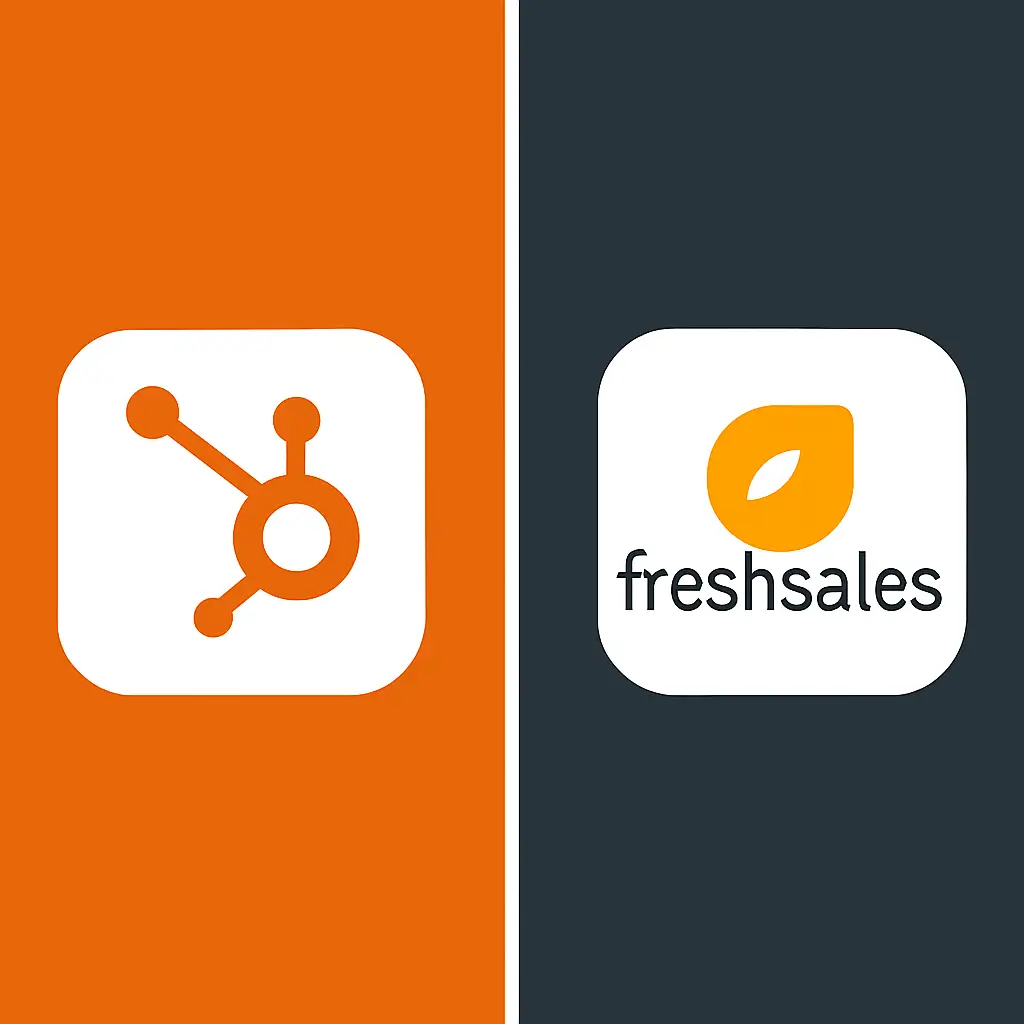
You’ve narrowed it down to two CRMs: HubSpot and Freshsales. Both look good on paper, have good reviews, and are trying to get your business by offering free trials and comparison landing pages. So, which one do you really buy?
We moved clients from Freshsales to HubSpot (and looked at the switch in both directions) while also connecting both platforms to more than 300 other business tools. This is what we really think: HubSpot is the best choice for most growing teams. Freshsales is the best choice for a certain group of buyers, and we’ll tell you who that is.
This isn’t an article that looks like a feature spreadsheet. It’s a practitioner’s view of two platforms we know well, including what goes wrong when you switch between them, which pricing tiers are actually useful, and where each tool makes you think it does.
HubSpot vs Freshsales at a Glance
HubSpot is a single growth platform that includes CRM, sales, marketing, and customer service all in one data model. Freshworks made Freshsales, an AI-powered sales CRM for sales teams that want to manage leads better and have built-in communication tools at a lower cost per seat. The main difference is that HubSpot replaces many point tools in your entire go-to-market stack, while Freshsales only replaces your CRM. If you’re already using Freshworks products, Freshsales works with Freshdesk and Freshmarketer.

Turn HubSpot Into A Real-Time SMS Engine with Message IQ
 Two-Way Conversations
 Shared Team Inbox
 Automation Triggers
 Advanced Reporting
 Compliance Tools
- 98% SMS read within 3 min
- 78% Buy from first responder
- 21× More likely to qualify

*MessageIQ is an IntegrateIQ product – built natively for HubSpot by the same team.
What HubSpot Really Is
HubSpot started out as an inbound marketing platform in 2006. Since then, it has grown into one of the most complete CRM ecosystems on the market. It has a Hub model with six hubs: Sales Hub, Marketing Hub, Service Hub, Operations Hub, Commerce Hub, and Content Hub. Each hub can work on its own, but they all work better together. That integration isn’t just a marketing term; it means that marketing, sales, and service all read from and write to the same contact record.
HubSpot has more than 1,500 native app integrations, so it works with almost every tool that a modern revenue team uses, such as Gong, Outreach, Stripe, DocuSign, Slack, Google Ads, LinkedIn Ads, and more. The HubSpot Academy and community are real training tools, not just things that come to mind later.
The truth is that HubSpot’s prices at the Professional and Enterprise levels go up quickly, especially when you add Marketing Hub to Sales Hub. Teams that only need to manage their sales pipeline often feel like they’re paying for features they won’t use.
What Freshsales Really Is
Freshworks is the company that makes Freshsales, which is a CRM product. They also make Freshdesk (for customer support), Freshmarketer (for marketing automation), and Freshservice (for IT service management). Freshsales is a CRM that focuses on sales and has a real AI layer called Freddy AI that scores leads, gives deal insights, and makes sales predictions across all of its paid tiers.
The platform’s built-in phone, email, and chat tools set it apart from the rest. Freshsales has built-in multi-channel communication, while HubSpot only offers calling as an add-on at lower tiers. That matters for sales teams that spend a lot of time on the phone.
The truth is that Freshsales works best when all of your tools are from Freshworks. Its 500 or so integrations are noticeably less than HubSpot’s marketplace when you look outside of that ecosystem. When teams try to connect Freshsales to their bigger setup, they often run into problems with tools like Gong, Outreach, or complicated marketing stacks.
HubSpot vs Freshsales: Head-to-Head Comparison
| Dimension | HubSpot | Freshsales | Winner | Key Differentiator |
|---|---|---|---|---|
| Pricing | Free CRM (unlimited contacts); Sales Hub Starter $20/user/mo; Pro $100/user/mo | Free (3 users, 1K contacts); Growth $9/user/mo; Pro $39/user/mo (what teams actually need) | Freshsales entry / HubSpot at scale | Freshsales $9 plan has no AI or sequences |
| Sales Features | Deal pipelines, sequences, custom objects, playbooks, CPQ at Pro+ | Pipelines (1 on Growth), sequences at Pro, Freddy AI deal insights, built-in calling | Tie | Freshsales native calling; HubSpot paid add-on |
| Marketing | Marketing Hub (separate): email, ads, landing pages, automation | Freshmarketer (separate): basic email campaigns, journey builder | HubSpot | Marketing Hub is enterprise-grade; Freshmarketer is basic |
| Reporting | Custom dashboards, multi-touch revenue attribution, forecast reports | Basic sales reports (Growth); advanced forecasting at Pro | HubSpot | HubSpot reporting depth is significantly stronger |
| AI Features | HubSpot AI across Hubs: content assistant, predictive scoring (Enterprise) | Freddy AI: lead scoring, deal insights, forecasting (Pro tier) | Freshsales | Freddy AI at Pro is genuinely competitive and lower cost |
| Ease of Use | Moderate learning curve; rewards feature investment over time | Lower initial curve; intuitive sales UI; faster to self-serve setup | Freshsales | Freshsales wins on initial onboarding speed |
| Integrations | 1,500+ native integrations; deep ecosystem across marketing, sales, service | ~500 integrations; strong within Freshworks; thinner outside it | HubSpot | HubSpot marketplace is 3x larger |
| Customer Support | Email/chat on Starter; phone on Pro+; HubSpot Academy | 24×5 support on ALL paid plans including free; phone on every tier | Freshsales | 24×5 phone on the free plan is genuinely rare |
| Customisation | Custom objects, custom properties, flexible pipelines at Pro+ | Custom fields, custom views; less flexible at enterprise level | HubSpot | HubSpot custom objects exceed Freshsales ceiling |
| Scalability | Multi-hub model: add Marketing, Service, Ops without switching tools | Scales within Freshworks suite but products work more independently | HubSpot | HubSpot’s unified data model is the scale advantage |
Pricing: How Much You’ll Really Pay
Freshsales has a Growth plan that costs $9 per user per month, and HubSpot has a free CRM that leads the way. Both entry points are real, but neither tells the whole story.
The Freshsales Price Trap
Freshsales Growth at $9 per user per month sounds good. The problem is that Growth doesn’t have AI lead scoring, email sequences, multiple pipelines, or advanced workflows. Those are the things that make a CRM useful for a B2B sales team that is going out. You can get Pro for $39 per user per month whenever you need it. That’s a 4.3x price jump that most people don’t expect.
Freshsales also has real hidden costs, like bot sessions for chat automation ($100–300/month beyond the first 500), per-minute calling rates for international calls, and CPQ licenses beyond the first. If you need email marketing, Freshmarketer is a separate product.
HubSpot’s free CRM really does have no limits.
HubSpot’s free CRM lets you have as many contacts as you want, while Freshsales’ free plan only lets you have 1,000 contacts and 3 users. The free tier of HubSpot also lets you sync Gmail and Outlook, keep track of deals, and set up a basic pipeline. It’s not a 30-day trial; it’s a free tier that small teams use to run their businesses all the time.
The paid levels of HubSpot can be very expensive. At $100 per user per month, Sales Hub Professional is a big investment. Adding Marketing Hub on top of that quickly brings most small and medium-sized businesses into the four-figure monthly range. That investment pays off in the long run, but you have to put down real money first.
| Plan | HubSpot (Sales Hub) | Freshsales | Key Difference |
|---|---|---|---|
| Free | Free unlimited contacts, core CRM, Gmail/Outlook sync | Free 3 users max, 1,000 contacts, no reports, no custom fields | HubSpot free plan is genuinely more capable for most teams |
| Entry Paid | Starter: $20/user/mo email, forms, calling (90 min/user) | Growth: $9/user/mo basic pipeline, email tracking, 1 pipeline, no AI, no sequences | Freshsales cheaper but Growth is barely functional for B2B outbound |
| Mid Tier | Professional: $100/user/mo automation, custom reporting, playbooks, sequences | Pro: $39/user/mo Freddy AI, multiple pipelines, sequences, territory management | Freshsales Pro is strong value; HubSpot Pro unlocks full platform depth |
| Enterprise | Enterprise: $150/user/mo custom objects, predictive scoring, advanced reporting | Enterprise: $59/user/mo audit logs, advanced customization, AI forecasting | HubSpot Enterprise is significantly more expensive; Freshsales stays accessible |
| Hidden Costs | Add-ons: Marketing Hub (separate), calling overages, CMS | Add-ons: bot sessions ($100-300/mo), phone credits, extra CPQ licenses, Freshmarketer | Both have costs beyond base price; Freshsales calling costs add up for high-volume teams |
Best for HubSpot
- Mid-market teams with 20 or more users who need sales and marketing to work from the same contact record, not two systems that are only loosely connected by Zapier. This is what HubSpot’s multi-hub model is made for.
- Teams that want to grow a lot and don’t want to switch CRMs again in 18 months. Freshsales doesn’t handle custom objects, complex pipelines, and attribution reporting the same way that HubSpot’s data model does.
- Companies that use Gong, Outreach, Stripe, DocuSign, LinkedIn Ads, and Salesforce for complicated integration stacks. HubSpot’s marketplace is so deep that these connections work without having to build anything special. We’ve added HubSpot to more than 300 platforms, which is hard to do on the Freshworks marketplace.
- RevOps teams that need serious reporting, like multi-touch attribution, custom dashboards, and tracking forecasts by rep, team, and deal type. The reporting at HubSpot’s Pro+ level is much better than that of Freshsales’ equivalent level
Freshsales is the best.
- Small teams of 10 to 15 people that only do sales and don’t need marketing automation because they don’t have the money. Freshsales offers real AI-powered pipeline management for $39 per user per month, which is about half the price of HubSpot Professional.
- Companies that are already heavily invested in the Freshworks ecosystem, like those that use Freshdesk for customer service. The built-in integration between Freshsales and Freshdesk is very good. Ticket history, contact context, and agent hand-offs all work well on the same platform. You can do this with Service Hub from HubSpot, but you have to buy it separately.
- Teams that spend a lot of time on the phone and want calling built in without having to buy an extra. At the Pro level, Freshsales comes with phone, email, chat, WhatsApp, and SMS built in. For outbound sales teams that make a lot of calls, not having to pay for calling add-ons on top of your CRM subscription adds up over time.
What it Really Looks Like to Move from Freshsales to HubSpot
This part is missing from most comparison pages. We’re not going to do that because it’s the part that really matters for whether your move goes well or turns into a six-month distraction. We’ve done migrations from Freshsales to HubSpot, and here’s what the steps look like:
What Moves Smoothly
- Contacts, Companies, and Deals core CRM records move safely with the right field mapping.
- Activity history (calls, emails, notes) moves with the right export settings.
- Custom fields can be moved, but they need to be mapped to HubSpot properties first.
- Deal pipeline stages are set up in HubSpot as deal stages in the right pipeline.
What Needs to Be Fixed or Rebuilt
- Freddy AI scoring models Freshsales’ AI scoring is trained on your data within Freshsales. None of that model carries over. Your HubSpot instance starts fresh on predictive scoring, and it takes time for the HubSpot AI to develop meaningful signals from your data.
- Custom pipeline views and filters Freshsales’ custom view configurations don’t export. Sales reps will need to rebuild their working views inside HubSpot, which takes a few hours of setup per team.
- Freshdesk ticket relationships if your team links Freshsales contacts to Freshdesk tickets, that relationship doesn’t migrate automatically. You either move to HubSpot Service Hub (our typical recommendation) or rebuild the integration between HubSpot and a separate support platform.
- Built-in phone numbers Freshsales assigns calling numbers to your team. These numbers don’t transfer to HubSpot. Teams using Freshsales’ calling feature need to either port existing numbers or provision new HubSpot calling numbers for each rep.
- Freshmarketer journey logic if you’re using Freshmarketer for email automation, those sequences and journey builders need to be recreated in HubSpot Marketing Hub. The logic is transferable but the configuration is manual.
Timeline and What We Handle
A typical Freshsales-to-HubSpot migration takes 8 weeks from kickoff to go-live with IntegrateIQ handling the full process: data audit, field mapping, custom property recreation, pipeline rebuild, workflow migration, and user training. Teams that try to run this internally typically take 4-5 months and hit data quality issues that slow adoption.
For more on what breaks in CRM migrations and how to avoid the common traps, our CRM migration playbook covers the full process.
See your 12-month revenue impact with HubSpot CRM
Enter your current numbers — visitors, leads, deal size — and get a personalized projection based on real HubSpot customer benchmarks.
Calculate My ROI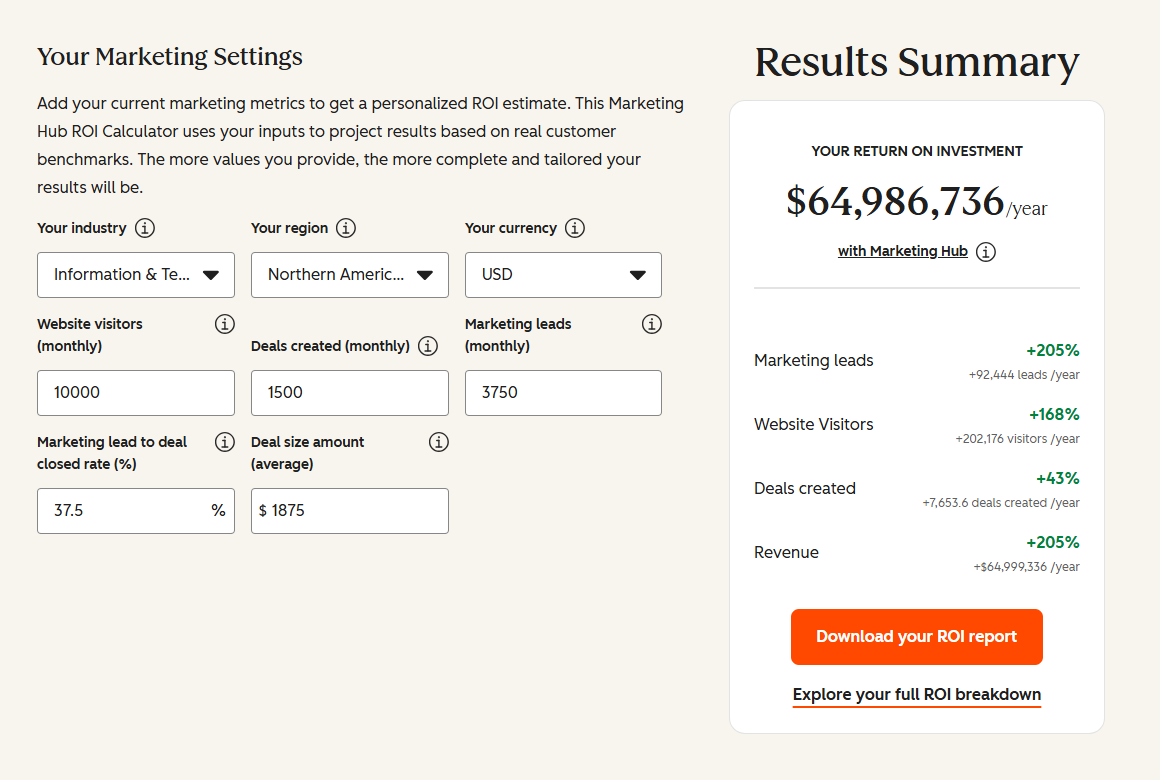
HubSpot vs Freshsales: The Final Verdict
HubSpot wins for most teams specifically any team where growth is the plan, where sales and marketing need to work from shared data, or where the integration stack has real complexity. HubSpot’s multi-hub model means you’re buying infrastructure, not just a CRM. The cost is real, but so is the compound return.
Freshsales wins for a specific buyer: small, sales-only teams under 15 users that are already in the Freshworks ecosystem, prioritize built-in calling, and don’t have near-term marketing automation needs. If that describes your team right now, Freshsales Pro at $39/user/month is genuinely good value and there’s no compelling reason to migrate.
If you’re still on the fence, here are the three questions that tend to break the tie:
- Do you need sales and marketing to share the same contact record and attribution data? If yes, HubSpot.
- Are you already paying for Freshdesk and relying on its support workflows? If yes, the Freshsales integration is genuinely valuable evaluate whether HubSpot Service Hub justifies the switch cost.
- Is your integration stack going to grow in complexity over the next 12 months? If yes, HubSpot’s marketplace depth will save you from hitting walls that Freshsales’ ecosystem creates.

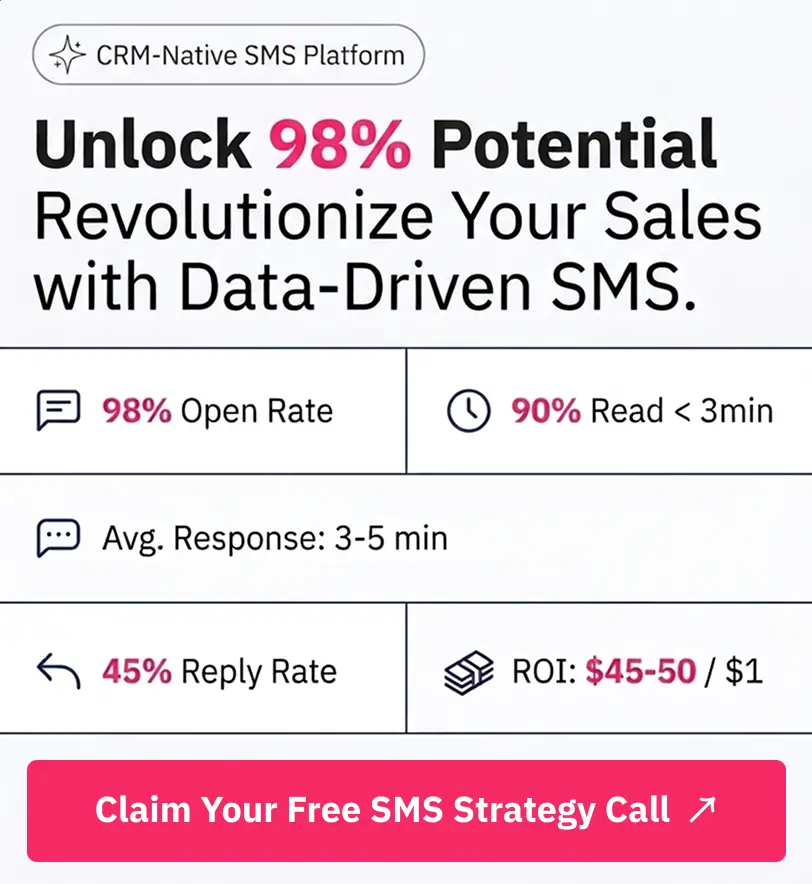
Table of Contents
- The Choice That Most Sales Leaders Put Off
- HubSpot vs Freshsales at a Glance
- What HubSpot Really Is
- What Freshsales Really Is
- HubSpot vs Freshsales: Head-to-Head Comparison
- Pricing: How Much You’ll Really Pay
- Best for HubSpot
- Freshsales is the best.
- What it Really Looks Like to Move from Freshsales to HubSpot
- HubSpot vs Freshsales: The Final Verdict