








If you’re choosing between HubSpot and Salesloft, the most useful answer is this: they solve different problems. HubSpot is a full CRM platform. Salesloft is a sales engagement layer that sits on top of a CRM. For most B2B teams under 50 reps, HubSpot Sales Hub Pro covers what they need natively. For high-volume outbound motions on Salesforce, Salesloft is the right pick. And a real third answer exists: many mid-market teams run both, with HubSpot as the CRM and Salesloft as the engagement layer connected by the native integration.
We’re Integrate IQ, a HubSpot Diamond Solutions Partner with custom integration accreditation. We’ve architected stacks that include both platforms, integrated Salesloft into HubSpot for clients keeping both, and migrated teams from Salesforce + Salesloft to HubSpot when they wanted to consolidate. This comparison comes from real implementation work.
Below, we’ll cover where each platform genuinely wins, why the comparison gets oversimplified, and when running both is the smarter architecture.
Free estimator
Know what your HubSpot project costs before the first call.
Select your services and get a transparent price range in minutes. No sales call needed to get a number.
Firm quote after a free discovery call. Build estimate
HubSpot vs Salesloft at a Glance
HubSpot is an AI-powered customer platform serving more than 278,000 companies, with a Smart CRM at the foundation and Sales, Marketing, Service, Content, and Operations Hubs sharing one database. Salesloft is a sales engagement and revenue orchestration platform serving more than 5,000 enterprise customers (post-Clari merger as of December 3, 2025), focused on cadence automation, conversation intelligence, and pipeline execution on top of an existing CRM.
Quick comparison
| Dimension | HubSpot | Salesloft |
| Category | Full CRM platform with sales, marketing, service | Sales engagement layer on top of a CRM |
| Best for | B2B teams under 50 reps wanting CRM + engagement on one platform | High-volume outbound teams of 10+ SDRs/AEs, especially on Salesforce |
| Starting price (annual) | Free; Sales Hub Pro $100/seat | Custom; Advanced ~$125-180/seat (negotiated); 10-seat min common |
| Free tier | Yes, full Smart CRM | No |
| Core strength | Native CRM with marketing, service, and AI in one platform | Multi-channel cadences, conversation intelligence, sales coaching |
What HubSpot Does Well (and Where It Doesn’t)
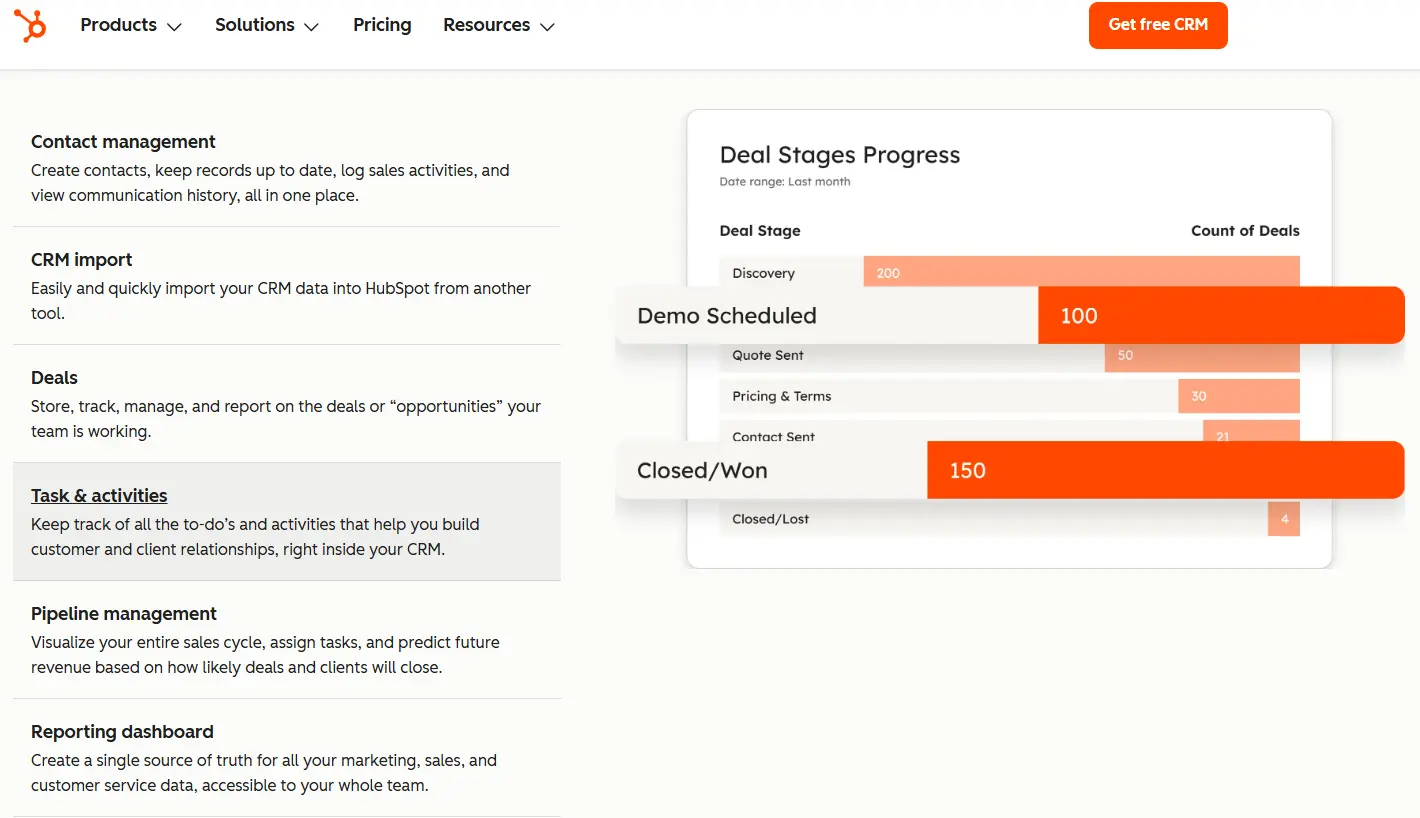
HubSpot started as inbound marketing software in 2006 and grew into a full customer platform. The Smart CRM sits at the foundation of every Hub. That architecture is the difference between HubSpot and a sales engagement tool.
HubSpot Sales Hub covers the core sales workflow:
- Pipeline management with custom deal stages, automation, and forecasting
- Sequences for multi-step email outreach (Pro and Enterprise)
- Native calling with 500-2,000 minutes per seat depending on tier
- Deal management with custom properties and stage probability
- AI prioritization through Breeze: deal scoring, content suggestions, conversation summaries
- Playbooks for structured discovery and qualification
Beyond Sales Hub, the platform includes Marketing Hub (email campaigns, landing pages, attribution), Service Hub (tickets, knowledge base, SLAs), Content Hub (CMS, blog, AI content), and Operations Hub (data sync, programmable automation). Everything shares the same contact and company records.
Sales Hub pricing in 2026: Free, Starter at $15 per seat per month, Professional at $100 per seat plus $1,500 onboarding, Enterprise at $150 per seat plus $3,500 onboarding. All annual billing.
The honest limitation in this specific comparison: HubSpot’s sequences are simpler than Salesloft’s cadences. They’re linear email-only chains with task and call reminders, capped at 50 contacts per enrollment. They don’t support conditional branching, multi-channel orchestration (LinkedIn, calls, SMS as native steps), or the cadence sophistication that high-volume outbound teams need at scale. For inbound-led teams or moderate outbound volumes, the limitation rarely matters. For teams running 200+ outbound touches per rep per day, it’s a real gap.

Turn HubSpot Into A Real-Time SMS Engine with Message IQ
 Two-Way Conversations
 Shared Team Inbox
 Automation Triggers
 Advanced Reporting
 Compliance Tools
- 98% SMS read within 3 min
- 78% Buy from first responder
- 21× More likely to qualify

*MessageIQ is an IntegrateIQ product – built natively for HubSpot by the same team.
What Salesloft Does Well (and Where It Doesn’t)
Salesloft launched in 2011 as a sales engagement platform. It’s not a CRM. It’s a workspace where sales reps execute outbound and pipeline work on top of an existing CRM (typically Salesforce, sometimes HubSpot). Salesloft completed its merger with Clari in December 2025, creating a combined company with approximately $450M in ARR and customers including Adobe, IBM, 3M, Zoom, and Shopify.
Salesloft’s strengths sit in three areas:
Cadences
Salesloft’s cadence engine is the gold standard for outbound execution. Multi-step, multi-channel sequences combining email, calls, LinkedIn, and manual tasks. A/B testing on email steps. Conditional branching. Templates with personalization at scale. The interface keeps reps in execution mode without context switching. For teams running 10+ SDRs executing daily activity benchmarks, this is where Salesloft pulls decisively ahead of any CRM-native sequence tool.
Conversation intelligence
Salesloft Conversations (acquired from Drift years ago) records, transcribes, and analyzes sales calls. Real-time coaching cards surface during live calls. AI-generated call summaries auto-log to the CRM. Managers review calls, score them, and coach reps using actual conversation data instead of memory. For SDR-heavy organizations where ramp time and consistency matter, this drives real ROI.
Rhythm and forecasting
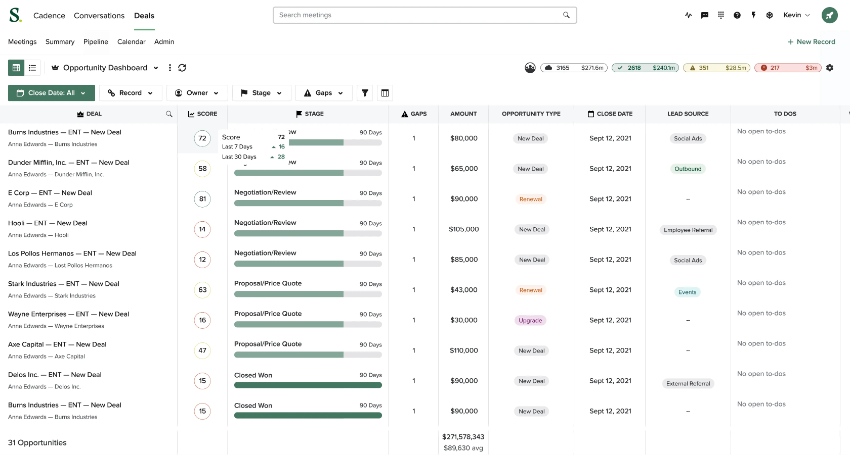
Rhythm, launched in June 2023, is Salesloft’s AI orchestration layer that surfaces next-best-action recommendations across cadences, calls, and deals. Post-Clari merger, Salesloft Forecast and Deals modules deliver pipeline forecasting that bundles with Clari’s deeper revenue analytics. For enterprise revenue teams, this is increasingly positioned as a unified revenue platform rather than a pure engagement tool.
Salesloft’s pricing in 2026 isn’t published. Industry data from Vendr and others points to:
- Essentials: ~$75-100 per user per month (small teams)
- Advanced: ~$125-180 per user per month after negotiation (most commonly purchased)
- Premier: 20-40% more than Advanced (enterprise + Clari bundling)
- Dialer is a separate add-on (35-50% discount when bundled at purchase)
- 10-seat minimum common; multi-year discounts of 15-25% standard
The honest limitation: Salesloft is engagement-only. It depends on a CRM for customer data, deal management, and reporting. Teams running standalone Salesloft pay double licenses (CRM + Salesloft) and live with sync overhead between the two systems. Salesloft has no marketing automation, no service product, no native CMS, and no inbound capabilities. It’s a purpose-built tool for sales execution, and that focus is both its strength and its constraint.
The Fundamental Difference: CRM vs Sales Engagement Layer
Most HubSpot vs Salesloft comparisons miss this distinction, but it’s the answer that determines everything else.
HubSpot is a CRM. The system of record for customer data. Deals, contacts, companies, and tickets all live inside it. Reporting runs on that data. Marketing, sales, and service all read from and write to the same database. When a deal closes in HubSpot, the customer record is right there with all its history.
Salesloft is a sales engagement platform. It executes the outbound and pipeline work that CRMs handle inadequately. It reads contact and deal data from a connected CRM, executes cadences and calls against that data, and writes activity back. Salesloft doesn’t replace a CRM. It runs alongside one.
So the real question isn’t “HubSpot or Salesloft.” The real questions are:
- Do I need a CRM? (Yes, every B2B team does.)
- Do I need a separate sales engagement layer on top of that CRM? (Depends on outbound volume, motion sophistication, and whether your CRM’s native engagement features are enough.)
HubSpot competes for question one against other CRMs (Salesforce, Pipedrive, Zoho). Salesloft competes for question two against other engagement platforms (Outreach, Apollo, Salesforce’s own Cadence). The two products only collide for teams trying to decide whether HubSpot Sales Hub Pro is enough or whether they need a dedicated engagement layer on top.

Pricing Comparison: HubSpot Wins on Value, Salesloft Wins on Engagement Depth at a Cost
Real numbers for a 25-rep team:
HubSpot Sales Hub Professional only
- 25 seats × $100/month = $2,500/month base
- $1,500 one-time onboarding (year one)
- Annual cost year one: ~$31,500
- Annual cost year two onward: ~$30,000
Salesloft Advanced + Salesforce Sales Cloud Professional
- 25 seats Salesloft Advanced × ~$150 negotiated = $3,750/month
- Plus 25 seats Salesforce Sales Cloud Pro × $100 = $2,500/month
- Plus dialer add-on (~$30-50/seat/month for 25 seats)
- Plus implementation costs
- Annual cost: ~$80,000-95,000 before professional services
HubSpot Sales Hub + Salesloft (the “both” option)
- HubSpot Sales Hub Professional 25 seats: $30,000-31,500 annual
- Salesloft Advanced 25 seats + dialer: $50,000-65,000 annual
- Native HubSpot-Salesloft integration is included in standard pricing
- Total annual cost: ~$80,000-95,000
Verdict on pricing: HubSpot is the cheapest path for any team that doesn’t need Salesloft-grade engagement depth. The combined HubSpot + Salesloft stack is comparable to Salesforce + Salesloft once you factor in license consolidation and HubSpot’s bundled marketing and service. For teams that need engagement depth, the relevant comparison isn’t HubSpot vs Salesloft directly. It’s HubSpot vs Salesforce as the underlying CRM, with Salesloft layered on top of either.
CRM and Deal Management: HubSpot Decisively Wins
This dimension isn’t close. HubSpot is a CRM. Salesloft isn’t.
HubSpot’s Smart CRM provides full contact, company, deal, and ticket records with custom properties, custom objects (Enterprise tier), full association management, lifecycle stage tracking, and deal forecasting. The CRM is the foundation, and every other Hub builds on it.
Salesloft has Deals and pipeline management, but those features assume an underlying CRM as the source of truth. Salesloft Deals is a workspace for sales reps to manage opportunities and forecast revenue, with the actual customer records living in Salesforce or HubSpot.
Verdict: HubSpot wins decisively. Salesloft requires a CRM by design.
Cadences and Sequences: Salesloft Wins on Depth, HubSpot Wins on Integration
This is where Salesloft genuinely earns its second license.
Salesloft’s cadences are multi-step, multi-channel, with conditional branching, A/B testing, and personalization at scale. Reps can build sequences combining email, phone calls, LinkedIn touches, and manual tasks. Cadence pacing adjusts based on prospect engagement signals. Templates pull from a content library with manager-approved messaging. The execution interface is purpose-built for SDRs running 100+ daily activities.
HubSpot’s sequences are simpler. Linear email-only chains with task and call reminders. Capped at 50 contacts per enrollment. They handle straightforward outbound and follow-up workflows well. They don’t support multi-channel orchestration as native steps, conditional branching, or the cadence sophistication that high-volume teams need.
For most B2B teams running moderate outbound volumes (under 100 touches per rep per day, mostly email), HubSpot sequences are enough. For teams running 200+ touches per day across email, calls, LinkedIn, and manual research tasks, Salesloft’s cadence depth materially impacts pipeline created.
Verdict: Salesloft wins on cadence depth. The honest answer for most teams is that HubSpot sequences cover their actual workflow.
Calling and Conversation Intelligence: Salesloft Wins on Depth, HubSpot Wins on Native Inclusion
HubSpot ships with native calling at every Sales Hub tier. Starter includes 500 calling minutes per month. Professional and Enterprise raise that ceiling significantly. Calls log automatically to contact and deal records, with AI-generated summaries through Breeze. For teams running modest call volumes alongside other engagement, that’s enough.
Salesloft’s dialer is a separate add-on, but it includes capabilities HubSpot doesn’t match. Real-time coaching cards during live calls. Conversation intelligence with keyword tracking. AI-generated call summaries with action items. Manager call review workflows with scoring rubrics. Talk-track analytics. For SDR organizations where call coaching and conversation review drive measurable ramp time improvements, this depth justifies the add-on cost.
Verdict: Salesloft wins on conversation intelligence depth. HubSpot wins for teams that want calling included natively without a separate license.
Marketing Capabilities: HubSpot Only
Salesloft has no marketing automation. No email campaigns layer. No landing pages. No forms. No marketing attribution. None of those products exist in the platform, and they aren’t on the roadmap. Salesloft’s product focus is sales execution.
HubSpot Marketing Hub provides full marketing automation, email campaigns, landing pages, forms, paid ad management, and multi-touch attribution. Marketing-sourced leads flow into the same database as deals, which makes campaign-to-revenue reporting native.
Verdict: HubSpot wins decisively. If marketing automation matters, this dimension alone often settles the discussion.
Forecasting and Revenue Intelligence
This dimension shifted significantly in late 2025.
HubSpot’s native forecasting covers weighted pipeline, deal stage probability, AI-driven close predictions through Breeze, and rep-level performance. The reporting is CRM-native and ships pre-built. For teams that want forecasting tied directly to deals in their CRM, HubSpot delivers it without configuration.
Salesloft’s forecasting got materially stronger after the Clari merger on December 3, 2025. The combined platform now offers Salesloft Deals + Forecast plus Clari’s deeper revenue analytics, AI-driven pipeline inspection, and enterprise-grade predictive forecasting. For sales-led organizations where forecasting accuracy is a board-level metric, the post-merger Salesloft + Clari stack is a credible competitor to dedicated revenue intelligence platforms.
Verdict: Tie at the mid-market level. Salesloft + Clari pulls ahead at enterprise scale where dedicated revenue intelligence matters more than CRM-native reporting.
Integrations and the Native HubSpot-Salesloft Connection
HubSpot’s App Marketplace lists more than 1,500 native integrations. Salesloft’s marketplace is smaller but includes the integrations that matter most for sales engagement: Salesforce (deeply native), HubSpot CRM (native, bidirectional), LinkedIn Sales Navigator, ZoomInfo, calendar tools, and the major dialer/voice platforms.
The most relevant integration for this comparison: Salesloft has a native, bidirectional integration with HubSpot CRM. Contacts, companies, deals, and activities sync between the two systems. This is the architecture many mid-market teams run: HubSpot as the system of record (with Marketing, Sales, and Service Hubs), Salesloft as the engagement layer for high-volume outbound. The integration handles the data flow without requiring iPaaS middleware.
As a HubSpot Diamond Partner with custom integration accreditation, we’ve architected this exact stack for clients running heavy outbound on top of a HubSpot foundation. We’ve also migrated teams from Salesforce + Salesloft to HubSpot + Salesloft when they wanted to consolidate the CRM layer without losing engagement depth.
Verdict: HubSpot wins on raw integration breadth. Salesloft wins on depth of the integrations that matter for sales engagement, especially Salesforce. The native HubSpot-Salesloft integration makes “both” a real architecture option.
HubSpot vs Salesloft: Side-by-Side Comparison
| Dimension | HubSpot | Salesloft | Winner |
| Category | Full CRM platform | Sales engagement layer | Different jobs |
| Pricing (25 seats annual) | ~$30,000 (Sales Hub Pro) | ~$50,000-65,000 + CRM cost | HubSpot |
| CRM features | Native, full data model | None native; requires CRM | HubSpot |
| Cadences/sequences | Linear email sequences | Multi-channel cadences with branching | Salesloft |
| Calling/dialer | Native at every tier | Add-on with deeper conversation intelligence | HubSpot (native); Salesloft (depth) |
| Conversation intelligence | Breeze AI summaries | Real-time coaching, call review, talk-track analytics | Salesloft |
| Marketing | Native Marketing Hub | None | HubSpot |
| Service | Native Service Hub | None | HubSpot |
| Forecasting | Native CRM-based | Salesloft + Clari (post-merger) | Tie (enterprise edge to Salesloft) |
| Integrations | 1,500+ native | Strong sales-engagement integrations, native HubSpot connector | HubSpot (breadth) |
When HubSpot Is the Better Choice
1. You’re a B2B team under 50 reps that wants CRM + engagement on one platform
Most growth-stage and mid-market B2B companies don’t need Salesloft-grade engagement depth. HubSpot Sales Hub Pro covers sequences, calling, deal management, and forecasting natively. Adding a second platform doubles license cost and creates sync overhead for engagement features the team won’t use at depth.
2. Your pipeline is inbound or marketing-driven
Inbound-led teams don’t need cadence sophistication. They need fast follow-up on warm leads, lead scoring, attribution, and nurture. HubSpot’s combination of Marketing Hub + Sales Hub delivers all of that natively. Salesloft would be solving a problem that doesn’t exist for these teams.
3. You’re consolidating the GTM stack
Teams running CRM + email marketing + helpdesk + sequences + calling as five separate tools often save money by moving to HubSpot’s all-in-one model. Salesloft adds to the stack rather than consolidating it.
4. You don’t have a dedicated SDR organization
Salesloft’s depth pays back when you have 10+ SDRs running multichannel cadences daily. For teams without that motion (founder-led sales, AE-only orgs, account management), the engagement layer is overkill.
5. Service and post-sale workflows matter
Salesloft has no service product. Teams that need ticketing, customer onboarding workflows, or renewal management get those natively in HubSpot Service Hub.
When Salesloft Is the Better Choice
Salesloft is genuinely the better pick in these scenarios. We’re a HubSpot partner, but a vendor comparison page that pretends the competitor never wins isn’t credible.
1. You’re running heavy outbound with 10+ SDRs/AEs
This is Salesloft’s core scenario. SDR organizations executing 100-200+ daily touches across email, calls, and LinkedIn need cadence sophistication that CRM-native sequences don’t deliver. The depth of cadence orchestration, A/B testing, and pacing intelligence directly correlates with pipeline created.
2. You’re already on Salesforce as the CRM
Salesloft’s Salesforce integration is the deepest in the category. For Salesforce-anchored organizations, Salesloft is the standard sales engagement choice. The integration handles bidirectional sync, activity logging, and deal management without iPaaS middleware.
3. Sales coaching and conversation intelligence drive measurable ROI
If your sales managers spend significant time on call review, talk-track coaching, or rep ramp, Salesloft Conversations delivers depth that HubSpot’s Breeze AI doesn’t yet match. For organizations where coaching impacts attainment, that gap matters.
4. You want unified forecasting post-Clari merger
After the December 2025 Clari merger, the combined Salesloft + Clari platform offers enterprise-grade forecasting and revenue intelligence. For sales-led organizations where forecasting accuracy is a board-level metric, this stack competes with dedicated RI platforms like Gong.
When You Should Run Both Together
This is the scenario most comparison pages skip, and it’s the right answer for many mid-market B2B teams.
Running HubSpot + Salesloft works when you need both: a real CRM with marketing and service capabilities (HubSpot), plus a dedicated engagement layer for high-volume outbound (Salesloft). The native HubSpot-Salesloft integration syncs contacts, companies, deals, and activities bidirectionally between the two systems. Reps execute cadences in Salesloft. Marketing nurtures and scores leads in HubSpot. Service handles tickets in HubSpot Service Hub. Everything flows into the same customer record.
Teams that benefit from this architecture:
- Mid-market B2B with both inbound marketing and high-volume outbound (typically 30-100 reps total)
- Teams that want to leave Salesforce but can’t give up Salesloft’s cadence depth
- Organizations expanding from inbound-only to outbound, where HubSpot is already the CRM and Salesloft is the natural engagement layer
- Companies running ABM motions where personalized cadence orchestration matters more than the CRM-native sequence model
The cost is real: you’re paying for both platforms. But the integration overhead is lower than a Frankenstein stack of CRM + email tool + calling tool + sequence tool, and the unified customer record lives inside HubSpot rather than spread across multiple systems.
What Implementing HubSpot + Salesloft Looks Like
If your team decides to run both, the implementation has a defined shape. Here’s what we run with clients:
- Set up HubSpot CRM properly first. Custom properties, lifecycle stages, deal pipelines, and reporting structure all get configured before Salesloft enters the picture. Skipping this step creates field mapping problems later.
- Configure the native HubSpot-Salesloft integration. Map fields bidirectionally, decide which system is the source of truth for each property, and set sync rules for contacts, companies, deals, and activities.
- Migrate existing cadences and templates from Salesloft (if coming from a Salesforce stack) or build them fresh in Salesloft after HubSpot data is clean.
- Define the rep workflow. Reps typically work cadences in Salesloft and update deals in HubSpot, with calls logging automatically to both systems.
- Set up reporting in HubSpot for full-funnel attribution, with Salesloft-side activity reports for SDR productivity.
- Train the team on the dual-system workflow. Most adoption issues come from reps not understanding which system to use for which task.
Migration scenarios we handle:
- Salesforce + Salesloft → HubSpot + Salesloft: keep the engagement layer, replace the CRM. Typical timeline: 8 weeks.
- HubSpot Sales Hub only → HubSpot + Salesloft: add the engagement layer. Typical timeline: 4-6 weeks.
- Salesforce + Salesloft → HubSpot only: consolidate to one platform. Typical timeline: 8 weeks plus rep change management.
Our 98.5% client retention rate reflects how these implementations hold up post-launch. We process 20 billion+ records annually and sync 55 million fields daily across 300+ platform integrations, including the HubSpot-Salesloft connection.
See your 12-month revenue impact with HubSpot CRM
Enter your current numbers — visitors, leads, deal size — and get a personalized projection based on real HubSpot customer benchmarks.
Calculate My ROI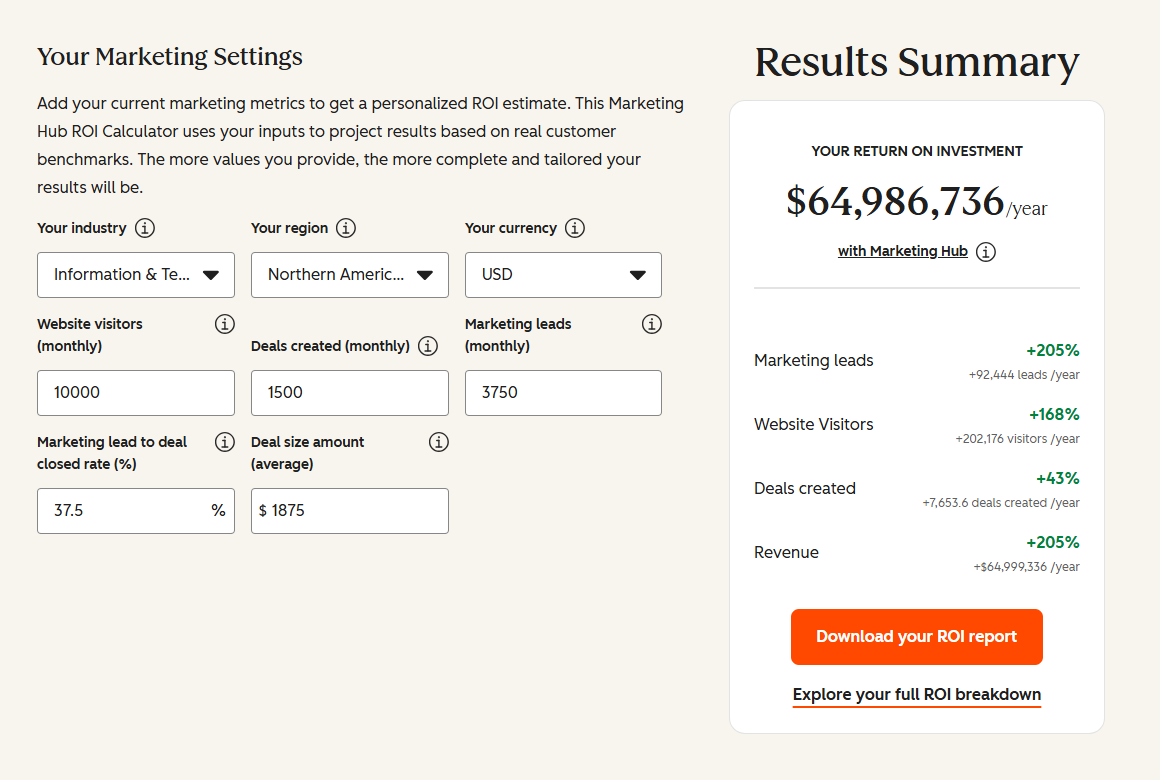
HubSpot vs Salesloft: The Final Verdict
HubSpot is the better pick for most B2B teams under 50 reps that need CRM, marketing, sales, and service on one platform. The free tier is generous, the all-in-one model lowers total cost, and Sales Hub Pro covers what most growth-stage teams actually need.
Salesloft is the better pick for high-volume outbound organizations, especially those already on Salesforce, where cadence sophistication, conversation intelligence, and (post-Clari merger) unified forecasting drive measurable ROI.
“Both together” is the right answer for many mid-market teams: HubSpot as the CRM with marketing and service, Salesloft as the engagement layer for outbound. The native integration makes that architecture viable without iPaaS middleware.
If you’re still deciding, ask yourself three questions:
- Do you have a real SDR organization running 10+ reps executing daily multichannel cadences? If yes, Salesloft (or HubSpot + Salesloft) is the right answer. If no, HubSpot Sales Hub native sequences are enough.
- Do you also need marketing automation and service tied to the CRM? If yes, HubSpot has to be in the stack somewhere. Salesloft alone doesn’t fill those gaps.
- Are you on Salesforce today? If yes, the migration question is whether to consolidate to HubSpot or layer Salesloft on top. If no, HubSpot Sales Hub Pro is usually the cleanest single-platform answer.

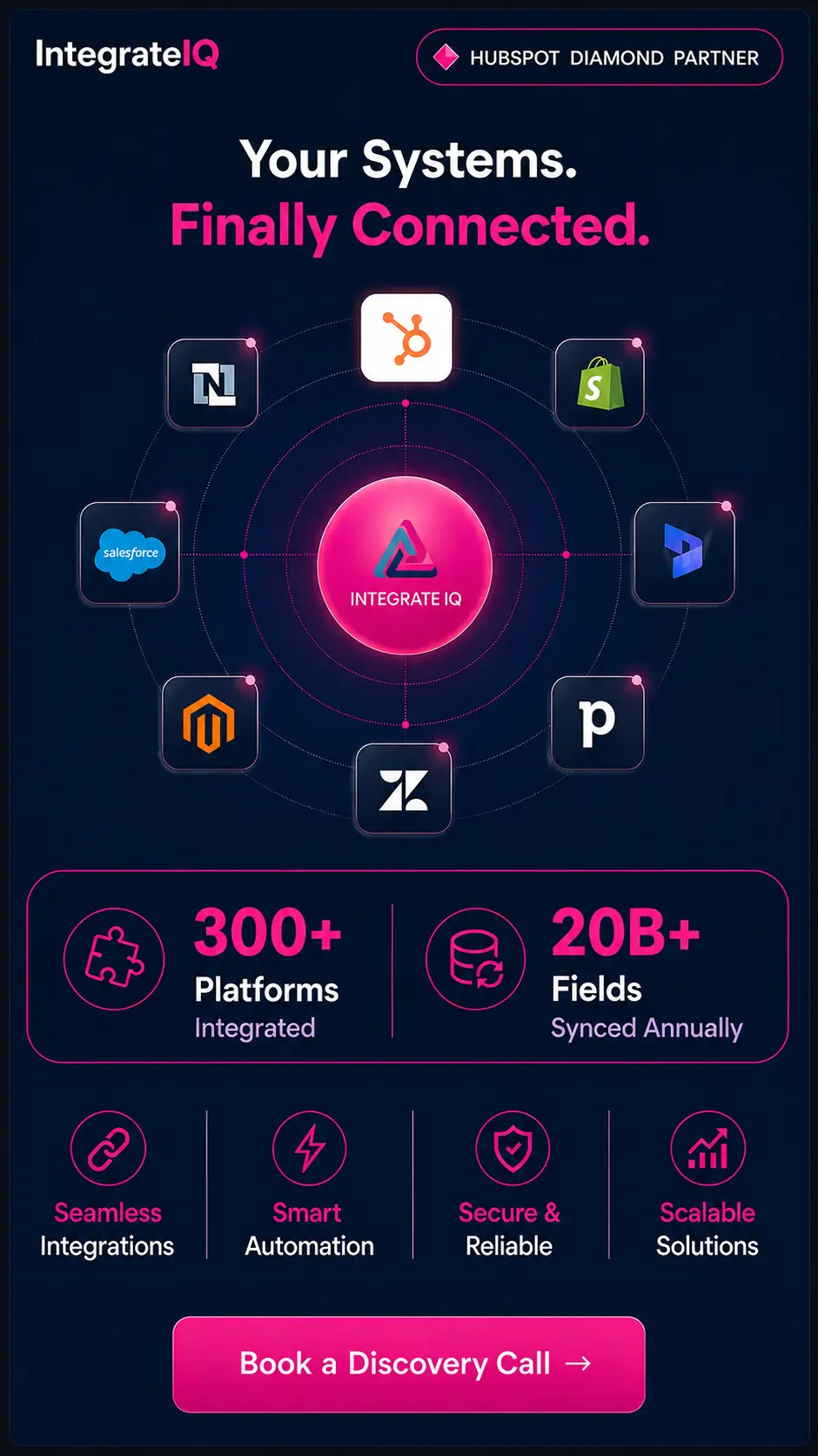
Table of Contents
- HubSpot vs Salesloft at a Glance
- What HubSpot Does Well (and Where It Doesn’t)
- What Salesloft Does Well (and Where It Doesn’t)
- The Fundamental Difference: CRM vs Sales Engagement Layer
- Pricing Comparison: HubSpot Wins on Value, Salesloft Wins on Engagement Depth at a Cost
- CRM and Deal Management: HubSpot Decisively Wins
- Cadences and Sequences: Salesloft Wins on Depth, HubSpot Wins on Integration
- Calling and Conversation Intelligence: Salesloft Wins on Depth, HubSpot Wins on Native Inclusion
- Marketing Capabilities: HubSpot Only
- Forecasting and Revenue Intelligence
- Integrations and the Native HubSpot-Salesloft Connection
- HubSpot vs Salesloft: Side-by-Side Comparison
- When HubSpot Is the Better Choice
- When Salesloft Is the Better Choice
- When You Should Run Both Together
- What Implementing HubSpot + Salesloft Looks Like
- HubSpot vs Salesloft: The Final Verdict