











Most comparisons between HubSpot and Salesforce look like lists of features. You get a 40-row table and a vague answer that says “it depends,” but you’re still stuck. That’s not helpful because the decision isn’t really about features. It’s about design.
Salesforce and HubSpot are based on very different ideas. HubSpot gives you a single data model with one database, six connected Hubs, and built-in marketing automation. Salesforce gives businesses a flexible, modular platform to build their CRM from parts, clouds, and custom code. One architecture works for your team, but the other one messes up your roadmap.
As a HubSpot Diamond Solutions Partner, we’ve moved clients from Salesforce to HubSpot and built the HubSpot-Salesforce integration for clients who use both. We’ve seen both systems fail when they are used by the wrong people. After processing more than 20 billion records a year and syncing 55 million fields every day across more than 300 platforms, here’s our honest opinion on which platform your team should use in 2026.
| Quick Verdict
HubSpot wins for most growing companies especially those under 500 employees that want to ship in weeks, not months, and unify marketing and sales on one data model. Salesforce earns its higher price for enterprises with true multi-cloud complexity, CPQ requirements, regulated-industry compliance needs, or Apex-level custom logic that HubSpot’s workflow engine can’t replicate. The 3.4x TCO gap is real but so are Salesforce’s genuine capabilities at scale. |
Free estimator
Know what your HubSpot project costs before the first call.
Select your services and get a transparent price range in minutes. No sales call needed to get a number.
Firm quote after a free discovery call. Build estimate
HubSpot vs Salesforce at a Glance
Most comparisons between HubSpot and Salesforce look like lists of features. You get a 40-row table and a vague answer that says “it depends,” but you’re still stuck. That’s not helpful because the decision isn’t really about features. It’s about design.
Salesforce and HubSpot are based on very different ideas. HubSpot gives you a single data model with one database, six connected Hubs, and built-in marketing automation. Salesforce gives businesses a flexible, modular platform to build their CRM from parts, clouds, and custom code. One architecture works for your team, but the other one messes up your roadmap.
As a HubSpot Diamond Solutions Partner, we’ve moved clients from Salesforce to HubSpot and built the HubSpot-Salesforce integration for clients who use both. We’ve seen both systems fail when they are used by the wrong people. After processing more than 20 billion records a year and syncing 15 million fields every day across more than 300 platforms, here’s our honest opinion on which platform your team should use in 2026.

The Architecture Question Nobody Else Is Asking
Here’s the context that most comparison pages leave out: the difference in implementation between HubSpot and Salesforce has nothing to do with which one has more features. It’s built in.
You’re not building with HubSpot; you’re configuring. The data model has its own ideas. There are set relationships between Contacts, Companies, Deals, Tickets, and Custom Objects, and HubSpot’s workflow engine works on top of that. This means that a RevOps lead can send out a working CRM in 2 to 6 weeks without having to write any code.
You’re designing with Salesforce. The schema is flexible, so every implementation is a one-of-a-kind build. For business teams, record types, Apex triggers, custom approval flows, and Lightning components are not optional extras. They are the base. That’s why it takes 3 to 6 months to set up Salesforce for mid-market companies and 12 months or more for real enterprise companies.
The truth about the cost of implementation is that HubSpot projects usually cost between $5,000 and $20,000 with a certified partner. Salesforce implementations for the middle market start at $30,000 and often go over $100,000. If you hire a full-time Salesforce admin for $60,000 to $100,000 a year to handle ongoing governance, the architectural choice becomes a budget item instead of just a platform choice.
This isn’t a bad thing about Salesforce. A 500-person business with multi-territory deal structures and custom CPQ needs a permissive architecture. But what about a B2B SaaS company with 75 people? That design makes every change request cost more.

Turn HubSpot Into A Real-Time SMS Engine with Message IQ
 Two-Way Conversations
 Shared Team Inbox
 Automation Triggers
 Advanced Reporting
 Compliance Tools
- 98% SMS read within 3 min
- 78% Buy from first responder
- 21× More likely to qualify

*MessageIQ is an IntegrateIQ product – built natively for HubSpot by the same team.
HubSpot vs Salesforce Pricing: What You Actually Pay
Sticker price comparisons mislead you. Here’s what the total cost of ownership looks like for a 50-person team:
| Cost Component | HubSpot Professional | Salesforce Enterprise |
| Base CRM license | ~$45/seat/mo (5-seat base) | ~$165/user/mo (raised 6% Aug 2025) |
| Marketing tools | Included in Marketing Hub | Marketing Cloud: $1,250–$4,200/mo (separate) |
| AI features | Breeze AI included on all paid Hubs | Agentforce: additional licensing |
| Implementation | $5,000–$20,000 (partner fee) | $30,000–$100,000+ (partner fee) |
| Admin overhead | Part-time; no dedicated admin for SMB | $60,000–$100,000/year dedicated admin |
| 3-year TCO (50 users) | Baseline | ~3.4x HubSpot Professional |
Salesforce’s Marketing Cloud, Tableau CRM, and Agentforce licenses aren’t bundled together, which makes the gap bigger. The biggest structural pricing benefit of HubSpot is that the CRM comes with marketing automation. HubSpot already gives you both marketing and sales if your team is in charge of both. You buy them separately with Salesforce.
It’s worth noting that HubSpot lowered the price of its Starter tier to $15 per seat per month in early 2026, making it the easiest way for businesses to get started with CRM.
Salesforce went the other way: Enterprise grew by 6% in August 2025.
Sales Features: Pipeline, Deals, and Automation
HubSpot Sales Hub takes care of everything that most B2B sales teams need, like deal pipelines, automated sequences, scheduling meetings, tracking forecasts, and automating deal stages. You can change all of these settings without having to write any code. G2 gives HubSpot Sales Hub an 8.7 for being easy to use, while Salesforce gets an 8.0.
Salesforce’s strength in sales is its ability to customize non-standard deal structures. These are real Salesforce benefits for enterprise sales operations: complex CPQ workflows, deal hierarchies that span multiple territories, custom approval chains with conditional routing, and Apex-triggered automations that fire when records change. HubSpot’s workflow engine is strong and can handle 90% of normal B2B sales situations, but it doesn’t have the same level of logic as Apex.
The truth is that HubSpot’s Sales Hub gives you a faster ramp, higher adoption, and fewer change requests if your deals follow a set stage process and your team closes in HubSpot’s standard pipeline structure. If your company has spent years building complicated custom deal logic in Salesforce, rebuilding it in HubSpot’s workflow engine isn’t always the same.

Marketing Features: Where HubSpot’s Architecture Wins
This is HubSpot’s structural advantage, and we see it in every migration we do. Every HubSpot plan comes with Marketing Hub. Your sales team and your email campaigns, landing pages, lead scoring, attribution reporting, and marketing automation all use the same contact database. There is no sync of data. There is no way to map fields between your CRM and your marketing platform. Sales and marketing are looking at the same record.
Salesforce’s response to this is Marketing Cloud, which is a separate product that costs $1,250 per month. It works well for enterprise journey orchestration, but it’s not included with Sales Cloud. That means you have to pay for two contracts, manage two data models, and connect two products. That’s not a problem with the setup for a team of 50 people. It’s a problem with the budget.
HubSpot Marketing Hub gets an 8.6 for ease of use on G2. Salesforce Marketing Cloud gets a 7.6. That gap shows the complexity delta: Marketing Cloud is made for big businesses and needs a lot of setup time and money.
AI in 2026: Breeze vs Agentforce
The AI comparison is the most important thing that sets 2026 apart from other years, but most comparison articles still write it as a footnote. No, it’s not.
Paid subscribers can use HubSpot Breeze AI across all six Hubs without paying anything extra. Breeze takes care of lead scoring, making content, optimizing emails, adding to data, and conversational bots. Breeze has direct access to every contact interaction, deal stage, and support ticket because it uses HubSpot’s unified data model. It doesn’t need data pipelines or a separate AI setup. HubSpot’s MCP server became available to everyone in the Spring 2026 update. This means that AI tools like Claude and ChatGPT can now read and update HubSpot records directly.
Salesforce Agentforce is a whole different thing. Agentforce started out as a low-code agent builder, but now it lets businesses make AI agents that can do multiple steps across the whole Salesforce ecosystem. It has 18,500 customers and handles more than 3 billion workflows every month as of 2026. It’s more powerful for enterprise agentic orchestration, but requires more architecture work to configure. Salesforce Headless 360, which was announced in April 2026, makes core features available as APIs, MCP tools, and CLI commands for workflows that are driven by agents.
The fair comparison: Breeze is easier to use because any HubSpot user can turn on AI without having to set up a separate module. Agentforce wins when it comes to enterprise orchestration depth. Breeze is the better choice if your team needs AI that works right away without any extra setup. Agentforce is worth the trouble if your business needs autonomous agents to work across multiple cloud workflows.
Ease of Use and Implementation
HubSpot’s implementation structure is one of the most underappreciated advantages in the CRM market. Most teams are in production within 2–6 weeks. Training is minimal most reps figure out the deal pipeline in a day. RevOps doesn’t need a developer ticket to update a field label or add a workflow step.
Salesforce implementations for mid-market companies take 3–6 months when managed well. Enterprise implementations regularly stretch to 12 months. The platform’s permissive schema means more configuration options, but it also means every implementation is a custom build. Our team at Integrate IQ structures every HubSpot implementation around an 8-week delivery timeline something you can read more about at how IntegrateIQ structures every HubSpot implementation.
The downstream effect of implementation complexity is adoption. CRM adoption fails when the tool becomes too complex for day-to-day users to navigate. HubSpot research found that 72% of teams that switched from Salesforce to HubSpot reported higher CRM adoption. That’s not a marketing stat it’s what happens when a tool is designed for the rep, not the admin.
Integrations and Ecosystem
Salesforce AppExchange has 5,246 integrations. HubSpot’s app marketplace has 2,000+. If sheer integration count is your decision criteria, Salesforce wins. But for most mid-market teams, the relevant question isn’t the total number of available integrations it’s whether your specific stack works, and how much it costs to maintain those connections. That’s where Integrate IQ’s HubSpot-Salesforce integration work matters: we’ve connected HubSpot into 300+ platforms, including Salesforce itself for companies that aren’t ready for a full switch.
One of the fastest-growing CRM strategies in 2026 is the dual-platform approach using HubSpot for marketing and top-of-funnel engagement while running Salesforce as the system of record for sales, service, and compliance. This isn’t a compromise. For enterprise teams with regulated-industry requirements in Salesforce and growth-marketing needs in HubSpot, the bi-directional native sync between the two platforms is the right architecture.
Best for HubSpot
- B2B SaaS and professional services companies (50–500 employees) that want marketing and sales on one platform, need to ship in weeks, and don’t have the admin bandwidth to staff a dedicated Salesforce team.
- Growth-stage companies consolidating their first real CRM stack. HubSpot’s free CRM plus Marketing Hub Starter gives early-stage teams full contact management, deal tracking, and email marketing without burning runway.
- RevOps teams tired of the admin overhead tax. If your current Salesforce instance requires a developer ticket for basic workflow changes, HubSpot’s configurability without code is the productivity unlock you’re looking for.
Best for Salesforce
- Enterprises with 200+ reps, complex CPQ, and multi-territory deal structures. When your deal logic genuinely requires Apex triggers and custom approval chains, HubSpot’s workflow engine isn’t a 1:1 replacement.
- Regulated-industry organizations. Financial Services Cloud, Health Cloud, and Salesforce Shield give enterprises HIPAA, SOX, and FINRA-grade compliance infrastructure that HubSpot’s general business compliance doesn’t match.
- Companies already running the full Salesforce multi-cloud stack where switching cost exceeds the efficiency gain. If your team is deep into Service Cloud, Tableau CRM, and Data Cloud, staying on Salesforce and integrating HubSpot for marketing may be the smarter move than a full migration.
What Migrating from Salesforce to HubSpot Actually Looks Like
Salesforce-to-HubSpot is the most common direction in 2026, driven by cost reduction and the desire for simpler administration. We’ve run this migration many times. Here’s the realistic picture. For a deeper breakdown of avoiding the common mistakes, check out our CRM migration mistakes to avoid.
What moves cleanly:
- Contacts, Companies, Deals (mapped from Opportunities), Activities, Notes, and Attachments
- Standard picklist values (with field mapping to HubSpot equivalents)
- Users, teams, and role-based permissions
- Email templates and sequences (rebuilt in HubSpot’s Sequences tool)
What requires rebuild work:
- Apex triggers — these have no HubSpot equivalent. Logic needs to be mapped to HubSpot Workflows, which handle most standard automations but not Apex-level conditional branching.
- Record types — HubSpot doesn’t use record types. Properties and pipeline stages replace this structure; it’s a conceptual shift, not a missing feature.
- Complex approval flows — HubSpot has approval steps in Sales Hub Enterprise, but deep conditional approval routing built in Salesforce needs to be redesigned, not copied.
- Custom reports — Salesforce reports built on custom objects need to be recreated in HubSpot’s report builder, which covers 90% of standard sales analytics but requires rethinking report architecture.
- Salesforce-specific integrations — tools connected via AppExchange connectors need to be reconnected through HubSpot’s marketplace or custom-built via API.
The biggest mistake teams make: trying to ‘lift and shift’ their Salesforce setup into HubSpot. This imports the complexity that drove the migration in the first place. A Salesforce instance with 400 custom fields, 150 workflows, and 60 custom reports should be treated as an opportunity to redesign, not replicate.
Timeline and cost: A well-planned Salesforce-to-HubSpot migration for a 50-user team takes 4–10 weeks with a certified partner and costs $15,000–$50,000 depending on data volume and customization complexity. Integrate IQ’s 8-week delivery framework covers field mapping, workflow rebuild, integration reconnect, and team training. Our CRM migration services page covers what that process looks like in practice.
How to Structure Your Salesforce-to-HubSpot Migration
- Audit your current Salesforce setup: identify which custom fields, workflows, and reports are actually in use. Most Salesforce instances carry 2–3 years of unused complexity.
- Build a field mapping spreadsheet: Salesforce object → Salesforce field → HubSpot object → HubSpot property. Flag fields with no HubSpot equivalent for a decision: drop, custom property, or rebuild logic.
- Clean data before you migrate: deduplicate contacts and companies, fix invalid emails, archive old records. Migrating dirty data solves nothing.
- Set up HubSpot account structure: users, teams, permissions, pipelines, and custom properties before any data lands.
- Run a phased import: contacts and companies first, then deals, then activities. Validate each phase before proceeding.
- Rebuild workflows and sequences in HubSpot’s tooling this is where the real design work happens. Don’t copy; redesign.
- Reconnect integrations: re-point paid ads, forms, and marketing automation to HubSpot. Use the native HubSpot-Salesforce sync if running both temporarily.
- Keep Salesforce read-only for 30 days post-cutover as a reference while the team validates pipeline data.
See your 12-month revenue impact with HubSpot CRM
Enter your current numbers — visitors, leads, deal size — and get a personalized projection based on real HubSpot customer benchmarks.
Calculate My ROI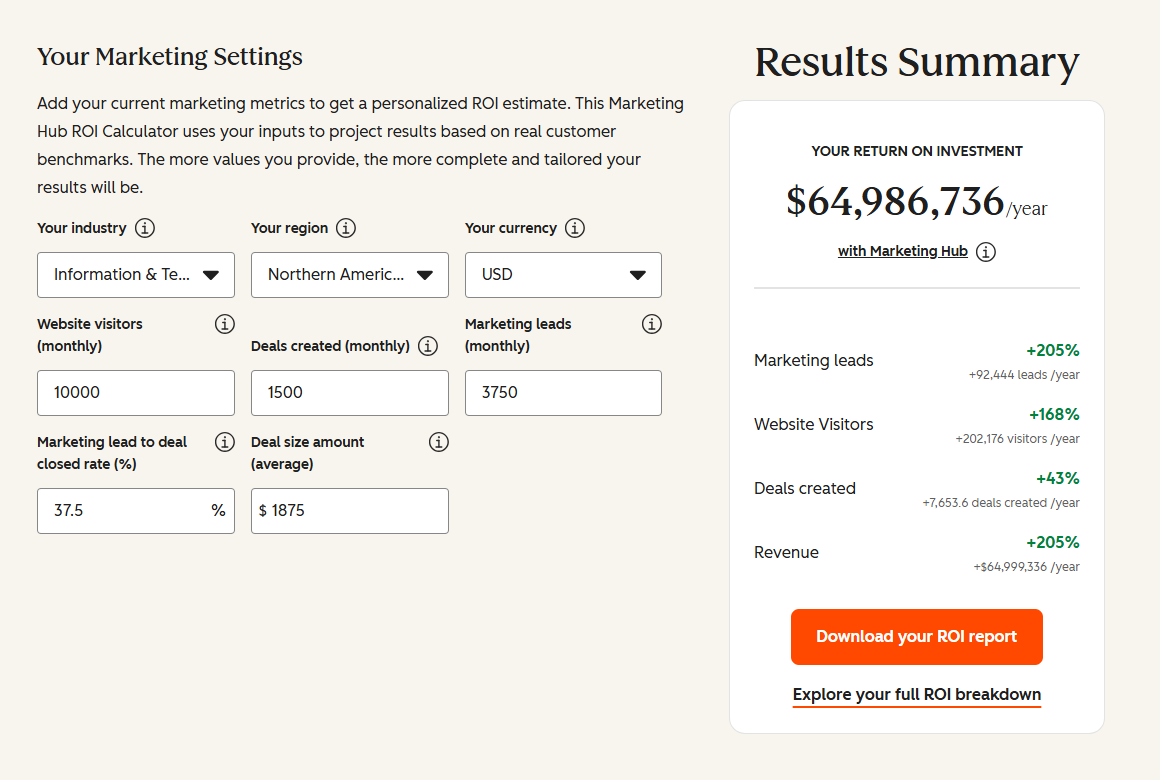
HubSpot vs Salesforce: The Final Verdict
For most growing B2B companies especially those under 500 employees that need unified marketing and sales, faster time to value, and lower total cost of ownership HubSpot is the right architecture in 2026. The unified data model eliminates the integration overhead that kills Salesforce ROI for mid-market teams. The implementation timeline means you’re selling in HubSpot in 8 weeks, not 8 months. And Breeze AI runs across all your Hubs without a separate licensing conversation.
For enterprises with genuine multi-cloud complexity, regulated-industry compliance requirements, 200+ reps with non-standard deal logic, or deep investment in Salesforce’s ecosystem, Salesforce still earns its price. If your sales process genuinely needs Apex-level customization and your CFO needs SOX-grade compliance infrastructure, HubSpot isn’t the answer and pretending otherwise would be dishonest.
Three questions to answer before you decide:
- Does your sales process require custom code or Apex-level logic to function? If yes, evaluate Salesforce seriously before committing to HubSpot.
- Do you need regulated-industry compliance (HIPAA, SOX, FINRA)? If yes, Salesforce’s specialized clouds are worth the premium.
- Can your team staff a dedicated Salesforce admin for ongoing governance? If not, HubSpot’s lower administrative overhead is a real productivity advantage not just a marketing message.

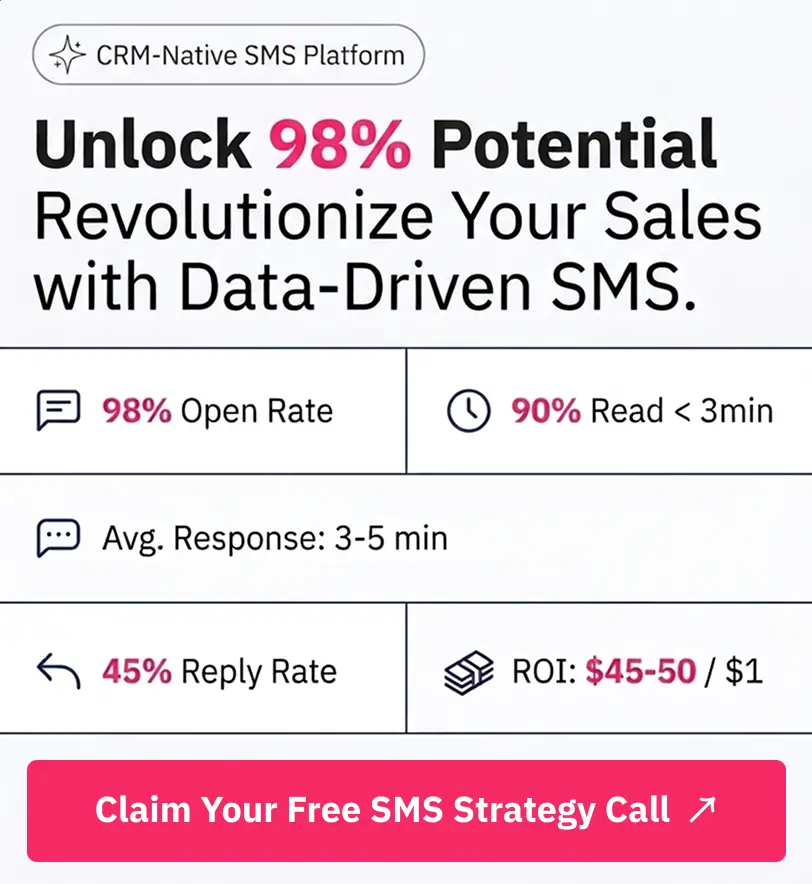
Table of Contents
- HubSpot vs Salesforce at a Glance
- The Architecture Question Nobody Else Is Asking
- HubSpot vs Salesforce Pricing: What You Actually Pay
- Sales Features: Pipeline, Deals, and Automation
- Marketing Features: Where HubSpot’s Architecture Wins
- AI in 2026: Breeze vs Agentforce
- Ease of Use and Implementation
- Integrations and Ecosystem
- Best for HubSpot
- Best for Salesforce
- What Migrating from Salesforce to HubSpot Actually Looks Like
- HubSpot vs Salesforce: The Final Verdict