


If you’re comparing HubSpot vs Brevo, you’re really asking one question: does your business run on a CRM or on email? That’s not a trick question. The answer shapes everything from the tool you pick to how much you’ll spend next year. HubSpot is a revenue platform where email is one capability among many. Brevo is an email and multichannel marketing platform where the CRM is a lightweight add-on. They’re solving different problems.
At Integrate IQ, we’re a HubSpot Diamond Solutions Partner and we’ve migrated clients between CRM platforms, including Brevo, into HubSpot, handling data mapping, workflow reconstruction, and full platform setup. We know where each tool wins, where it breaks, and what it actually costs to switch. Here’s the honest comparison.
| Quick verdict: HubSpot wins for CRM-first teams that need marketing, sales, and service sharing one data layer. Brevo wins for email-first or multichannel teams that don’t need a full CRM and can’t justify HubSpot’s $890/month Professional wall. If you’re managing a growing B2B sales pipeline alongside your email marketing, HubSpot is the right long-term investment. If you’re a newsletter-first brand, ecommerce team, or agency running campaigns for clients, Brevo gives you 80% of the capability at 10% of the cost. |
Free estimator
Know what your HubSpot project costs before the first call.
Select your services and get a transparent price range in minutes. No sales call needed to get a number.
Firm quote after a free discovery call. Build estimate
HubSpot vs Brevo at a Glance
HubSpot is a multi-hub revenue platform that combines Marketing, Sales, Service, Operations, and Commerce in one shared CRM. The CRM is the engine everything else runs on and that’s genuinely different from how most marketing tools work. When a lead fills out a form, gets nurtured via email, books a demo, and becomes a customer, HubSpot tracks every step on one contact record. That full-funnel visibility is the core of its value.
Brevo (formerly Sendinblue) starts from the other direction. It’s an email and multichannel marketing platform that added a lightweight CRM layer over time. It gives you email, SMS, WhatsApp, push notifications, transactional messaging, landing pages, and basic deal tracking under one roof. The price-to-capability ratio is exceptional for teams that primarily need to send and automate communications.
| Plan | HubSpot Price | Brevo Price | Key Difference |
| Free | Free CRM (limited features) | 300 emails/day, unlimited contacts | HubSpot free has no automation; Brevo free includes basic workflows |
| Entry paid | $15/mo (Marketing Starter) | $9/mo (Starter, 5k emails) | Brevo Starter: volume-based; HubSpot Starter: contacts-based + limited automation |
| Growth | $890/mo (Marketing Pro + $3k onboarding) | $18-$65/mo (Business, up to 20k emails) | This is the real pricing cliff: 13x+ difference at the growth tier |
| Advanced | $3,600+/mo (Marketing Enterprise) | $449/mo (Professional) | Enterprise-grade automation and attribution: HubSpot is still the deeper platform |
| Sales CRM | $100/user/mo (Sales Hub Pro) | $31/mo add-on (Sales Essentials) | Brevo’s sales add-on is functional; HubSpot’s is enterprise-grade |
Pricing Comparison: The Real Numbers
This is where the comparison gets brutally honest. HubSpot’s pricing model charges by marketing contacts. Brevo’s charges by email volume. For teams with large lists who don’t email daily, Brevo’s model is dramatically cheaper.
HubSpot Marketing Hub Starter starts at $15/month. That sounds affordable until you hit the automation wall. HubSpot Starter limits you to 10 workflow actions per workflow, no conditional branching, and no lead scoring. Triggering multi-step nurture sequences, behavioral automations, or any kind of if/then logic requires Marketing Hub Professional at $890/month plus a mandatory $3,000 onboarding fee. That’s a $3,890 first-month bill to unlock real automation.
Brevo’s Business plan, at $18 to $65/month depending on email volume, includes full branching automation, behavioral triggers, A/B testing, and landing pages. For a 3-person marketing team sending 20,000 emails/month, Brevo runs about $65/month. HubSpot at comparable automation depth runs $890/month. That’s a 13x gap.
The hidden costs on both sides: Brevo charges extra to remove its branding from emails ($12/month add-on on Starter). Its Sales Essentials upgrade adds $31/month. Phone support requires the Business plan or above. HubSpot’s hidden costs include its mandatory onboarding fees, per-seat charges for Sales Hub, and a $500/month add-on for transactional email functionality that Brevo includes natively on every plan.
| Transactional email: Brevo includes SMTP relay, RESTful API, and transactional email on every plan at no extra cost. HubSpot charges $500/month as a Professional add-on. If your business sends password resets, order confirmations, or any automated triggered messages, Brevo’s pricing model has a structural advantage. |

Turn HubSpot Into A Real-Time SMS Engine with Message IQ
 Two-Way Conversations
 Shared Team Inbox
 Automation Triggers
 Advanced Reporting
 Compliance Tools
- 98% SMS read within 3 min
- 78% Buy from first responder
- 21× More likely to qualify

*MessageIQ is an IntegrateIQ product – built natively for HubSpot by the same team.
Email Marketing Features
Both platforms offer solid email marketing. The difference is in what email means to each of them.
Brevo’s email tooling is the core product: drag-and-drop editor, 40+ templates, detailed campaign stats (heatmaps, click-per-link ratios, geolocation of openers), A/B testing on Business plans, and multichannel send capabilities from one dashboard. Deliverability varies by sending practices on both platforms, with independent tests showing both within range of the 83% industry average.
HubSpot’s email sits inside the CRM, which is where it actually becomes powerful. Smart Content lets you dynamically swap email content based on a contact’s lifecycle stage, industry, or deal status. Sales sequences trigger follow-up emails based on pipeline activity. Multi-touch attribution connects email performance to closed revenue. That’s a different kind of email capability, and it requires HubSpot Professional to access.
Bottom line: For campaign-focused email marketing (newsletters, promotions, ecommerce flows), Brevo is competitive and dramatically cheaper. For lifecycle marketing tied to sales pipeline and revenue attribution, HubSpot’s email tooling is in a different category.
Marketing Automation: The Starter Wall Nobody Talks About

This is the most underreported fact in every HubSpot vs Brevo comparison: HubSpot Starter’s automation is functionally crippled.
On HubSpot Marketing Hub Starter, you get 10 workflow actions per workflow, limited trigger types (delays, notifications, basic list updates, ad audience management), and zero conditional branching. You can’t build a lead nurture sequence that routes contacts differently based on behavior. You can’t score leads. You can’t trigger actions based on deal stage or sales activity. That requires Professional at $890/month.
Brevo’s Business plan at $18/month includes full branching automation with conditional logic, behavioral triggers, lead scoring, and multi-step sequences. For a growth-stage team that genuinely needs marketing automation, Brevo Business delivers more automation capability at its price tier than HubSpot does below the $890 Professional threshold.
The caveat: once you’re at HubSpot Professional, the automation power jumps significantly. Cross-hub workflows that trigger across sales, marketing, and service, programmatic sequences, and revenue-linked automation are HubSpot Professional’s strengths that Brevo can’t match at any price.
CRM and Sales Features
This is the comparison’s clearest divergence. We’ve migrated clients from Brevo to HubSpot specifically because Brevo’s CRM ran out of road when their sales team scaled past a handful of reps.
HubSpot Sales Hub gives you a full-featured B2B CRM: deal pipelines with custom stages, lead scoring, sequence automation, forecasting, custom objects, calculated properties, and a complete activity timeline. At the Professional tier, you get playbooks, coaching tools, and advanced reporting that ties individual rep activity to pipeline outcomes. It’s not a marketing add-on it’s a standalone sales system that competes with Salesforce.
Brevo’s CRM is honest about what it is: a basic pipeline tool for teams whose primary need is email, not complex deal management. The free sales features give you contact tracking and a simple deal view. The Sales Essentials add-on ($31/month) adds task automation, meeting booking, and priority views. The Sales Advanced add-on ($64/month) includes forecasting and advanced reporting. There’s no native lead scoring tied to contact behavior, no custom objects, and no activity timeline that connects marketing and sales touchpoints in one record.
For a 10+ rep B2B sales team: Brevo’s CRM isn’t built for this use case, and pushing it there creates more workarounds than it saves in cost. For a team of 1-3 people who mainly need to track deals alongside their email marketing, Brevo’s sales add-ons are genuinely sufficient. See how our HubSpot CRM migration services handle the transition when teams outgrow their current platform.
Multichannel Marketing: Where Brevo Genuinely Leads
If your marketing strategy extends beyond email into SMS, WhatsApp, push notifications, or live chat, Brevo has a structural advantage that HubSpot can’t match at comparable price points.
Brevo includes SMS campaigns, WhatsApp Business campaigns, web push notifications, and live chat natively across its paid plans. You don’t need a third-party integration or a new contract. A single Brevo Business plan connects all these channels to your contact database and automation logic.
HubSpot requires separate add-ons or third-party integrations for most of these channels. SMS and WhatsApp support exist through HubSpot’s app marketplace but aren’t native, meaning additional setup, potential data sync issues, and extra cost. Live chat is available via Service Hub but at separate Hub pricing.
For ecommerce brands, consumer-facing businesses, or any team running true multichannel campaigns, this is a real Brevo win. Our HubSpot integrations with 300+ platforms can fill these gaps for teams that need HubSpot’s CRM depth alongside multichannel capability, but it requires integration work that Brevo handles natively.
Reporting and Analytics
Brevo’s reporting is campaign-centric: open rates, click rates, heatmaps, geolocation data, A/B test results, and basic ecommerce analytics. It’s solid for measuring email and campaign performance. What it can’t do is connect those campaign metrics to pipeline outcomes or revenue.
HubSpot’s reporting is where the CRM-first architecture pays off. Multi-touch attribution models assign revenue credit to specific marketing touchpoints. Custom dashboards pull pipeline data, sales activity, and marketing performance into a single view. Funnel analytics show drop-off at every stage from first touch to closed deal. If your CMO needs to show the board how email campaigns contributed to quarterly revenue, Brevo requires a BI tool to answer that question. HubSpot Professional answers it natively.
The honest caveat: HubSpot’s advanced reporting requires Professional ($890/month). If you’re on Starter, reporting is limited to basic dashboards and pre-built reports. The attribution and custom reporting that make HubSpot genuinely powerful for revenue teams are Professional-tier features.
Integrations and Ecosystem
HubSpot’s app marketplace lists 1,500+ native integrations: Salesforce, Slack, Stripe, Shopify, Jira, Google Ads, LinkedIn Ads, Zoom, Docusign, Outreach, and dozens more. For teams running a multi-tool stack, this depth matters. Connections to existing tools are usually native, maintained, and configurable without custom code.
Brevo integrates with 150+ tools, with strong native connections to Shopify, WooCommerce, WordPress, and Salesforce. The Brevo API is developer-friendly, and Zapier fills many gaps. But for teams with complex tech stacks, Brevo’s integration library becomes a constraint. When we migrate clients from Brevo to HubSpot, the integration rebuild is often the most time-intensive part, because workflows that relied on Zapier bridges get replaced with native HubSpot connections. Our guide on field mapping and data transformation covers why this matters in practice.
Best for HubSpot
- B2B companies with a dedicated sales team (5+ reps) that need pipeline management, deal forecasting, lead scoring, and sales sequences all talking to their marketing data. Brevo’s CRM runs out of road at this scale, and the cost of stitching together workarounds exceeds the cost of HubSpot Professional.
- Revenue teams that need to attribute marketing spend to closed deals. If your CMO, CFO, or board asks “which campaigns drove revenue this quarter,” HubSpot Professional gives you a direct answer. Brevo gives you campaign-level stats that stop short of pipeline.
- Companies planning to add a Service Hub layer for customer support or a Commerce Hub layer for billing and subscriptions. HubSpot’s cross-hub integration is genuinely powerful when all the pieces are in play. That architecture doesn’t exist in Brevo.
Best for Brevo
- Email-first marketing teams with contact lists over 10,000 who send campaigns weekly. Brevo’s volume-based pricing model means the cost doesn’t balloon as your list grows the way HubSpot’s contact-based pricing does. At 50,000 contacts, the savings are substantial.
- Multichannel marketers who need email, SMS, WhatsApp, and transactional email in one platform without paying for separate add-ons or stitching integrations together. For consumer brands, ecommerce, and agencies managing client campaigns, Brevo’s native multichannel is a real structural advantage.
- Early-stage startups and small businesses that need real marketing automation but genuinely can’t justify $890/month for HubSpot Professional. Brevo Business gives you branching automation, behavioral triggers, and landing pages for a fraction of the cost.
If you’re in a similar situation to teams we’ve worked with in industries like banking and finance or recruiting and staffing, the Brevo-to-HubSpot transition often happens at a predictable inflection point: when the sales team demands a real CRM and email alone stops being enough.
What Migrating from Brevo to HubSpot Looks Like
We’ve run this migration. Here’s what actually moves cleanly and what needs rebuilding from scratch.
What Transfers
- Contacts and companies: export from Brevo as CSV, map to HubSpot contact properties during import. Standard fields (name, email, phone, company) move cleanly.
- Lists and segments: Brevo segments can be recreated as HubSpot Active Lists using the same logic. It’s manual but straightforward.
- Basic deal data: if you’re using Brevo’s CRM, deal records export to CSV and import into HubSpot deal properties.
- Email templates: HTML templates can be migrated to HubSpot’s template system, though you’ll need to recode for HubSpot’s template language (HubL).
What Needs Rebuilding
- Automation workflows: Brevo’s automation logic doesn’t map 1:1 to HubSpot Workflows. The trigger structures, branch conditions, and action types differ enough that rebuilding from scratch is usually faster than attempting to translate. This is the most time-intensive part of the migration.
- Transactional email setup: your SMTP relay and API keys in Brevo need to be replaced with HubSpot’s transactional email configuration (or a third-party SMTP service if you’re not on HubSpot’s $500/month add-on). All triggered email templates need to be rebuilt.
- Custom contact attributes: Brevo uses custom attributes; HubSpot uses custom properties. The data moves, but the structure often needs rethinking to take advantage of HubSpot’s custom objects and property groups.
- Engagement data: historical open rates and click data from Brevo don’t import into HubSpot’s engagement timeline. This affects list hygiene and suppression logic on the new platform.
- Lead scoring rules: if you built contact scoring in Brevo, it needs to be rebuilt as a HubSpot lead scoring model, which uses a different scoring logic framework.
Our typical HubSpot onboarding support for Brevo migrations runs 8 weeks from kickoff to full platform handover. That covers data migration, workflow rebuild, integration reconnection, and team training. The most common CRM migration mistakes we see happen when teams underestimate the automation rebuild scope and skip the engagement data clean-up before migrating.
See your 12-month revenue impact with HubSpot CRM
Enter your current numbers — visitors, leads, deal size — and get a personalized projection based on real HubSpot customer benchmarks.
Calculate My ROI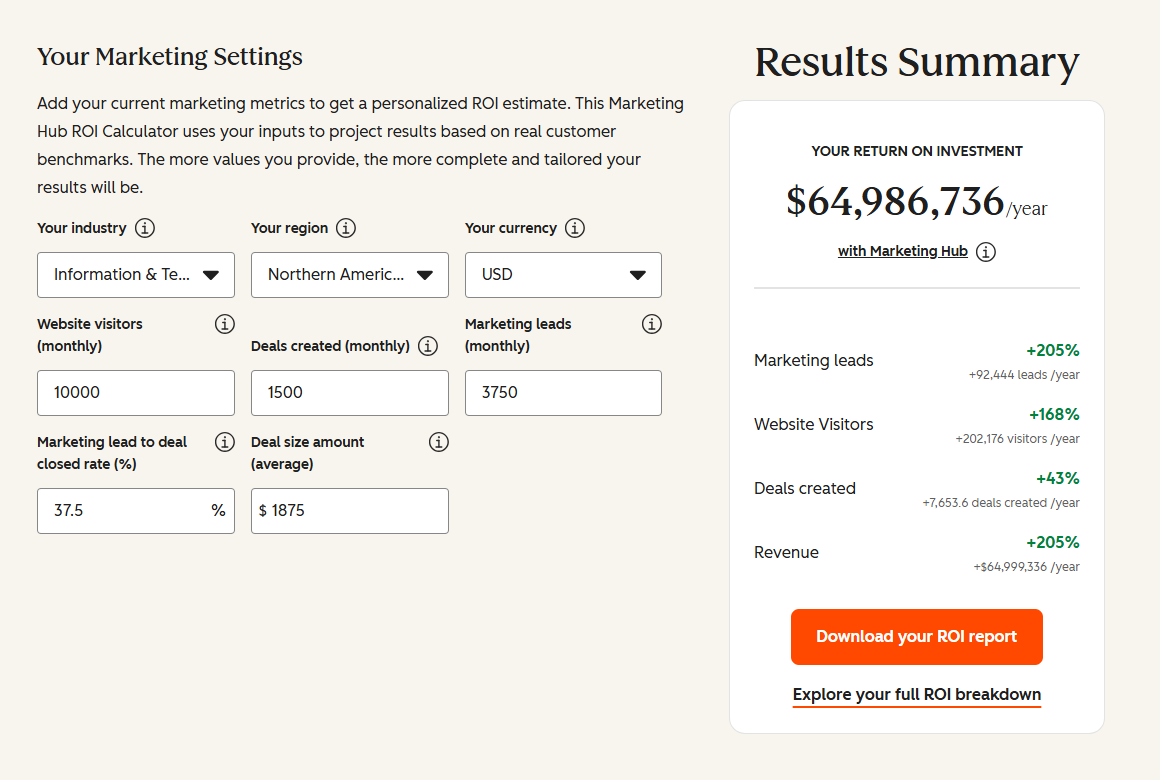
HubSpot vs Brevo: The Final Verdict
These tools are genuinely strong at different things, and that’s the honest answer no vendor comparison will give you.
HubSpot wins when your business needs marketing, sales, and service activity to share one customer record. The CRM is the foundation, and the reporting, attribution, and cross-hub automation built on top of it deliver value that Brevo can’t replicate without bolting on multiple additional tools. For B2B companies with a real sales process, HubSpot Professional’s investment is justifiable. For companies running Marketing + Sales + Service Hubs, the compound value is significant.
Brevo wins when email and multichannel marketing is the core job, the sales team is small or doesn’t need a sophisticated CRM, and the HubSpot Professional pricing wall doesn’t make sense for the stage the business is at. It’s a genuinely capable platform for what it’s designed to do, and the pricing model is well-suited to large lists with moderate sending frequency.
Three questions to ask before deciding
(1) Do you need marketing attribution connected to pipeline and revenue, or are campaign-level metrics enough?
(2) Does your sales team need sequences, lead scoring, and deal forecasting, or basic pipeline tracking?
(3) Are you sending multichannel campaigns (SMS, WhatsApp) natively, or is email the primary channel? The answers point clearly to one platform or the other.

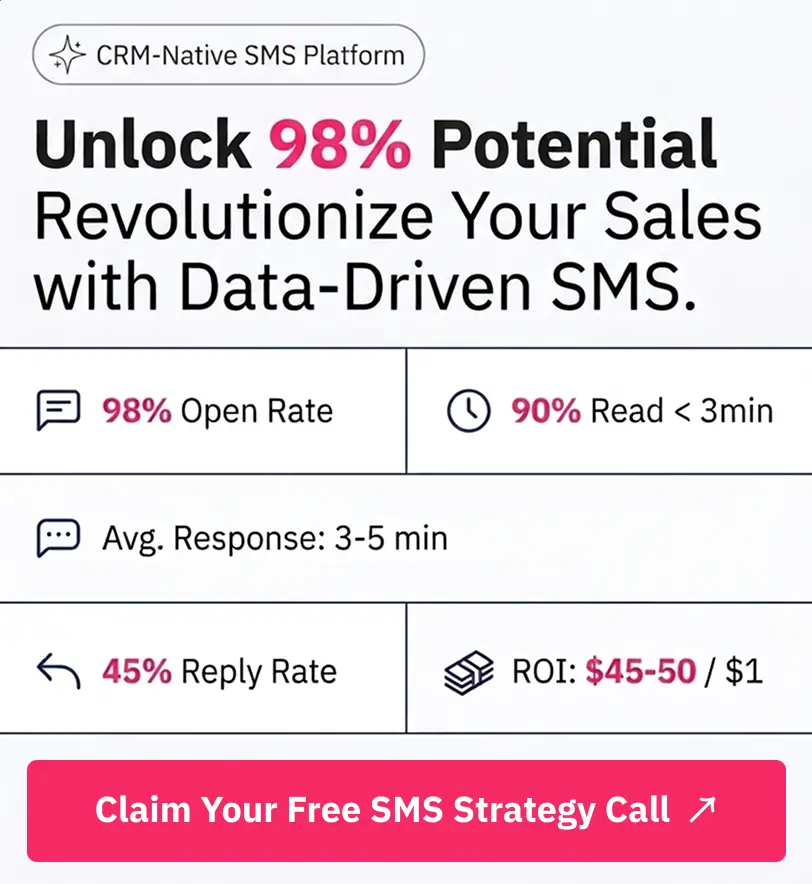
Table of Contents
- HubSpot vs Brevo at a Glance
- Pricing Comparison: The Real Numbers
- Email Marketing Features
- Marketing Automation: The Starter Wall Nobody Talks About
- CRM and Sales Features
- Multichannel Marketing: Where Brevo Genuinely Leads
- Reporting and Analytics
- Integrations and Ecosystem
- Best for HubSpot
- Best for Brevo
- What Migrating from Brevo to HubSpot Looks Like
- HubSpot vs Brevo: The Final Verdict