












Free estimator
Know what your HubSpot project costs before the first call.
Select your services and get a transparent price range in minutes. No sales call needed to get a number.
Firm quote after a free discovery call. Build estimate
HubSpot vs Marketo: Features, Pricing & Pros Compared
If you are stuck between HubSpot and Marketo, you are not picking between two versions of the same thing. You are picking between two different operating models for your entire go to market motion.
HubSpot is an all-in-one platform where marketing, sales, and service share one CRM and one data layer. Marketo (now Adobe Marketo Engage) is a dedicated marketing automation engine that runs alongside a separate CRM, usually Salesforce. That single architectural difference shapes everything else in this comparison: pricing, time to launch, who you need to hire to run it, and what happens when you want to move.
Quick verdict: HubSpot wins for most B2B teams in 2026, especially companies under 500 employees that want speed, transparent pricing, and one platform for the full revenue motion. Marketo wins if you’re a 500+ employee enterprise already deep in Salesforce and Adobe Experience Cloud, you have dedicated marketing operations staff, and your programs genuinely need multi-model scoring, Velocity scripting, and token-driven personalization at scale.
We’re Integrate IQ, a HubSpot Diamond Solutions Partner. We’ve migrated clients between Marketo and HubSpot in both directions and integrated both platforms into 300+ other tools. This comparison is the verdict we give our own prospects when they ask which one fits their team. We’ll cover pricing with real numbers, the eight dimensions that actually matter, where each platform genuinely wins, and what moving from Marketo to HubSpot looks like in week-by-week terms.
HubSpot vs Marketo at a Glance

HubSpot Marketing Hub is a marketing automation platform built on top of HubSpot’s native Smart CRM, designed to run marketing, sales, and service from one data layer. It targets SMB through mid-market teams that want fast time-to-value, transparent pricing, and an all-in-one stack.
Adobe Marketo Engage is a dedicated marketing automation engine built for enterprise B2B teams with complex, high-volume lead lifecycle programs. It assumes you already run a separate CRM (typically Salesforce) and have dedicated marketing operations staff to administer it.
The core difference: HubSpot replaces your stack. Marketo plugs into one.
| Factor | HubSpot | Marketo Engage |
| Best for | B2B teams under 500 employees | Enterprise B2B with dedicated MOps |
| Starting price | Free CRM; Marketing Hub Starter ~$20/seat | Quote-based, ~$895+/month base |
| Free tier | Yes (CRM + limited marketing) | No |
| CRM included | Yes, native | No, requires separate CRM |
| Typical launch time | Weeks | 60 to 90 days |
| Core strength | Speed, unified data, transparent pricing | Enterprise depth, multi-model scoring, ABM |
| Core limitation | Pricing climbs at higher contact tiers | High year-one TCO, steep learning curve |

Turn HubSpot Into A Real-Time SMS Engine with Message IQ
 Two-Way Conversations
 Shared Team Inbox
 Automation Triggers
 Advanced Reporting
 Compliance Tools
- 98% SMS read within 3 min
- 78% Buy from first responder
- 21× More likely to qualify

*MessageIQ is an IntegrateIQ product – built natively for HubSpot by the same team.
What HubSpot Is and Who It’s Built For
HubSpot started as an inbound marketing tool in 2006 and grew into a full platform organized around six Hubs: Marketing, Sales, Service, Operations, Commerce, and Content. All of them sit on top of HubSpot Smart CRM, which is included free.
For this comparison, Marketing Hub is the direct counterpart to Marketo. It handles email campaigns, forms, landing pages, lead capture, workflows, lead scoring, ad management, social, and reporting. Smart CRM provides the contact, company, and deal data those marketing tools run on, with Sales Hub and Service Hub layering customer-facing teams on the same records.
HubSpot’s strength is the architecture. Marketing, sales, and service work on one set of contacts. Reporting pulls from one data layer. AI features (Breeze Copilot, Breeze Agents, predictive scoring) work natively because they have full visibility into the funnel. Onboarding is structured and most teams launch their first real campaigns within a few weeks of go-live.
The honest limitation: HubSpot’s pricing climbs faster than people expect once marketing contacts grow into the tens of thousands or when you add multiple Hubs at Enterprise tier. Lead scoring depth and native ABM capabilities also trail Marketo at the enterprise end. HubSpot has narrowed those gaps significantly in 2025-2026, but for organizations running 10+ parallel scoring models or deeply customized program hierarchies, the gap is still real.
What Marketo Is and Who It’s Built For
Marketo launched in 2006 as a lead management and marketing automation platform. Adobe acquired it for $4.7 billion in 2018 and renamed it Adobe Marketo Engage. It now sits inside the Adobe Experience Cloud alongside Adobe Analytics, Real-Time CDP, and Marketo Measure (formerly Bizible) for revenue attribution.
Marketo is marketing automation only. It expects a separate CRM, almost always Salesforce, with bi-directional sync for leads, contacts, and campaigns. Inside the platform, work happens through a program-based architecture where campaigns are organized as reusable program assets that can be cloned across regions, product lines, and buyer stages.
Marketo’s strength is depth and governance. Unlimited custom score fields, multi-model scoring running in parallel, Velocity scripting for dynamic email content, REST API access for programmatic campaign creation, custom object triggers, and token-based personalization that drives variables across every channel in a program. For enterprise marketing operations teams running complex demand-gen motions across multiple regions or product lines, Marketo handles complexity that breaks lighter platforms.
The honest limitation: Marketo treats marketing automation as an engineering discipline. The interface is dated, the learning curve is steep, and most organizations need at least one certified Marketo admin. Implementation routinely runs 60 to 90 days, and total year-one cost (license, implementation, Salesforce, MOps headcount) commonly lands in the $50,000 to $200,000+ range. Pricing is quote-based across Select, Prime, and Ultimate tiers.

Pricing: HubSpot Publishes Numbers, Marketo Sends You to Sales
Pricing is where the first real fork shows up. HubSpot publishes Marketing Hub pricing on its site: Starter around $20 per seat per month, Professional at $890 per month for three core seats, and Enterprise at $3,600 per month for five core seats. Marketing contact tiers stack on top of seat costs and that’s where bills can grow faster than teams expect.
Marketo doesn’t publish list pricing. Industry benchmarks put the Select tier at around $895 to $1,000 per month base, with Prime and Ultimate higher. Mid-market deployments are widely reported in the $3,000 to $5,000 per month range once database size and tier are factored in. Implementation alone routinely runs $10,000 to $75,000 or more depending on scope. Add Salesforce licenses ($25 to $300 per user per month), training, and at least one dedicated marketing operations specialist, and year-one total cost of ownership commonly clears $100,000 to $200,000 for mid-market deployments.
Verdict: HubSpot wins on cost transparency and year-one TCO for nearly every team under 1,000 employees. Marketo earns its price tag at enterprise scale where program complexity and program-cloning needs genuinely justify the spend, but most teams paying Marketo prices aren’t using the features that justify them.
Ease of Use and Time to Launch
HubSpot scores about 4.5 out of 5 for ease of use on G2 and Capterra. The visual workflow builder, drag-and-drop email composer, and in-app onboarding guides mean most marketers ship their first campaign within two to three weeks of go-live. New hires get productive in days, not months. HubSpot Academy provides free certifications that flatten the ramp.
Marketo trades simplicity for control. The interface uses a modular structure (Marketing Activities, Design Studio, Database, Analytics, Admin) that takes time to learn. Adobe documentation recommends HTML experience and IT involvement for setup. Most organizations bring in a certified Marketo consultant for the first 60 to 90 days, and ongoing administration usually requires at least one dedicated marketing operations specialist. Once teams cross that learning curve, Marketo runs sophisticated programs reliably, but the curve is real.
Verdict: HubSpot wins decisively. Time-to-value is often four to six weeks for HubSpot versus three to six months for Marketo, and that gap compounds into pipeline impact.
Lead Scoring and Nurturing
Both platforms score leads and nurture them through automated journeys. The depth is where they part ways.
HubSpot supports manual lead scoring across all tiers and predictive lead scoring at Enterprise. You can build score-based workflows that route, segment, and trigger handoffs to sales. For most B2B teams, the depth is sufficient. HubSpot has also added AI-driven scoring through Breeze in 2026, which has narrowed the gap noticeably.
Marketo’s scoring is the deepest in the market. You get unlimited custom score fields, multi-model scoring (engagement + fit + behavior + product-interest scores running in parallel), and granular triggers tied to behavioral signals, custom object data, and Salesforce data. For teams running ABM with buying committees, where one contact triggers different scoring logic depending on account state, Marketo handles complexity HubSpot doesn’t try to.
Verdict: Marketo wins on raw scoring depth. HubSpot wins on time-to-useful-score. Most B2B teams don’t need what Marketo offers here, but teams that genuinely do should pick Marketo.
Email and Automation Workflows
HubSpot’s email builder uses drag-and-drop with dynamic personalization tokens, A/B testing, deliverability tools, and live segmentation from CRM data. Workflows use a visual canvas with branching logic and cross-Hub triggers (a deal stage change in Sales Hub triggers a marketing workflow, for example). Marketers ship campaigns without engineering help.
Marketo’s automation lives inside Smart Campaigns and Engagement Programs. The depth is in the program-based architecture: clone a multi-asset program across regions, swap tokens for localization, and update campaign settings centrally. Velocity scripting lets you embed dynamic logic inside email content that goes well beyond standard personalization tokens. REST API access supports programmatic campaign creation for teams that need it.
Verdict: HubSpot wins on speed and usability for most teams. Marketo wins on technical ceiling and program-cloning at scale. The honest call: if your campaigns are similar enough to clone monthly across regions or product lines, Marketo’s program model pays for itself. If you’re building one campaign at a time, you’re not using what Marketo gives you.
CRM and Data Architecture (The Dimension Most Pages Skip)
This is the dimension every other comparison page glosses over and it’s the most important one.
HubSpot includes Smart CRM as the foundation. Contacts, companies, deals, tickets, and custom objects all live in one place. Marketing Hub doesn’t sync with the CRM; it runs on the CRM. There’s no integration to maintain, no field mapping to manage, no sync lag. Marketing data, sales data, and service data are the same data.
Marketo doesn’t have a CRM. It connects to one, usually Salesforce, via a bi-directional native connector. The sync is real-time for leads, contacts, and campaigns, and one-way for accounts, opportunities, users, and custom objects. The connection is mature and reliable, but it’s still a connection: you maintain field mappings, manage sync rules, and troubleshoot data hygiene across two systems.
Operationally, this changes everything. With HubSpot you maintain one platform. With Marketo + Salesforce you maintain two systems, two contracts, two admin teams, two sets of reporting definitions, and the integration between them. We’ve helped clients consolidate Salesforce + Marketo stacks into HubSpot and the operational drop is usually 30% to 50% of the time their old MOps team spent reconciling data between platforms.
Verdict: HubSpot wins unless Salesforce is non-negotiable. If Salesforce is the immovable system of record and consolidation isn’t on the table, Marketo is the correct answer for the marketing side.
Reporting and Attribution
HubSpot ships with custom reports, interactive dashboards, multi-touch revenue attribution, and customer journey analytics natively. Because the CRM and marketing tools share data, attribution works without setup gymnastics. Data Studio pulls in external datasets for teams that need to combine HubSpot with warehouse data.
Marketo’s reporting is powerful but layered. The core platform provides Revenue Cycle Analytics and program performance reports. Deeper multi-touch attribution and B2B revenue attribution typically require Marketo Measure (formerly Bizible) as an add-on, plus integration with Salesforce reporting or a BI tool like Tableau. The combined view is sophisticated, but you’re stitching multiple tools together.
Verdict: Tie, with a caveat. HubSpot wins on ease and unified reporting. Marketo wins on depth once Marketo Measure and Adobe Analytics are layered in. For most teams, HubSpot’s native attribution clears the bar. Enterprise teams with mature analytics functions may prefer Marketo’s depth even with the add-on cost.
AI Features: Breeze vs Adobe Sensei
HubSpot’s Breeze AI suite sits inside the platform, not as a bolt-on. Breeze Copilot drafts email copy, builds workflows, and generates campaign ideas. Breeze Agents prospect, qualify, and engage leads. The AI Content Writer handles blog posts and landing pages. Predictive lead and account scoring run natively. AEO (answer engine optimization) tools help content rank in AI search results. Everything draws on the unified CRM data, which makes the AI usefully context-aware.
Marketo accesses Adobe’s broader AI stack through Adobe Experience Platform and Adobe Sensei. Predictive content recommendations, audience segmentation, and integration with Adobe Analytics and Adobe Target are powerful for teams already inside Adobe Experience Cloud. Inside Marketo Engage itself, the native AI features focus mostly on send-time optimization and basic content recommendations. Teams not already on Adobe’s platform get a narrower AI experience.
Verdict: HubSpot wins on embedded AI for marketing teams that aren’t already on Adobe. Marketo wins if you’re already invested in Adobe Experience Cloud and want to use the broader AI stack across marketing, analytics, and content. For most B2B teams, HubSpot’s Breeze is more immediately useful because it ships native to the platform.
Integrations and Ecosystem
HubSpot’s app marketplace has 2,000+ integrations covering CRM, sales tools, ads, customer support, finance, and ops. The Operations Hub adds programmable workflows and a custom code action for builds that go beyond pre-built connectors. The ecosystem is broad and the development model is approachable.
Marketo’s integration story splits in two. Inside the Adobe Experience Cloud and Salesforce ecosystems, the connections are deep and bi-directional. Outside those ecosystems, Marketo’s native marketplace is smaller, and teams often rely on iPaaS tools (Workato, Zapier, custom REST API builds) for everything else.
As a HubSpot Diamond Solutions Partner, we’ve built custom integrations connecting HubSpot to 300+ platforms across CRM, ERP, accounting, field service, healthcare, finance, and recruiting. The native marketplace plus custom build options cover almost any scenario. When clients run Marketo + Salesforce + a third system, the third integration is usually where things break, and that’s where we get the call.
Verdict: HubSpot wins on breadth. Marketo wins inside the Adobe + Salesforce stack.
ABM Capabilities
Account-based marketing is one of the few dimensions where Marketo’s edge is genuine.
HubSpot has native ABM tooling: target account lists, account-based workflows, account-level reporting, and integrations with intent data providers. For B2B teams running ABM as part of a broader demand-gen motion, it works well and avoids the cost of a separate ABM platform.
Marketo’s ABM is deeper. Account hierarchy support, account-level scoring, buying-committee tracking, and program structures designed for multi-stakeholder, multi-touch campaigns are part of how the platform was built. For organizations where ABM is the primary motion (not a supplement), Marketo handles complexity HubSpot doesn’t try to.
Verdict: Marketo wins for enterprise B2B teams where ABM is the core motion. HubSpot wins when ABM is one channel among several.
Customer Support and Training
HubSpot offers tiered support: Starter customers get email and chat, Professional adds phone support, Enterprise adds technical account managers. HubSpot Academy provides free certifications, and the documentation is one of the strongest in the industry. Most ramping happens self-service.
Marketo’s support tiers come quote-based and often involve add-on costs for premium support. The Adobe Experience League documentation is detailed but technical, and most organizations supplement it with Marketo certifications, an external consultant, or both. Marketo’s community is strong but smaller than HubSpot’s.
Verdict: HubSpot wins on accessibility and breadth of free training. Marketo wins on technical depth for teams already inside the Adobe documentation universe.
HubSpot vs Marketo: Side-by-Side Comparison
Quick reference across every dimension we covered. The Winner column reflects the call we’d make for a typical B2B buyer evaluating both platforms.
| Dimension | HubSpot | Marketo Engage | Winner |
| Architecture | Marketing + CRM + Sales + Service unified | Marketing automation only, separate CRM required | HubSpot |
| Starting price | Free CRM; Marketing Hub Pro $890/mo | ~$895/mo base, quote-based | HubSpot |
| Year-1 TCO (mid-market) | ~$80,000 typical | ~$100,000 to $200,000+ | HubSpot |
| Implementation time | Weeks to first campaign | 60 to 90 days | HubSpot |
| Ease of use (G2) | 4.5/5 | Lower, learning curve real | HubSpot |
| Lead scoring depth | Standard + predictive at Enterprise | Unlimited multi-model scoring | Marketo |
| Email & automation | Visual builder, branching workflows | Program-based, Velocity scripting | HubSpot for most teams |
| CRM integration | Native Smart CRM included | Bi-directional Salesforce sync | HubSpot |
| Reporting & attribution | Native multi-touch attribution | Revenue Cycle Analytics + Marketo Measure | Tie |
| AI features | Breeze AI embedded | Adobe Sensei via Experience Cloud | HubSpot |
| Integrations | 2,000+ native apps | Strong in Adobe + Salesforce stack | HubSpot |
| ABM capabilities | Native ABM tools | Deep enterprise ABM | Marketo |
| Customer support | Tiered, with free Academy | Quote-based, add-on tiers | HubSpot |
When HubSpot Is the Better Choice
HubSpot is the right call for the following teams:
B2B teams under 500 employees that want marketing, sales, and service on one platform
If your operating model is one revenue team running one funnel, HubSpot’s unified architecture removes the data reconciliation tax. We’ve seen clients go from spending 30 hours a month reconciling Salesforce and Marketo data to spending zero, because the underlying CRM and marketing tools are the same system.
Companies without dedicated marketing operations staff
HubSpot is designed for marketers to administer themselves. If you don’t have a certified Marketo admin on staff and don’t plan to hire one, HubSpot is the safer bet. Teams launch campaigns in weeks instead of waiting for technical resources.
Organizations consolidating a fragmented stack
If you’re running a separate CRM, separate marketing automation tool, separate reporting tool, and separate service desk, HubSpot lets you consolidate into one platform with one contract. We routinely take clients from 4-5 tools down to HubSpot plus one or two complementary systems.
Teams that need transparent pricing for procurement
HubSpot publishes its prices. Finance teams can model year-one and year-three costs without going through a sales cycle. Marketo’s quote-based approach makes budgeting harder, especially for organizations that don’t already have a procurement relationship with Adobe.
Companies running inbound, content-led, or product-led growth motions
HubSpot’s tooling (CMS, blog, SEO, AEO, social, ads, forms, landing pages, AI content) is built for inbound. If your demand engine is inbound-first rather than outbound-led, you’ll use more of HubSpot’s surface area.
When Marketo Is the Better Choice
This section is non-negotiable on a credible comparison. Marketo genuinely wins for some teams, and pretending otherwise wastes everyone’s time.
Enterprise B2B teams with dedicated marketing operations staff and Salesforce as the system of record
If you’re a 500+ employee organization where Salesforce isn’t going anywhere and you already employ certified marketing ops specialists, Marketo’s depth pays for itself. The native Salesforce connector and program-based architecture are designed for exactly this environment.
Organizations already invested in Adobe Experience Cloud
If you run Adobe Analytics, Real-Time CDP, Adobe Target, and Marketo Measure, Marketo Engage slots in as the marketing automation piece of a stack that’s already aligned. The integration depth across Adobe products is genuine, and the AI capabilities through Adobe Sensei are stronger inside that ecosystem.
Teams running complex multi-region, multi-product demand programs
Marketo’s program model lets you clone a campaign structure across regions, product lines, or buyer stages and centrally manage tokens for localization. For teams running 50+ active programs across multiple geographies, this scales better than rebuilding workflows one at a time. HubSpot’s workflow builder can handle this with effort, but it’s not what the architecture was designed for.
Sophisticated ABM motions with multi-model scoring
If your ABM strategy requires multiple scoring models running in parallel (engagement, fit, intent, product-interest), tracking buying committees across accounts, and integrating with intent data providers at the account level, Marketo handles that complexity natively. HubSpot has narrowed this gap in 2026 but Marketo still leads at the deepest end.
What Migrating from Marketo to HubSpot Actually Looks Like
This is the section most comparison pages skip and the reason we’re qualified to write it. We’ve migrated clients from Marketo to HubSpot multiple times. Here’s what actually happens.
Typical timeline: 8 weeks from kickoff to go-live
That’s our standard delivery. Smaller migrations close faster; complex ones with custom Velocity scripts or 50+ active programs can run 10 to 12 weeks. The 8-week timeline assumes data hygiene work happens in parallel with technical setup.
What data carries over cleanly
Contacts, companies, lead activities, email engagement history, list memberships, custom field values, and consent/compliance records migrate cleanly with the right field mapping. Standard email templates can usually be rebuilt in HubSpot’s drag-and-drop editor with no loss of functionality.
What needs to be rebuilt
Five things consistently need rebuilding rather than direct migration:
- Marketo programs become HubSpot workflows. The program-based architecture doesn’t map one-to-one; we typically rebuild the logic in HubSpot workflows and document the equivalences.
- Velocity scripts become smart content rules. HubSpot doesn’t support Velocity scripting; dynamic email logic gets translated into HubSpot’s smart content and personalization tokens.
- Multi-model scoring collapses into HubSpot’s scoring framework, sometimes supplemented with predictive scoring at Enterprise tier. Teams running 5+ parallel scoring models in Marketo need to consolidate.
- Custom tokens become HubSpot personalization tokens or custom property references. The syntax differs and centralized program tokens require workarounds.
- Salesforce sync continuity. If you’re keeping Salesforce alongside HubSpot, we configure the HubSpot-Salesforce integration to maintain the same field-level sync rules you had with the Marketo-Salesforce connector. We’ve documented our approach to the HubSpot and Salesforce integration in detail.
What typically improves post-migration
Three operational wins show up almost every time: time spent reconciling marketing and CRM data drops sharply because both tools share one data layer, time-to-launch on new campaigns drops from days to hours, and ongoing MOps headcount needs decrease (most clients keep the same headcount but redirect to higher-value work).
What requires extra attention
Three things to plan for: deliverability reputation transfer (we manage IP warming and domain authentication), historical reporting continuity (we recommend keeping Marketo accessible read-only for 90 days for historical reports), and team training (HubSpot is easier but it’s still a new tool; we run structured onboarding).
See your 12-month revenue impact with HubSpot CRM
Enter your current numbers — visitors, leads, deal size — and get a personalized projection based on real HubSpot customer benchmarks.
Calculate My ROI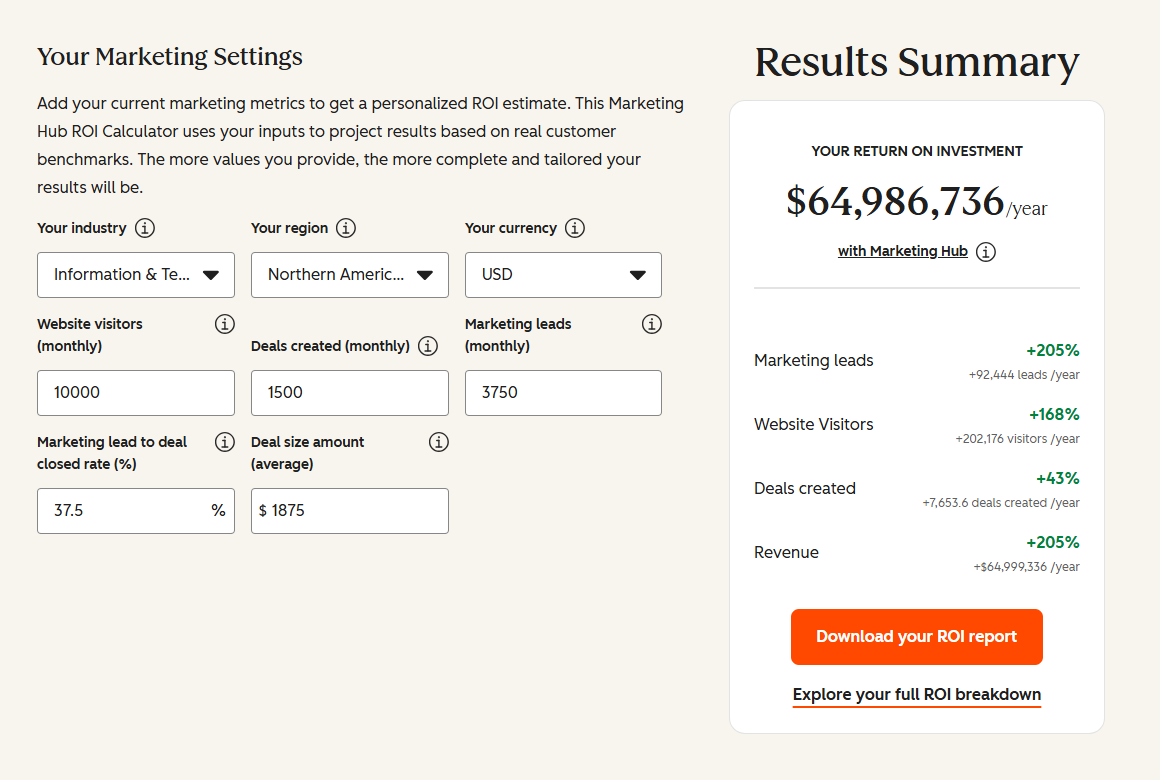
HubSpot vs Marketo: The Final Verdict
For most B2B teams in 2026, HubSpot is the right choice. The unified CRM and marketing architecture, transparent pricing, four-to-six-week time-to-launch, and embedded AI features collectively make HubSpot the lower-risk, higher-velocity option. Most teams paying Marketo prices aren’t using the features that justify them.
Marketo remains the right choice for a narrower, real category of buyers: enterprises with dedicated marketing operations, Salesforce as the immovable CRM, Adobe Experience Cloud already in place, and program complexity (multi-region, multi-model scoring, deep ABM) that genuinely uses what Marketo gives you. For those teams, switching to HubSpot would be a downgrade. We tell them so.
If you’re still on the fence, three questions clarify the answer:
- Do you have a dedicated marketing operations specialist on staff today? If no, HubSpot is the safer choice.
- Is Salesforce the immovable system of record? If yes, evaluate whether you actually need Marketo’s depth or whether HubSpot + Salesforce integration covers your needs at lower TCO.
- Are you running 25+ active marketing programs cloned across regions or product lines? If yes, Marketo’s program model earns its price. If no, HubSpot will probably run faster and cheaper.

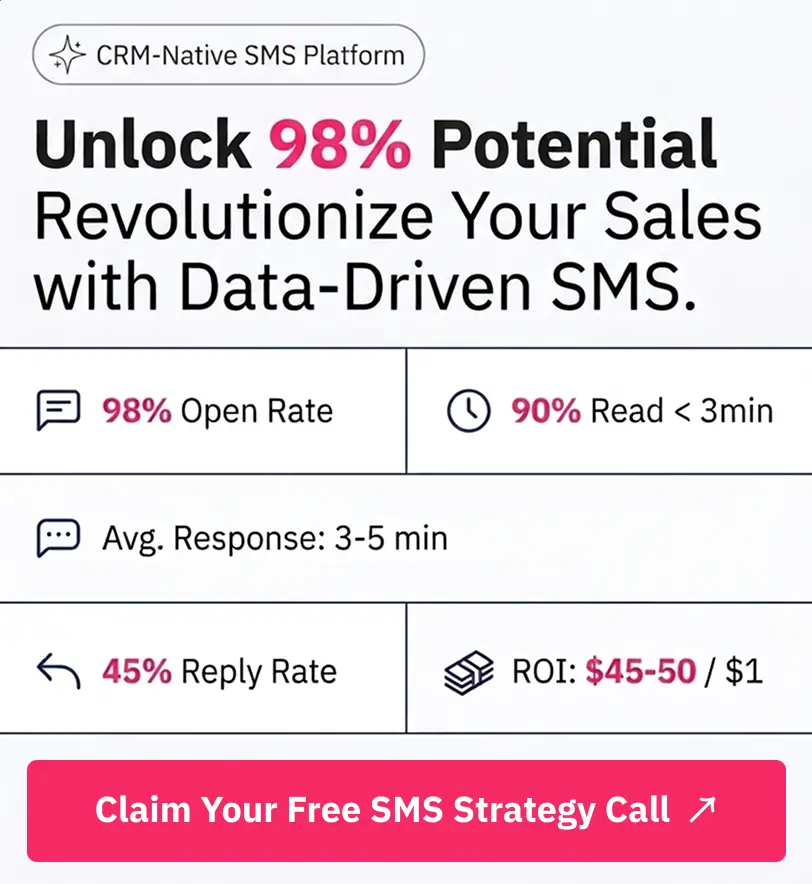
Table of Contents
- HubSpot vs Marketo: Features, Pricing & Pros Compared
- HubSpot vs Marketo at a Glance
- What HubSpot Is and Who It’s Built For
- What Marketo Is and Who It’s Built For
- Pricing: HubSpot Publishes Numbers, Marketo Sends You to Sales
- Ease of Use and Time to Launch
- Lead Scoring and Nurturing
- Email and Automation Workflows
- CRM and Data Architecture (The Dimension Most Pages Skip)
- Reporting and Attribution
- AI Features: Breeze vs Adobe Sensei
- Integrations and Ecosystem
- ABM Capabilities
- Customer Support and Training
- HubSpot vs Marketo: Side-by-Side Comparison
- When HubSpot Is the Better Choice
- B2B teams under 500 employees that want marketing, sales, and service on one platform
- Companies without dedicated marketing operations staff
- Organizations consolidating a fragmented stack
- Teams that need transparent pricing for procurement
- Companies running inbound, content-led, or product-led growth motions
- When Marketo Is the Better Choice
- What Migrating from Marketo to HubSpot Actually Looks Like
- HubSpot vs Marketo: The Final Verdict