









Expert HubSpot CRM Migration Service: Zero Data Loss, Full History, 8 Weeks

Our HubSpot CRM migration service moves complex environments from Salesforce, Microsoft Dynamics, Oracle, Zoho and legacy CRMs with zero data loss, full historical context preserved and go-live executed during a pre-agreed low-traffic window. We are the HubSpot data migration partner B2B teams call when they cannot afford to get it wrong.

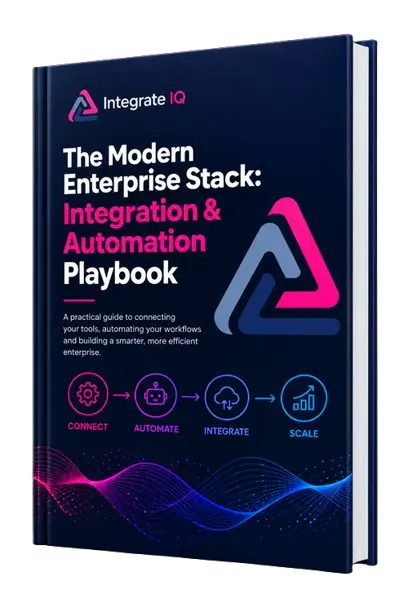
Get Your Free HubSpot Consultation + Claim The 2026 CRM Growth Playbook Instantly for FREE

Discover how top companies use their CRM to power marketing, sales & growth. No spam. No sales pitch. Just expert insights from certified HubSpot professionals.

🎁Bonus: Submit the form to Instantly download The 2026 CRM Growth Playbook for highest ROI
(Offer valid for Limited Time Only)

What Makes a HubSpot CRM Migration Service Fail and How We Prevent It

A flawed migration does not just move bad data; it breaks processes, erodes trust, and stalls growth. Understand the risks we mitigate.

Data Corruption & Loss

The danger isn't just losing records, but also the relationships between them. Broken associations between contacts, companies, deals, and historical activities lead to a critical failure of institutional knowledge, making accurate reporting and targeted marketing impossible.

Hidden Costs of Failure

The true cost extends far beyond the budget. It's a composite of sunk internal hours, the expense of a corrective migration, and the opportunity cost of delayed initiatives. A significant portion of our work involves rescuing projects initiated by others.

Operational Downtime & Poor Adoption

A technically flawed data transfer is catastrophic for daily operations. If the new system is perceived as untrustworthy from day one, teams will reject it, defeating the entire purpose of the investment and leaving you with the same inefficiencies you sought to eliminate.

Our HubSpot CRM Migration Service: Built for Complexity

Our HubSpot CRM migration service goes beyond moving records, it re-architects your revenue operations foundation with a process built on three pillars: meticulous planning, flawless technical execution and structured change management that ensures your team trusts the new system from day one.

Meticulous Planning & Auditing

Flawless execution is born from meticulous planning. We start with a deep, forensic audit of your source CRM to create a comprehensive Migration Blueprint, eliminating surprises and ensuring total alignment.

Flawless Technical Execution

With over a decade of experience and proprietary scripts, we don't just move records; we preserve the full context of your business history, guaranteeing data integrity through rigorous validation cycles.

Our Meticulous 4-Phase HubSpot Data Migration Services Process

We demystify the migration process with a proven, transparent methodology. Select a phase to see how we transform a complex undertaking into a structured, predictable journey.

1
Weeks 1-2

Audit & Strategic Planning

In-depth stakeholder interviews, process mapping workshops, and a deep-dive technical audit of your source CRM's data structures, objects, and automations.

Deliverable

Migration Audit & Cutover Plan: The master blueprint detailing scope, data mapping, timelines, risk mitigation, and a cutover schedule for minimal disruption.

2
Weeks 3-4

Technical Configuration & Data Mapping

HubSpot portal coordination (users, roles, pipelines), creation of custom properties, and building the custom data mapping, validation, and deduplication scripts.

Deliverable

Data Mapping & Validation Scripts: The custom-coded intelligence that ensures your data is cleaned, transformed, and loaded correctly and consistently into HubSpot.

3
Weeks 5-7

Phased Execution & Validation

Primary data migration into a sandbox environment, followed by multiple, structured User Acceptance Testing (UAT) cycles with your key users for feedback and refinement.

Deliverable

UAT Cycles & Change Management Plan: A fully validated and approved dataset.

4
Week 8+

Final Cutover

Execution of the final 'delta' sync during a low-impact window, followed by a period of post-launch 'hypercare' support.

Deliverable

Full Data Set & Support: A fully migrated data set, comprehensive documentation, and the peace of mind that comes with ongoing expert support.

Free AI Scan

Stop Guessing What’s Broken. Get Your Free AI Growth Snapshot in 60 Seconds.

An instant AI-powered scan that shows where your brand, funnel, and CRM are leaking revenue and exactly what to fix first.

What You'll Get
  • CRM Alignment Score 0-100
  • Revenue Leakage Risks Top-3
  • Automation Opportunities
  • Integration Ideas Industry-specific
  • Conversion Optimization Wins
  • CRM ROI Opportunity Zones
65%

Most companies score between 52–71. Where do you stand?

HubSpot Migration Services vs DIY: The Specialist Advantage

When the stakes are high, expertise is non-negotiable. See how our specialized, risk-averse approach compares to standard or DIY methods.

Capability
Our Service
Standard / DIY
Historical Activity Preservation
Guaranteed full migration with preserved associations.
Limited/Risky. Historical context is frequently lost.
Custom Object Handling
Full support for schema replication and data migration.
Unsupported. Requires high-risk custom development.
Failed Migration Recovery
Core specialization with a proven, forensic process.
No protocol. Lacks skills to fix data corruption.
Data Cleansing & Validation
Proactive & scripted. Automated deduplication is built-in.
Manual & reactive. Relies on error-prone CSV cleanup.
Post-Migration Enablement
Comprehensive user training and "hypercare" support.
Technical handover only. User adoption left to chance.

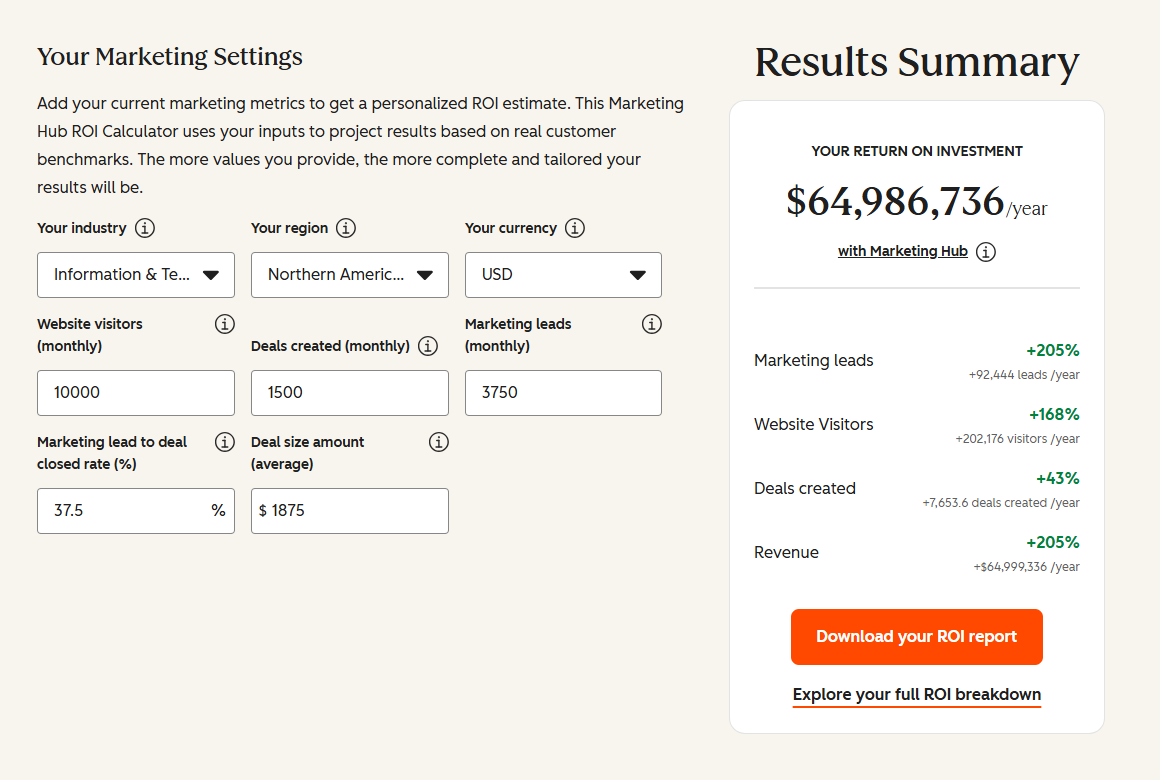
Your 12-Month Revenue Impact with HubSpot CRM

Get personalized projections based on real HubSpot customer data — matched to your industry and region.

1
Add Your Current Numbers

Visitors · Leads · Deals · Close Rate · Avg. Deal Size

2
Choose Your Industry & Region

Benchmarks that actually match your market

3
See Your Projected Growth

Leads · Pipeline · Revenue

4
Download Your ROI Report

Instant PDF, ready to share

ROI Calculator Preview

What Makes a HubSpot CRM Migration Service More Complex Than a Standard Data Transfer

The most common mistake companies make when planning a HubSpot CRM migration is treating it as a data export and import exercise. Move the records from one system to another, map the obvious fields, check that the contacts and companies are in the right place, and go live. For a small, simple CRM with clean data and minimal customisation, that might be enough. For the organisations that call us, it never is.

What makes a HubSpot CRM migration service genuinely complex is the relational data  the associations between objects that carry the institutional knowledge of how your business has operated. Contacts associated with specific companies at specific deal stages. Activity history tied to the right rep at the right point in the pipeline. Notes and call logs attributed to the correct contact timeline. Email history mapped to the right lifecycle stage. When these associations break which they do in poorly executed migrations you don’t just lose records. You lose the context that makes those records useful.

Our HubSpot CRM migration service is built around that reality. We spend as much time on the relational mapping as we do on the record migration itself. Every association, every reference, every cross-object link is documented in the migration blueprint and validated in the UAT environment before a single record goes into production.


HubSpot Data Migration Services: What's Actually Included

When we describe our HubSpot data migration services, we mean a comprehensive engagement that covers the full journey from source CRM to live HubSpot portal not just the technical act of moving records. The engagement begins with a forensic audit of your source CRM: not just the records themselves, but the schema, the automation logic, the custom fields, and the business rules encoded in your current workflows. We need to understand what your current system does before we can accurately replicate it and often improve on it in HubSpot.

From that audit, we produce a Migration Blueprint that defines exactly what moves, what transforms, what gets cleaned, what gets archived, and what gets left behind. Every data decision is documented and client-approved before execution begins. This document becomes both our technical specification and the acceptance test plan your team uses during UAT. The primary migration runs in a sandbox environment your team reviews and validates before anything touches your production portal. The final cutover executes during a pre-agreed low-traffic window. And for a defined hypercare period afterward, your dedicated HubSpot migration specialist monitors sync performance and resolves any issues before they become operational problems.

Why the Right HubSpot Data Migration Partner Matters More Than the Tool

Roughly half of our migration engagements are recovery projects clients who attempted a self-serve migration using one of the available data transfer tools, or worked with a generalist HubSpot migration agency, and ended up with a partially migrated portal their team can’t trust. The tool moved the records. The relationships between them didn’t survive. The historical activity is attributed to the wrong contacts. The deal stages don’t match the source system. And now the company is paying twice — once for the original migration that failed and once for the recovery.

The difference between a successful migration and a failed one is not which tool you use. It’s the expertise and methodology of the team executing it. A credible HubSpot data migration partner starts with the blueprint, not the export. They define acceptance criteria before UAT begins, not after go-live when problems surface. They plan the cutover during a low-impact window and maintain hypercare coverage afterwards. And they understand that the real risk isn’t technical failure it’s the erosion of team trust in a new system that was supposed to solve problems and instead created new ones.

Platforms We Migrate From and What Each Migration Involves

Our HubSpot CRM migration services cover the full spectrum of source platforms. Salesforce migrations are our most common and most complex engagements Salesforce’s object model, custom APEX code, complex hierarchy structures, and extensive customisation all require careful analysis before mapping to HubSpot’s architecture. We rebuild the business logic in HubSpot natively rather than trying to replicate Salesforce-specific patterns that don’t translate. Microsoft Dynamics migrations involve similar complexity, particularly around the financial and ERP data that often sits in Dynamics alongside CRM data.

Oracle, SAP, Zoho, Pipedrive, and legacy CRM migrations each carry their own technical characteristics, and we’ve executed migrations from all of them. For companies migrating from spreadsheet-based CRM management still common in manufacturing and professional services the migration challenge is less about technical complexity and more about data standardisation: cleaning, deduplicating, and structuring records that were never designed for a proper CRM before they land in HubSpot.
Regardless of the source platform, our HubSpot migration partner methodology is the same: discovery first, blueprint second, sandbox execution third, UAT fourth, production cutover fifth, hypercare last. The sequence doesn’t change because the risk profile of skipping any step doesn’t change either.

How to Evaluate a HubSpot Migration Agency Before You Commit

The gap between a capable HubSpot migration specialist and a generalist agency attempting a migration is significant, and the consequences of choosing wrong are expensive. Before signing with any migration partner, there are five questions worth asking directly.

  • First: what’s your process for handling relational data and object associations, not just records?
  • Second: do you run the migration in a sandbox environment before production cutover, and can we review and approve the data before go-live?
  • Third: what are your acceptance criteria for UAT, and who defines them?
  • Fourth: what does post-launch hypercare look like — how long, what’s covered, and what’s the response SLA? Fifth: can you provide references from clients who migrated from the same source platform as ours?

A capable HubSpot migration agency should answer all five without hesitation and with specificity. Vague answers to any of them particularly on sandbox validation and post-launch support are a reliable indicator of how the engagement will go when something unexpected happens. And in migration projects, something unexpected always happens.

HubSpot CRM Migration Service FAQ: Your Questions Answered

HubSpot CRM Migration Service FAQ: Your Questions Answered

Security is paramount. We use secure, encrypted API connections for most of our data transfers. In some cases, we will export/import records. Your data is never stored on intermediate servers. Our processes are designed with a safety-first mindset.

Our HubSpot CRM migration service is scoped individually because no two migrations carry the same complexity. The primary cost drivers are: the volume of records being migrated, the number of objects and custom fields in scope, the complexity of the relational data (especially cross-object associations), and whether the migration includes historical activity records and attachment files. For context, straightforward single-CRM migrations with standard objects and clean data typically start in the $8K-$15K range. Complex enterprise migrations from Salesforce with custom objects, APEX logic, and multi-system dependencies typically range from $25K to $60K+. We provide a fixed-price quote after the scoping call no hourly billing.

Yes, and this is one of the most technically complex parts of any HubSpot data migration services engagement. Activity history emails, calls, meetings, notes is valuable precisely because it carries the context of the customer relationship over time. Migrating it accurately requires careful mapping between the source system's activity objects and HubSpot's engagement records, with correct attribution to the right contacts, companies, and deals. Not all migration tools handle this well. We migrate historical activity as a defined workstream within the migration blueprint, with explicit acceptance criteria that your team validates during UAT

Not necessarily. Many of our HubSpot data migration partner engagements involve migrating data into an existing HubSpot portal that's already partially configured. In those cases, we conduct a portal audit alongside the source CRM audit to understand what's already in HubSpot, identify any conflicts with the incoming data, and plan the merge carefully. If you're migrating into a new, empty HubSpot portal, the process is cleaner but we still start with a portal configuration phase to ensure the properties, pipelines, and object schema are correctly set up before any data lands.

Deduplication is built into our HubSpot data migration services process as a standard workstream, not an optional add-on. Before any records move, we run deduplication analysis on your source data to identify exact and near-match duplicates using configurable matching rules by email address, company domain, phone number, or custom field combinations depending on your data. We produce a deduplication report for your review, define the merge rules with your input, and apply them during the data transformation phase before records load into HubSpot. Post-migration, we run a final deduplication check in HubSpot to catch any duplicates that arose from the merge itself.

Yes , multi-source migrations are among our most complex HubSpot migration specialist engagements, and we deliver them regularly. The primary challenge is data conflict resolution: when records exist in both source systems (the same contact, the same company, the same deal at different stages), we need to define merge rules that preserve the most valuable data from each source rather than duplicating or overwriting. We address this in the migration blueprint with your input on which source is authoritative for each data type. Multi-source migrations typically run longer than single-source 10 to 14 weeks is common and the UAT phase is more intensive because your team needs to validate records from both sources.

Hypercare is the defined support period immediately after your production cutover, during which your HubSpot migration specialist monitors the migrated environment actively rather than on-request. During hypercare which typically runs two to four weeks depending on migration complexity we monitor data sync accuracy, validate that all workflows and automations are behaving as expected with real data, and resolve any issues that surface during actual use before they affect your operations. Hypercare is included in every migration engagement as a fixed deliverable, not an optional extension. It exists because no UAT environment fully replicates the edge cases that appear when a full team is using the system with live business data for the first time.

Ready to Move to HubSpot with Confidence?

Don't let complexity create uncertainty. Partner with the specialists in migrations others can't handle. Let's architect your seamless and secure transition.

Book a Free Migration Scoping Call
Contact Us Book A Meeting