










Most HubSpot vs Agile CRM comparison pages treat this as a normal head-to-head: feature lists, price columns, a few user quotes, neutral verdict. That misses the actual question a buyer should ask in 2026. Agile CRM’s last published product update shipped in October 2020. Its G2 profile carries an inactive flag. The parent company (500apps) has publicly redirected development toward a different product suite. The iOS app sits at 1.6 stars. Trustpilot reviews surface a pattern of cancellation difficulties and unexpected charges that show up enough to count as a pattern rather than isolated incidents.
That doesn’t make Agile CRM unusable. The free plan still works for solo operators who fit inside it. The built-in telephony is genuinely useful. The price point is competitive. But choosing a CRM is a 3-to-5-year decision, and the product reliability question matters as much as the feature comparison.
Quick verdict: HubSpot wins for almost any team in 2026, and the gap is wider than feature comparisons suggest. The exception is a narrow set of scenarios: solo operators on Agile’s free plan with no growth plans, or teams already deeply embedded in the 500apps ecosystem. For everyone else, HubSpot’s active development, regular AI feature releases, and 2,000+ integration marketplace make it the lower-risk choice even at a higher price point.
We’re Integrate IQ, a HubSpot Diamond Solutions Partner with custom integration accreditation. We’ve migrated teams from legacy and stagnant CRMs into HubSpot, including from Agile CRM, and we know what to watch for in the data when moving off a frozen platform. This comparison covers what each product actually does in 2026, where Agile CRM might still make sense, and what migrating off it looks like if you’ve already decided to move.
Free estimator
Know what your HubSpot project costs before the first call.
Select your services and get a transparent price range in minutes. No sales call needed to get a number.
Firm quote after a free discovery call. Build estimate
HubSpot vs Agile CRM at a Glance
HubSpot is a customer platform organized around Smart CRM, with marketing, sales, service, content, operations, and commerce Hubs sharing one data layer. It targets B2B teams, service businesses, and SMB-through-enterprise customers that need an active, modern CRM with AI features and a deep integration ecosystem.
Agile CRM is an all-in-one CRM with marketing, sales, and service modules, plus built-in telephony and a helpdesk. It targets small businesses looking for a cheap, bundled alternative to specialized tools. Since 2020, the product has effectively been on maintenance mode while parent company 500apps shifted focus to a broader productivity suite.
The core difference in 2026: HubSpot is an actively developed platform with a real AI roadmap. Agile CRM is a stable but largely unchanged product that hasn’t received meaningful updates in roughly five years.
| Factor | HubSpot | Agile CRM |
| Best for | SMB through enterprise; growing teams | Solo operators on free plan; existing 500apps users |
| Free tier | Free CRM, 1,000 contacts, 2 users | Free plan, 10 users, 1,000 contacts |
| Starting paid price | Starter ~$15-20/seat/mo | Starter $8.99/user/mo |
| Last major product update | Ongoing; AI features shipping in 2026 | October 2020 per public release notes |
| Core strength | Active development, unified Hubs, AI | Free plan supports 10 users; built-in telephony |
| Core risk | Pricing climbs at higher tiers | Frozen development; billing complaint patterns |
What HubSpot Is and Who It’s Built For
HubSpot launched in 2006 as an inbound marketing platform and grew into a customer platform organized around six Hubs: Marketing, Sales, Service, Content, Operations, and Commerce. All of them sit on top of HubSpot Smart CRM, which is included free. HubSpot currently serves over 162,000 customers in the marketing automation category alone and ranks 4th in market share.
HubSpot’s strength is the combination of active development, unified data, and a large integration ecosystem. AI features (Breeze Copilot, Breeze Agents, predictive lead scoring) ship regularly. The integration marketplace covers 2,000+ apps. The platform handles SMB through enterprise customers on the same architecture.
HubSpot is the right call for teams that treat their CRM as a long-term operational investment. New features, security updates, AI capabilities, and integration support all matter over a 3-to-5-year decision window. For any team that expects to grow, integrate with modern apps, or use AI in their sales and marketing workflows, HubSpot’s active development is genuinely valuable.
The honest limitation: HubSpot’s pricing climbs faster than people expect. Marketing Hub Professional at $890/month per month is where serious automation lives. Mandatory onboarding fees ($1,500 to $7,000 depending on tier) stack on top. For very small teams or solo operators, the entry into real automation is a meaningful step up from Agile CRM’s $8.99 per user.
Turn HubSpot Into A Real-Time SMS Engine with Message IQ
 Two-Way Conversations
 Shared Team Inbox
 Automation Triggers
 Advanced Reporting
 Compliance Tools
- 98% SMS read within 3 min
- 78% Buy from first responder
- 21× More likely to qualify

*MessageIQ is an IntegrateIQ product – built natively for HubSpot by the same team.
What Agile CRM Is (and the 500apps Pivot)
Agile CRM launched in 2013 as an all-in-one SMB CRM with sales, marketing, and service modules in one product. The platform offered an unusually generous free plan (10 users, up to 1,000 contacts in current iteration) plus built-in telephony, landing pages, helpdesk, and a 500-app integration suite. For small businesses looking to consolidate sales and marketing tools cheaply, the offer was compelling in the mid-2010s.
In late 2020, parent company 500apps publicly redirected its product roadmap. Agile CRM’s last entry on its Product Updates page is dated October 2020, and that entry explicitly describes the company’s shift to building “almost 20+” apps for the 500apps suite. Since then, the product has been stable but essentially unchanged. The 500apps suite (NinjaSEO, Finder.io, ClickDesk, Clockly, and others) gets the development attention. Agile CRM customers can access these as an add-on for $14.99 per user.
Agile CRM still has roughly 41,657 customers in the marketing automation category. The free plan and core sales, marketing, and service modules continue to function. Customer support remains available. For some users, the product still meets their needs.
The honest limitation: choosing a CRM with no visible roadmap, no AI features shipping, and a documented company pivot away from the product is a real risk. The reality shows up in adjacent signals: G2 flagged the profile as inactive after a year of no major reviews. The iOS mobile app rates 1.6 stars. Trustpilot reviews surface a pattern of cancellation difficulties and unexpected charges that multiple users have reported in 2025-2026. These are factual concerns worth weighing alongside any feature comparison.
The Product Development Reality (And Why It Matters)
Most comparison pages skip this. We’re going to cover it because it’s the most important variable in the decision.
Software products require continuous development to stay competitive on security, integrations, and feature parity. APIs change. Email providers update authentication standards (think SPF, DKIM, DMARC, BIMI). Browsers tighten cookie policies. AI changes user expectations of every category, including CRM. A product that stopped shipping major updates in October 2020 has missed five years of these changes.
The signals worth checking on Agile CRM:
- Public product updates page ends at October 2020 with an explicit pivot statement
- G2 profile flagged inactive due to insufficient recent reviews
- iOS mobile app rated 1.6 stars (Android similar)
- Trustpilot pattern of cancellation difficulties and unexpected charges, with multiple users reporting in 2025 and 2026
- Vendor reportedly redirecting users toward 500apps when contacting support
- No visible AI roadmap or feature releases despite the broader 2024-2026 AI wave in CRM software
None of these are individually disqualifying. Taken together, they describe a product in maintenance mode, not active development. That’s a real procurement consideration even when feature lists look comparable on paper.
HubSpot, by contrast, shipped Breeze AI across the platform in 2024-2026, expanded AEO (answer engine optimization) tools for content, added Cowork and other adjacent products, and continues regular feature releases. The active development is verifiable through release notes, public product blog, and ongoing third-party integration launches.
Free Tier Comparison
This is the dimension where Agile CRM still genuinely competes.
Agile CRM Free supports up to 10 users and 1,000 contacts. Core sales, marketing, and service modules are accessible. Email campaigns, landing pages, helpdesk tickets, and deal pipeline tracking all work at the free tier. For a 5-person agency or micro-team that needs basic CRM plus some marketing tooling at zero cost, the free plan is one of the more generous on the market.
HubSpot Free CRM is also free but structured differently. You get unlimited free “view-only” users plus 2 paid Core seats free. Up to 1,000 contacts (this was reduced from 1 million in September 2024, an important update most pages still miss). Basic email, forms, and contact management work. Real marketing automation, sequences, and lead scoring all sit behind paid tiers.
For a 10-user solo-operator team that wants basic CRM functionality at zero cost, Agile CRM’s free plan does offer more on paper. For a 2-person team that wants HubSpot’s broader ecosystem, integration depth, and active development trajectory, HubSpot’s free tier is more strategic even with fewer free seats.
Verdict: Agile CRM wins on raw user-count and feature scope at the free tier. HubSpot wins on the long-term value of starting on an actively-developed platform you can grow into.
Pricing Breakdown
Below the free tier, the pricing models diverge sharply.
Agile CRM paid plans
Starter at $8.99 per user per month adds advanced contact management, email campaign extensions, and integrations. Regular at $29.99 per user per month adds marketing automation, lead scoring, and helpdesk features. Enterprise at $47.99 per user per month adds advanced analytics, custom telephony integration, and a dedicated account rep. The 500apps suite is available as a $14.99 per user add-on covering 38+ adjacent productivity tools.
HubSpot paid plans
Marketing Hub Starter at around $15-20 per seat per month adds email marketing and basic forms but no workflow automation. Marketing Hub Professional at $890 per month for three seats unlocks real automation, A/B testing, attribution reporting, and Breeze AI features, with a $1,500 to $3,000 mandatory onboarding fee. Sales Hub Professional runs roughly $90 per user per month with sales engagement, sequences, forecasting, and call recording. Enterprise tiers run materially higher.
The honest math
For a 5-user team needing basic CRM plus marketing automation, Agile CRM Regular costs roughly $150 per month ($1,800 per year). HubSpot equivalent (Marketing Hub Professional + a few Sales Starter seats) lands around $12,000 to $15,000 in year one once onboarding is factored in. That’s a 7-to-10x cost difference at this team size.
The cost gap is real and material. What you’re paying extra for with HubSpot is active development, AI features, 2,000+ integrations, a modern UI, ongoing mobile app maintenance, broader community resources, and the reduced risk of running a critical business system on a product whose roadmap has been frozen for five years.
CRM Core Features
Both platforms cover the basics: contact management, deal pipelines, custom fields, task management, and activity tracking. The depth and modernness of the implementation diverge.
HubSpot Smart CRM includes contacts, companies, deals, custom objects, line items, products, and tickets. Custom objects let teams model any data structure (subscriptions, projects, properties, courses) as first-class records with their own properties, associations, and workflows. Lifecycle stages, lead status, and persona properties come standard. The data model is built for modern operational complexity.
Agile CRM provides contacts, deals, custom fields, and basic pipeline management. Custom objects aren’t part of the data model. Lifecycle stage tracking is more limited. The implementation is functional but reflects the design priorities of the mid-2010s SMB CRM era. For very small businesses with straightforward sales processes, it works. For teams with any data-modeling complexity, the constraints become visible.
Verdict: HubSpot wins on data model depth and modernness. Agile CRM covers basics adequately.
Marketing Automation
HubSpot Marketing Hub’s automation lives in a visual workflow canvas with branching logic, cross-Hub triggers, custom code actions, AI-driven workflow builders, and integration with sales and service data. Real automation requires the Professional tier at $890 per month.
Agile CRM’s marketing automation includes email campaigns, drip sequences, landing pages, web tracking, and basic lead scoring. The campaign builder is functional. The depth and modernness fall behind HubSpot meaningfully. A/B testing is more limited. There’s no visible AI-driven automation building. Smart content rules are basic compared to HubSpot’s smart content.
Verdict: HubSpot wins decisively on automation depth, modernness, and AI integration. Agile CRM’s automation is adequate for simple drip campaigns and lead nurture. Anything more complex hits the platform’s age.
Sales and Pipeline Features
Both platforms include deal pipelines, but Sales Hub functionality is meaningfully different between them.
HubSpot Sales Hub at the Professional tier provides sales sequences (multi-step automated outreach), playbooks, call recording with AI summarization, forecasting, quotes, custom objects for sales data, and integrated meeting scheduling. Breeze Prospecting Agent (an AI sales agent) researches leads and drafts outreach. The capability set is built for modern sales motions.
Agile CRM includes deal pipeline tracking, task management, calendar appointment scheduling, and built-in telephony with click-to-call and call recording. The built-in telephony is genuinely useful for teams that would otherwise pay for a separate dialer. Sales automation is functional. There are no AI-driven prospecting agents or modern sales engagement features.
Verdict: HubSpot wins on sales engagement modernness. Agile CRM wins narrowly on built-in telephony being included rather than a separate cost.
Service and Helpdesk
HubSpot Service Hub provides tickets, customer portals, SLA management, knowledge base, live chat, and a unified customer view spanning marketing and sales touchpoints. Service Hub Professional and Enterprise add automation, customer surveys, and dedicated customer success tooling.
Agile CRM’s helpdesk module includes ticketing, live chat, and basic ticket management. It’s bundled with the CRM rather than priced as a separate product, which is genuinely useful for small teams that want all-in-one. The depth is meaningfully less than Service Hub, especially around automation, SLA management, and knowledge base.
Verdict: HubSpot wins on depth. Agile CRM wins on bundling and price point for teams that need basic helpdesk capability alongside CRM.
Integrations and Ecosystem
HubSpot’s app marketplace has 2,000+ integrations across CRM, sales, ads, support, finance, ops, and most categories of business software. Operations Hub adds programmable workflows and a custom code action for builds beyond pre-built connectors.
Agile CRM’s native integration list is roughly 40 apps. The 500apps suite adds 38+ adjacent productivity tools but these are 500apps products, not third-party integrations to external tools your team likely already uses. Zapier integration extends reach but adds another tool to maintain.
As a HubSpot Diamond Solutions Partner, we’ve built custom integrations connecting HubSpot to 300+ platforms across CRM, ERP, accounting, field service, healthcare, finance, and recruiting. When clients move from Agile CRM to HubSpot, one of the consistent wins is access to native integrations they had to build manually or skip on Agile.
Verdict: HubSpot wins decisively. The integration gap is one of the most material differences between the platforms.
Mobile Experience
Most comparison pages skip mobile, which is a mistake for any sales team that works in the field.
HubSpot’s mobile apps (iOS and Android) are actively maintained, receive regular feature updates, and currently rate above 4 stars on both stores. Sales reps can access deals, log calls, update records, and run workflows from their phones.
Agile CRM’s iOS app currently rates 1.6 stars. User reviews surface performance issues, crashes, and slow load times. The Android app has similar feedback. For sales teams that need reliable mobile CRM access, the gap is real and operational.
Verdict: HubSpot wins decisively. For mobile-first sales teams, this dimension alone is often disqualifying for Agile CRM.
Reporting and AI Features
HubSpot includes custom reports, interactive dashboards, multi-touch revenue attribution, and customer journey analytics natively. Breeze AI sits across the platform: Breeze Copilot drafts emails and builds workflows, Breeze Agents prospect and engage leads, predictive lead scoring runs at Enterprise tier. AEO tooling helps content rank in AI search results. AI features ship regularly through 2026.
Agile CRM provides basic pipeline reports, activity reports, and email campaign analytics. Custom dashboard capabilities are more limited. There’s no visible AI roadmap or feature releases despite the broader AI wave in CRM software through 2024-2026. For teams that want AI-driven sales prospecting, marketing copy generation, or predictive scoring, Agile CRM doesn’t currently offer comparable capability.
Verdict: HubSpot wins decisively. The AI gap is widening as HubSpot ships new Breeze capabilities and Agile CRM remains in maintenance mode.
HubSpot vs Agile CRM: Side-by-Side Comparison
Quick reference across every dimension. The Winner column reflects the call we’d make for the typical buyer evaluating both in 2026.
| Dimension | HubSpot | Agile CRM | Winner |
| Active development | Ongoing; AI features shipping in 2026 | Last update October 2020 | HubSpot |
| Market presence | 162,000+ customers, 4th in market share | 41,000+ customers, 7th, declining | HubSpot |
| Free tier | 1,000 contacts, 2 paid Core seats free | 10 users, 1,000 contacts | Agile (raw scope) |
| Starting paid tier | Starter $15-20/seat/mo | Starter $8.99/user/mo | Agile (price) |
| Real automation tier | Marketing Pro $890/mo + onboarding | Regular $29.99/user/mo | Agile (price) |
| CRM data model | Smart CRM with custom objects | Basic contacts/deals; no custom objects | HubSpot |
| Marketing automation depth | Modern visual workflows, AI-driven | Functional but dated | HubSpot |
| Sales engagement | Sequences, AI prospecting agent | Built-in telephony; no AI | HubSpot (depth); Agile (telephony bundled) |
| Service / helpdesk | Native Service Hub at additional cost | Bundled in CRM tiers | HubSpot (depth); Agile (bundling) |
| Integrations | 2,000+ native apps | ~40 native + Zapier | HubSpot |
| AI features | Breeze across platform; shipping monthly | No visible AI roadmap | HubSpot |
| Mobile apps | 4+ stars, actively maintained | iOS 1.6 stars | HubSpot |
| Customer support | Tiered, free Academy, large community | Phone support; mixed user reports | HubSpot |
| Billing reliability | Standard SaaS billing | Trustpilot patterns of cancellation issues | HubSpot |
When HubSpot Is the Better Choice
HubSpot is the right call for the following teams:
Any team treating their CRM as a 3-to-5-year operational investment
Active development matters over multi-year horizons. APIs change, integrations evolve, security standards tighten, and AI is reshaping every category. Buying an actively developed platform is worth materially more than buying a stagnant one even when the stagnant one is cheaper. For any team expecting their CRM to be central to operations over the next several years, HubSpot is the safer call.
Growing businesses that will outgrow a 1,000-contact tier
Both free tiers cap at 1,000 contacts. Growth past that point puts you on paid tiers in either platform. Once paid, HubSpot’s roadmap and integration ecosystem make the higher price more defensible than staying on a frozen product.
Teams with mobile-first sales reps
Field sales, account management, and remote sales teams need a working mobile CRM. HubSpot’s app is actively maintained. Agile CRM’s iOS app rates 1.6 stars with documented performance issues. This dimension alone is often disqualifying for mobile-heavy teams.
Organizations needing 2,000+ integrations
Modern operations connect CRM to many other systems: marketing tools, ERPs, accounting, project management, customer success platforms, data warehouses, BI tools, AI services. HubSpot’s marketplace covers nearly all of these natively. Agile CRM doesn’t, and the gap costs real implementation time.
Teams that want AI features in their CRM workflows
AI-driven prospecting, content generation, lead scoring, and workflow building are becoming standard CRM capabilities through 2026. HubSpot’s Breeze AI ships regularly. Agile CRM has no visible AI roadmap. For any team expecting to use AI features over the coming year, the gap is meaningful.
When Agile CRM Might Still Make Sense
The honest scenarios are narrow. Agile CRM’s wins in 2026 are specific and don’t apply broadly. Naming them honestly is what makes the rest of this comparison credible.
Solo operators or micro-teams already on the free plan
If you’re a 1-to-5 person team using Agile CRM’s free plan, you have no growth plans pushing you past 1,000 contacts or 10 users, and the product currently meets your needs, switching for the sake of switching may not be worth the migration effort. The free plan works. The product is stable even if frozen.
Teams already deeply embedded in the 500apps ecosystem
If your operations depend on multiple 500apps products (NinjaSEO, Finder.io, ClickDesk, Clockly, others) and switching means rebuilding several workflows across multiple tools, the operational lock-in may make staying on Agile CRM the path of least resistance for now.
Buyers explicitly choosing maintenance-mode software
Some teams genuinely prefer software that doesn’t change. If your business has stable processes, low integration needs, and you’ve explicitly decided that a frozen product is what you want (no learning curves on new features, no UI changes, no AI features you don’t plan to use), Agile CRM offers that at a competitive price.
Outside these scenarios, HubSpot or another actively-developed CRM (Zoho, Freshsales, EngageBay, Pipedrive) is almost certainly the better call.
Migrating from Agile CRM to HubSpot
If you’ve decided to move off Agile CRM, here’s what we see in actual migration projects.
Typical timeline: 4 to 6 weeks from kickoff to go-live
Agile-to-HubSpot migrations run faster than complex enterprise CRM migrations because the data structures are simpler and there are fewer integrations to preserve. Most migrations close in 4 to 6 weeks. Larger migrations with 5+ years of historical data and many custom fields can run 6 to 8 weeks.
What carries over cleanly
- Contacts and companies with all custom fields mapped to HubSpot contact and company properties.
- Deal records, deal stages, and pipeline structure mapped to HubSpot deals.
- Email engagement history, including opens, clicks, and campaign membership.
- Task and activity history (calls, meetings, notes) mapped to HubSpot activities.
- Consent records and opt-in status for marketing email compliance.
What needs to be rebuilt
- Marketing automation workflows rebuild as HubSpot workflows. Agile’s campaign and drip logic doesn’t export, so we translate the rules into HubSpot’s workflow canvas.
- Landing pages rebuild in HubSpot’s CMS. The HTML doesn’t transfer cleanly, and most clients use this as an opportunity to refresh the design.
- Email templates rebuild in HubSpot’s drag-and-drop editor.
- Lead scoring rules rebuild in HubSpot’s scoring framework.
- Helpdesk tickets (if used) migrate into Service Hub or get archived in Agile for historical reference depending on volume and ongoing value.
Specific watch-outs for Agile CRM migrations
Three issues come up consistently in Agile-to-HubSpot moves that are worth flagging upfront:
- Verify your Agile CRM data export works before you commit to a migration date. Some users report API rate limits and export timeouts on accounts with high record counts.
- If you’ve been using the built-in telephony for call recording, plan for either HubSpot’s call recording (via Sales Hub) or a separate dialer integration. The recordings don’t migrate.
- Cancel Agile CRM billing carefully and document the cancellation. The Trustpilot pattern around unexpected charges is worth taking seriously. Keep records of the cancellation request and effective date.
What typically improves post-migration
Three operational wins show up consistently: integrations that were impossible or required workarounds on Agile CRM become native through HubSpot’s marketplace, mobile productivity for sales reps jumps measurably, and AI features (Breeze Copilot, predictive scoring, content generation) start contributing to daily workflows in ways Agile CRM doesn’t currently offer.
See your 12-month revenue impact with HubSpot CRM
Enter your current numbers — visitors, leads, deal size — and get a personalized projection based on real HubSpot customer benchmarks.
Calculate My ROI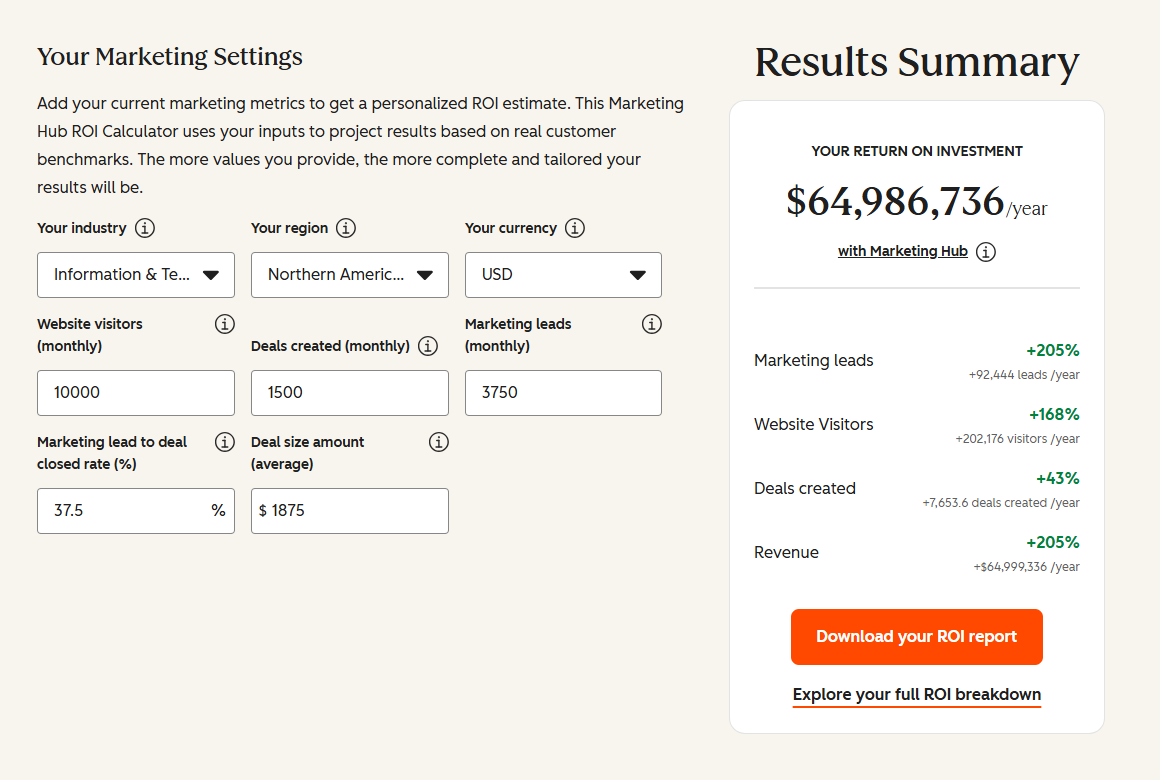
HubSpot vs Agile CRM: The Final Verdict
For most buyers in 2026, HubSpot is the right call. The active development, AI roadmap, 2,000+ integrations, and modern mobile experience are worth materially more than Agile CRM’s price advantage given the documented stagnation since 2020 and the operational risks of running a critical business system on a maintenance-mode product.
Agile CRM still has narrow wins. The free plan supports 10 users versus HubSpot’s 2 paid Core seats. The built-in telephony is bundled rather than a separate cost. The Starter plan at $8.99 per user is genuinely cheap. For solo operators or micro-teams with no growth plans, the product still works for what it does.
Three questions clarify the right call:
- Do you treat your CRM as a long-term operational investment? If yes, HubSpot. Active development matters over multi-year horizons.
- Will you need 2,000+ native integrations, AI features, and modern mobile in the next 12 to 24 months? If yes, HubSpot. The gap is widening, not closing.
- Are you currently on Agile CRM’s free plan, with no growth pressure and the product meeting your current needs? If yes, you can stay there for now without urgency, while planning your eventual move.

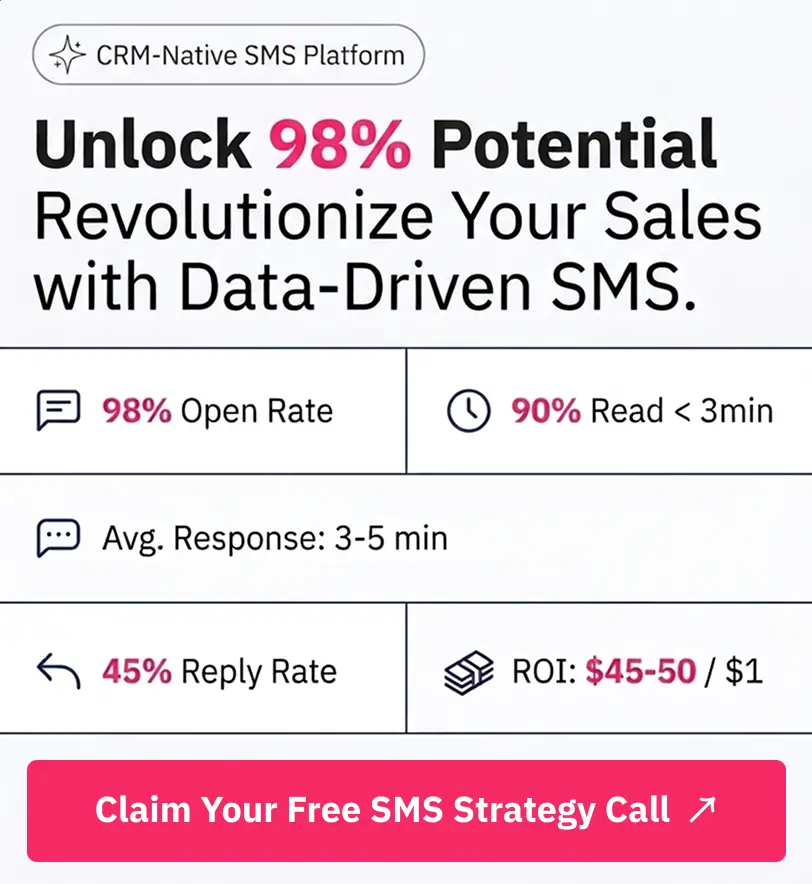
Table of Contents
- HubSpot vs Agile CRM at a Glance
- What HubSpot Is and Who It’s Built For
- What Agile CRM Is (and the 500apps Pivot)
- The Product Development Reality (And Why It Matters)
- Free Tier Comparison
- Pricing Breakdown
- CRM Core Features
- Marketing Automation
- Sales and Pipeline Features
- Service and Helpdesk
- Integrations and Ecosystem
- Mobile Experience
- Reporting and AI Features
- HubSpot vs Agile CRM: Side-by-Side Comparison
- When HubSpot Is the Better Choice
- When Agile CRM Might Still Make Sense
- Migrating from Agile CRM to HubSpot
- HubSpot vs Agile CRM: The Final Verdict