

For B2B teams, HubSpot Onboarding Mistakes often happen early and limit ROI fast. Poor planning, messy data, and misaligned teams reduce adoption and reporting accuracy. Avoiding these mistakes ensures HubSpot supports sales, marketing, and service as a single, reliable system for growth.
Key Takeaways
- Define Strategic Goals Early: Jumping into HubSpot without clear business objectives leads to underutilized features and aimless activity.
- Prioritize Data Hygiene: Importing “dirty” data duplicates, outdated records, or inconsistent formats corrupts your reporting and destroys sales team trust from day one.
- Avoid “Custom Property Bloat”: Creating too many custom fields “just in case” creates a maintenance nightmare; stick to native features whenever possible.
- Bridge the Team Silos: HubSpot is not just a marketing tool; failing to align sales, marketing, and service on lifecycle definitions stalls adoption.
- Invest in Training: Tech alone won’t drive growth; comprehensive, role-based training is essential to ensure the team actually uses the platform correctly.
- Plan for Integration Governance: Connecting tools without a clear data flow strategy often results in overwritten fields and broken syncs.
The Bigger Picture: Why Your Onboarding Sets the Ceiling for Growth
In 2026, HubSpot has evolved from a simple CRM into a sophisticated, AI-powered customer platform. While the potential for revenue growth and operational efficiency is higher than ever, so is the complexity of a successful rollout. Mid-market executives often view onboarding as a technical “set it and forget it” task rather than a strategic transformation.
Unfortunately, a poorly executed onboarding doesn’t just slow you down it creates a “data debt” that can take years to repay. When your CRM migration lacks a solid foundation, your AI agents lack the context they need to perform, and your sales team reverts to the very spreadsheets you were trying to eliminate.
See your 12-month revenue impact with HubSpot CRM
Enter your current numbers — visitors, leads, deal size — and get a personalized projection based on real HubSpot customer benchmarks.
Calculate My ROI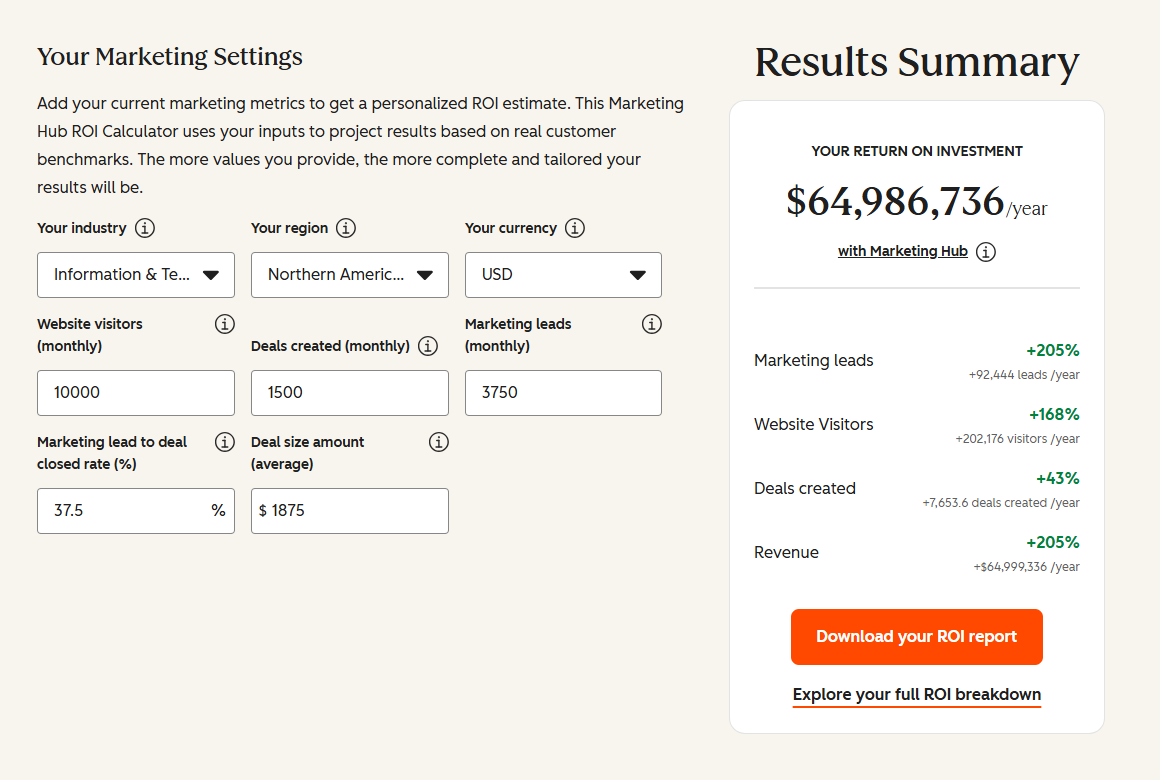
1. Customizing Without Clear Business Objectives
The most common mistake is starting without a documented “North Star.” Teams often dive into building forms and workflows because they can, not because they should.
Without clear KPIs like reducing the sales cycle by 15% or improving MQL-to-SQL conversion HubSpot becomes a “decorative” tool rather than a revenue engine. Before you touch a single setting, define 3–5 specific outcomes that align with your overall business strategy.
2. Migrating “Dirty” Data into the New System
HubSpot is a mirror; if you feed it disorganized data, it will reflect a disorganized business. Many companies rush the migration process, bringing over duplicate contacts, invalid email formats, and outdated deal records.
This leads to a “data jungle” where reports are untrustworthy and automation triggers fire incorrectly. A strategic approach requires auditing your data before migration to ensure it is clean, structured, and properly mapped.
3. Creating “Property Bloat” Through Over-Customization
There is a dangerous “just in case” mindset that leads teams to create dozens of custom properties for data they might never use. This clutter overwhelms users and slows down reporting.
The Fix: Lean on HubSpot’s native fields first. Only build custom properties when they directly support a specific KPI or a critical segmentation need. This keeps your portal lean and easier for new hires to navigate during HubSpot onboarding.
4. Treating HubSpot as a Marketing-Only Island
HubSpot’s power lies in its ability to unify the entire customer journey. However, many organizations fail to involve sales and service leadership early in the process.
If your sales team doesn’t agree on what constitutes a “Qualified Lead,” or if your service team isn’t using the same integrated data, you’ll end up with fragmented silos. Successful implementation requires cross-departmental alignment on lifecycle stages and handoff processes.
5. Building “Branching Monster” Workflows
Automation is a double-edged sword. It’s tempting to build a single, 20-step workflow that handles everything from lead scoring to internal alerts. These “monsters” are nearly impossible to troubleshoot when they inevitably break.
Instead, modularize your automation. Build separate, clean workflows for specific purposes – one for nurturing, one for data cleanup, and another for sales notifications.
6. Underestimating the Training and Documentation Gap
Even the best-configured portal will fail if the people using it don’t understand it. Skipping user training is a recipe for low adoption and manual workarounds.
Furthermore, many teams fail to document why certain customizations were made. Six months later, no one remembers why a specific custom object exists or who owns a particular workflow. Professional HubSpot training ensures your team understands the “why” behind the “how.”
7. Ignoring Integration Governance
In the age of Breeze AI, integrations are no longer optional. But connecting tools without a governance framework rules on mapping, ownership, and two-way sync is a major risk.
Common errors include allowing external tools to overwrite your lead source data or syncing lifecycle stages in both directions, which creates conflicting values and ruins your attribution reporting.
Checkout our HubSpot Onboarding Checklist
Things To Watch Out For
- The “DIY” Trap: Attempting a complex implementation without expert guidance often leads to 80% more time spent on setup and higher error rates.
- Static Lead Scoring: Many teams set up lead scoring during onboarding and never look at it again. Your scoring model should be refined quarterly based on actual conversion data.
- Default Dashboard Reliance: Default dashboards rarely reflect your specific KPIs. Ensure you build role-specific views so each team sees the metrics that matter most to them.
What Marketers Should Do Now
- Audit Your Data: Before migrating or integrating new tools, perform a comprehensive cleanup of your current database.
- Define Your Lifecycle Stages: Meet with sales and service leaders to document exactly when a lead moves from MQL to SQL to Opportunity.
- Map Your Tech Stack: Document every tool that will touch HubSpot and define which system is the “Source of Truth” for each data point.
- Schedule a Portal Audit: If you’ve already onboarded, schedule a health check to identify and remove unused properties or broken workflows.
FAQs
How long does a typical HubSpot onboarding take?
Most professional implementations for mid-market businesses take between two to six weeks, depending on the complexity of your data and the number of hubs being deployed.
Can I avoid HubSpot onboarding mistakes by using a partner?
Yes. Partnering with a certified agency ensures faster implementation, fewer configuration errors, and a setup that is aligned with your specific business goals.
What is the most common mistake in HubSpot Marketing Hub setup?
The most frequent error is starting without clear business objectives, followed closely by migrating poor-quality data that leads to broken workflows and unreliable reporting.
Should I use custom objects during my HubSpot onboarding?
You should only use custom objects when HubSpot’s native objects (Contacts, Companies, Deals, and Tickets) truly fall short of your needs. Always start with a tight use case and map out the data model first.
Accelerate Your Growth with Professional HubSpot Onboarding
Avoiding these HubSpot onboarding mistakes is significantly easier when you have a Diamond Partner in your corner. While the platform is designed for ease of use, the strategic architecture required for mid-market scale is complex.
At Integrate IQ, we don’t just “turn on” your portal; we build a custom-engineered ecosystem tailored to your specific revenue goals. Our team handles the heavy lifting from sophisticated data mapping and complex CRM migrations to advanced automation and role-specific training. We ensure your data is clean, your teams are aligned, and your technology is actually driving growth.
Ready to ensure a flawless rollout? Explore our professional HubSpot Onboarding Services and let’s build your foundation for success.