
Explore this article with AI:
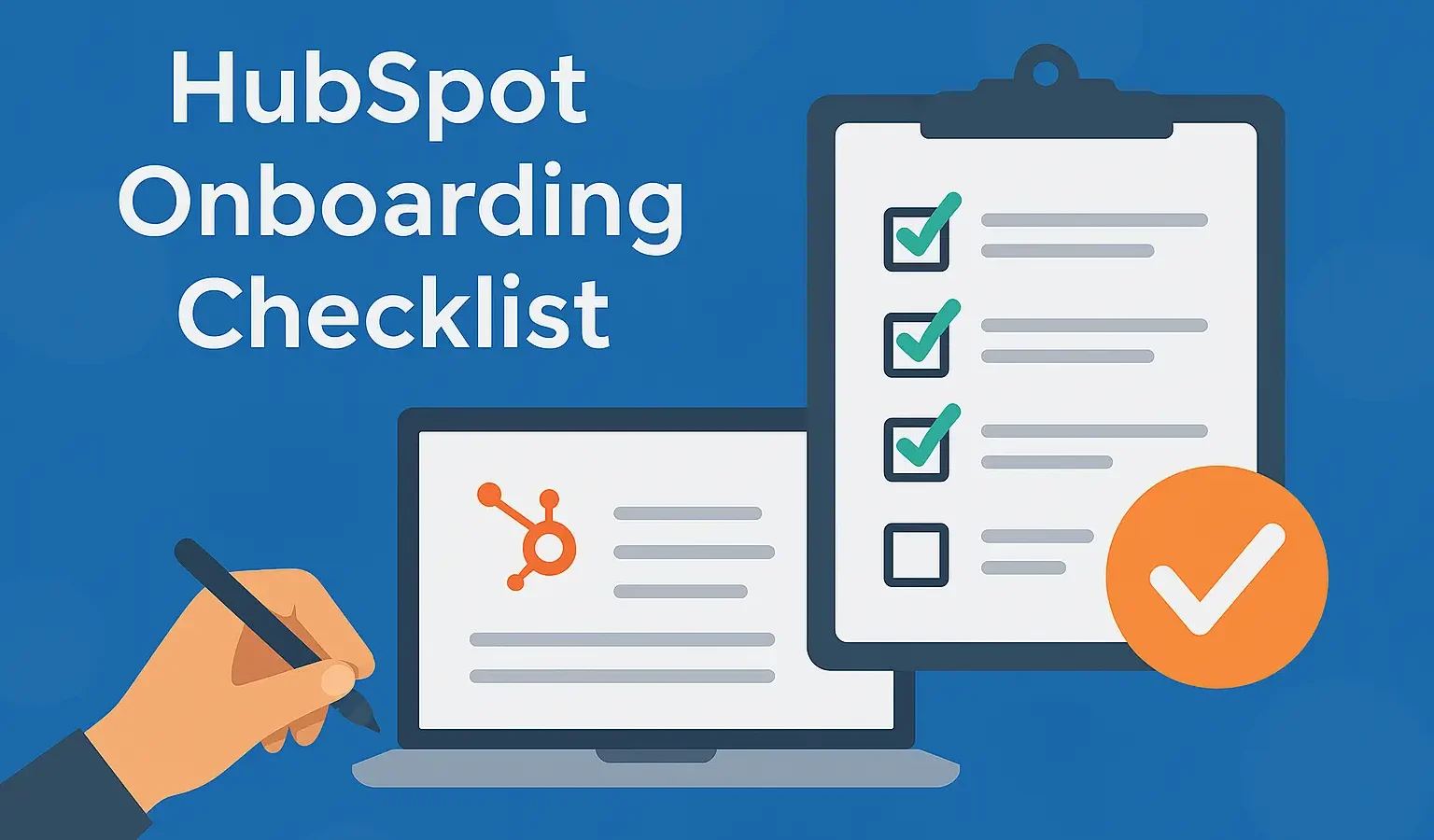
Getting HubSpot is easy. Getting it right is where most mid-market teams stumble. Whether you just closed a deal for Marketing Hub Professional or are consolidating your entire revenue operation into a single CRM, the technical setup is only half the battle. The other half? Ensuring your data, people, and AI agents are actually ready to work.
A successful HubSpot onboarding checklist isn’t just a list of buttons to toggle; it’s a strategic roadmap to ensure you don’t end up with an expensive digital rolodex.
Free estimator
Know what your HubSpot project costs before the first call.
Select your services and get a transparent price range in minutes. No sales call needed to get a number.
Connect HubSpot to your ERP, billing platform, or database field mapping, custom logic, and support included.
Pipelines, workflows, email templates, and reporting configured for how your team actually works.
Live, role-based sessions with recordings and written guides built around a custom plan for your team.
HubSpot Partner
Client retention
Platforms integrated
Key Takeaways
- Data Integrity First: Migrating “dirty” data into a fresh HubSpot portal is the fastest way to lose sales team buy-in.
- AI Readiness: 2026 onboarding requires configuring “Breeze” AI agents and data enrichment tools from day one.
- Cross-Hub Alignment: Marketing, Sales, and Service must agree on “Lifecycle Stage” definitions before a single workflow is built.
- Governance Over Gimmicks: Avoid “property bloat” by sticking to native HubSpot fields whenever possible.
The Strategic Shift: Onboarding in the Era of AI
In 2026, HubSpot onboarding has evolved beyond simple domain authentication. With the introduction of Breeze AI and the unified Smart CRM architecture, your setup must prioritize machine-readability as much as human usability. If your data is unstructured, your AI agents will hallucinate, and your predictive lead scoring will fail.
Mid-market executives often view onboarding as a “set it and forget it” IT task. This is a mistake. It is a fundamental shift in how your company go-to-market. Without a documented “North Star”—specific KPIs like reducing the sales cycle by 15%—your portal will lack the focus needed to drive ROI.
Account Foundations & Security
Before you import a single contact, you must secure the perimeter. This is the “boring” part of the HubSpot onboarding checklist that prevents catastrophic data leaks or deliverability issues later.
- User Permissions: Assign roles based on the principle of least privilege. Not everyone needs “Super Admin” status.
- Security Protocols: Enforce Two-Factor Authentication (2FA) for all users and assess if Single Sign-On (SSO) is required for your enterprise security stack.
- Regional Compliance: If you operate in the EU, configure your GDPR settings, including cookie consent banners and legal basis for processing, immediately.
Domain & Technical Configuration
Your HubSpot portal needs to “talk” to the internet correctly. This step ensures your emails land in inboxes and your tracking is accurate.
- DKIM & SPF Records: Authenticate your email sending domains to protect your sender reputation.
- Tracking Code: Install the HubSpot tracking code on your external website (if not using HubSpot CMS) to begin capturing behavioral data.
- Subdomain Management: Link subdomains for landing pages and blogs (e.g., info.yourbrand.com).
The “Clean Room” Data Migration
The “garbage in, garbage out” rule is unforgiving. Most teams rush this step and regret it for years.
- Deduplication: Run your legacy data through a scrubbing tool before the import.
- Field Mapping: Map your old CRM fields to HubSpot’s native properties.
- Property Audit: Resist the urge to create 50 custom properties. Check if a native HubSpot field exists first to avoid “property bloat.”
Defining the Lifecycle Journey
If Marketing thinks an MQL is anyone who downloads a PDF, but Sales thinks an MQL is someone ready to buy today, your HubSpot implementation will fail.
- Shared Definitions: Standardize what constitutes a Lead, MQL, SQL, and Opportunity.
- Lead Scoring: Set up basic “Fit” and “Engagement” scores. In 2026, utilize Breeze Intelligence to enrich these scores with third-party intent data.
Sales Pipeline Architecture
A messy pipeline is a visual representation of a messy sales process.
- Stage Mapping: Your HubSpot deal stages should mirror your actual buyer’s journey, not just your internal milestones.
- Probability Settings: Assign realistic win probabilities to each stage for accurate forecasting.
- Required Fields: Mandate that certain data (like “Deal Source”) is entered before a deal can move to the next stage.
Marketing Hub & Content Setup
Now that the plumbing is set, it’s time to build the engine.
- Brand Kit: Upload your logos, fonts, and colors to the HubSpot Brand Kit to ensure consistency across AI-generated content.
- Template Design: Build or customize your email and landing page templates.
- Subscription Types: Create clear opt-in categories (e.g., Newsletters, Product Updates) to remain compliant and respect user preferences.
Configuring Breeze AI Agents
In the current landscape, your HubSpot onboarding checklist must include AI agent configuration.
- Content Agent: Feed your brand voice guidelines into the AI to ensure generated blogs and emails sound like your team, not a robot.
- Customer Agent: Train the service agent on your existing knowledge base so it can handle Tier 1 support queries immediately.
- Data Quality Tools: Enable the Data Quality Command Center to automatically flag formatting issues and anomalies.
Essential Integrations
HubSpot shouldn’t be an island.
- App Marketplace: Connect your tech stack—Slack for notifications, Zoom for meetings, or specialized ERPs.
- Data Sync: Use HubSpot’s native “Data Sync” for two-way, real-time updates between platforms like Salesforce or Microsoft Dynamics.
Automation & Workflow Logic
Start small. Do not build “branching monster” workflows that no one understands.
- Internal Notifications: Automate “New Lead” alerts to the right sales rep.
- Nurture Sequences: Set up basic automated follow-ups for high-intent actions, like a demo request.
Reporting Dashboards
If you can’t measure it, you didn’t do it.
- Executive Dashboard: High-level metrics like CAC (Customer Acquisition Cost) and total revenue.
- Marketing Performance: MQL-to-SQL conversion rates and campaign ROI.
- Sales Activity: Time-in-stage reports and individual rep performance.
Training & User Adoption
The best CRM in the world is useless if your team refuses to use it.
- Role-Based Training: Don’t show the sales team how to build a landing page. Show them how to use the “Meetings” tool to book more calls.
- Documentation: Create a simple “Internal Wiki” that outlines how your company uses HubSpot.
Checkout our HubSpot Onboarding Checklist

Turn HubSpot Into A Real-Time SMS Engine with
Message IQ

Two-Way Conversations

Shared Team Inbox

Automation Triggers

Advanced Reporting

Compliance Tools
-
98%
SMS read within 3 min -
78%
Buy from first responder -
21×
More likely to qualify
3–5 min avg response
$45–$50 ROI / $1

*MessageIQ is an IntegrateIQ product – built natively for HubSpot by the same team.
Things to Watch Out For
- The “DIY” Trap: Attempting a complex Professional or Enterprise implementation without expert guidance usually leads to 80% more time spent on “fixing” mistakes later.
- Custom Property Overload: Creating too many custom fields “just in case” makes the UI cluttered and reporting impossible.
- Treating it as a Marketing-Only Tool: If Sales isn’t living in the CRM from day one, you lose the “Single Source of Truth.”
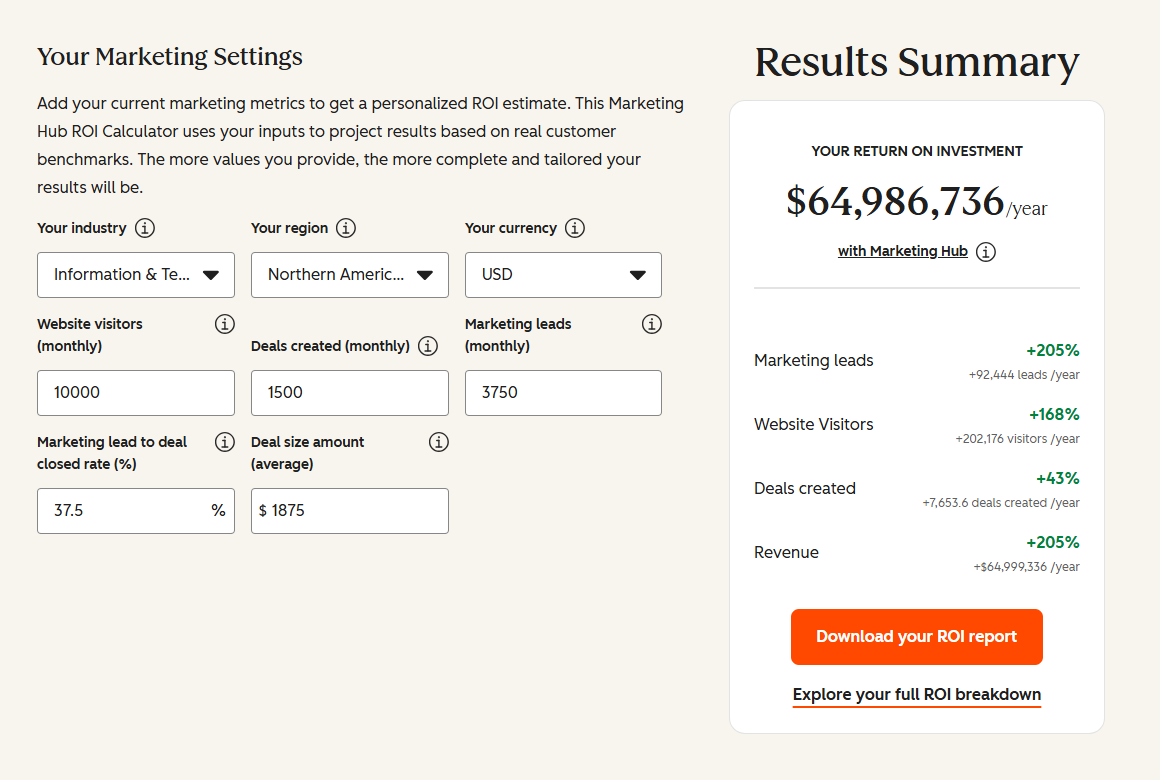
See your 12-month revenue impact with HubSpot CRM
Enter your current numbers — visitors, leads, deal size — and get a personalized projection based on real HubSpot customer benchmarks.
What Marketers Should Do Now
- Audit Your Data: Before you even look at HubSpot, run a health check on your current spreadsheet or legacy CRM.
- Document Your Process: Write down your sales and marketing handoff process on paper first. If it’s broken on paper, HubSpot won’t fix it.
- Appoint a “HubSpot Champion”: Identify one internal person who will own the platform’s health and governance.
- Schedule a Conversation: If you’re moving to Professional or Enterprise, book a demo with a partner to ensure your architecture is built for scale.
FAQs
What is the most important part of a HubSpot onboarding checklist?
The most important part of a HubSpot onboarding checklist is data hygiene and mapping. If you import inaccurate or duplicate data, your reporting will be flawed, and your team will lose trust in the system immediately.
How long does HubSpot onboarding typically take?
For mid-market companies, a thorough HubSpot onboarding checklist takes between 60 to 90 days. This allows for technical setup, data migration, workflow testing, and comprehensive team training.
Do I need a partner for my HubSpot onboarding checklist?
While you can follow a HubSpot onboarding checklist solo, many businesses find that working with a Diamond Partner reduces setup errors and accelerates ROI. This is especially true if you require complex integrations or AI agent configuration.
Bottom Line
HubSpot is a powerful engine, but it needs a solid foundation to run. By following a structured HubSpot onboarding checklist, you move from “installing software” to “building a revenue machine.” Focus on data quality, align your teams, and embrace the AI tools available in 2026 to ensure your investment pays off from the first month.

Table of Contents
- Key Takeaways
- The Strategic Shift: Onboarding in the Era of AI
- Account Foundations & Security
- Domain & Technical Configuration
- The "Clean Room" Data Migration
- Defining the Lifecycle Journey
- Sales Pipeline Architecture
- Marketing Hub & Content Setup
- Configuring Breeze AI Agents
- Essential Integrations
- Automation & Workflow Logic
- Reporting Dashboards
- Training & User Adoption
- Things to Watch Out For
- What Marketers Should Do Now