












What is a HubSpot Zoom integration?
A HubSpot Zoom integration is a data connection that syncs Zoom meetings, webinar registrants, attendees, cloud recordings, and transcripts to HubSpot contact and deal records. The native connector, built by HubSpot, handles meeting scheduling, webinar registration and attendance sync, and recording access on contact timelines. Custom builds extend it for multi-account scenarios, engagement depth scoring, and deal-level attribution.
How does the HubSpot Zoom integration work?
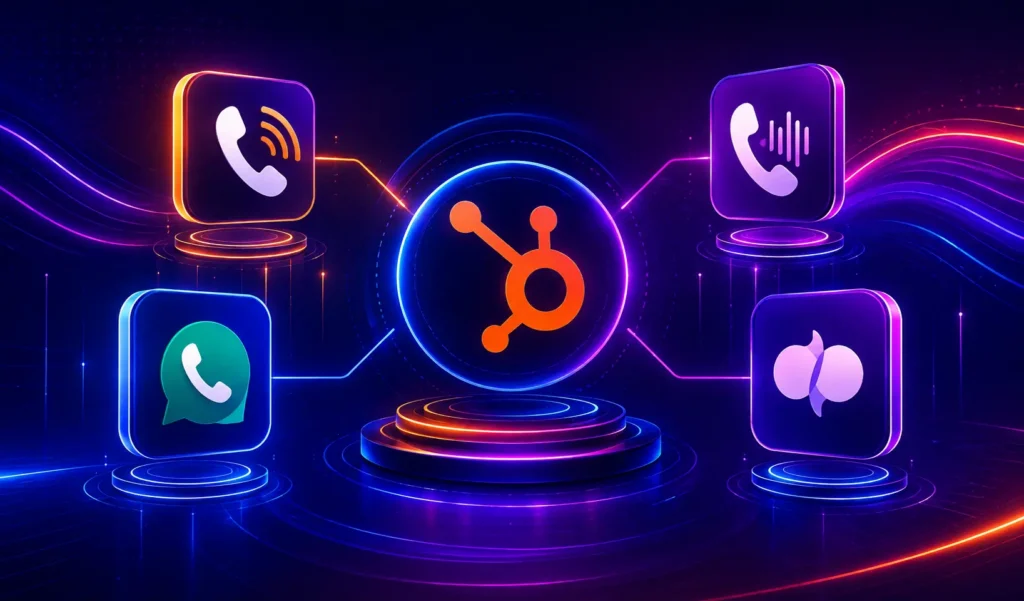
Each HubSpot user connects their individual Zoom account through the HubSpot marketplace app. Zoom OAuth handles authentication. Meeting bookings created through HubSpot scheduling pages generate Zoom links automatically. Webinar registrants and attendees sync as HubSpot contacts and marketing events. Cloud recordings and transcripts appear on contact timelines within minutes of a meeting ending.
Turn HubSpot Into A Real-Time SMS Engine with Message IQ
 Two-Way Conversations
 Shared Team Inbox
 Automation Triggers
 Advanced Reporting
 Compliance Tools
- 98% SMS read within 3 min
- 78% Buy from first responder
- 21× More likely to qualify

*MessageIQ is an IntegrateIQ product – built natively for HubSpot by the same team.
Does HubSpot have a native Zoom integration?
Yes. HubSpot maintains a native Zoom integration in its App Marketplace with no per-user fee beyond your Zoom subscription. It supports Zoom meetings, Zoom webinars (with the paid Webinar add-on), cloud recordings, and transcripts. It does NOT support Zoom Events, Personal Meeting IDs, multiple Zoom tenants per HubSpot account, or more than three required registration form fields.
Why did my Zoom-based HubSpot contact segmentation stop working in 2025?
On January 8, 2025, HubSpot migrated Zoom engagement data from contact properties to the marketing events framework. Contact-based Zoom properties like “Last registered Zoom webinar” and “Average Zoom webinar attendance duration” stopped working for list segmentation and workflow enrollment on that date. Rebuild affected workflows using Marketing Event filters instead of Zoom contact property filters.
Can HubSpot connect to multiple Zoom accounts?
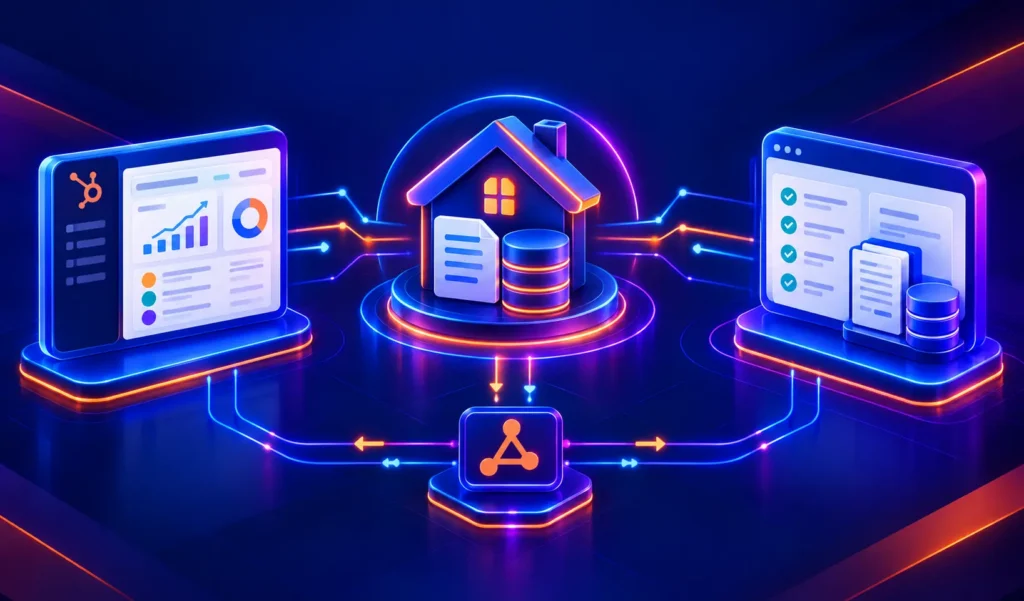
Not with the native connector. Only one Zoom tenant (organisation-level account) can connect to a single HubSpot portal. Teams or agencies running multiple Zoom accounts, separate accounts for brands, regions, or acquired entities, need a custom integration that routes data from multiple Zoom tenants to the same HubSpot portal with source-account tagging preserved.
How long does a custom HubSpot Zoom integration take to build?
A custom HubSpot Zoom integration takes about 8 weeks from kickoff to production. Discovery runs two weeks for Zoom account structure audit, engagement scoring rules, and multi-account scoping. Build and staging runs three weeks against sandbox environments. Historical backfill runs one week, and cutover with hypercare covers the final two. Multi-account or Zoom Events scenarios extend discovery, not build.
HubSpot Zoom Integration: Native Connector Setup, Limitations, and Advanced Automation
The HubSpot Zoom integration is one of the most-used connections in HubSpot’s App Marketplace. The native connector is built by HubSpot, works well for its intended scope Zoom meeting links in HubSpot scheduling pages, webinar registrant and attendee sync, and cloud recording access on contact timelines and requires no custom development for the standard setup. Most teams get real value from it quickly.
But the native connector has limits that catch teams off guard. A January 2025 change broke existing segmentation workflows built on Zoom contact properties.
Registration failures happen when Zoom forms have extra required fields beyond the three HubSpot supports. Participants who join a Zoom link without being logged in don’t reliably create HubSpot contacts. And companies with multiple Zoom accounts can only connect one to HubSpot natively.
We’re Integrate IQ, a HubSpot Diamond Solutions Partner with custom integration accreditation. This guide covers what the native integration does, the limitations you need to know before relying on it, and where a custom build makes sense for teams needing more from their Zoom and HubSpot connection.
What the Native HubSpot Zoom Integration Does
The native connector delivers across three primary areas:
Meeting Scheduling
- Add a Zoom videoconference link automatically to any HubSpot meeting booking when a prospect books a meeting through your HubSpot scheduling page, the Zoom link generates and goes out in the confirmation email
- Each HubSpot user connects their individual Zoom account meetings use each rep’s own Zoom link rather than a shared account
- Google Calendar and HubSpot scheduling stay aligned Zoom meetings appear on both
Webinar Sync
- Zoom webinar registrants automatically create or update HubSpot contacts
- Zoom webinar attendees sync with attendance data joined, no-show, attendance duration
- Webinar data available for HubSpot workflow triggers: enrolled attendees in post-event sequences, send recording to no-shows, update lifecycle stage for attendees
- Registrants can be added to Zoom webinars directly from HubSpot workflows
Recordings and Transcripts
- Zoom cloud recording links appear on the associated HubSpot contact’s timeline
- Meeting transcripts sync to contact records when cloud recording is enabled
- Sales reps can review prior call transcripts directly from the HubSpot contact without opening Zoom
Native Integration: Key Limitations
| Limitation | Detail | Impact |
| One Zoom account per HubSpot account | Only one Zoom tenant (organisation-level account) can connect to a HubSpot portal | Teams or agencies with multiple Zoom accounts cannot connect both natively |
| Zoom Personal Meetings not supported | Only Zoom meeting links generated by the integration work personal meeting IDs (PMIs) are excluded | Reps who use PMIs by default need to change their Zoom meeting settings |
| Webinar add-on required | Zoom webinar sync requires the paid Zoom Webinar add-on not included in standard Zoom plans | Teams on Zoom Pro without the Webinar add-on cannot sync webinar data |
| Direct-join participants may not track | Participants who join a Zoom link directly without being logged into their Zoom account may not create HubSpot contacts | Attendance data can be incomplete for webinars where attendees don’t register or log in |
| Registration form: 3 required fields maximum | HubSpot only supports First name, Last name, and Email as required registration fields any additional required fields in Zoom will cause registration to fail | Common cause of silent registration failures teams don’t see the error, they just see missing registrants |
| Jan 2025: contact-based properties removed for segmentation | Zoom contact-based properties (e.g., ‘Last registered Zoom webinar’) can no longer be used to segment HubSpot contact lists as of January 8, 2025 | Existing workflows or smart lists that used Zoom contact properties for segmentation stopped working in January 2025 |
The January 2025 Segmentation Change: What Happened and What to Do
If your HubSpot contact list segmentation or workflow enrollment criteria used Zoom contact-based properties before January 8, 2025, those filters stopped working. Zoom contact-based properties such as ‘Last registered Zoom webinar’, ‘Average Zoom webinar attendance duration’, and similar can no longer be used to filter contacts for list membership or workflow enrollment.
The reason: HubSpot migrated Zoom engagement data to the marketing events framework, which handles event-based data differently from contact properties. Zoom activity now lives as marketing events associated with contacts not as static contact properties.
The Migration Path: Use Marketing Event Filters
To segment contacts based on Zoom webinar activity after January 2025, use HubSpot’s Marketing Event filters rather than contact property filters:
- In HubSpot list builder or workflow enrollment triggers, use ‘Marketing Event’ filter options rather than Zoom contact property filters
- Filter by ‘Attended webinar’, ‘Registered for webinar’, or ‘Did not attend webinar’ using the marketing event name or date range
- Contacts who attended Zoom webinars from before January 8, 2025 can still be segmented using the old contact properties — those historical values were preserved
- New Zoom activity (from January 8, 2025 onwards) requires marketing event filters for accurate segmentation
If you have workflows that enrolled contacts based on Zoom contact property criteria, audit them and replace the Zoom property filters with equivalent marketing event filters. This is a one-time migration task for each affected workflow.
Common Failure Points and How to Fix Them
| Problem | Root Cause | Fix |
| Registrants not appearing as HubSpot contacts | Zoom registration form has extra required fields beyond First name, Last name, Email | Remove all required fields from the Zoom registration form except the three HubSpot supports, or move additional fields to optional |
| Meeting participants not creating contact records | Participants joined the Zoom link directly without logging into their Zoom account — email not captured | Enable Zoom registration for webinars; for meetings, note this is a known platform limitation direct-join attendees may not track |
| Zoom recordings not appearing on contact timeline | Cloud recording not enabled in Zoom account settings; or individual user hasn’t connected their Zoom account to HubSpot | Enable cloud recording in Zoom admin settings; ensure each HubSpot user connects their individual Zoom account, not just the admin |
| Wrong Zoom user’s link sent in meeting confirmations | User not connected their individual Zoom account defaults to admin’s account | Each HubSpot user must connect their own Zoom account in Settings > Integrations > Zoom > My settings |
| Internal team members creating as HubSpot contacts | Team members’ Zoom meetings syncing and creating internal contacts | Add company email domain to Contact Exclusions in Zoom integration global settings |
See your 12-month revenue impact with HubSpot CRM
Enter your current numbers — visitors, leads, deal size — and get a personalized projection based on real HubSpot customer benchmarks.
Calculate My ROI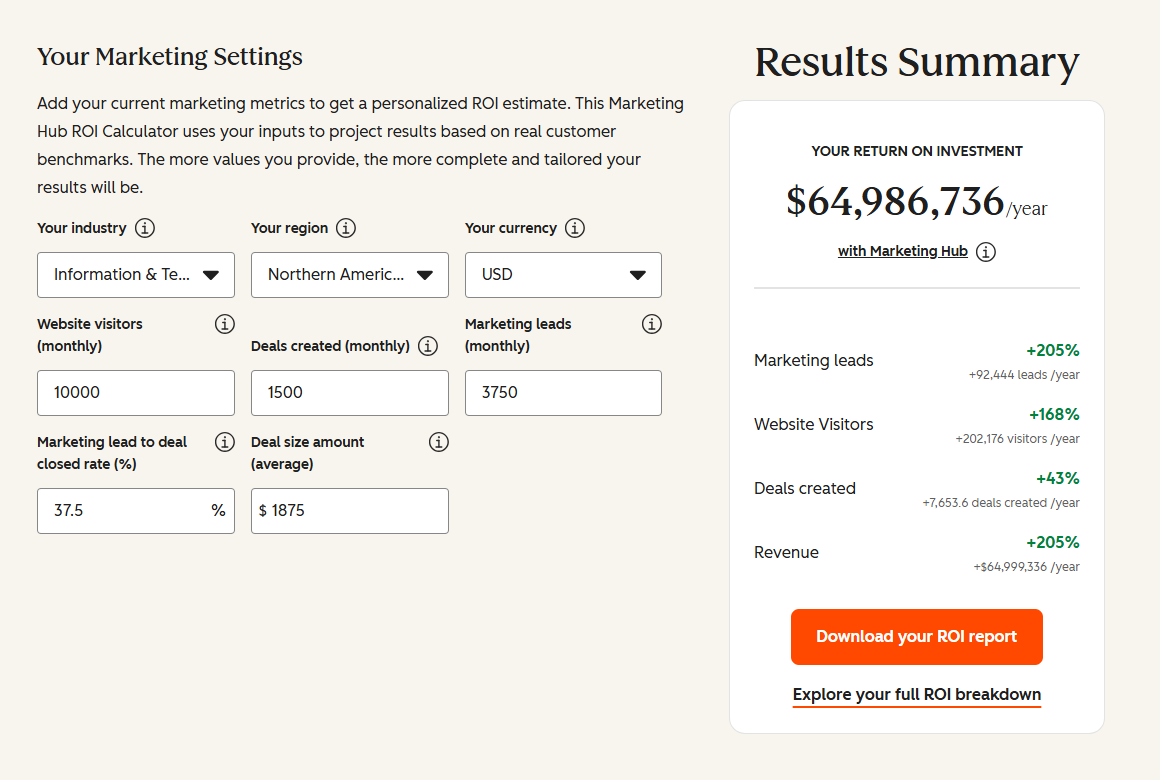
What a Custom Integration Adds
The native Zoom HubSpot integration covers the standard use case well. A custom build becomes worthwhile for teams with specific requirements the native connector doesn’t handle:
Multi-Zoom-Account Scenarios
Organisations with multiple Zoom accounts separate accounts for different teams, brands, or acquired entities can only connect one natively. A custom integration can route data from multiple Zoom accounts to the same HubSpot portal with appropriate tagging to distinguish the source account.
Engagement Depth Scoring
The native connector syncs attendance duration as a contact property. A custom integration takes this further: attendance duration, Q&A question count, poll response data, and raise-hand events all map to HubSpot lead score inputs. A contact who attended 90% of a pricing webinar, asked three questions, and responded to every poll is demonstrably more engaged than one who joined for five minutes and left. The custom integration makes that distinction visible as a lead score differential that your HubSpot sequences can act on immediately. For teams comparing webinar platforms, our HubSpot Livestorm integration covers similar engagement depth for teams considering an alternative to Zoom Webinars.
Advanced Webinar Attribution
The native connector logs webinar attendance on contact timelines and supports basic workflow triggers. A custom integration maps webinar engagement back to HubSpot deal records which specific webinars did contacts attend before a deal closed? Which webinar topics correlate with higher deal close rates? This webinar-to-revenue attribution is available when Zoom engagement data maps to HubSpot deal properties through a custom build.
| Capability | Native Connector | Custom Integration |
| Zoom meeting link in HubSpot scheduling | Yes | Yes |
| Webinar registrant/attendee sync to contacts | Yes | Yes (with more field options) |
| Recordings and transcripts on contact timeline | Yes | Yes |
| Attendance-triggered HubSpot workflows | Yes (basic) | Yes (advanced duration, poll, Q&A) |
| Multiple Zoom accounts to one HubSpot | No one tenant only | Yes |
| Lead scoring from attendance depth (duration, polls) | Limited | Full all engagement signals mapped |
| Webinar attribution on deal records | No | Yes |
| Internal meeting filtering beyond domain exclusion | Limited | Full conditional filtering |

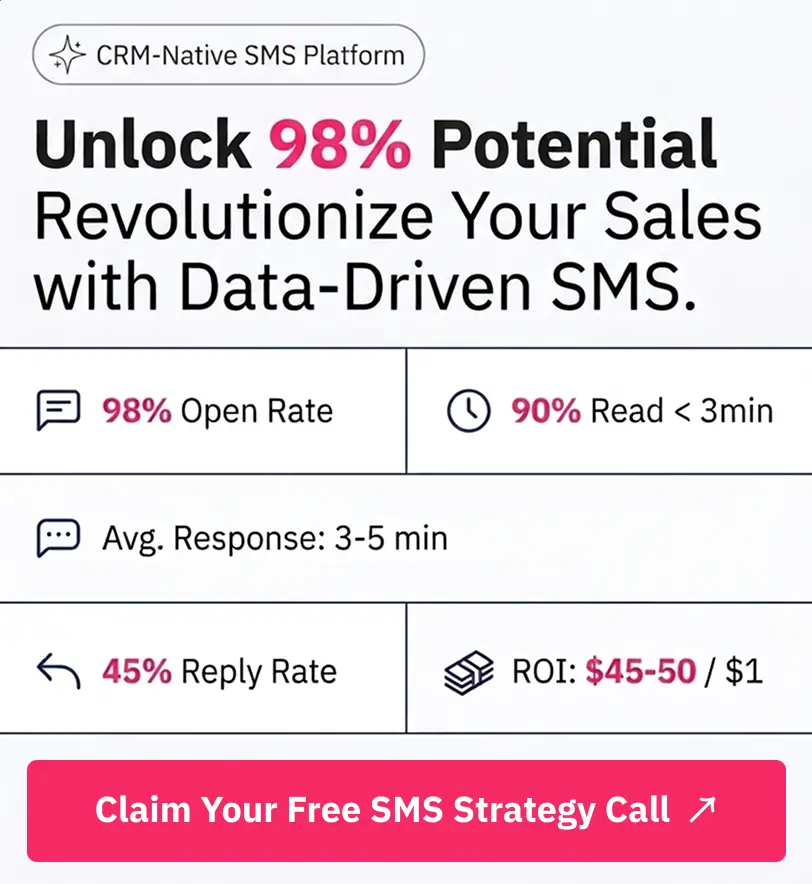
Table of Contents
- What is a HubSpot Zoom integration?
- How does the HubSpot Zoom integration work?
- Does HubSpot have a native Zoom integration?
- Why did my Zoom-based HubSpot contact segmentation stop working in 2025?
- HubSpot Zoom Integration: Native Connector Setup, Limitations, and Advanced Automation
- What the Native HubSpot Zoom Integration Does
- Native Integration: Key Limitations
- The January 2025 Segmentation Change: What Happened and What to Do
- Common Failure Points and How to Fix Them
- What a Custom Integration Adds