












Explore this article with AI:

Your HubSpot admin just gave notice, or your portal has outgrown the person managing it, or a native connector broke for the third time this quarter. Whatever got you here, you’re facing the same question every growing HubSpot customer eventually asks: do we hire a HubSpot admin, or do we bring in a Solutions Partner?
The honest answer is that it depends on what’s actually broken. A HubSpot admin is a full-time employee who owns daily portal management: workflow builds, data hygiene, user permissions, reporting. A HubSpot Solutions Partner is a certified agency that delivers implementation, integration work and strategic guidance across multiple client portals at once. Neither one is a strictly better choice. They solve different problems, and a lot of teams eventually need both.
We’re a HubSpot Diamond Solutions Partner with custom integration accreditation, so we have a stake in how this plays out. We’ve built 300+ integrations, sync 7 million fields daily, and hold a 98.5% client retention rate. That doesn’t mean every reader needs a partner. It means we’ve seen this decision made well and made badly enough times to give you a real framework instead of a sales pitch.
Free estimator
Know what your HubSpot project costs before the first call.
Select your services and get a transparent price range in minutes. No sales call needed to get a number.
Connect HubSpot to your ERP, billing platform, or database field mapping, custom logic, and support included.
Pipelines, workflows, email templates, and reporting configured for how your team actually works.
Live, role-based sessions with recordings and written guides built around a custom plan for your team.
HubSpot Partner
Client retention
Platforms integrated
What a HubSpot admin does vs what a Solutions Partner delivers
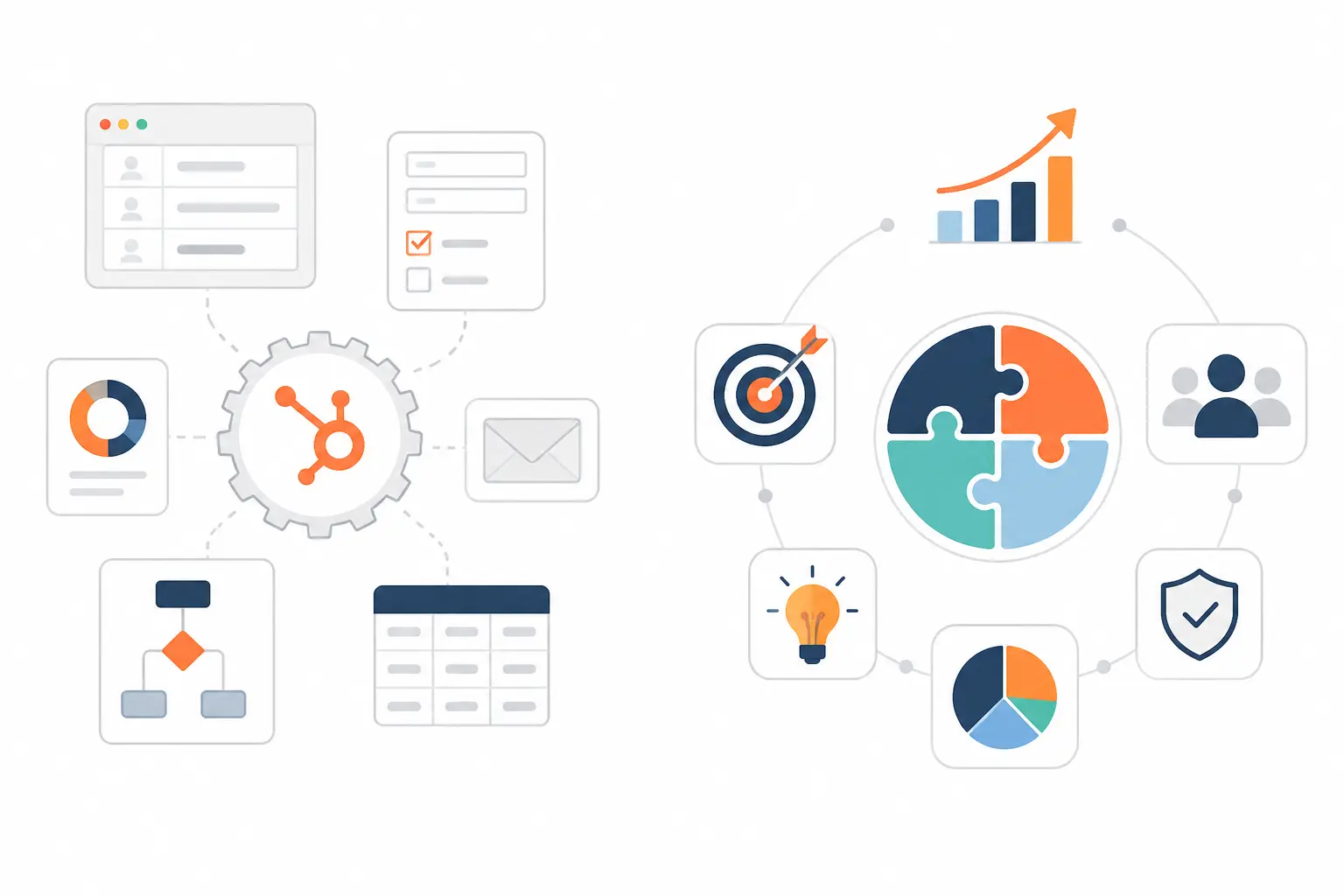
A HubSpot admin owns your portal day to day. They configure workflows, clean up properties and lifecycle stages, manage user permissions, build reports, and answer the “why isn’t this working” questions that come up constantly once a team relies on HubSpot for revenue operations. It’s a generalist role by design. One person is expected to be reasonably good across Marketing Hub, Sales Hub, Service Hub and whatever else your portal touches.
A Solutions Partner is a team, not a person. When you engage a partner, you get access to specialists: someone who architects custom objects, someone who scopes custom integrations, someone who understands compliance-heavy reporting. Partners also come with Partner Seat access, a free license HubSpot grants agencies to work inside client portals, and in some engagements a Partner Admin role with elevated settings permissions (though still restricted around billing). That structure lets a partner move faster on complex work than a solo admin usually can, simply because the work gets routed to whoever already does it every day.
The tradeoff is continuity and cost structure. An admin is embedded in your team, available daily, and paid a flat salary regardless of workload. A partner scales up and down with your needs but isn’t sitting in your Monday standup.
There’s also a depth question worth naming directly. Someone who’s spent two years building workflows in Marketing Hub isn’t automatically qualified to architect custom objects in Sales Hub or scope a bi-directional data sync. HubSpot’s own certification tracks reflect this: a generalist admin certification and a specialist integration credential test very different skills. When you’re hiring or evaluating a partner, matching the person or team to the specific Hub and problem type matters more than matching to a title.
Cost comparison: fully-loaded admin salary vs partner retainer
Most comparisons stop at admin salary, which understates the real cost. Here’s the fully-loaded picture.
| Cost factor | In-house HubSpot admin | HubSpot Solutions Partner |
|---|---|---|
| Base cost | $65,000 to $100,000+ salary | $1,500 to $15,000+/month retainer |
| Hourly equivalent | Roughly $35 to $48/hour | $75 to $300+/hour depending on specialization |
| Recruiting and onboarding | 4 to 8 weeks, plus agency or job board fees | None; team is already trained |
| Benefits and overhead | 20 to 30% on top of salary (health, PTO, taxes) | Included in retainer |
| Ramp time to productivity | 60 to 90 days on an unfamiliar portal | Days, since partners work across many portals |
| Coverage during leave or turnover | None; single point of failure | Built into the team model |
Freelance admins and contractors sit at the low end of the hourly range, $75 to $150 an hour. Fractional RevOps strategists and integration specialists run $150 to $300 an hour. Full agency retainers span $1,500 a month for ongoing admin-style support up to $15,000 a month for full-scope partnership work, including implementation and custom builds. Below $75 an hour, you’re usually looking at offshore task execution rather than someone who can make architectural decisions in your portal.
None of this means a partner is automatically cheaper. A stable, well-scoped portal with predictable daily requests often costs less with a full-time admin over a multi-year horizon. Where the math shifts is variability. An admin’s cost is fixed whether your team files two tickets a week or twenty, while a partner retainer flexes with actual workload, which matters if your requests spike around launches, campaigns, or a busy sales quarter and go quiet in between. Run your own numbers with our HubSpot ROI calculator before you commit to either path. The framework below is how you tell which situation you’re actually in.

Turn HubSpot Into A Real-Time SMS Engine with
Message IQ

Two-Way Conversations

Shared Team Inbox

Automation Triggers

Advanced Reporting

Compliance Tools
-
98%
SMS read within 3 min -
78%
Buy from first responder -
21×
More likely to qualify
3–5 min avg response
$45–$50 ROI / $1

*MessageIQ is an IntegrateIQ product – built natively for HubSpot by the same team.
A 5-question decision framework
Answer these five questions before you post a job listing or call an agency. The pattern in your answers points to the right model.
- How many Hubs does your portal actively use? One or two Hubs with straightforward workflows favors an admin. Three or more Hubs with cross-Hub automation favors a partner or a hybrid model.
- Do you need a custom integration or custom objects? If the answer involves connecting HubSpot to an ERP like NetSuite, a billing system, or any tool without a clean native connector, that’s specialist work. A generalist admin can usually configure it wrong before getting it right, and the rework costs more than scoping it correctly the first time.
- Is your RevOps function mature, or still taking shape? Mature RevOps with documented processes gives an admin clear guardrails to execute inside. An immature or undefined RevOps function needs strategic input a generalist admin typically isn’t hired to provide.
- How urgently do you need results? An admin hire takes 4 to 8 weeks to recruit plus 60 to 90 days to ramp on your portal. A partner can start scoping within days.
- What happens if your one HubSpot expert leaves tomorrow? If the honest answer is “everything stalls,” you already have a single point of failure, and that risk alone is worth solving regardless of which direction you pick.
If your answers lean toward stable, single-Hub, well-documented, and not urgent, hire an admin. If they lean toward complex, multi-Hub, integration-heavy, or urgent, a partner will outperform a solo hire at a comparable or lower total cost. If you get a mixed read across the five questions, you’re likely a hybrid case, which is the most common outcome in practice.
When you need both: the hybrid model
Most growing HubSpot portals don’t end up choosing one model exclusively. They land on a hybrid: an internal admin who owns daily requests, user support, and routine workflow maintenance, paired with a partner who handles integrations, major builds, and anything that requires specialist depth.
This is closer to how we work with most of our own clients. A client’s internal admin manages the day-to-day portal, while our team scopes and delivers the custom integration work their admin isn’t equipped or staffed to build alone, typically inside our 8-week integration delivery process from kickoff to go-live. The admin doesn’t get replaced. Their job gets easier because the hardest 20% of the workload, the part requiring integration architecture or multi-system data mapping, goes to a team that does that work every day.
The hybrid model also solves the continuity risk from question five above. If the admin leaves, the partner relationship and documentation persist, so institutional knowledge doesn’t walk out the door with one employee.
There’s a natural division of labor here worth spelling out. Daily ticket triage, new user setup, list segmentation, and routine reporting requests are well suited to an admin who’s in the portal every day and understands the business context behind each request. Anything that requires touching the API directly, mapping fields across two or more systems, or building error handling for a data sync belongs with a team that builds that kind of thing weekly rather than occasionally. Splitting the work along that line, rather than trying to find one person who’s equally strong at both, is usually what makes the hybrid model hold up over time instead of quietly reverting to whichever side is louder that quarter.
Signals you’ve outgrown a single admin
Watch for these triggers. Any one of them is a reasonable prompt to bring in partner support, even if you keep your admin in place.
- You’re being asked to build a custom integration connecting HubSpot to an ERP, billing platform, or legacy system without a reliable native connector — see how we approached this for a construction supplier’s Epicor integration
- Your portal has expanded to three or more Hubs with automation that spans across them
- You’ve hit compliance or audit requirements a generalist admin isn’t trained to architect for, common in regulated industries like financial services
- Your current admin has given notice, and you’re facing a 3 to 6 month gap to recruit and ramp a replacement
- You’re relying on one person’s undocumented knowledge of how your portal actually works
None of these mean your admin is underperforming. They mean the problem in front of you falls outside what a single generalist role was ever designed to solve.
What to expect from Integrate IQ as a partner
If the integration side of that list is what’s pulling you toward a partner, that’s specifically where we operate. We’re a HubSpot Diamond Solutions Partner with custom integration accreditation, and integration work, not general portal administration, is the core of what we do. We’ve built 300+ platform integrations and move more than 20 billion records annually across our client base, with a 98.5% client retention rate.
Our engagements typically run 8 weeks from kickoff to go-live, covering discovery, build, testing, and training, so your internal team, admin included, knows how to maintain what we’ve built once we hand it off. If your decision also involves consolidating systems rather than just connecting them, our CRM migration service covers that too. We don’t replace your admin. We give them a team to call when the work moves past what one generalist role should be expected to carry alone.
FAQ
Can a HubSpot admin build a custom integration?
A skilled admin can sometimes configure simple integrations using native connectors or HubSpot’s Data Hub Data Sync, but custom API-based integrations involving bespoke field mapping, error handling, and non-standard objects generally require specialist engineering experience most generalist admins don’t have. Attempting it without that background usually means rework later.
How much does a HubSpot Solutions Partner cost per month?
Retainers typically range from $1,500 a month for lighter, ongoing admin-style support to $15,000 a month for full-scope implementation and custom integration partnerships. Hourly rates for fractional specialists and integration engineers run $150 to $300, compared to $75 to $150 for freelance admin-level work.
What’s the difference between a Partner Seat and a Partner Admin?
A Partner Seat is a free license HubSpot grants agencies so their team can access and work inside a client’s portal. A Partner Admin has elevated settings permissions on top of that, though access is still restricted around billing and account-level controls.
Can I use an admin and a partner at the same time?
Yes, and it’s the most common setup among growing HubSpot customers. An internal admin handles daily requests, user support, and routine workflow maintenance, while a partner is engaged for integrations, major builds, or strategic work the admin isn’t staffed to handle alone.
How long does it take to replace a HubSpot admin who leaves?
Recruiting and onboarding a replacement typically takes 3 to 6 months when you account for hiring time plus 60 to 90 days of ramp-up on an unfamiliar portal. During that window, most portals shift into maintenance mode, which is part of why continuity risk is a factor worth weighing even if you ultimately choose the admin path.
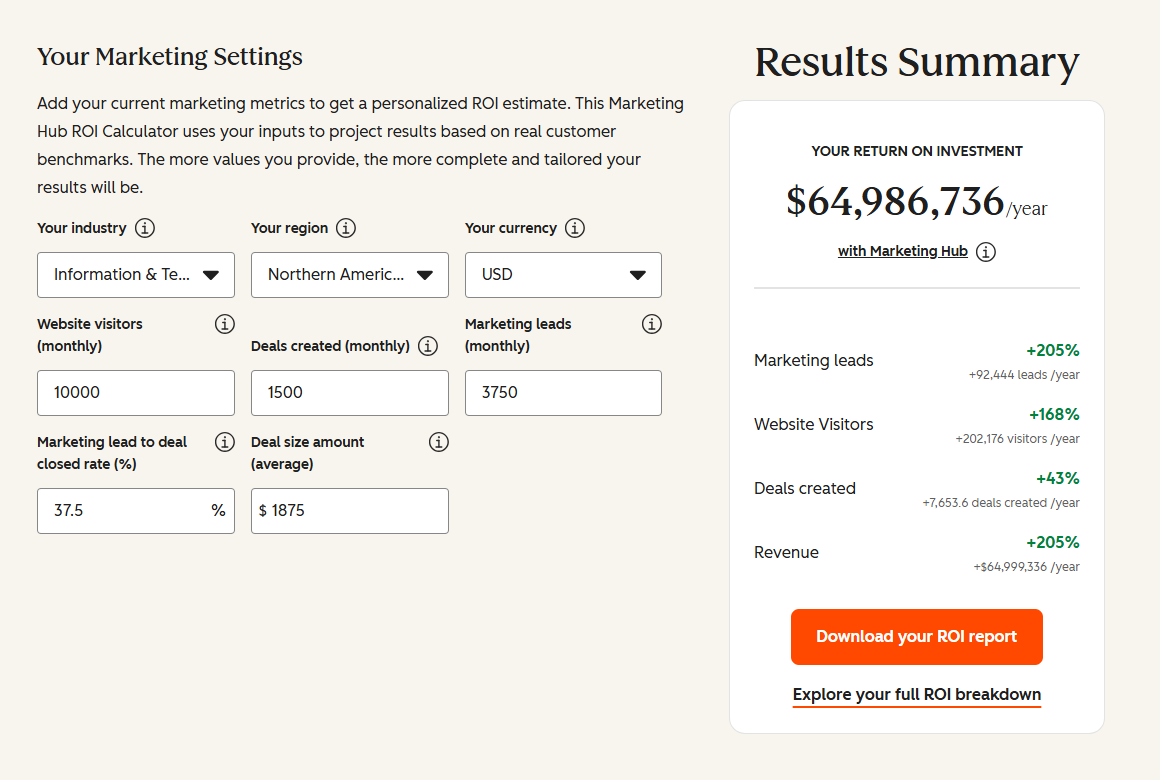
See your 12-month revenue impact with HubSpot CRM
Enter your current numbers — visitors, leads, deal size — and get a personalized projection based on real HubSpot customer benchmarks.
Talk to an engineer before you commit to either path
If the trigger pulling you toward this decision is a custom integration, a broken native connector, or a portal that’s outgrown what one admin can architect alone, we’ll scope it honestly. We’ll tell you if you actually need custom work or if a native connector will hold up fine, with training included so your internal team, admin or not, can maintain it after we’re gone.
Get your existing admin up to speed alongside any build with our HubSpot training and onboarding support, or see the 25 best HubSpot integrations most teams reach for once they’ve made this call and are ready to build.

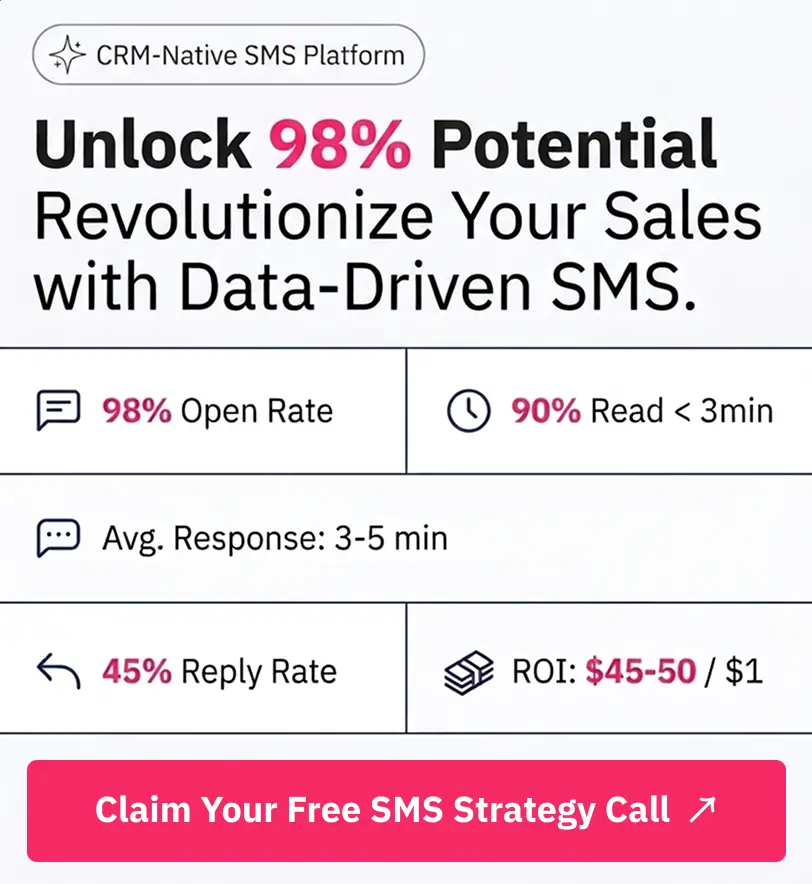
Table of Contents
- What a HubSpot admin does vs what a Solutions Partner delivers
- Cost comparison: fully-loaded admin salary vs partner retainer
- A 5-question decision framework
- When you need both: the hybrid model
- Signals you've outgrown a single admin
- What to expect from Integrate IQ as a partner
- FAQ
- Talk to an engineer before you commit to either path