

















What is a HubSpot Recurly integration?
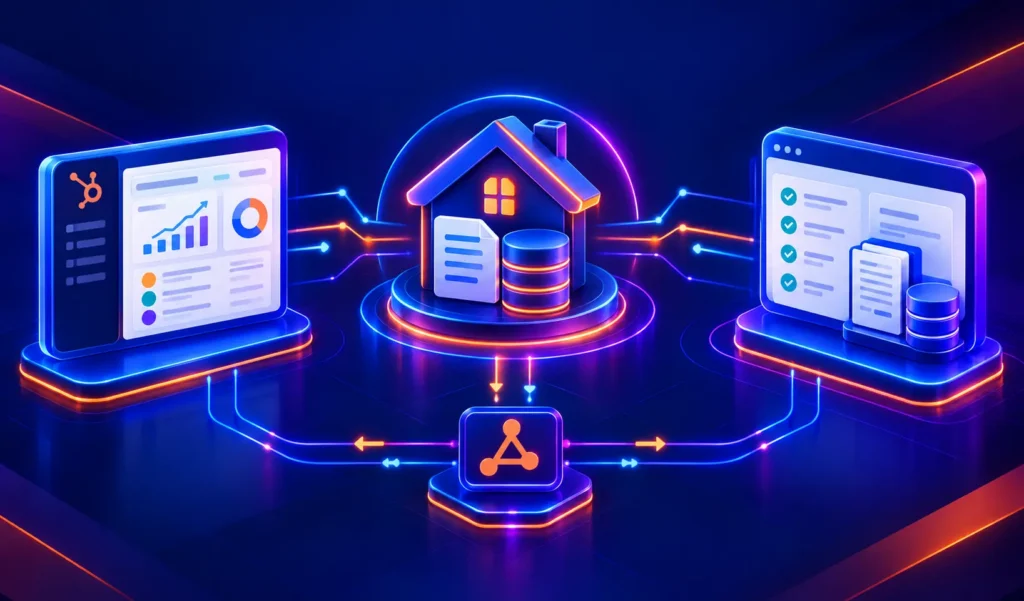
A HubSpot Recurly integration connects your subscription billing platform to HubSpot syncing subscription status, MRR, dunning events, and invoice data so sales, marketing, and customer success work from the same financial picture.
How does the HubSpot Recurly integration work?
The integration maps HubSpot contacts, companies, and deals to Recurly accounts and subscriptions, then keeps both systems current using Recurly’s API and webhook events. A Closed-Won deal can create a subscription in Recurly with the correct plan and add-ons, while billing events sync back to trigger HubSpot workflows.

Turn HubSpot Into A Real-Time SMS Engine with Message IQ
 Two-Way Conversations
 Shared Team Inbox
 Automation Triggers
 Advanced Reporting
 Compliance Tools
- 98% SMS read within 3 min
- 78% Buy from first responder
- 21× More likely to qualify

*MessageIQ is an IntegrateIQ product – built natively for HubSpot by the same team.
Does HubSpot have a native Recurly integration?
Not one built by HubSpot or Recurly directly with deep field-level control. Zapier offers basic connectivity for sending Recurly data out to HubSpot, but due to PCI compliance, it can’t create or update billing information within Recurly. Most businesses wanting real bi-directional control build a custom integration.
Can Zapier update billing information in Recurly?
No. Recurly’s own documentation confirms that due to PCI compliance requirements, Zapier cannot create or update customer billing information within Recurly. Any workflow that needs to change payment details has to route through a PCI-compliant path, not a generic automation tool.
How long does a HubSpot Recurly integration take to build?
A custom HubSpot Recurly integration typically takes 8 weeks: 2 weeks of discovery and field mapping, 3 weeks of build and staging, and the remaining weeks for testing and go-live support.
Is it safe to rely only on Recurly’s webhooks for critical alerts like failed payments?
No. Recurly’s own documentation explicitly warns that webhooks should not be solely relied upon for critical functions and should be used alongside API responses, since webhook delivery isn’t guaranteed. A dropped webhook can mean a missed dunning alert and real lost revenue if there’s no reconciliation check behind it.
How a HubSpot Recurly Integration Actually Works
A HubSpot Recurly integration works by keeping Recurly as the source of truth for subscription and billing data, using both its API and webhook events together, since Recurly’s own documentation warns against relying on webhooks alone.
In the HubSpot-to-Recurly direction, a Closed-Won deal creates a subscription with the correct plan and add-ons, and any billing detail updates route through a PCI-compliant path rather than a generic automation tool, which can’t write billing data into Recurly at all.
In the Recurly-to-HubSpot direction, dunning events, invoice status, and subscription changes sync back with correct ordering and a reconciliation check, so a dropped webhook doesn’t mean a silently missed payment failure.
Three Ways to Connect Recurly and HubSpot
Not every team needs custom. Here is the honest comparison.
| Factor | Zapier | DIY Direct API / Webhook Integration | Custom Integration (Integrate IQ) |
|---|---|---|---|
| Best for | Sending basic Recurly data out to other tools | In-house dev teams comfortable maintaining webhook and API code | Revenue teams needing dunning recovery logic, reconciliation, and PCI-safe billing updates |
| PCI-restricted billing writes | Not possible, blocked by PCI compliance | Depends on how your team routes the update | Routed through a PCI-compliant path, never attempted through an unauthorized channel |
| Webhook reliability handling | Relies on webhook delivery as-is | Depends entirely on what your team builds | Reconciliation sweep against the API catches anything a dropped webhook missed |
| Sync direction | One-way out of Recurly | Whatever gets built, often one-way | True bi-directional, configurable per object |
| Business logic | Basic, no dunning-stage awareness | Basic, maintained by whoever wrote it | Custom rules, e.g. multi-channel dunning sequencing by retry window |
| Volume handling | Task limits and throttling at scale | Breaks under thousands of hourly webhook events without dedicated maintenance | Built for high webhook volume with ordering and deduplication logic |
| Maintenance | You manage it | Falls on whoever built it | Monitored, maintained, and supported |
If you just need Recurly data flowing out to other tools, Zapier covers the basics, though it can’t touch billing information either way due to PCI rules. Once dunning recovery sequencing, webhook reliability, or true bi-directional sync matter, a custom integration is what keeps revenue-critical events from silently slipping through.
Featured snippet candidate: publish the comparison table as a real HTML table, not an image.
Additional Revenue Workflows You Can Automate Once Recurly Data Lives in HubSpot
This page already covers full customer visibility, proactive churn reduction, automated sales-to-billing handoffs, accelerated issue resolution, hyper-targeted segments, subscription lifecycle automation, lead scoring, and revenue reporting. The five below are deliberately new.
- Multi-Channel Dunning Recovery Sequencing. Beyond a single failed-payment task, HubSpot can trigger a coordinated multi-channel recovery sequence, email, then SMS via Message IQ, then a CS call task, timed to Recurly’s actual dunning retry schedule, rather than one generic alert.
- Reconciliation Sweep Beyond Webhooks. Since Recurly’s own documentation warns against relying on webhooks alone for critical functions, the integration runs a scheduled reconciliation sweep against the Recurly API to catch any events a dropped or delayed webhook might have missed, rather than trusting webhook delivery completely.
- Pause and Resume State Sequencing Protection. For subscriptions using Recurly’s Pause feature, the integration enforces correct event ordering so a resume event processed out of sequence before its pause event doesn’t corrupt HubSpot’s view of the account’s actual status.
- Recovery-Specific Retry Window Alerts. Using Recurly Recover’s specific retry-window events, the integration can alert the account team precisely when a retry window is about to close, rather than a generic “payment failed” notice that doesn’t convey urgency or timing.
- Billing Update Handoff for PCI-Restricted Changes. Since billing detail changes can’t be pushed into Recurly through basic tools due to PCI compliance, the integration routes any HubSpot-side request to update payment info to a secure Recurly-hosted update flow, rather than attempting to write card data through an unauthorized path.
What Breaks in a Recurly HubSpot Sync, and How We Prevent It
- Duplicate records and identity resolution. Customers with multiple Recurly accounts, a personal trial, then a company account, or slightly different billing emails can create duplicate HubSpot contacts. We match on a stable Recurly account identifier, not email or name matching alone.
- System-of-record conflicts. Support may manually adjust a subscription in Recurly while a HubSpot workflow still assumes the original terms. We define Recurly as the source of truth for billing and subscription fields, HubSpot for engagement fields, with field-level write permissions enforced.
- Transaction ID mistaken for invoice ID. Recurly’s own payment webhook documentation confirms the UUID field in payment events is a transaction ID, not an invoice ID; querying the invoice endpoint directly with that UUID silently fails or returns the wrong data. We follow Recurly’s documented relationship path from transaction to invoice correctly, a detail easy to get wrong on a first build.
- Webhooks alone aren’t a reliable architecture. Recurly’s own documentation explicitly warns that webhooks should not be solely relied upon for critical functions and should be used alongside API responses, since webhook delivery isn’t guaranteed. An integration that trusts webhooks completely can silently miss a dunning event or cancellation. We build a reconciliation layer that checks the API directly, not just webhook delivery, for anything revenue-critical.
- Webhook volume and ordering at scale. Recurly can generate thousands of webhook events per hour during billing cycles, trial expirations, or dunning runs, and events aren’t guaranteed to arrive in order. A naive integration can drop events, process them out of sequence, or duplicate work. Across 300+ platform integrations moving 20 billion plus fields annually, we build with explicit ordering logic and deduplication, not assumed sequential delivery.
Implementation Timeline: What to Expect
Most HubSpot Recurly integrations ship in 8 weeks. The first 2 weeks cover discovery and field mapping, including your specific plans, add-ons, and dunning configuration. The next 3 weeks cover build and staging, including reconciliation and ordering logic for webhook events. The remaining weeks cover testing, historical data backfill, and go-live support. Our HubSpot integration process is the same repeatable framework behind our 98.5% client retention rate.
See your 12-month revenue impact with HubSpot CRM
Enter your current numbers — visitors, leads, deal size — and get a personalized projection based on real HubSpot customer benchmarks.
Calculate My ROI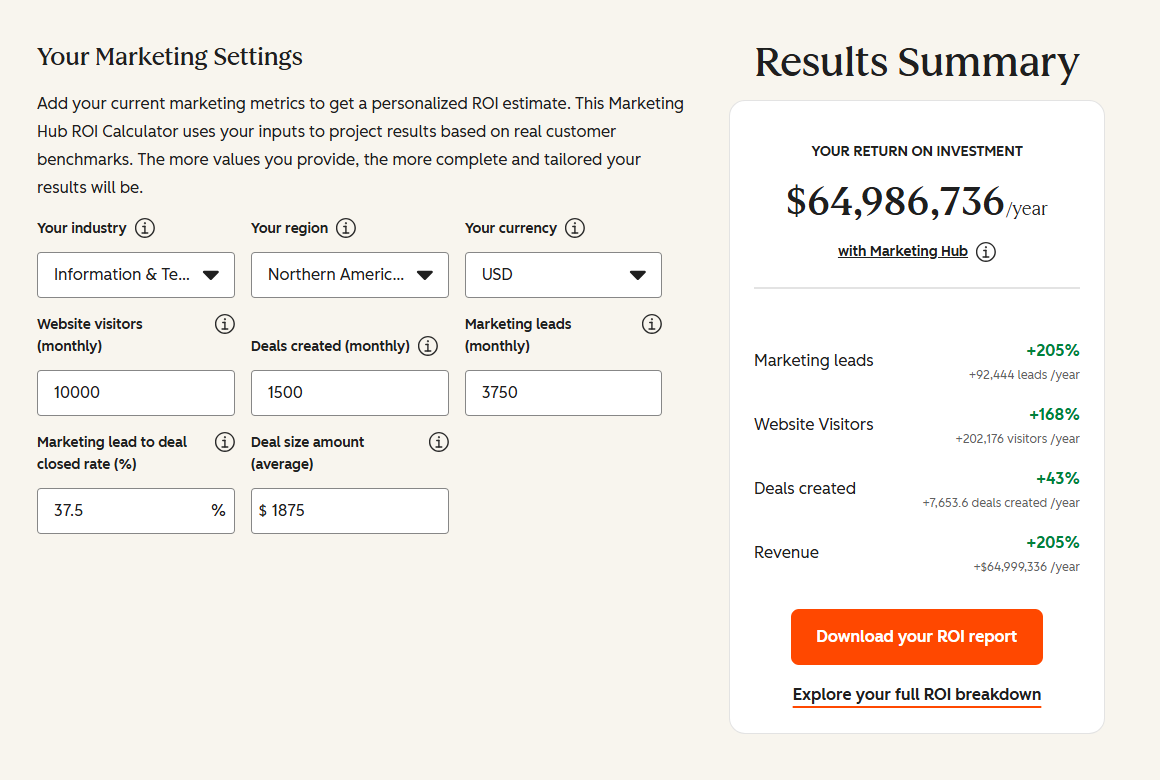
Connect the Rest of Your Revenue Stack
Dunning recovery texting works well paired with Message IQ, our own HubSpot SMS solution, since SMS dunning is a common way subscription businesses recover failed payments. See our dedicated banking and finance industry work for the broader billing and compliance picture. Custom reconciliation logic or dunning sequencing beyond the standard build often needs full-stack development support. Getting sales and CS teams onto the new workflow goes faster with HubSpot training. Not sure what any of this is worth to your team? Run the numbers on our Integration ROI Calculator.


Table of Contents
- What is a HubSpot Recurly integration?
- How does the HubSpot Recurly integration work?
- Does HubSpot have a native Recurly integration?
- Can Zapier update billing information in Recurly?
- How long does a HubSpot Recurly integration take to build?
- Is it safe to rely only on Recurly’s webhooks for critical alerts like failed payments?
- How a HubSpot Recurly Integration Actually Works
- Three Ways to Connect Recurly and HubSpot
- Additional Revenue Workflows You Can Automate Once Recurly Data Lives in HubSpot
- What Breaks in a Recurly HubSpot Sync, and How We Prevent It
- Implementation Timeline: What to Expect
- Connect the Rest of Your Revenue Stack