






HubSpot Data Mapping Service: What It Includes, When You Need One and How to Choose
Every failed HubSpot migration and every broken integration we get called to fix traces back to the same root cause: fields that don’t line up. A…

HubSpot Diamond Solutions Partner
HubSpot Workday Integration stops letting your employee and candidate data sit in a silo. Connect Workday to HubSpot to automate talent nurture, streamline employee onboarding, and get a full 360-degree view. Your standard connector wasn’t built to handle sensitive HRIS data—our custom HubSpot-Workday integration is built for security and scale, bridging the gap between your core people data and your GTM engine.
Discover how top companies use their CRM to power marketing, sales & growth. No spam. No sales pitch. Just expert insights from certified HubSpot professionals.
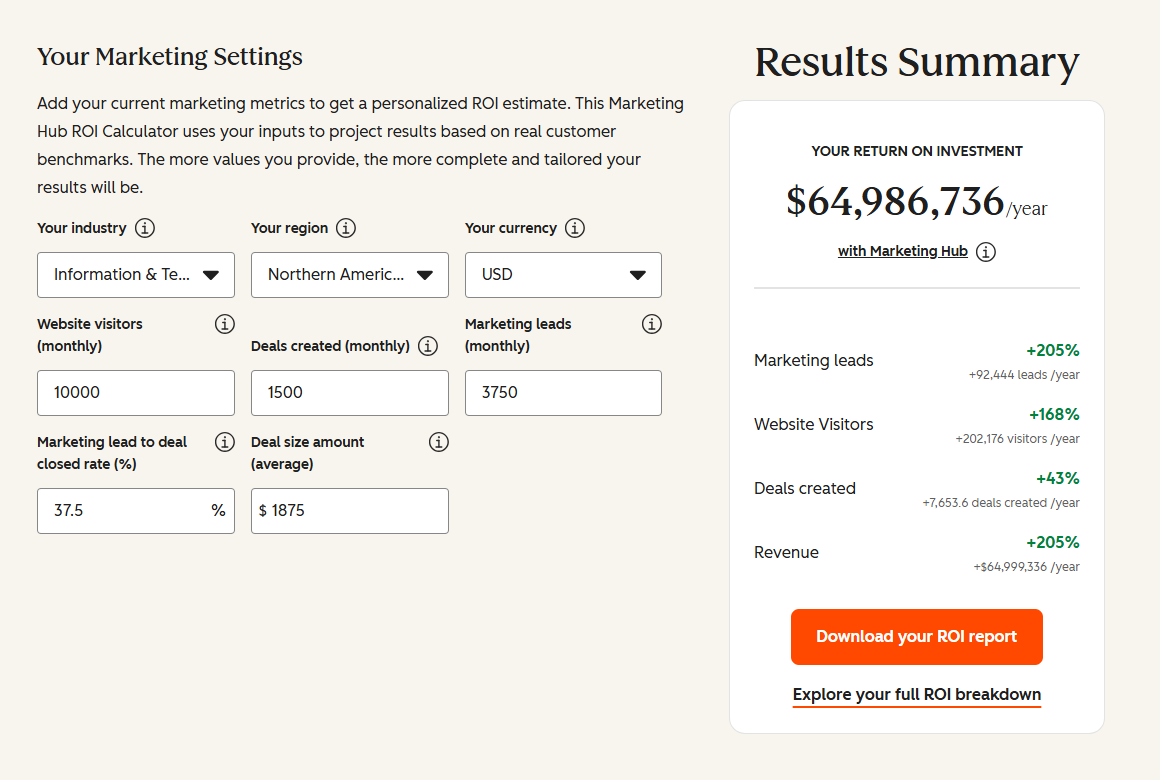
Get personalized projections based on real HubSpot customer data — matched to your industry and region.
Visitors · Leads · Deals · Close Rate · Avg. Deal Size
Benchmarks that actually match your market
Leads · Pipeline · Revenue
Instant PDF, ready to share
Two guides that turn this integration into the business case your VP wants to hear, with the framing and numbers ready to go.
Forecast credibility, deal velocity, expansion revenue, in CRO language.
Attribution, budget defensibility, segmentation, in CMO language.
Cost per order, cycle time compression, team capacity at higher volume, in COO language.
ERPs, custom objects, legacy databases, real-time bi-directional sync. Every estimate is built by the same engineers who ship the integration.
60-second ballpark · No back-and-forth
Bi-directional sync
One-way or two-way, built to your data flow
Granular field mapping
Every property mapped, validated, tested
Real-time + scheduled
Instant triggers and batched syncs together
Custom sync logic
Your business rules, written into the build
Error handling
Monitoring, alerts, retry logic baked in
Year 1 continuity
License, maintenance, ongoing support
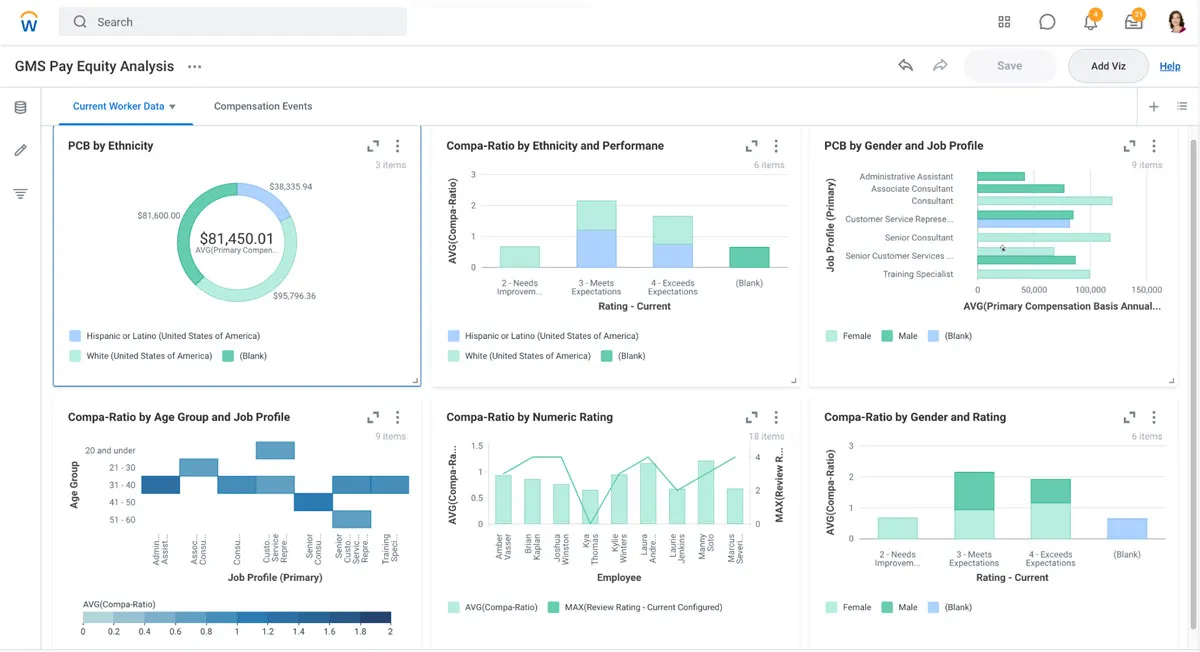
Give your talent acquisition and HR teams the power of HubSpot's marketing automation. By syncing candidate and employee data, you can build powerful nurture streams and onboarding experiences.
Sync candidates from Workday Recruiting to HubSpot to build automated "keep-warm" campaigns for your talent pipeline.
Move new hires from Workday HCM into HubSpot workflows for automated IT, HR, and marketing onboarding sequences.
Allow recruiters to see a candidate's marketing engagement (e.g., attended a recruiting webinar) directly in Workday.
Reduce manual data entry by automatically creating candidate profiles from HubSpot form submissions (e.g., "Careers Fair" landing page).
Give your talent acquisition and HR teams the power of HubSpot's marketing automation. By syncing candidate and employee data, you can build powerful nurture streams and onboarding experiences.


Integrate IQ has consistently shown they can be trusted with even the most complex projects. I know our customers are in great hands and that the job will always get done right.
Your HubSpot platform is missing key internal data. Our integration syncs essential employee information from Workday, allowing you to manage internal communications and align sales territories more effectively.
Sync your employee directory from Workday to HubSpot, allowing you to use HubSpot's internal marketing tools for company newsletters and updates.
Build accurate sales territory assignments in HubSpot based on up-to-date employee lists and roles from Workday.
Create a single, unified view of customer-facing teams, mapping Workday employee data to HubSpot owner fields.
Automatically de-provision HubSpot access or re-assign tasks when an employee's status changes to "Terminated" in Workday.
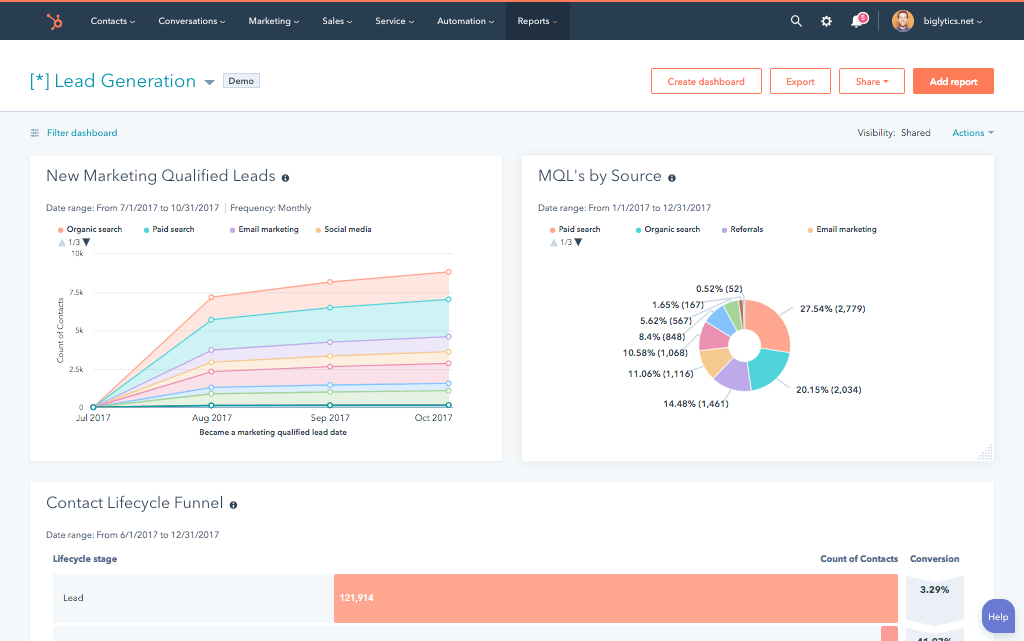
Your HubSpot platform is missing key internal data. Our integration syncs essential employee information from Workday, allowing you to manage internal communications and align sales territories more effectively.
Get personalized projections based on real HubSpot customer data — matched to your industry and region.
Visitors · Leads · Deals · Close Rate · Avg. Deal Size
Benchmarks that actually match your market
Leads · Pipeline · Revenue
Instant PDF, ready to share
Our custom integrations are engineered for flexibility and scale, handling any business logic and data transformation you require.
Basic connectors can't handle the security, compliance, and complexity of employee PII (Personally Identifiable Information). We build your integration around your specific HR and IT policies, ensuring data is both secure and useful.
We connect the dots between your people data and your marketing platform.
An instant AI-powered scan that shows where your brand, funnel, and CRM are leaking revenue and exactly what to fix first.
Most companies score between 52–71. Where do you stand?
No surprises. Clear scope, clear acceptance tests. We believe in straightforward pricing so you know exactly what to expect before we begin.
A failed integration is more than a technical problem: it's a drain on time, budget, and morale. We are the specialists that leading companies like MetLife trust to handle their most mission-critical data flows. We don't rely on fragile connectors or simplistic platforms because we know they can't handle enterprise scale. Our approach is built on robust, custom development and a deep understanding of both HubSpot and the systems you need to connect it to. Partnering with us isn't just another attempt; it's an investment in certainty.
Our four pillars for delivering successful outcomes on complex projects.
We thrive on custom API integrations, multi-system migrations, and “messy data” that makes others pause. Full support for standard and custom objects across your stack is table stakes for us.
Real problems, shipped solutions. Our proprietary Smart Ramp apps were developed to fill gaps in HubSpot capabilities and solve real-world customer problems. The same practical mindset powers our HubSpot AI Accelerator: We focus on data readiness and shipped outcomes, not shiny features.
Complex projects demand clarity. Our Smart Process runs on an 8-12 week cadence with stage gates, transparent deliverables, and clear pricing. That’s how we maintain a 98.5% customer retention rate.
We’re a developer-led team of integration engineers, solution architects, and technical PMs. Clients describe us simply: 'the folks you call when something seems impossible.'

















See why leaders at scaling companies partner with Integrate IQ's experts.
Why Businesses Trust Integrate IQ for a Smarter HubSpot Experience

We build the integration with security first, often using one-way syncs and field-level permissions to ensure only non-sensitive data needed for marketing or operations is moved.
Yes. A primary use case is syncing candidate data from Workday Recruiting to HubSpot, allowing you to build marketing nurture campaigns for your talent pipeline.
We can build a custom rule that automatically updates the contact property in HubSpot (e.g., sets "Employee Status" to "Inactive") and triggers de-provisioning workflows.
Our solution is custom-built to handle the complex, secure nature of HRIS data. We map custom fields and build logic that one-size-fits-all tools can't.
Stop managing your talent and your customers in separate worlds. Schedule a discovery call to see how a unified HubSpot and Workday system can transform your recruiting, onboarding, and internal communications.
Connect HubSpot & Workday
Every failed HubSpot migration and every broken integration we get called to fix traces back to the same root cause: fields that don’t line up. A…
Your HubSpot migration date is on the calendar. Your source CRM is full of duplicates, contacts who changed jobs three years ago, and a “Lead Source”…
HubSpot’s AI Chatbot is the conversational layer built into the HubSpot Customer Platform, and it answers website visitors using your CRM data and your own knowledge…
