






































What is a HubSpot Apollo.io integration?
A HubSpot Apollo.io integration is a bi-directional data connection that syncs contacts, accounts, deals, and sequence engagement activity between Apollo and HubSpot CRM. Apollo provides B2B database enrichment and sequence engagement; HubSpot owns the CRM system of record. The integration ensures every enriched contact, sequence reply, meeting booked, and email opened appears on the correct HubSpot deal and contact record.
How does the HubSpot Apollo.io integration work?
It works through Apollo’s REST API and HubSpot’s REST API with field mapping, dedupe on email plus company domain, and workflow triggers in both directions. Apollo offers two native options: HubSpot CRM (full bi-directional) and HubSpot Data Enrichment (enrichment-only). Custom integrations extend beyond native for deal creation on reply, conditional sync logic, and multi-instance CRM setups.

Turn HubSpot Into A Real-Time SMS Engine with Message IQ
 Two-Way Conversations
 Shared Team Inbox
 Automation Triggers
 Advanced Reporting
 Compliance Tools
- 98% SMS read within 3 min
- 78% Buy from first responder
- 21× More likely to qualify

*MessageIQ is an IntegrateIQ product – built natively for HubSpot by the same team.
Does HubSpot have a native Apollo.io integration?
Yes. Apollo maintains two native HubSpot integrations: HubSpot CRM (full bi-directional sync of contacts, accounts, deals, activities) and HubSpot Data Enrichment (enrichment-only). Apollo only supports one CRM at a time, so teams migrating from Salesforce must disconnect first. Native works for basic use cases but lacks deal creation on reply and complex conditional logic.
Can Apollo automatically create deals in HubSpot?
Not with the native connector reliably. The native syncs contacts, accounts, and deals when they exist but does not auto-create HubSpot deals when a prospect replies to an Apollo sequence or is marked Interested. A custom integration adds a workflow trigger that creates a HubSpot deal in the correct pipeline the moment a reply happens.
How long does a custom HubSpot Apollo.io integration take to build?
A custom HubSpot Apollo.io integration takes about 8 weeks from kickoff to production. Discovery runs two weeks for sequence structure inventory, engagement scoring rules, and deduplication design. Build and staging runs three weeks. Workflow layer runs one week, UAT with SDR and RevOps runs one week, and go-live with monitored production traffic covers the final week.
What data can sync between HubSpot and Apollo?
Contacts and people, companies and organizations, deals with custom mapping, sequence activities (emails sent, opens, clicks, replies), calls and voicemails, tasks and meetings, owner assignments, contact and account stages, and enriched fields (job title, phone, verified email, technographic data). HubSpot workflow enrollment can also trigger Apollo sequence enrollment for a clean MQL-to-outreach handoff.
The Cost Lens: What Each Path Actually Costs in SDR Time
The vertical sections above show what each Apollo integration path can do. This companion table shows what each path costs in SDR hours, because the native Apollo connector is good for the basics but its gaps silently steal SDR time every week.
| Cost Dimension | Apollo Native (HubSpot CRM) | Zapier / iPaaS | Custom (Integrate IQ) |
|---|---|---|---|
| Setup time to first sync | Same day (once configured) | Hours to days depending on Zap complexity | 6-8 weeks (custom build) |
| Deal creation on sequence reply | Not automatic; SDRs create deals manually | Basic Zap creates deals, breaks on schema changes | Automatic deal creation with pipeline routing on reply, meeting booked, or Interested status |
| SDR time on manual deal creation | 10-15 min per positive reply | 5-10 min per reply (Zap troubleshooting) | Zero (deal auto-created with full context) |
| Custom sequence-reply routing (e.g. sync only if title contains VP) | Not supported | Basic conditional logic | Full support with any Apollo or HubSpot field |
| Multi-CRM instance support | Not supported (Apollo = one CRM at a time) | Multiple Zaps per instance, brittle | Full support across multiple HubSpot portals |
| Enrichment latency for new HubSpot contacts | Batch, hourly to daily | Depends on Zap trigger cadence | Real-time enrichment on contact creation with seconds latency |
| Duplicate handling at scale | Basic dedupe, breaks with 10,000+ contacts | Zap-level dedupe, fragile | Custom dedupe logic on email + domain + phone with merge rules |
| Team hours reconciling Apollo/HubSpot data monthly | 3-5 hours per RevOps lead per month | 1-2 hours per RevOps lead per month | Zero (reconciliation runs automatically) |
The native Apollo connector looks free on paper. The operational cost 10 to 15 minutes of manual deal creation per positive reply, monthly reconciliation hours, SDRs walking into meetings without Apollo engagement context usually exceeds a custom build’s ROI within 60 days for teams above 10 SDRs running 200+ sequences per month. Our custom HubSpot integration services cover the build, backfill, and post-launch monitoring on a fixed project cost.
Prospecting Workflows Beyond the Vertical Sections Above
- Positive reply to deal creation with sequence context. Apollo sequence positive reply fires a HubSpot workflow that creates a deal in the correct pipeline, attaches the full sequence history (which emails opened, what wording drove the reply), and assigns the deal to the AE with a task to book a meeting inside 24 hours. Speed-to-first-meeting compresses because deal creation stops being a manual SDR task.
- Meeting booked to AE handoff with Apollo engagement summary. A meeting booked via Apollo triggers a HubSpot workflow that creates a deal, attaches all prior sequence engagement, and posts a summary in Slack for the AE. The AE walks into the meeting knowing which emails the prospect opened, which topics they clicked, and what pain point drove the meeting request.
- MQL to Apollo sequence enrollment. A HubSpot contact reaching MQL threshold (lifecycle stage change, form fill scoring above threshold, engagement pattern match) automatically enrolls into the correct Apollo sequence based on persona, industry, or intent signal. Marketing hands off to outbound seamlessly without SDRs manually copying lead lists between platforms.
- Enrichment on contact creation with real-time trigger. Every new HubSpot contact (form fill, chat, CSV import, meeting booked) triggers real-time Apollo enrichment that returns verified email, direct phone, LinkedIn URL, seniority, department, and technographic data inside seconds. Contact records are complete the moment they land in HubSpot instead of waiting for a batch enrichment run.
- Bounced-email intent signal to re-enrichment. An Apollo sequence email bounce triggers HubSpot to flag the contact as needing re-enrichment, pulls fresh contact data from Apollo’s database, and if a new verified email is found, resumes the sequence. Bounce rate drops without SDRs manually cleaning contact lists.
What Breaks in an Apollo HubSpot Sync (Beyond Native Limits)
- Deal creation gap on sequence reply. Native Apollo HubSpot integration syncs contacts and updates deals when they exist but does not create deals when a positive reply happens. SDRs create deals manually, dropping the AE handoff by hours or days. Custom integration adds a workflow trigger that creates deals on reply with the sequence context preserved.
- One-CRM lock breaking mid-migration. Apollo only supports one CRM at a time. Teams migrating from Salesforce to HubSpot lose Apollo sequence-to-CRM sync entirely during the cutover window. A custom bridge integration keeps both flows live during migration so SDRs never lose visibility into the new HubSpot portal.
- Enrichment stale on high-turnover roles. Apollo enrichment on job title and company runs at connection time; roles change and Apollo does not re-enrich stale contacts unless prompted. Contacts show “Marketing Manager at CompanyX” three years after they left. Custom sync re-enriches contacts at a defined cadence (quarterly or when engagement resumes) so title accuracy stays useful for personalization.
- Sequence exclusion logic missing on active customers. SDRs prospect existing customers because Apollo does not know the contact reached Customer stage in HubSpot. Native exclusion works on lifecycle stage but breaks on custom properties (renewal-at-risk, expansion opportunity, churn risk). Custom sync writes suppression flags to Apollo based on any HubSpot property so SDRs never prospect an active customer or churn-risk account.
- Custom Apollo fields silently dropped. Native mapping covers standard Apollo fields but drops custom Apollo fields (intent score, buying committee tag, verticalization label) silently. Sales operations rebuilds segmentation manually in HubSpot. Custom integration maps all Apollo custom fields to HubSpot custom properties with field-level system of record so intent and buying signals stay actionable.
Implementation Timeline: What to Expect
The page above already covers the 8-week custom build cadence broken down by week (Weeks 1-2 Discovery, Week 3 Environment, Weeks 4-5 Core Build, Week 6 Workflow Layer, Week 7 UAT, Week 8 Production). Confirming the standard 8-week production timeline and what shifts for edge cases. Standard single-team HubSpot Apollo integrations complete in 8 weeks. Teams running Apollo across multiple HubSpot portals or migrating from Salesforce to HubSpot alongside the Apollo build add 1 to 2 weeks in discovery for portal-specific routing and cutover choreography, not in build. High-volume teams running 500+ Apollo sequences per month add discovery time for volume filtering rules and API rate-limit design. Post-launch monitoring is included, so if Apollo pushes an API update or HubSpot rolls a workflow action, we see it before your SDR reports do. Full detail is on our HubSpot integration process page and 98.5% of clients renew for a follow-on scope.
See your 12-month revenue impact with HubSpot CRM
Enter your current numbers — visitors, leads, deal size — and get a personalized projection based on real HubSpot customer benchmarks.
Calculate My ROI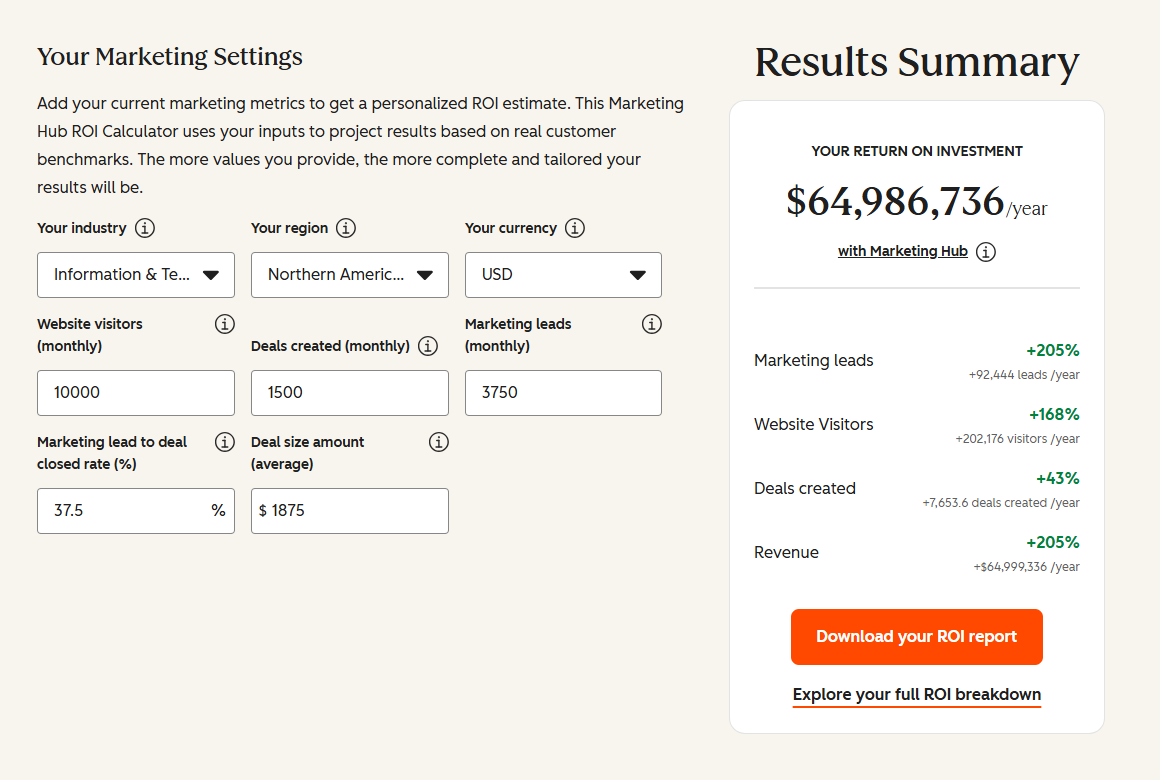
Connect the Rest of Your Revenue Stack
Apollo rarely lives alone in the sales engagement stack. Teams evaluating alternatives review our HubSpot Salesloft integration, HubSpot Outreach integration and HubSpot ZoomInfo integration as parallel outbound and enrichment options. Teams comparing Apollo pricing to alternatives often review our HubSpot vs Salesloft comparison for the sales engagement decision. Teams adding SMS to the outbound sequence layer in Message IQ an Integrate IQ product built natively for HubSpot that fires SMS from workflow triggers with 98% read rate and TCPA compliance controls, which complements Apollo’s email-and-call sequence model by handling the SMS channel Apollo does not (appointment confirmations, meeting reminders, offer nudges). Teams closing on high-value Apollo-sourced deals pair this with a HubSpot Gong integration or HubSpot Chorus integration so call recordings flow to the same deal record. For broader sales engagement patterns, our guide to top HubSpot custom integrations covers the decision framework, and the integration ROI calculator turns the case into a number.

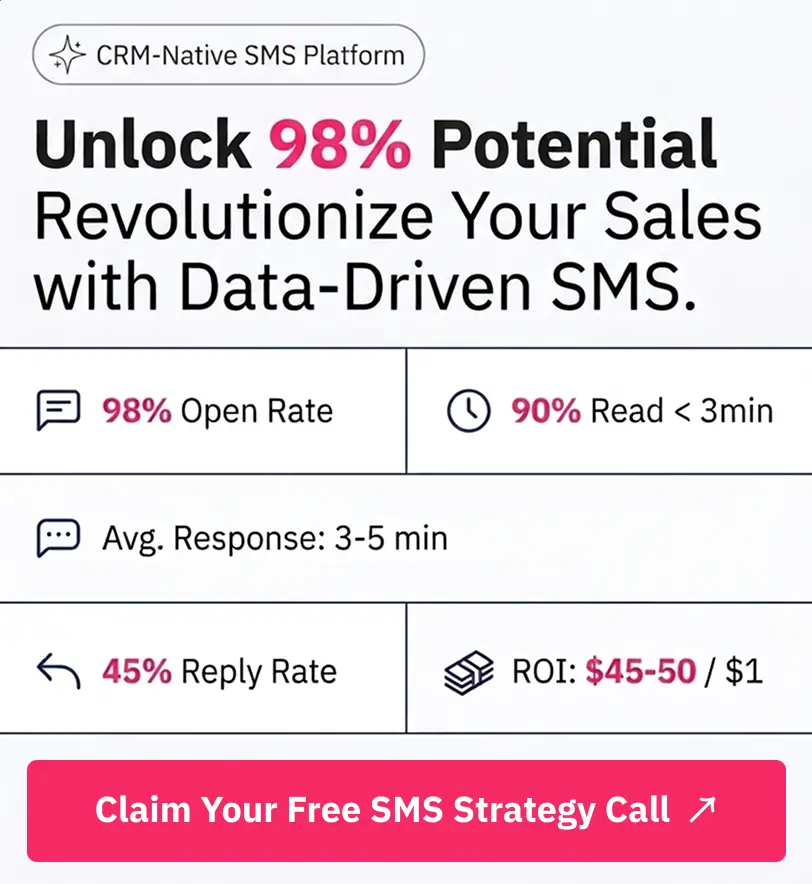
Table of Contents
- What is a HubSpot Apollo.io integration?
- How does the HubSpot Apollo.io integration work?
- Does HubSpot have a native Apollo.io integration?
- Can Apollo automatically create deals in HubSpot?
- How long does a custom HubSpot Apollo.io integration take to build?
- What data can sync between HubSpot and Apollo?
- The Cost Lens: What Each Path Actually Costs in SDR Time
- Prospecting Workflows Beyond the Vertical Sections Above
- What Breaks in an Apollo HubSpot Sync (Beyond Native Limits)
- Implementation Timeline: What to Expect
- Connect the Rest of Your Revenue Stack