


What is a HubSpot ActiveCampaign integration?
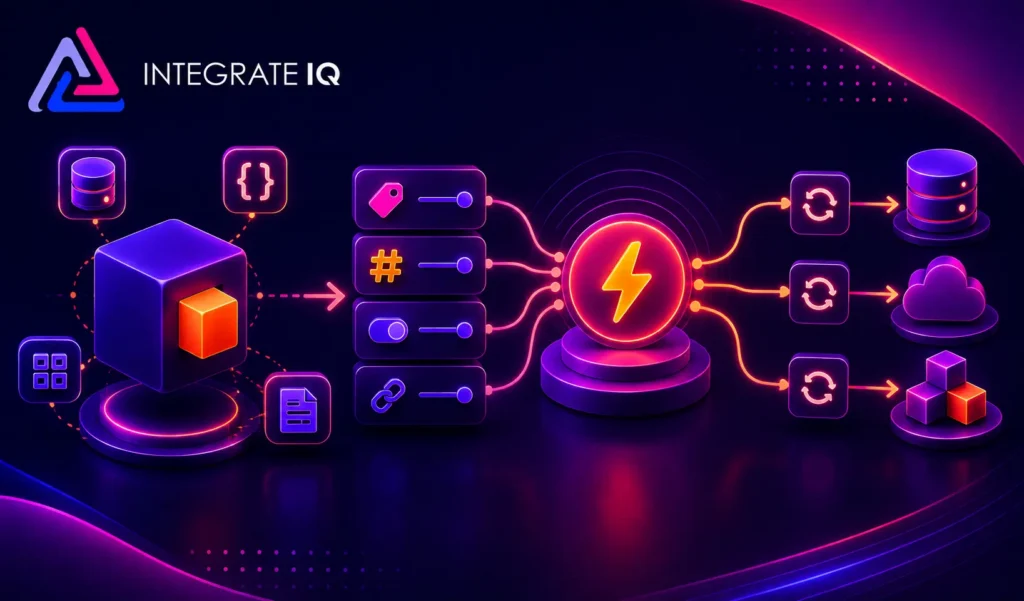
A HubSpot ActiveCampaign integration is a two-way data connection that syncs contacts, program membership, lead scores, and email engagement between HubSpot and ActiveCampaign in near real time. It keeps ActiveCampaign automation activity visible inside HubSpot and pushes HubSpot lifecycle and deal data back to ActiveCampaign for accurate lead handoff and attribution.
How does the HubSpot ActiveCampaign integration work?
It works through the HubSpot and ActiveCampaign REST APIs, with field mapping, deduplication, and a defined system of record for every object. When a record updates in either system, the sync writes the change to the other within minutes. Bi-directional rules control which fields, like lead score or lifecycle stage, flow which direction.

Turn HubSpot Into A Real-Time SMS Engine with Message IQ
 Two-Way Conversations
 Shared Team Inbox
 Automation Triggers
 Advanced Reporting
 Compliance Tools
- 98% SMS read within 3 min
- 78% Buy from first responder
- 21× More likely to qualify

*MessageIQ is an IntegrateIQ product – built natively for HubSpot by the same team.
Does HubSpot have a native ActiveCampaign integration?
HubSpot does not maintain a first-party ActiveCampaign integration. The marketplace lists third-party apps that handle basic contact sync but skip program membership, lead score sync, and campaign attribution detail. Teams that need accurate MQL handoff or closed-loop reporting typically move to a custom-built integration instead.
How long does a HubSpot ActiveCampaign integration take to build?
A custom HubSpot ActiveCampaign integration takes about 8 weeks from kickoff to production. Discovery runs two weeks, build and staging tests run three, historical backfill runs one, and cutover with hypercare covers the final two weeks. Timelines extend for accounts with heavy custom field mapping or high contact volume.
Can HubSpot and ActiveCampaign sync bi-directionally?
Yes. Bi-directional sync is standard in a custom HubSpot ActiveCampaign integration. You define system of record at the field level, so ActiveCampaign automation activity flows one way, HubSpot lifecycle stage and deal data flow the other, and conflicts resolve by rule rather than by whichever system wrote last. The native app supports bi-directional sync only for basic contact fields.
What data can sync between HubSpot and ActiveCampaign?
Contacts, deals, companies, tags, program and list membership, lead scores, and email engagement events like opens, clicks and automation entries, plus HubSpot lifecycle stage. Field mapping is configured per project so only relevant data flows and each field has a clear owner. Custom ActiveCampaign and HubSpot fields sync through each platform’s REST API.
How a HubSpot ActiveCampaign Integration Actually Works
A HubSpot ActiveCampaign integration keeps ActiveCampaign as the system of record for automation, lead score, and program membership, while HubSpot owns the deal, lifecycle, and revenue side. Neither platform has to become a shadow copy of the other.
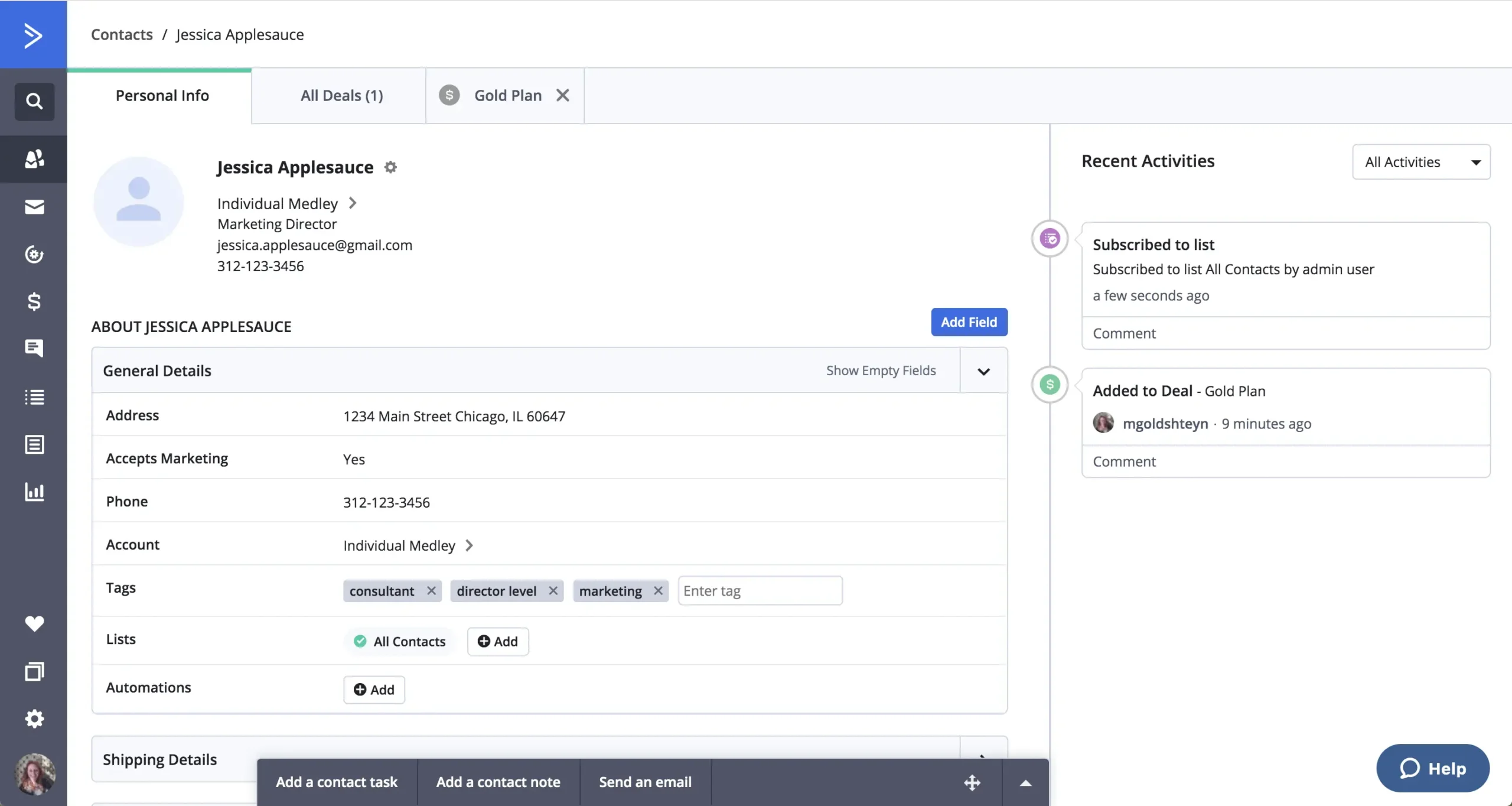
Data flows both ways. ActiveCampaign pushes lead score changes, program membership, tags, and engagement events into HubSpot so sales sees marketing context on the contact record. HubSpot pushes lifecycle stage, deal stage, and deal value into ActiveCampaign so automations can branch on where a contact sits in the pipeline.
Nothing syncs by accident. Every field has a defined owner and direction, so a rep updating a deal stage in HubSpot cannot get overwritten by an unrelated ActiveCampaign automation run, and vice versa.
Three Ways to Connect ActiveCampaign and HubSpot
Not every team needs custom. Here is the honest comparison.
| Factor | Native Marketplace App | Zapier / iPaaS | Custom (Integrate IQ) |
|---|---|---|---|
| Best for | Basic contact sync for small lists | Point-to-point automation triggers | Full bi-directional GTM data flow at scale |
| Sync direction | One-way or narrow two-way | One-way per Zap, stacked Zaps for two-way | True bi-directional, controlled at the field level |
| Custom objects/fields | Standard fields only | Limited, breaks on schema changes | Full support for custom properties and tags |
| Lead scoring and campaign attribution sync | Not supported | Requires fragile custom Zap logic | Native mapping, real-time score and attribution sync |
| Business logic | None, straight field copy | Basic conditional Zaps | Full custom logic, e.g. sync only past MQL threshold |
| Volume handling | Degrades past a few thousand contacts | Rate-limited, task-based pricing scales poorly | Built for enterprise volume, batched and throttled |
| Historical backfill | Not supported | Manual, error-prone | Full historical sync included |
| Maintenance | None, vendor-controlled | Ongoing Zap upkeep as apps change | Managed and monitored by Integrate IQ post-launch |
Revenue Workflows You Can Automate Once ActiveCampaign Data Lives in HubSpot
- Score-Threshold MQL Handoff. When a contact’s ActiveCampaign lead score crosses your defined threshold, the sync updates the HubSpot contact to Marketing Qualified Lead and attaches the last five engagement events. The rep sees full context on the first call instead of a cold record.
- Nurture Completion to Sales Task. Completing a nurture sequence in ActiveCampaign creates a HubSpot task for the account owner, logging the sequence name and completion date on the contact timeline. Reps follow up while intent is warm instead of relying on manual exports.
- Two-Way Segment Sync. Email opens, clicks, and automation entries in ActiveCampaign update HubSpot list membership and custom properties in near real time, and HubSpot property changes flow back to update ActiveCampaign tags. Marketing and sales work off one live segment instead of two drifting lists.
- Event Registration Alerts. A webinar registration captured in ActiveCampaign creates a HubSpot deal or task tied to that contact, and post-event attendance updates the record automatically. Sales gets a same-day alert instead of finding out at the next pipeline review.
- Suppression List Sync. Unsubscribes and bounces recorded in either platform push instantly to the other, so a contact who opts out in ActiveCampaign can never re-enter a HubSpot workflow and vice versa. This keeps both systems compliant and protects sender reputation.
What Breaks in a ActiveCampaign HubSpot Sync, and How We Prevent It
- Duplicate records and identity resolution. Contacts created independently in HubSpot forms and ActiveCampaign automations collide on email address. We match and merge on a defined identity key before write, so neither system ends up with silent duplicates.
- System-of-record conflicts. Without a clear field owner, a contact edited in both platforms in the same window can get overwritten by whichever sync ran last. We assign system of record at the field level so updates apply in one direction only, by rule.
- Tag and property mapping drift. ActiveCampaign tags and HubSpot custom properties use different value sets, and a renamed tag or property silently breaks the mapping. We validate mappings against both schemas on every deploy and alert on drift.
- Lead score and program membership drift. ActiveCampaign scores and program membership are proprietary objects with no default HubSpot equivalent, so naive syncs let scores stall or attribution reporting fall out of sync. We build explicit mapping logic so scores and program state stay current in both systems.
- API rate limits at volume. Across our client base we sync 20 billion plus fields annually across 300+ platforms, so at ActiveCampaign automation-trigger volume we batch, checkpoint, and throttle by design instead of by accident.
Implementation Timeline: What to Expect
Most HubSpot ActiveCampaign integrations complete inside eight weeks of kickoff. The first two weeks cover discovery: object inventory in both systems, field-by-field mapping, system of record decisions, and an audit of existing ActiveCampaign lead-scoring rules and program membership logic. Weeks three to five are build and unit testing against a staging ActiveCampaign instance and a HubSpot sandbox. Week six runs the historical backfill and reconciliation. Weeks seven and eight cover user acceptance testing, cutover, and hypercare. Post-launch monitoring is included, so if a ActiveCampaign configuration changes or HubSpot pushes an API update, we see it before your reports do. Full detail is on our HubSpot integration process page and 98.5% of clients renew for a follow-on scope.
See your 12-month revenue impact with HubSpot CRM
Enter your current numbers — visitors, leads, deal size — and get a personalized projection based on real HubSpot customer benchmarks.
Calculate My ROI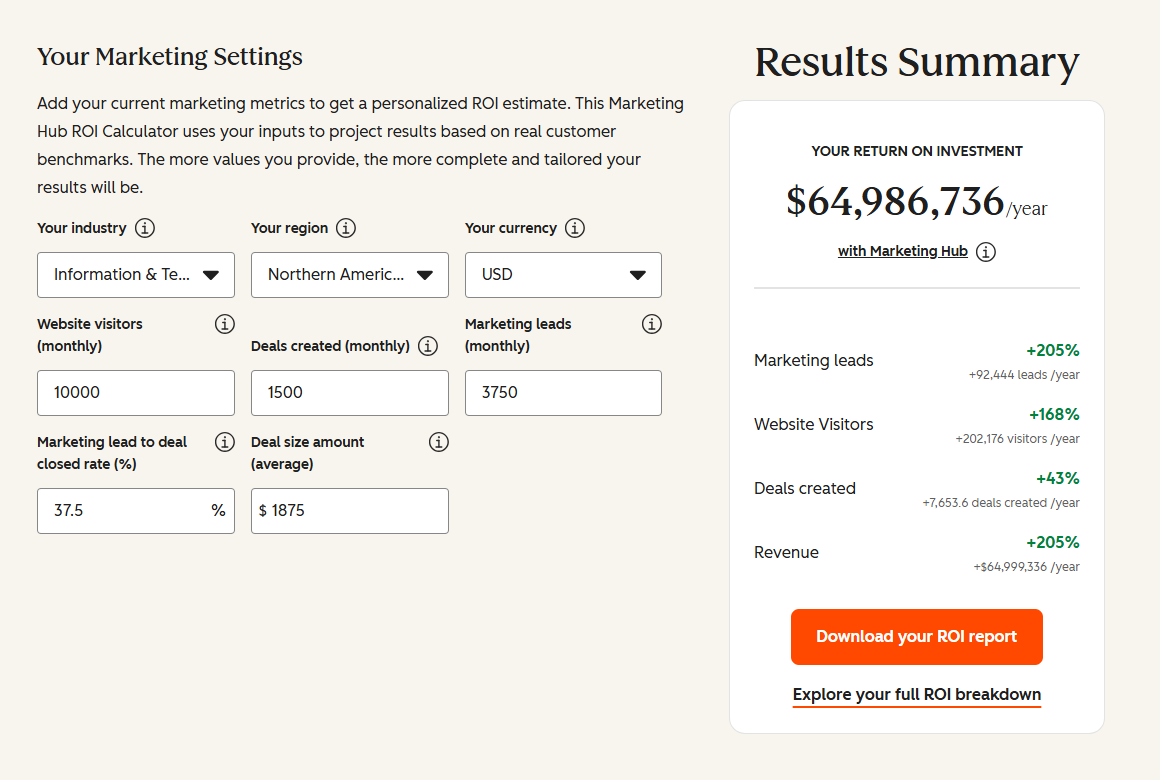
Connect the Rest of Your Revenue Stack
Most ActiveCampaign users are also weighing their broader GTM stack. If you are comparing CRMs outright, our HubSpot Salesforce integration covers the same sync patterns for sales-led teams. Feeding product usage or warehouse data into either platform pairs well with a HubSpot Snowflake integration and ecommerce-heavy ActiveCampaign users often also run a HubSpot Klaviyo integration for order and lifecycle data. Whatever you build, size the return first with our integration ROI calculator

Table of Contents
- What is a HubSpot ActiveCampaign integration?
- How does the HubSpot ActiveCampaign integration work?
- Does HubSpot have a native ActiveCampaign integration?
- How long does a HubSpot ActiveCampaign integration take to build?
- Can HubSpot and ActiveCampaign sync bi-directionally?
- What data can sync between HubSpot and ActiveCampaign?
- How a HubSpot ActiveCampaign Integration Actually Works
- Three Ways to Connect ActiveCampaign and HubSpot
- What Breaks in a ActiveCampaign HubSpot Sync, and How We Prevent It
- Implementation Timeline: What to Expect
- Connect the Rest of Your Revenue Stack