







































What is a HubSpot Document360 integration?
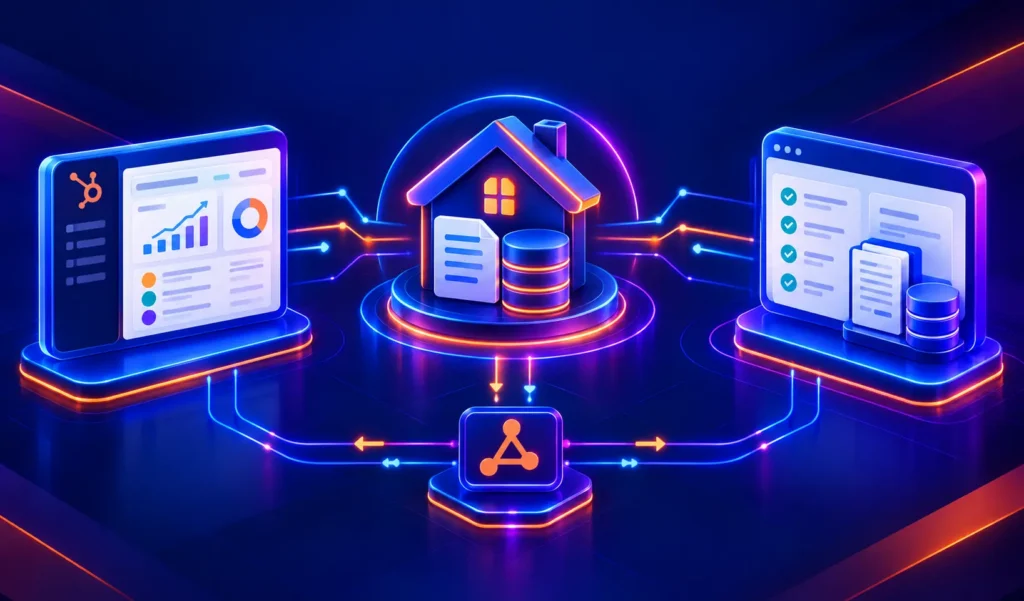
A HubSpot Document360 integration is a two-way data connection that syncs contacts, tickets, and knowledge base articles between HubSpot and Document360 in near real time. It keeps article views and reader access visible inside HubSpot and pushes contact and lifecycle data back to Document360 for a unified, permission-aware customer view.
How does the HubSpot Document360 integration work?
It works through the HubSpot and Document360 REST APIs, with field mapping, deduplication and a defined system of record for every object. When a reader’s access level or a ticket updates in either system, the sync writes the change to the other within minutes, governed by bi-directional field rules.

Turn HubSpot Into A Real-Time SMS Engine with Message IQ
 Two-Way Conversations
 Shared Team Inbox
 Automation Triggers
 Advanced Reporting
 Compliance Tools
- 98% SMS read within 3 min
- 78% Buy from first responder
- 21× More likely to qualify

*MessageIQ is an IntegrateIQ product – built natively for HubSpot by the same team.
Does HubSpot have a native Document360 integration?
HubSpot does not maintain a first-party Document360 integration. The marketplace lists Zapier and PixieBrix templates that handle basic ticket-to-article lookups and contact syncing. These templates skip SLA field sync, custom ticket field mapping, and reader group provisioning. Teams needing secure, permission-based access typically move to a custom-built integration.
How long does a HubSpot Document360 integration take to build?
A custom HubSpot Document360 integration takes about 8 weeks from kickoff to production. Discovery runs two weeks, build and staging tests run three, historical backfill runs one week, and cutover with hypercare covers the final two weeks. Timelines extend for multi-brand knowledge bases or high article volume.
Can HubSpot and Document360 sync bi-directionally?
Yes. Bi-directional sync is standard in a custom HubSpot Document360 integration. You define system of record at the field level, so article views and reader status flow one way while lifecycle stage and deal data flow the other, with conflicts resolved by rule instead of by whichever system wrote last.
What data can sync between HubSpot and Document360?
Contacts, tickets, deals, and companies from HubSpot; readers, reader groups, articles, article feedback, and search analytics from Document360; plus marketing activity like emails, forms, and lifecycle stage. Field mapping is configured per project so only relevant data flows and every field has a clear owner.
How a HubSpot Document360 Integration Actually Works
A HubSpot Document360 integration works by giving each system ownership of the data it knows best. Document360 owns the knowledge base: articles, versions, categories, reader groups, and search behavior. HubSpot owns the relationship: contacts, deals, tickets, and lifecycle stage. The sync moves data between them without either side overwriting the other’s source of truth.
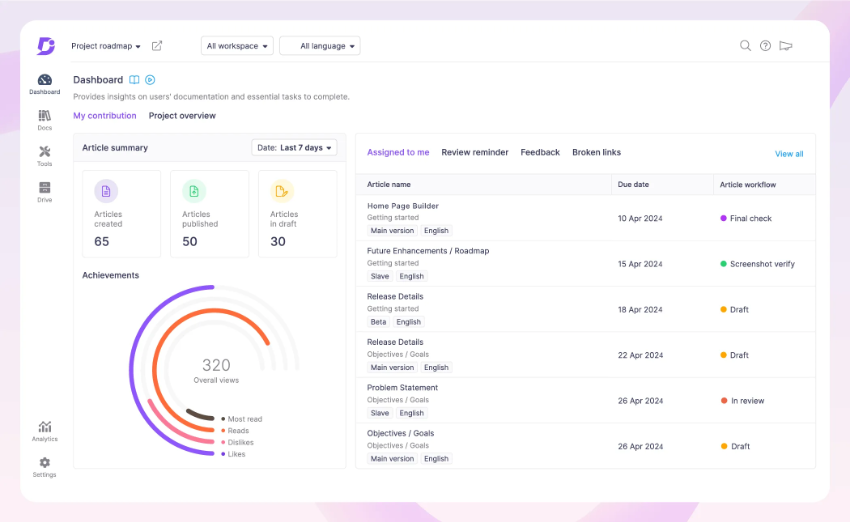
In practice, that means two sync directions running side by side. Article views, feedback ratings, and search queries flow from Document360 into the HubSpot contact timeline, so agents see what a customer already tried before they opened a ticket. Contact properties, list membership, and deal stage flow from HubSpot into Document360, so reader access to private knowledge bases updates automatically the moment a deal closes or a support tier changes.
None of this happens by accident. Every field carries a defined system of record, so a support tier downgrade in HubSpot revokes Document360 reader access on schedule, and a new article published in Document360 does not silently overwrite manually tagged HubSpot properties. Business rules, not whichever system wrote last, decide what moves and when.
Three Ways to Connect Document360 and HubSpot
Not every team needs custom. Here is the honest comparison.
| Factor | Native / Marketplace App | Zapier / iPaaS | Custom (Integrate IQ) |
|---|---|---|---|
| Best for | Basic article lookup for a handful of reps | Simple ticket-to-article automations, no engineering needed | Enterprise-scale, permission-aware KB integration |
| Sync direction | One-way, ticket to article search only | Configurable, but built one Zap at a time | True bi-directional, controlled at the field level |
| Custom objects/fields | Not supported | Limited, breaks on custom ticket fields | Full support for custom objects and reader groups |
| Ticket routing and SLA sync | No SLA field mapping | Manual, per-Zap SLA logic that drifts over time | SLA fields mapped and monitored end to end |
| Business logic | None | Basic conditional logic per Zap | Your access rules, tier logic, and escalation paths built in |
| Volume handling | Degrades past a few hundred tickets a month | Rate limits kick in at moderate volume | Built for high-traffic support centers |
| Historical backfill | Not available | Manual, one record at a time | Automated backfill with reconciliation |
| Maintenance | None, and it breaks silently | You maintain every Zap as fields change | We monitor and maintain it post-launch |
Zapier or a marketplace app is enough if you are syncing one ticket field to one article search box for a small team. Once you need reader group provisioning tied to deal stage, SLA-aware routing, or a knowledge base that spans multiple brands, custom development from our custom HubSpot integration services is the option that will not break under load.
Support Workflows You Can Automate Once Document360 Data Lives in HubSpot
- Self-service deflection scoring. A contact views three or more Document360 articles without submitting a ticket, so a HubSpot lifecycle property updates to reflect self-service engagement. Support sees who solved their own problem, and marketing gets a fresh onboarding signal.
- Tier-based reader provisioning. A deal closes or a support tier property changes in HubSpot, so the contact is automatically added to or removed from the matching Document360 reader group. Private documentation access always matches current entitlement, with zero manual work.
- Documentation gap alerts. A support ticket closes with no matching Document360 article found, so HubSpot creates a task for the documentation team with the ticket subject and resolution notes attached. The knowledge base grows from real gaps, not guesswork.
- Pre-ticket context for agents. A contact opens a support ticket in HubSpot, so their Document360 article views and search history populate the ticket timeline automatically. Agents start every conversation already knowing what the customer tried.
- Chatbot-first deflection. A HubSpot chatflow visitor asks a product question, so the bot queries the Document360 API and returns the matching article before a ticket is ever created. Ticket volume drops without adding headcount.
What Breaks in a Document360 HubSpot Sync, and How We Prevent It
- Duplicate records and identity resolution. Anonymous KB visitors who later submit a ticket under a different email create two contact records. We match on verified identifiers and merge history before it splits your reporting.
- System-of-record conflicts. Without a defined owner per field, a manually tagged HubSpot property and an auto-synced Document360 field can overwrite each other. We assign system of record at the field level so overwrites never happen by accident.
- Field mapping and status drift. Ticket status values and article categories get renamed over time in both systems. We build a mapped translation layer and monitor for drift instead of letting it silently break reporting.
- SLA and reader-access mismatch. Support tiers and SLA rules are defined differently in HubSpot and Document360, so a downgrade in one system can leave stale reader access or a missed SLA alert in the other. We fire tier and access changes off the same trigger so they never fall out of step.
- API rate limits at volume. Across our client base we move 20 billion plus records annually and 7 million fields daily, so we batch, checkpoint, and throttle by design instead of by accident.
Implementation Timeline: What to Expect
Most HubSpot Document360 integrations complete inside eight weeks of kickoff. The first two weeks cover discovery: object inventory in both systems, field-by-field mapping, system of record decisions, and reader group and access-tier mapping across every private knowledge base. Weeks three to five are build and unit testing against a staging Document360 project and a HubSpot sandbox. Week six runs the historical backfill and reconciliation. Weeks seven and eight cover user acceptance testing, cutover, and hypercare. Post-launch monitoring is included, so if a Document360 project version changes or HubSpot pushes an API update, we see it before your reports do. Full detail is on our HubSpot integration process page and 98.5% of clients renew for a follow-on scope.
See your 12-month revenue impact with HubSpot CRM
Enter your current numbers — visitors, leads, deal size — and get a personalized projection based on real HubSpot customer benchmarks.
Calculate My ROI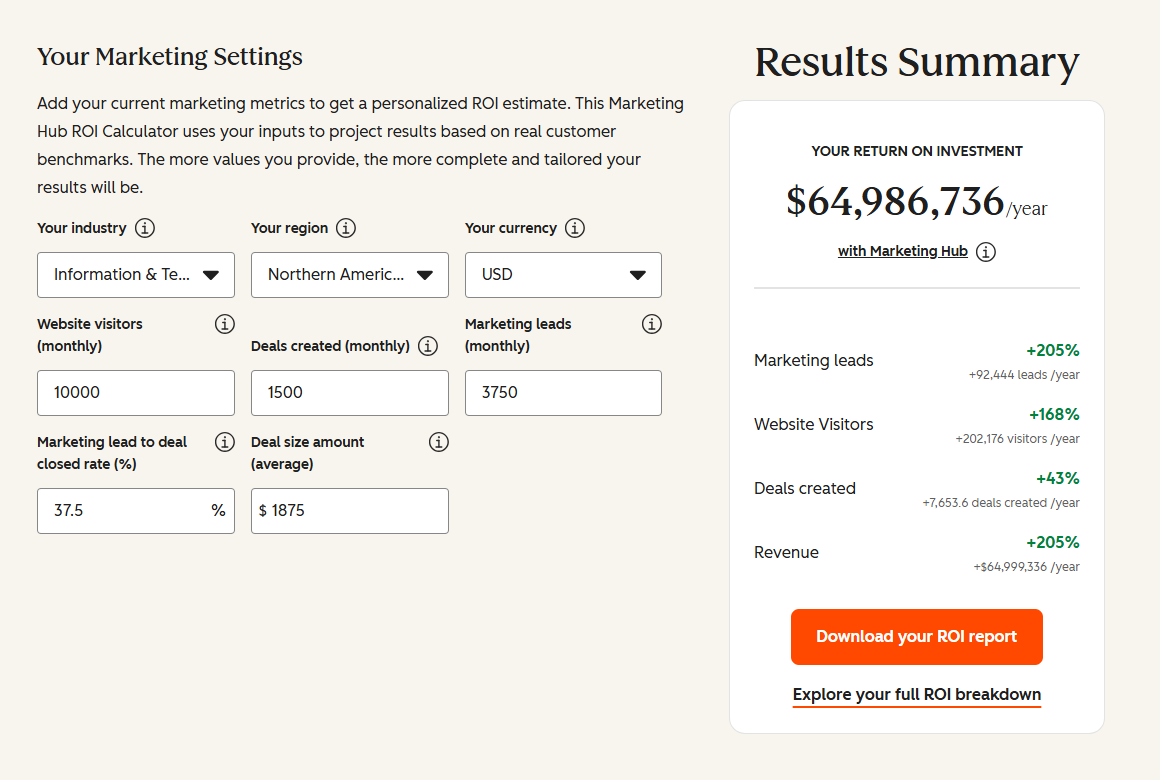
Connect the Rest of Your Revenue Stack
Document360 rarely runs alone. Teams that route KB access by deal stage often also connect Salesforce for account ownership through our HubSpot Salesforce integration pair the knowledge base with a live chat widget through our HubSpot Intercom integration and escalate undocumented issues to engineering with our HubSpot Jira integration. Weighing HubSpot’s own help desk against a dedicated KB tool? Our HubSpot vs Zendesk comparison breaks down where each one wins. Not sure what any of this is worth in hours saved? Run the numbers on our integration ROI calculator.

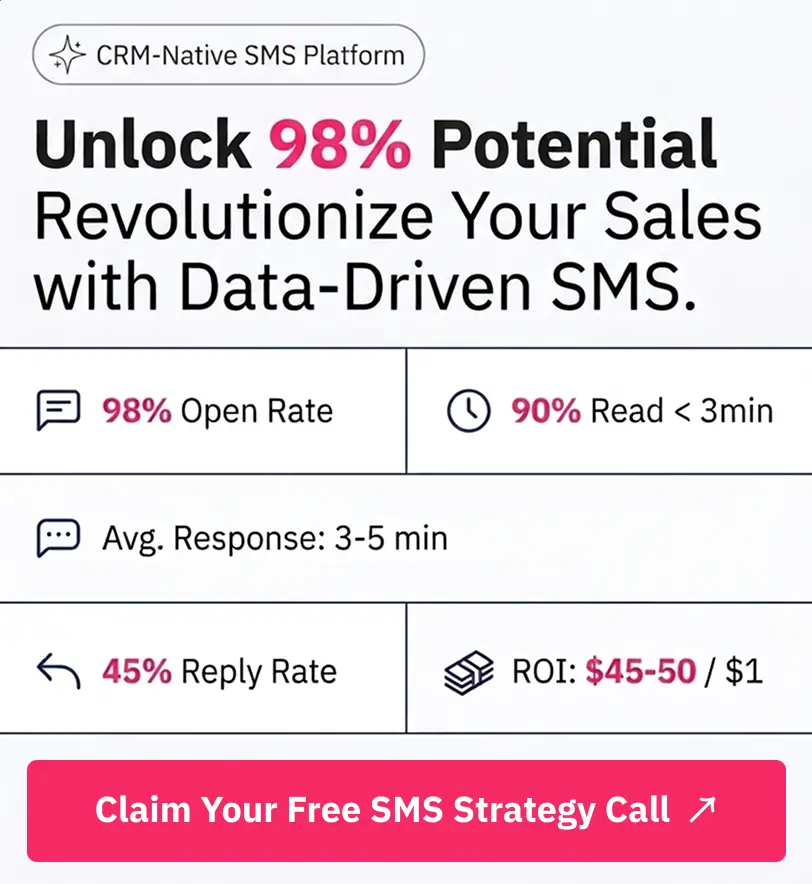
Table of Contents
- What is a HubSpot Document360 integration?
- How does the HubSpot Document360 integration work?
- Does HubSpot have a native Document360 integration?
- How long does a HubSpot Document360 integration take to build?
- Can HubSpot and Document360 sync bi-directionally?
- What data can sync between HubSpot and Document360?
- How a HubSpot Document360 Integration Actually Works
- Three Ways to Connect Document360 and HubSpot
- Support Workflows You Can Automate Once Document360 Data Lives in HubSpot
- What Breaks in a Document360 HubSpot Sync, and How We Prevent It
- Implementation Timeline: What to Expect
- Connect the Rest of Your Revenue Stack