













HubSpot Sana Commerce Integration: ERP-Powered B2B Marketing Automation
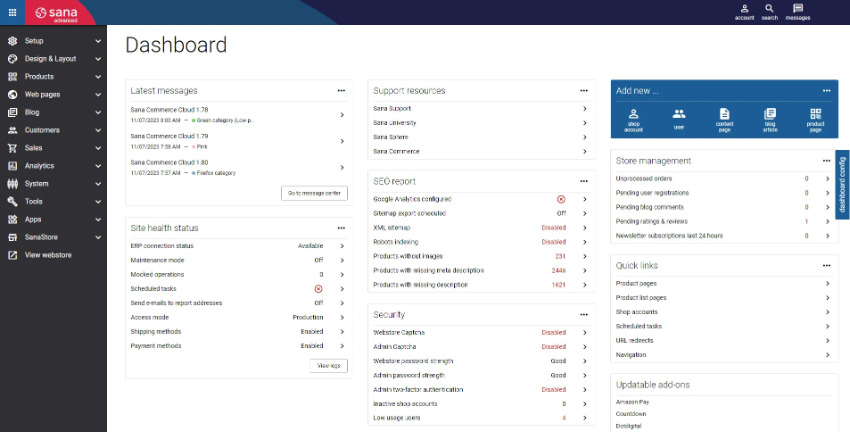
Most B2B ecommerce platforms maintain their own copy of ERP data. Sana Commerce doesn’t. It lives inside SAP or Microsoft Dynamics, pulling product data, pricing, inventory, and customer-specific terms directly from the ERP in real time.
When that data reaches HubSpot through an integration, it’s already ERP-validated contract-accurate pricing, real credit status, live inventory signals. That’s a fundamentally different quality of marketing data than what a standard ecommerce platform syncs to a CRM.
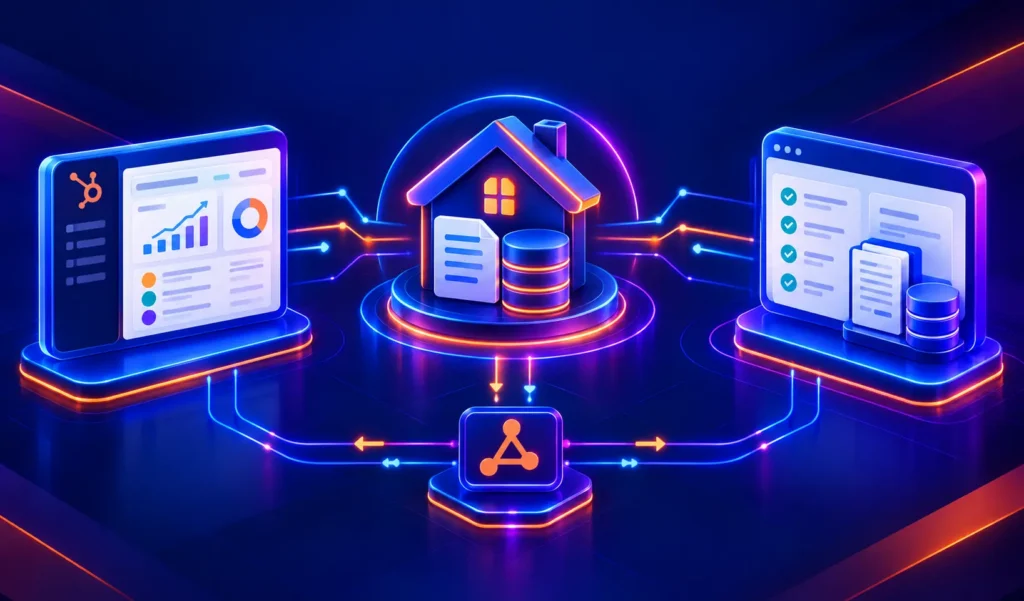
No native HubSpot connector exists for Sana Commerce in HubSpot’s App Marketplace. A custom integration built on Sana’s API and HubSpot’s API is the path and the ERP-native architecture of Sana Commerce is what makes it worth building carefully.
We’re Integrate IQ, a HubSpot Diamond Solutions Partner with custom integration accreditation. We’ve built this integration for B2B manufacturers and distributors running Sana Commerce on SAP and Microsoft Dynamics stacks.
Here’s what the integration connects and why Sana’s architecture changes what your HubSpot team can do with the data.
What Makes Sana Commerce Different and Why It Matters for HubSpot
Every B2B ecommerce platform eventually faces the same challenge: the ERP is the source of truth for pricing, inventory, and customer-specific terms, but the ecommerce platform runs separately and needs to keep a synced copy of that data. That sync delay even if it’s minutes creates discrepancies.
A customer sees a price in the webstore that doesn’t match their contract rate. Marketing segments by ‘last order’ data that’s six hours behind.
Sana Commerce solves this by running inside the ERP rather than alongside it. Product data, customer-specific pricing, contract terms, and inventory are read directly from SAP or Microsoft Dynamics in real time no copy, no sync delay, no discrepancy.
When that data reaches HubSpot through an integration the difference is meaningful:
- Pricing is contract-accurate. If a trade account has a negotiated pricing tier in the ERP, that pricing tier syncs to HubSpot — not an averaged or approximated value.
- Order data reflects actual revenue. The integration can be configured to only sync orders that have passed ERP credit checks — meaning HubSpot marketing data reflects confirmed revenue, not pending or disputed orders.
- Account status is real-time. If an account’s credit status changes in the ERP, the HubSpot Company record can reflect that immediately — relevant for segmentation and sales outreach decisions.

Turn HubSpot Into A Real-Time SMS Engine with Message IQ
 Two-Way Conversations
 Shared Team Inbox
 Automation Triggers
 Advanced Reporting
 Compliance Tools
- 98% SMS read within 3 min
- 78% Buy from first responder
- 21× More likely to qualify

*MessageIQ is an IntegrateIQ product – built natively for HubSpot by the same team.
Does a Native HubSpot Sana Commerce Integration Exist?
No. Sana Commerce doesn’t appear in HubSpot’s App Marketplace as a native connector. The integration path is a custom build using Sana Commerce’s API and HubSpot’s API.
Sana’s API gives access to the same ERP-validated data that powers the webstore customer accounts, order history, quote data, and product catalog with customer-specific pricing. A custom integration reads from that API and writes to HubSpot’s objects and properties.
This is different from most B2B ecommerce integrations. Because Sana’s data originates in the ERP (not in a separate ecommerce database), the API responses are ERP-accurate. You can learn more about Sana Commerce’s architecture at sana-commerce.com.
What a Custom HubSpot Sana Commerce Integration Connects
Direction 1: Sana Commerce (and ERP) to HubSpot
| Sana / ERP Object | HubSpot Object Created / Updated |
| Trade account (company/business buyer) | HubSpot Company record — company name, address, assigned sales rep, account type, credit status |
| B2B buyer contact at trade account | HubSpot Contact record associated with parent Company |
| Order placed and ERP credit-approved | HubSpot Deal created or Company/Contact timeline event updated with order value, SKU categories, and order date |
| Quote created in Sana webstore | HubSpot Deal updated with quote value and expiry; quote-to-order conversion tracked |
| Customer pricing tier / contract group | HubSpot Company property — pricing tier (Standard, Distributor, Contract Pricing) for segmentation |
| B2B cart abandoned by logged-in account holder | HubSpot workflow trigger: enrol account’s primary buyer contact in high-value abandoned cart sequence |
| Account inactive for 60+ days (no orders) | HubSpot workflow trigger: enrol in B2B win-back sequence with account-specific pricing context |
Direction 2: HubSpot to Sana Commerce
| HubSpot Event | Sana / ERP Action |
| New lead qualifies as potential trade account | HubSpot deal data triggers Sana trade account application or ERP account creation workflow |
| Contact email or company data updated in HubSpot | Sana customer record updated (if HubSpot is the source of truth for contact data) |
B2B Marketing Use Cases Powered by ERP-Validated Sana Data
B2B Abandoned Cart Recovery With Known Buyer Identity
The most overlooked opportunity in B2B ecommerce is the abandoned cart. B2B buyers on Sana Commerce portals are logged-in trade account holders they’re not anonymous visitors.
When a buyer adds items totalling $8,000 to their cart and doesn’t complete the order, their identity is known, their ERP pricing is known, and the items they left behind are known.
The integration captures that abandonment event from Sana and triggers a HubSpot workflow: the primary buyer contact at that trade account receives a personalised email referencing the specific items they left in the cart, at their contract pricing.
The account manager gets a task notification for follow-up. For high-value cart abandonment thresholds say, carts above $5,000 the account manager task fires immediately. The email sequence follows. No manual monitoring required.
ERP-Powered SKU-Level Reorder Campaigns
Because Sana’s order data is ERP-sourced, every order record in HubSpot carries SKU-level detail: product category, item codes, quantities. Marketing can build HubSpot active lists based on what accounts actually buy ‘Accounts that have ordered from the industrial fasteners category in the last 90 days but haven’t ordered from the safety equipment category’ and trigger targeted cross-sell campaigns based on that segmentation. This level of SKU-level campaign logic is impossible without the ERP data that Sana Commerce makes accessible.
Contract Pricing Tier Upgrade Campaigns
Sana Commerce supports customer-specific pricing tiers configured in the ERP Standard, Distributor, Contract pricing, and custom tiers for key accounts. The integration syncs each trade account’s pricing tier to a HubSpot Company property.
Marketing can segment accounts approaching a spend threshold that qualifies them for a higher tier and run an upgrade campaign: ‘Your account is $12,000 away from qualifying for Distributor pricing here’s what that unlocks.’
For B2B companies where pricing tier upgrades increase order frequency and average order value, this campaign type has measurable ROI that’s directly traceable back to the Sana + HubSpot integration.
Lead-to-Trade-Account Conversion Tracking
Marketing runs inbound campaigns in HubSpot content, paid ads, webinar sequences that generate leads from potential B2B buyers. When a lead submits a trade account application through the Sana Commerce portal, that conversion event needs to appear in HubSpot.
The integration closes this loop: a new Sana trade account triggers a HubSpot lifecycle stage update for the associated Contact and Company, moving them from Lead to Customer and triggering a new account onboarding sequence.
For B2B marketing teams trying to prove marketing ROI from inbound efforts, this closed-loop attribution is the data they can’t get without the integration. See more on how B2B teams build this attribution in our HubSpot integrations for B2B ecommerce context.
Account Health Monitoring via Order Frequency
The integration syncs each trade account’s last order date and trailing 90-day order count to HubSpot Company properties. A HubSpot workflow monitors account health daily: accounts with declining order frequency get flagged for sales outreach; accounts with no orders in 60 days trigger an account manager task and enrol in a re-engagement sequence.
For B2B manufacturers and distributors managing hundreds of trade accounts, this automated account health monitoring replaces the manual account review meetings that most sales teams still run on spreadsheets.
The ERP Validation Argument: Why This Integration Is Worth Building Correctly
Generic B2B ecommerce integrations push data to HubSpot regardless of ERP status. An order syncs to HubSpot whether it’s been credit-approved or not. A customer record syncs whether it’s active or flagged for review.
A well-built HubSpot Sana Commerce integration can apply ERP filtering logic: only sync orders that have cleared the ERP credit check, only update HubSpot account status when the ERP account status changes, only trigger marketing campaigns for accounts in good standing with no credit holds.
This filtering logic is what makes HubSpot marketing data trustworthy for B2B manufacturers operating with complex credit terms and account management requirements.
Off-the-shelf connectors and iPaaS tools don’t implement this filtering. A custom build does.
See your 12-month revenue impact with HubSpot CRM
Enter your current numbers — visitors, leads, deal size — and get a personalized projection based on real HubSpot customer benchmarks.
Calculate My ROI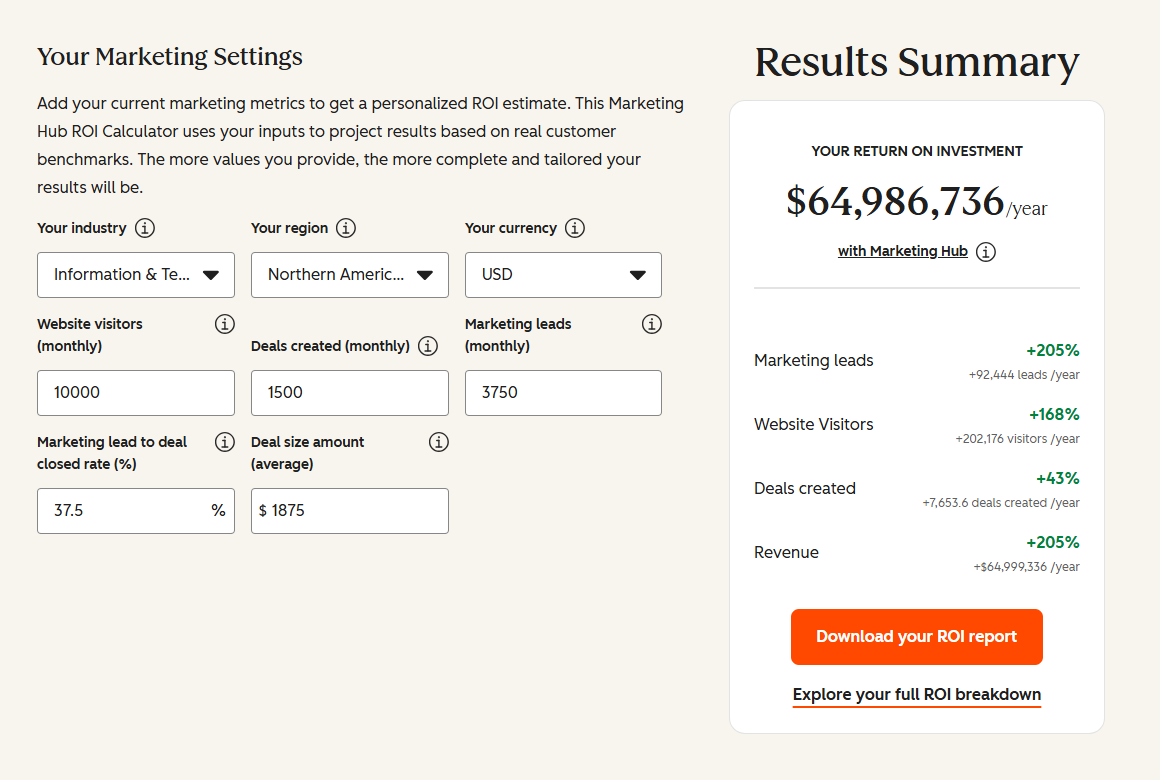
What to Expect from the Build
- Weeks 1-2: Discovery and ERP Data Mapping. Map Sana Commerce’s available API endpoints to HubSpot objects. Define which ERP data fields (pricing tier, credit status, account type) become HubSpot properties. Agree on ERP filtering logic for order sync. Confirm Sana API access.
- Weeks 3-4: Build and Sandbox Testing. Build against Sana’s API and HubSpot’s API. Test ERP-validated order sync, Company-Contact association logic, cart abandonment webhook handling, and pricing tier property mapping.
- Weeks 5-6: UAT. Your marketing team validates that segmentation lists based on pricing tier and SKU category are pulling correctly. Your account management team validates that Company records reflect accurate ERP account status and order history.
- Weeks 7-8: Go-Live and Monitoring. Production deployment with active monitoring. ERP filtering logic runs continuously to ensure only credit-approved, active account data reaches HubSpot campaigns.
For B2B manufacturers also evaluating their ERP-to-HubSpot connection directly, we build HubSpot SAP integration and HubSpot NetSuite integration for companies that want ERP data in HubSpot regardless of which ecommerce platform sits in the middle. See how our integration process works.

Table of Contents
- HubSpot Sana Commerce Integration: ERP-Powered B2B Marketing Automation
- What Makes Sana Commerce Different and Why It Matters for HubSpot
- Does a Native HubSpot Sana Commerce Integration Exist?
- What a Custom HubSpot Sana Commerce Integration Connects
- B2B Marketing Use Cases Powered by ERP-Validated Sana Data
- The ERP Validation Argument: Why This Integration Is Worth Building Correctly
- What to Expect from the Build