


























HubSpot Diamond Solutions Partner

HubSpot Zoho CRM Integration: Unify Your GTM Stack and Drive Scalable Growth

Eliminate data silos between marketing and sales. Our custom integration creates a single source of truth to accelerate your entire revenue engine and maximize growth.

98.5%
Client Retention
300+
Platforms Integrated
20B+
Fields Synced Annually
HubSpot Diamond Partner

Get Your Free HubSpot Consultation + Claim The 2026 CRM Growth Playbook Instantly for FREE

Discover how top companies use their CRM to power marketing, sales & growth. No spam. No sales pitch. Just expert insights from certified HubSpot professionals.

  • Proven Playbooks from top-performing companies
  • Strategies to drive more leads, pipeline & revenue
  • Actionable insights from HubSpot experts
🎁Bonus: Submit the form to Instantly download The 2026 CRM Growth Playbook for highest ROI
(Offer valid for Limited Time Only)

Your 12-Month Revenue Impact with HubSpot CRM

Get personalized projections based on real HubSpot customer data — matched to your industry and region.

1
Add Your Current Numbers

Visitors · Leads · Deals · Close Rate · Avg. Deal Size

2
Choose Your Industry & Region

Benchmarks that actually match your market

3
See Your Projected Growth

Leads · Pipeline · Revenue

4
Download Your ROI Report

Instant PDF, ready to share

ROI Calculator Preview

Make the case to your leadership

Two guides that turn this integration into the business case your VP wants to hear, with the framing and numbers ready to go.

Pitch your Sales Leadership

Forecast credibility, deal velocity, expansion revenue, in CRO language.

Read the sales guide

Pitch your Marketing Leadership

Attribution, budget defensibility, segmentation, in CMO language.

Read the marketing guide

Pitch your Operations Leadership

Cost per order, cycle time compression, team capacity at higher volume, in COO language.

Read the operations guide
HubSpot Diamond Partner

Get a scoped estimate not a guess

ERPs, custom objects, legacy databases, real-time bi-directional sync. Every estimate is built by the same engineers who ship the integration.

  • Scope-based pricing. From $3,450 - scales with actual complexity, never padded flat fees.
  • 98.5% year-one retention. The engineers who quote it are the ones who build it.
  • 300+ platforms shipped. Your edge case is likely already in production somewhere in our library.
Build your estimate

60-second ballpark · No back-and-forth

Standard on every build

Every estimate already includes all six

Bi-directional sync

One-way or two-way, built to your data flow

Granular field mapping

Every property mapped, validated, tested

Real-time + scheduled

Instant triggers and batched syncs together

Custom sync logic

Your business rules, written into the build

Error handling

Monitoring, alerts, retry logic baked in

Year 1 continuity

License, maintenance, ongoing support

Empower Your Sales Team in Zoho CRM with Marketing Intelligence

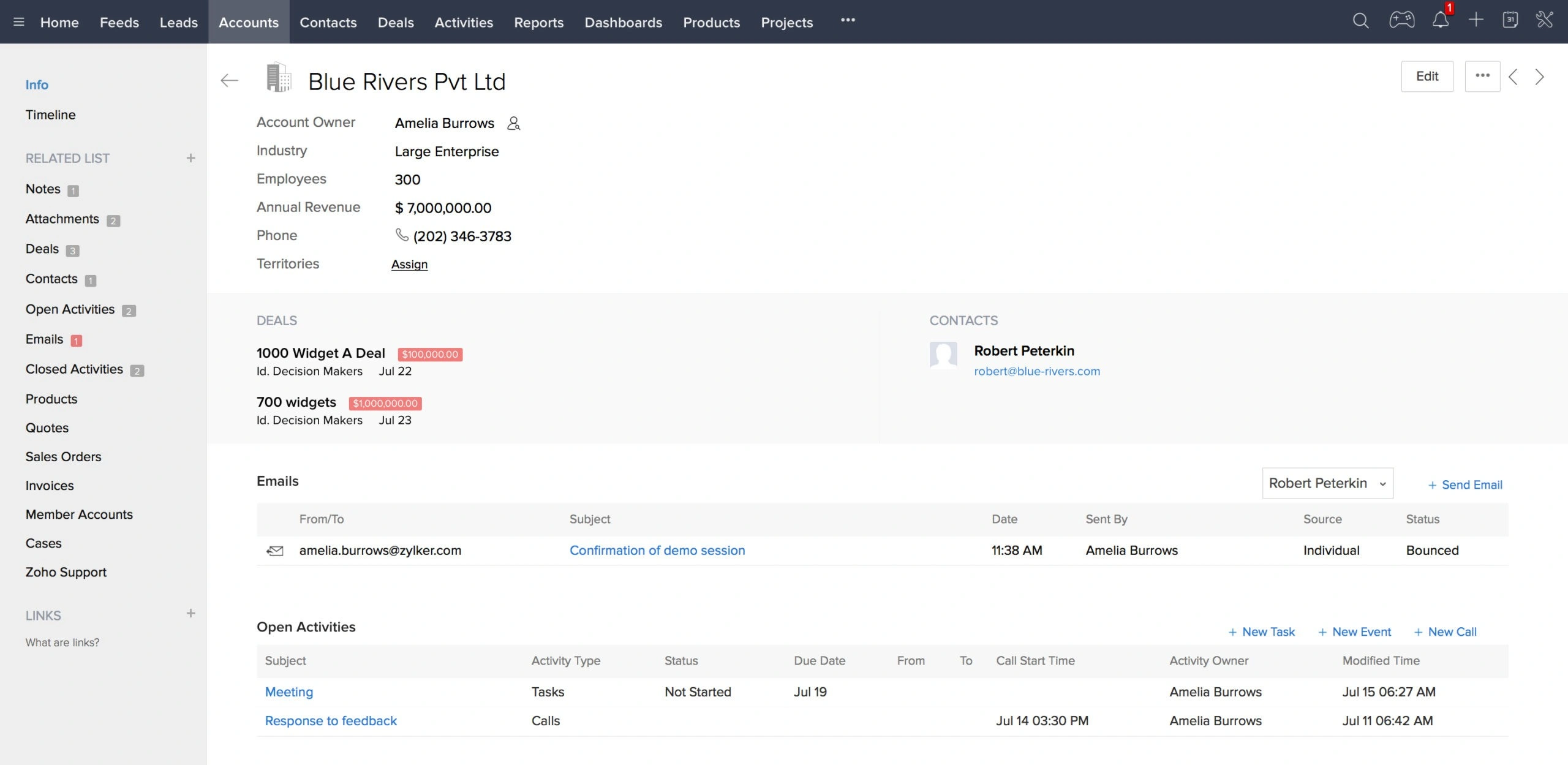
Bridge the gap between marketing engagement and sales action. By feeding real-time marketing intelligence from HubSpot directly into Zoho CRM, your sales team gains the critical context needed to prioritize the best leads and close deals faster. They'll know exactly which leads are hot, what they're interested in, and when to engage for maximum impact.

Real-Time Lead Alerts: Instantly create new leads or contacts in Zoho CRM from HubSpot form fills, demo requests, and other key marketing conversions.

Complete Engagement History: Equip sales with a full timeline of a lead's marketing activities including email opens, website visits, and content downloads right on the Zoho CRM record.

Data-Driven Prioritization: Sync HubSpot's lead scores directly to Zoho CRM, allowing reps to focus their time and effort on the most qualified, sales-ready opportunities.

Zoho CRM Dashboard

Bridge the gap between marketing engagement and sales action. By feeding real-time marketing intelligence from HubSpot directly into Zoho CRM, your sales team gains the critical context needed to prioritize the best leads and close deals faster. They'll know exactly which leads are hot, what they're interested in, and when to engage for maximum impact.

Integrate IQ has consistently shown they can be trusted with even the most complex projects. I know our customers are in great hands and that the job will always get done right.

Kathleen Rush

Manager, Strategic Partner Development Team at HubSpot

Zoho CRM HubSpot Integration Unlocks Closed-Loop Revenue Reporting

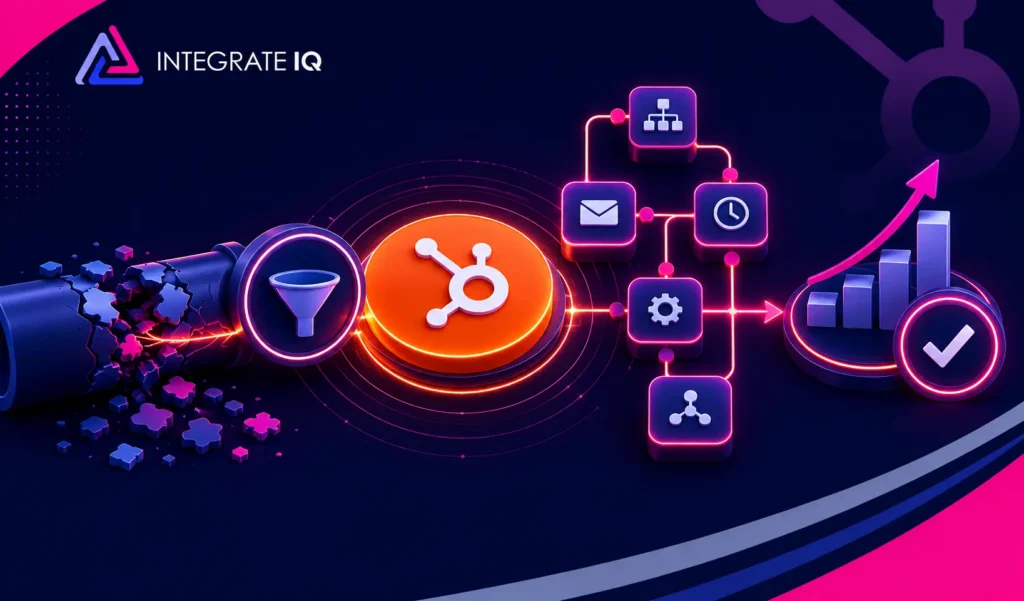
Stop guessing which marketing campaigns are driving revenue. By syncing sales outcomes and pipeline data from Zoho CRM back into HubSpot, your marketing team gains true closed-loop reporting. This enables you to accurately measure campaign ROI, optimize marketing spend, and build smarter nurturing strategies based on what actually converts to revenue.

Measure True Marketing ROI: Sync Zoho CRM deal stages, amounts, and closed-won status to HubSpot to attribute revenue directly to the marketing campaigns that generated it.

Automate Smarter Nurturing: Trigger HubSpot workflows and personalized email sequences based on changes in a lead's status or deal stage within Zoho CRM.

Refine Audience Segmentation: Enrich HubSpot contact lists with valuable data from Zoho CRM fields, allowing for highly targeted segmentation for future campaigns and content.

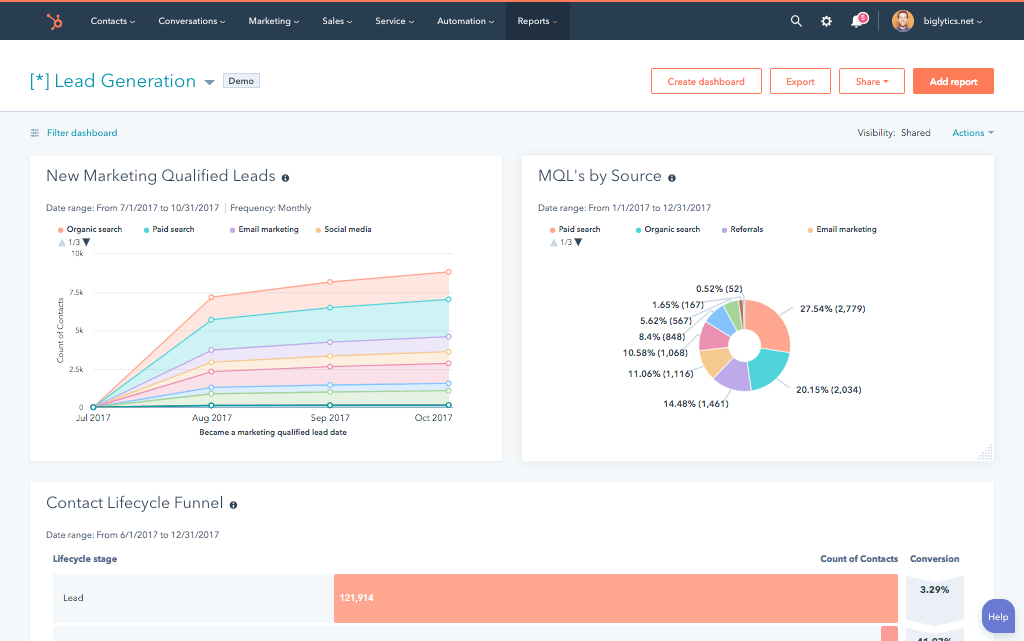
Hubspot Report

Stop guessing which marketing campaigns are driving revenue. By syncing sales outcomes and pipeline data from Zoho CRM back into HubSpot, your marketing team gains true closed-loop reporting. This enables you to accurately measure campaign ROI, optimize marketing spend, and build smarter nurturing strategies based on what actually converts to revenue.

A Bi-Directional Sync Architecture Built for HubSpot and Zoho CRM

Our custom integrations are engineered for flexibility and scale, handling any business logic and data transformation you require.

Built for Your Business Process

Standard, out-of-the-box connectors force you into a rigid data model. We believe your integration should adapt to your business, not the other way around. Our solution is built to handle your unique processes, custom data points, and complex routing rules, ensuring a perfect fit for your GTM strategy.

  • Bi-Directional & Uni-Directional Sync: Control the flow of information precisely between objects, deciding which system serves as the source of truth for every field.
  • Real-time & Scheduled Syncs: Choose between instant, trigger-based updates for critical data and scheduled, batch syncs for less time-sensitive information to optimize performance.
  • Custom Sync Logic & Triggers: Implement conditional logic to control when and how data syncs. For example, only sync a contact to Zoho CRM once their lead score exceeds 75.
  • High-Volume Data Handling: Our architecture is engineered to reliably manage hundreds of thousands of records, ensuring stability and performance at enterprise scale.

Object and Field Mapping Between HubSpot and Zoho CRM

We support standard and custom objects to ensure a complete and accurate view of your customer across both platforms. Our implementation includes mapping all the critical data fields your teams rely on.

HubSpot

Zoho CRM

  • Contacts
  • Companies
  • Tasks
  • Users
  • Products
  • Contacts
  • Accounts
  • Tasks
  • Users
  • Products
  • Contacts Contacts
  • Companies Accounts
  • Tasks Tasks
  • Users Users
  • Products Products

Transparent, Project-Based Pricing

No surprises. Clear scope, clear acceptance tests. We believe in straightforward pricing so you know exactly what to expect before we begin.

We fix what others can't. 50% Of our customers hired us to fix a failed integration.

A failed integration is more than a technical problem; it's a drain on time, budget, and morale. We are the specialists that leading companies like MetLife trust to handle their most mission-critical data flows. We don't rely on fragile connectors or simplistic platforms because we know they can't handle enterprise scale. Our approach is built on robust, custom development and a deep understanding of both HubSpot and the systems you need to connect it to. Partnering with us isn't just another attempt; it's an investment in certainty.

Trusted by Leaders, Proven by Results

Trusted by High-Growth Companies

See why leaders at scaling companies partner with Integrate IQ's experts.

I've been working with Integrate IQ for over 2 years now. We've had several outside systems that we wanted integrated with our HubSpot instance. From project planning and scoping, through build, and after deployment support, the team at Integrate IQ has been exemplary to work with. They've delivered on all commitments, helped established reasonable time frames for deliverables, and kept lines of communication open.

Marohn, M

We've partnered with Integrate IQ for over five years to develop integrations between our complex and not-so-widely-known ERP. They understand HubSpot's strengths, weaknesses and limitations, and are able to easily adapt to our evolving needs. They had an ownership change a few years ago, but that did not impact their expertise/service. We really appreciate our relationship with IIQ and recommend them to anyone looking to embed HubSpot deeper into their organization's systems.

Craychee, A

Integrate IQ has been great to work with! As someone who can be intimidated when things get too technical, they made the process of outlining our integration very approachable and understandable. They're great to work with and built the integration that we asked for, and then continued to work with us to fine-tune the tool over time as we figured out exactly what we needed.

Lauren Little

Integrate has been fantastic to work with. They helped us implement our CRM, design a framework for our pipeline that works perfectly and they built out an integration between HubSpot and Zoho which allows our data to flow seamlessly. They've been an invaluable partner in our growth.

Whipple, M

We worked with Integrate IQ on a complex integration and now we have a fantastic solution that makes HubSpot work even better!

Ben Donahower

HubSpot Is the Platform. We Make It Perform

Why Businesses Trust Integrate IQ for a Smarter HubSpot Experience

Category
HubSpot Direct
Integrate IQ
Setup Approach
Guided setup with best-practice coaching.
Done-for-you configuration — we build and optimize everything for you.
Integrations
Standard native apps and limited connectors.
Custom integrations with 300+ platforms — fully tested and supported.
CRM Migrations
Basic import support.
Complete migration from any CRM — clean data, mapped fields, zero downtime.
Technical Capability
Advisory-focused.
Engineer-led builds with API, automation, and custom object expertise.
Ongoing Support
Ticket-based, reactive
Dedicated partner support, proactive optimization & monitoring
Team Expertise
Generalists across thousands of accounts
Senior HubSpot engineers with 300+ complex integrations delivered

What Is a HubSpot Zoho CRM Integration?

A HubSpot Zoho CRM integration is a two-way sync that keeps your contacts, accounts, deals and activity records in sync between HubSpot and Zoho CRM in near real time. Marketing happens in HubSpot, sales happens in Zoho CRM and the integration eliminates the manual re-entry that usually happens in between them. Field mapping determines ownership of data between systems, so a lead score change in HubSpot will automatically update a Zoho CRM record, and a closed-won deal in Zoho CRM will feed revenue attribution back into HubSpot. Native connectors perform basic contact syncing. Custom build enables custom modules, conditional logic and closed loop reporting.

Does a HubSpot Zoho CRM Integration Include Zoho Mail?

HubSpot Zoho CRM integration and Zoho Mail integration solves two different problems. CRM integration synchronizes contacts, deals, and activity records between HubSpot and Zoho CRM. Zoho Mail integration is all about email delivery and inbox visibility, allowing reps to send and log Zoho Mail messages from HubSpot. Some teams need both CRM data flowing in for reporting and email activity logged for context. A custom integration can combine the two, pulling in Zoho Mail send and open events into HubSpot, as well as Zoho CRM deal and contact records. This provides sales and marketing with one communication and pipeline history, instead of two disconnected systems.
for HubSpot

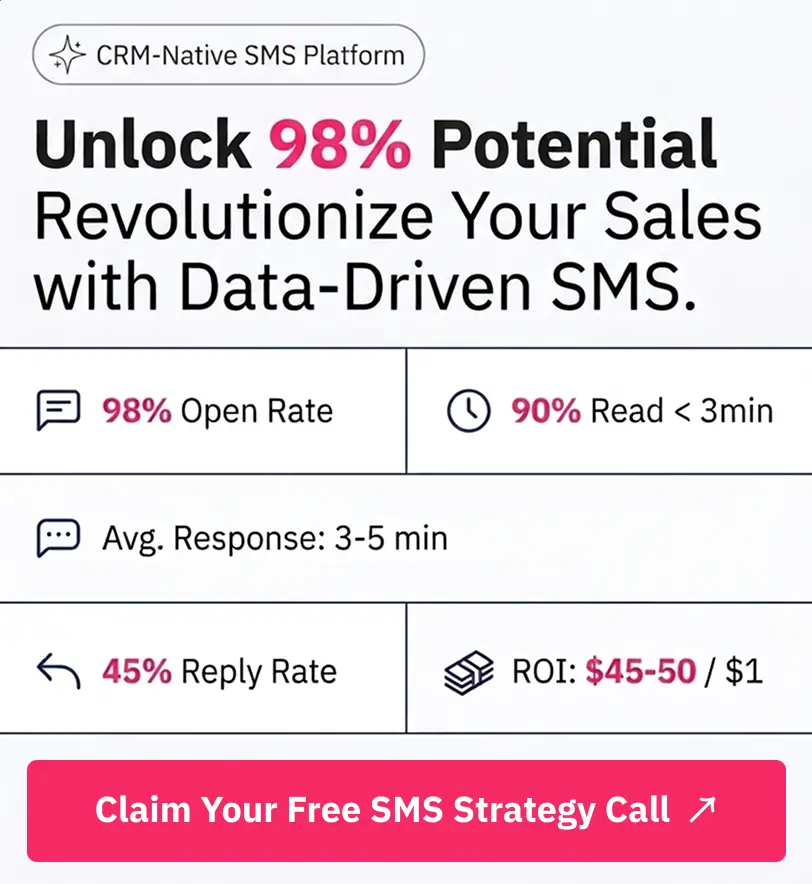
Turn HubSpot Into A Real-Time SMS Engine with Message IQ

chat icon Two-Way Conversations inbox icon Shared Team Inbox thunder icon Automation Triggers chart icon Advanced Reporting shield icon Compliance Tools
  • 98% SMS read within 3 min
  • 78% Buy from first responder
  • 21× More likely to qualify
Proven results
98% open rate 3–5 min avg response $45–$50 ROI / $1

*MessageIQ is an IntegrateIQ product – built natively for HubSpot by the same team.

How Does Zoho CRM Sync Data with HubSpot CRM?

Zoho CRM integrates with Hubspot CRM via the REST API of each platform, with field-level mapping determining precisely what is transferred and in which direction. Standard objects like contacts, accounts, deals and tasks are synced by default and custom modules and custom fields need to be specifically mapped in a custom integration. Updates to either system are written to the other within minutes, not on a batch schedule. A set record is defined for each field to ensure that neither platform will overwrite the other’s changes. Native connectors sync only default modules and often have a mismatch in picklist values. So, a Zoho CRM instance with custom modules requires custom field mapping to sync completely.

Which CRM Offers the Best Live Chat Integration with HubSpot: Salesforce or Zoho?

There isn’t an objectively best CRM for HubSpot live chat integration. Salesforce, Zoho CRM and HubSpot’s own chat tools all integrate differently based on your stack. HubSpot’s native chat widget already ties conversations to contact records, so the integration with Salesforce or Zoho CRM simply gives sales live chat visibility into deal and account data. Salesforce has more third-party chat connectors due to its market share, and Zoho CRM integrations are typically easier for teams already using Zoho’s own chat and desk products. The choice is less about which chat integration is better from a technology standpoint and more about which CRM already has your sales data.

Can You Migrate from Zoho CRM to HubSpot Instead of Syncing?

Yes, a Zoho CRM to HubSpot migration is a different project than an integration and some teams choose this option over a continuous sync. Migration moves contacts, accounts, deals and historical activity from Zoho CRM to HubSpot as a one-time transfer, then retires Zoho CRM as the system of record. This is great for teams looking to consolidate onto one platform vs. running two CRMs long term. An integration, on the other hand, keeps both systems live and syncing all the time, which is best for teams where different departments are committed to each platform. A discovery call typically will help to clarify which path aligns with your object volume and long term platform strategy.

How Does a HubSpot SugarCRM Integration Compare to a HubSpot Zoho CRM Integration?

Both a HubSpot SugarCRM integration and a HubSpot Zoho CRM integration solve the same core problem: keeping CRM and marketing data in sync. But they do so on different underlying platforms. SugarCRM is more common in larger, more customized sales organizations that make heavy use of custom modules and workflow rules. Zoho CRM is common in mid-market teams that run a broader Zoho suite. Both integrations require field-level mapping, bi-directional sync and a defined system of record to avoid conflicts. SugarCRM builds tend to be heavier due to deeper customization; Zoho CRM builds are often complicated instead by add-on modules like Zoho Mail, Campaigns, or Desk that also need mapping.

How a HubSpot Zoho CRM Integration Actually Works

A HubSpot Zoho CRM integration works by two APIs and one rule. One owning system for each field. Zoho CRM is Truth on the sales side (deal stage, account ownership, activity history); HubSpot is Truth on the marketing side (lifecycle stage, lead score, campaign attribution). Nothing is guessed.

The sync is bi-directional. Within minutes of a form fill in HubSpot, a Zoho CRM lead is created or updated. When you close a deal in Zoho CRM, it passes the amount and close date back to HubSpot so marketing can attribute revenue to the campaign that sourced it.

What doesn’t sync by accident: unmapped fields, values that violate your system-of-record rules, and anything blocked by a Zoho CRM Blueprint validation rule. Field-level control means a rename or a new picklist value in either system doesn’t silently corrupt the other system.

Three Ways to Connect Zoho CRM and HubSpot

Not every team needs custom. Here is the honest comparison.

Factor Native Marketplace App Zapier / iPaaS Custom (Integrate IQ)
Best for Basic contact sync for small teams Quick point-to-point automations Complex, high-volume GTM stacks
Sync direction One or two-way, limited object set Two-way, configured per zap Field-level bi-directional, fully configurable
Custom objects/fields Activities and custom modules do not sync Supported per-zap, brittle at scale Fully supported, including Zoho custom modules
Activity and engagement sync No engagement history sync Possible but manual per trigger Full activity log, lead score, and engagement history sync
Business logic None, straight field copy Basic if/then per zap Custom conditional logic and multi-step rules
Volume handling Degrades past roughly 30K contacts Rate-limited, breaks at volume Built for hundreds of thousands of records
Historical backfill Not supported Not supported Full historical sync included
Maintenance HubSpot/Zoho managed, limited support You maintain every zap Monitored and maintained, included in engagement


If you are syncing default contacts and leads at a low volume, the native marketplace app or a Zapier automation is genuinely fine and you shouldn’t pay for more. Once you have Zoho CRM custom modules, Blueprint validation rules, conditional business logic, or need closed-loop revenue reporting, those tools stop holding up and a custom build through our custom HubSpot integration services  is what actually closes the gap.

Revenue Workflows You Can Automate Once Zoho CRM Data Lives in HubSpot

  • Speed-to-lead routing. A HubSpot form fill creates a Zoho CRM lead and assigns it to the right rep by region or product line within seconds, so no lead sits in a queue overnight.
  • MQL handoff with full context. When a contact crosses your lead-score threshold in HubSpot, Zoho CRM receives the lifecycle stage, score, and last five engagement touches, so reps open the record already knowing why it was flagged.
  • Closed-loop revenue reporting. Zoho CRM deal stage and closed-won amount sync back to HubSpot, attributing revenue to the campaign that generated it instead of guessing at ROI.
  • Account-based re-engagement. A closed-lost reason logged in Zoho CRM triggers a targeted HubSpot nurture sequence matched to why the deal was lost.
  • Support-to-sales alerts. A support case opened on a strategic account notifies the Zoho CRM account owner inside HubSpot before the customer even calls sales.

What Breaks in a Zoho CRM HubSpot Sync, and How We Prevent It

  • Duplicate records and identity resolution. We match on email and domain-level rules before a record is created, not after, so the same contact never gets a HubSpot twin and a Zoho CRM twin.
  • System-of-record conflicts. Every field gets one owning system by design. HubSpot never overwrites a Zoho CRM-owned field and vice versa, so there is no “whoever synced last wins.”
  • Field mapping, picklist, and status value drift. We map internal values, not display labels, so a dropdown rename in either system does not silently break your reports.
  • Zoho CRM Blueprint and validation rule rejections. Zoho Blueprint enforces stage-transition and validation rules that HubSpot has no visibility into. We build sync logic that respects Blueprint state, so an out-of-sequence stage change from HubSpot does not get silently rejected by Zoho’s API.
  • API rate limits at volume. Across our client base we move 300+ platforms and 20 billion plus fields annually, so we batch, checkpoint, and throttle by design instead of by accident.

Implementation Timeline: What to Expect

Most HubSpot Zoho CRM integrations are done within 8 weeks from start. The first two weeks are dedicated to discovery: object inventory in both systems, field-by-field mapping, system of record decisions, and an audit of your Zoho CRM Blueprint and custom module configuration. Weeks three to five are build and unit test against a staging Zoho CRM instance and a HubSpot sandbox. Week six is the historical backfill and reconciliation. Week seven and eight are user acceptance testing, cutover and hypercare. Post launch monitoring is built in so if a Zoho CRM configuration changes or HubSpot pushes an API update, we see it before your reports do. 98.5% of clients renew for a follow-on scope. Full detail is on our HubSpot integration process page .

Free ROI Calculator

See your 12-month revenue impact with HubSpot CRM

Enter your current numbers — visitors, leads, deal size — and get a personalized projection based on real HubSpot customer benchmarks.

Calculate My ROI
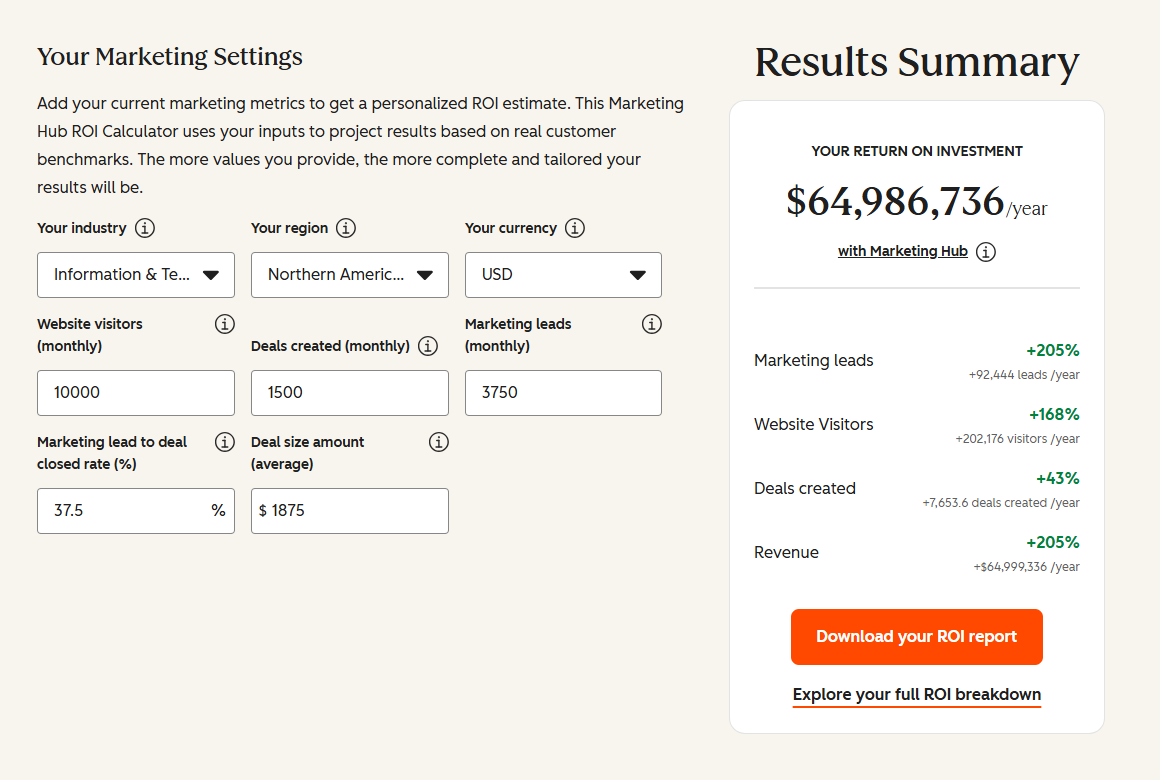
ROI Calculator Preview

 Connect the Rest of Your Revenue Stack

Most Zoho CRM buyers don’t look at one integration in isolation. If Salesforce is also an option, our HubSpot Salesforce integration page covers that build, and our HubSpot vs Zoho comparison lays out the platform tradeoffs directly. Thinking about SugarCRM? Visit our HubSpot SugarCRM integration page  and HubSpot vs SugarCRM comparison page. If you’re not syncing two, and are moving to a single CRM, our team of CRM migration services experts can walk you through that path. And before you scope anything, run your numbers through the integration ROI calculator  to see what manual handoffs are costing you today.

Tim Ritchie

Tim Ritchie

CEO of Integrate IQ

An admitted HubSpot fanboy, Tim has been in the HubSpot ecosystem as a consumer of the platform from the beginning. Tim believes that Message IQ’s success begins and end with the success of our customers and partners.

Integration CTA Image Message IQ CTA Image
Frequently Asked Questions

HubSpot Zoho CRM Integration FAQs

While native connectors are suitable for basic, linear syncs, our solution is built for complexity and scale. We handle custom objects, advanced conditional logic (e.g., 'if X in HubSpot and Y in Zoho, then do Z'), and complex data transformations that are beyond the scope of out-of-the-box tools. We tailor the sync to your exact business rules.

Absolutely. We specialize in mapping custom objects and fields. Whether you have unique fields on your Zoho Account object that need to inform HubSpot campaigns or custom HubSpot objects that need to be reflected in Zoho, our integration can support your specific data model.

Yes. We begin every project with a historical data sync to align all existing records in both systems. This ensures there are no data gaps and that your teams have a unified, accurate view from day one, rather than only syncing new data moving forward.

Yes, this is a perfect use case. We can build automation logic that uses data from both systems. For example, a new lead in HubSpot can be routed to the correct sales territory in Zoho based on a combination of HubSpot form data (e.g., State) and existing Zoho Account data (e.g., Industry or Parent Account), ensuring flawless assignment every time.

It depends on object count, how many Zoho CRM custom modules need mapping, and whether you need real-time or scheduled sync. Most projects scope from a discovery call rather than a flat quote. Run the integration cost estimate for a 60-second ballpark, or the integration ROI calculator to see what manual handoffs are costing you today.
About 8 weeks from kickoff to production. Discovery runs two weeks, build and staging run three, historical backfill runs one, and user acceptance testing plus cutover and hypercare cover the final two weeks. Heavy Zoho CRM customization or high record volume can extend the timeline.

If you only need basic contact and lead sync with no custom modules, the marketplace app is a reasonable starting point. Once you need Blueprint-aware sync, custom module mapping, conditional business logic, or closed-loop reporting, a custom integration becomes the only option that actually holds up at scale

No CRM is universally best. Reporting and management integration depth depends on how well the CRM's API supports custom objects, field-level sync, and third-party connectors, not on brand alone. HubSpot, Salesforce, and Zoho CRM all support broad app ecosystems, but a custom-built integration with proper field mapping and bi-directional sync typically outperforms any CRM's native reporting connectors for management visibility and accuracy.

Ready for a HubSpot Zoho CRM Integration That Actually Works?

A successful HubSpot onboarding goes beyond the basics. It's about building a platform that your team loves to use and that drives real growth. Let's build it right, right from the start.

Book Your HubSpot Discovery Call!

Post You May Like

Contact Us Book A Meeting