













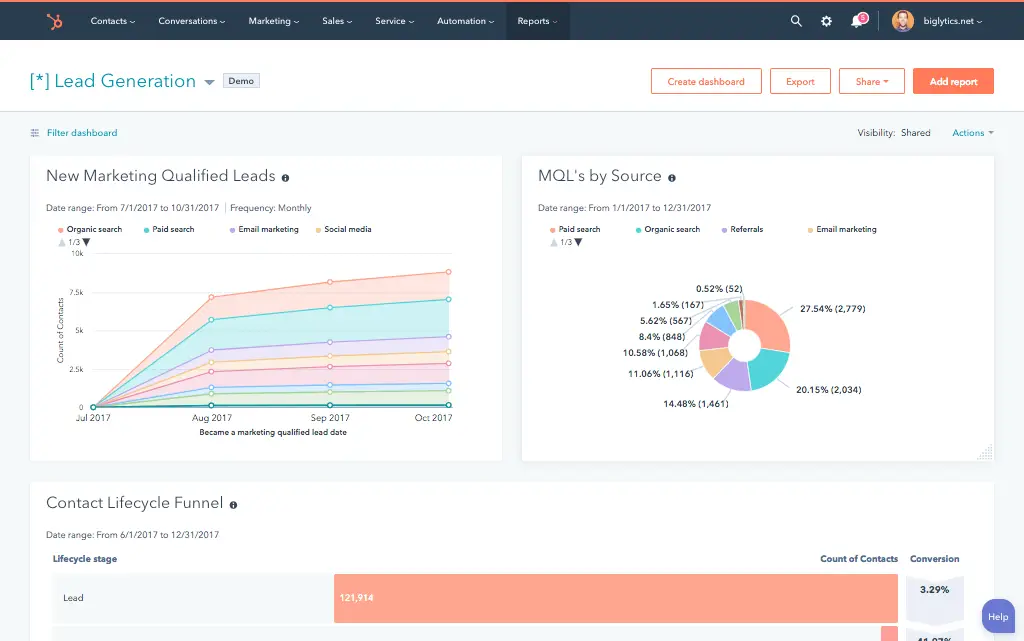


What is a HubSpot Avionté integration?
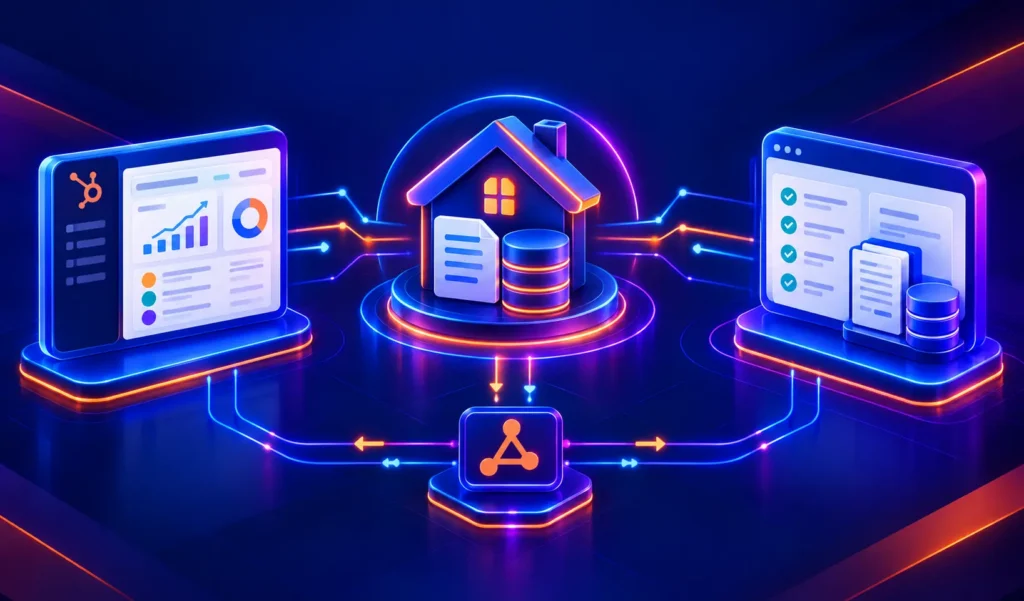
A HubSpot Avionté integration is a data connection that syncs candidates, clients, orders, placements, assignments, and revenue between Avionté staffing platforms (BOLD, CLASSIC, 24/7) and HubSpot CRM. It automates the sales-to-recruiting handoff, brings placement and revenue data into HubSpot for marketing attribution, and gives account executives visibility into active assignments before every client conversation.
How does the HubSpot Avionté integration work?
It works through Avionté’s REST API and HubSpot’s REST API with field mapping, deduplication on email plus Avionté ID, and workflow triggers for both directions. New HubSpot deals move to Avionté as job orders when a client contract is signed. Avionté placement events (candidate placed, contract started, contract ended) flow back to HubSpot as deal updates and marketing-safe custom properties.
Turn HubSpot Into A Real-Time SMS Engine with Message IQ
 Two-Way Conversations
 Shared Team Inbox
 Automation Triggers
 Advanced Reporting
 Compliance Tools
- 98% SMS read within 3 min
- 78% Buy from first responder
- 21× More likely to qualify

*MessageIQ is an IntegrateIQ product – built natively for HubSpot by the same team.
Does HubSpot have a native Avionté integration?
No. HubSpot does not maintain a native Avionté connector, and Avionté does not publish a HubSpot app on its marketplace. Third-party middleware like Zapier provides basic triggers but does not support the 50+ custom Avionté fields most staffing agencies need, or the bi-directional sync required for real sales-to-recruiting handoff. Staffing agencies build a custom HubSpot Avionté integration.
Can HubSpot and Avionté sync bi-directionally?
Yes with a custom build. HubSpot deal creation can trigger job order creation in Avionté at a defined pipeline stage, and Avionté events (order posted, candidate submitted, placement made, assignment ended) flow back to HubSpot. System of record is defined per field so recruiter-owned candidate data stays inside Avionté and account executive owned commercial data stays inside HubSpot.
How long does a custom HubSpot Avionté integration take to build?
A custom HubSpot Avionté integration takes about 8 weeks from kickoff to production. Discovery runs two weeks for job order flow mapping, placement lifecycle design, custom field inventory across staffing verticals, and Avionté platform confirmation (BOLD, CLASSIC, or 24/7). Build and staging runs three weeks. Backfill runs one week, cutover and hypercare cover the final two weeks.
What data can sync between HubSpot and Avionté?
Clients, contacts, candidates, job orders, submissions, placements, assignments, contract terms, bill and pay rates (bucketed for marketing), placement status, and revenue data. HubSpot marketing engagement (form fills, email opens, campaign attribution, lifecycle stage) flows the other way. Field mapping is configured per agency so only relevant staffing data flows and marketing-safe boundaries protect candidate PII.
How a HubSpot Avionté Integration Actually Works
A HubSpot Avionté integration keeps a modern sales and marketing engine in agreement with the staffing operations platform your recruiters live in. Avionté owns the operational relationship: candidates, clients, job orders, submissions, placements, assignments, contract terms, bill and pay rates, and time and expense capture. HubSpot owns the pre-sale relationship: lead capture from prospect employers, marketing attribution, sales pipeline for new client acquisition, and account manager workflows for existing client expansion.
The sync moves both directions. New client leads captured in HubSpot (Google Ads landing pages for staffing services, referral partner submissions, RFP forms) create client shells in Avionté with the original marketing source tagged. When a HubSpot deal moves to Closed-Won, an Avionté job order is created with the client, contact, contract terms, and requisition details populated automatically. Avionté placement and assignment events (candidate submitted, placement made, contract started, assignment ended, contract renewed) flow back to HubSpot as deal updates and company-level custom properties.
The important part is what stays inside each system. Avionté keeps candidate PII, background check data, work authorization details, and other recruiter-facing information inside its staffing-compliant environment. HubSpot only sees marketing-safe attributes (job order title, industry, contract stage, campaign attribution) so marketing can segment by client and vertical without exposing candidate data. Field-level system of record decisions get made during discovery.
Three Ways to Connect Avionté and HubSpot
The page above covers what a custom build delivers. This table adds the honest side-by-side staffing agencies need before committing to Zapier or a staffing-specific CRM instead of HubSpot.
| Factor | Zapier / Make (No-Code) | Staffing-Specific CRM (Bullhorn) | Custom (Integrate IQ) |
|---|---|---|---|
| Best for | Solo recruiters testing basic sync ideas | Teams okay with a staffing-first CRM instead of HubSpot | Agencies staying on HubSpot for marketing depth plus deep Avionté sync |
| Sync direction | One-way per Zap, brittle | Native but rigid to the staffing CRM data model | True bi-directional with field-level system of record |
| Custom Avionté field support | Not supported reliably | Standard staffing fields only | Full support including custom fields across BOLD, CLASSIC, 24/7 |
| Marketing automation depth | You do it manually in HubSpot | Basic staffing-templated emails only | Full HubSpot Marketing Hub depth (segmentation, workflows, attribution, ABM) |
| Vertical support (industrial, healthcare, IT, professional) | Manual routing per Zap | Native but limited customization | Vertical-specific pipeline logic with contract-type-driven automation |
| Client expansion and cross-sell tracking | Not supported | Basic account management | Full account expansion tracking with placement history and buying signal automation |
| Compliance handling for candidate PII | Depends on Zap architecture | Vendor-managed within staffing CRM | Marketing-safe boundaries defined; candidate PII stays inside Avionté |
| Maintenance | You own every broken Zap | Locked into staffing CRM roadmap | Monitored post-launch, included in scope |
If you are a solo recruiter or a boutique agency testing basic sync, Zapier works until volume breaks it. Staffing-specific CRMs like Bullhorn fit agencies happy to leave HubSpot’s marketing depth on the table (and Bullhorn is the direct competitor most agencies weigh). Anywhere you want HubSpot marketing paired with real bi-directional Avionté sync, custom field mapping across staffing verticals, and closed-loop attribution from ad spend to placement revenue, a custom HubSpot Avionté integration wins. We have proven this at 60-year staffing leader scale (case study. Our custom HubSpot integration services cover the build, backfill, and post-launch monitoring.
Staffing Agency Revenue Workflows Once Avionté Data Lives in HubSpot
- Client-signed to job order automation with attribution. A HubSpot deal moving to Closed-Won triggers Avionté job order creation with contract terms, requisition details, and the original marketing source tagged for attribution. Recruiters open Avionté and see a scoped order ready to fill, without account executives manually handing off contract details or ad hoc briefing docs.
- Placement milestone to client communication. Avionté placement events (candidate submitted, interview scheduled, offer extended, placement made, contract started) trigger HubSpot workflows that keep the client informed with milestone emails, add tasks for the account executive if a placement stalls, and update the deal timeline. Clients get consistent communication without recruiters writing custom updates.
- Assignment end to contract renewal automation. Avionté assignment end dates 30, 60, and 90 days out fire HubSpot workflows that surface renewal opportunities to the account manager, enroll the client in a contract renewal nurture sequence, and suppress prospecting messages to the client until the renewal closes. Marketing stops promoting new services to accounts already up for renewal.
- Contract expansion detection. Avionté active placements plus HubSpot engagement data surface expansion signals: clients with multiple active placements engaging with expansion content, clients whose placement count has grown quarter over quarter, or clients in a new vertical opening a role. Account executives get a task with placement history and engagement summary attached.
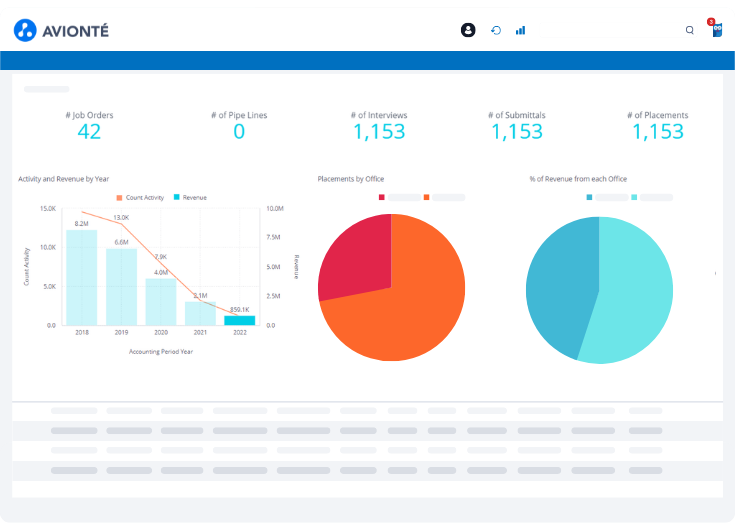
- Cost-per-placement attribution. When Avionté records a placement, HubSpot updates the deal to Closed-Won with placement revenue attributed to the original marketing source. Marketing dashboards show cost per placement by campaign (not cost per lead), which is the number staffing agency owners actually care about.
What Breaks in an Avionté HubSpot Sync, and How We Prevent It
- Duplicate client records across staffing verticals. Clients hiring across multiple verticals (industrial temp plus IT contract) commonly exist as multiple Avionté client records with slightly different naming (“Acme Corp” vs “Acme Corporation” vs “Acme Corp – IT Division”). Naive syncs mirror the fragmentation into HubSpot. We define client identity keys (Avionté client ID plus DUNS number plus billing address) up front so the same account stays as one HubSpot company across every vertical.
- Candidate PII leaking into HubSpot marketing properties. Sensitive candidate data (SSN, work authorization details, background check results, pay rate) landing in HubSpot marketing properties creates compliance risk. We define field-level marketing-safe boundaries during discovery so Avionté keeps recruiter-facing data and HubSpot only sees marketing-safe attributes (job title, industry, placement status).
- Multi-vertical pipeline collapse. Industrial staffing, healthcare staffing, IT contract, and executive search have different sales cycles, buying committees, and gross margin profiles. Native syncs collapse them into one pipeline, breaking gross-margin-aware reporting. We tag every deal and placement with vertical at sync time so pipeline reporting stays clean by service line.
- Placement stall silently killing deal attribution. A candidate submitted but not placed within a defined window (30 to 60 days depending on vertical) often stays as an open opportunity in Avionté with no visibility inside HubSpot. Account executives keep pushing marketing to that account, but the client has already gone quiet. We surface placement stall signals to HubSpot as deal risk flags so marketing suppression and account executive tasks fire on time.
- Contract renewal blindness on multi-year engagements. Avionté contract renewal dates (particularly on MSP arrangements or multi-year executive search retainers) often live only inside the operational system. Marketing runs generic prospecting to renewal-window clients instead of running renewal-specific campaigns. We map contract end dates to HubSpot company properties so 90/60/30/7-day renewal radar fires with the same reliability as SaaS renewal automation.
Implementation Timeline: What to Expect
Most HubSpot Avionté integrations complete inside eight weeks of kickoff. Discovery covers two weeks: Avionté platform confirmation (BOLD, CLASSIC, or 24/7), job order flow mapping across staffing verticals (industrial, healthcare, IT contract, professional), placement lifecycle design, custom field inventory (typical builds map 50+ fields), and marketing-safe field boundary definition to protect candidate PII. Weeks three to five are build and unit testing against a staging Avionté environment and a HubSpot sandbox. Week six runs the historical client and placement backfill. Weeks seven and eight cover user acceptance testing (account executives, recruiters, marketing, operations), cutover, and hypercare. Multi-vertical agencies or teams running MSP arrangements alongside contract staffing add discovery time, not build time. Post-launch monitoring is included, so if Avionté pushes an API update or your recruiter workflows change, we see it before your placement reports do. Full detail is on our HubSpot integration process page (https://integrateiq.com/our-hubspot-integration-process/), and 98.5% of clients renew for a follow-on scope. The proven playbook is documented in the 60-year staffing leader case study .
See your 12-month revenue impact with HubSpot CRM
Enter your current numbers — visitors, leads, deal size — and get a personalized projection based on real HubSpot customer benchmarks.
Calculate My ROI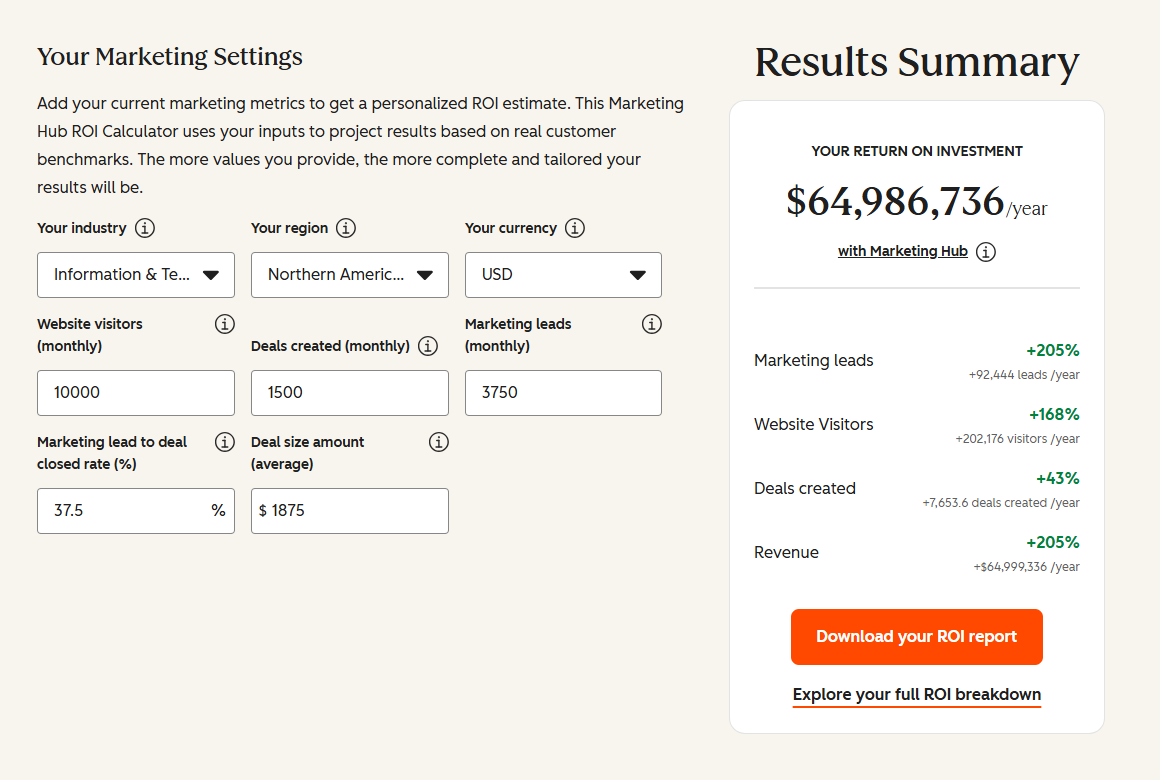
Connect the Rest of Your Revenue Stack
Avionté rarely lives alone in the staffing agency stack. Agencies running additional recruiting or applicant tracking systems alongside Avionté often add a HubSpot Bullhorn integration for hybrid deployments, or a HubSpot Vincere Evo integration for European operations. Agencies with heavy driver recruiting layer in a HubSpot Tenstreet integration alongside Avionté. Teams adding SMS for candidate outreach, interview reminders, and assignment start alerts bring in Message IQ an Integrate IQ product built natively for HubSpot that fires SMS from workflow triggers with 98% read rate and TCPA compliance controls, which is critical for candidate outreach where email response rates run below 20 percent. High-volume recruiting teams pair this with a HubSpot iCIMS integration for large enterprise clients running their own applicant tracking system. For broader staffing patterns, our recruiting and staffing industry page covers adjacent build patterns, and the integration ROI calculator turns the case into a number.

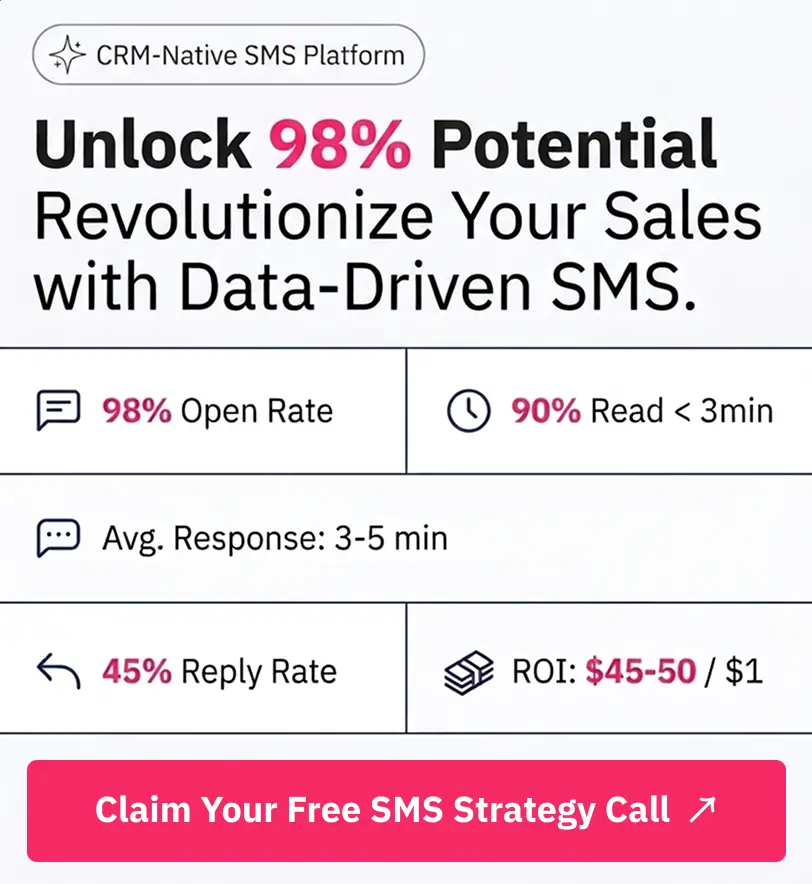
Table of Contents
- What is a HubSpot Avionté integration?
- How does the HubSpot Avionté integration work?
- Does HubSpot have a native Avionté integration?
- Can HubSpot and Avionté sync bi-directionally?
- How long does a custom HubSpot Avionté integration take to build?
- What data can sync between HubSpot and Avionté?
- How a HubSpot Avionté Integration Actually Works
- Three Ways to Connect Avionté and HubSpot
- Staffing Agency Revenue Workflows Once Avionté Data Lives in HubSpot
- What Breaks in an Avionté HubSpot Sync, and How We Prevent It
- Implementation Timeline: What to Expect
- Connect the Rest of Your Revenue Stack