



































What is a HubSpot Demio integration?
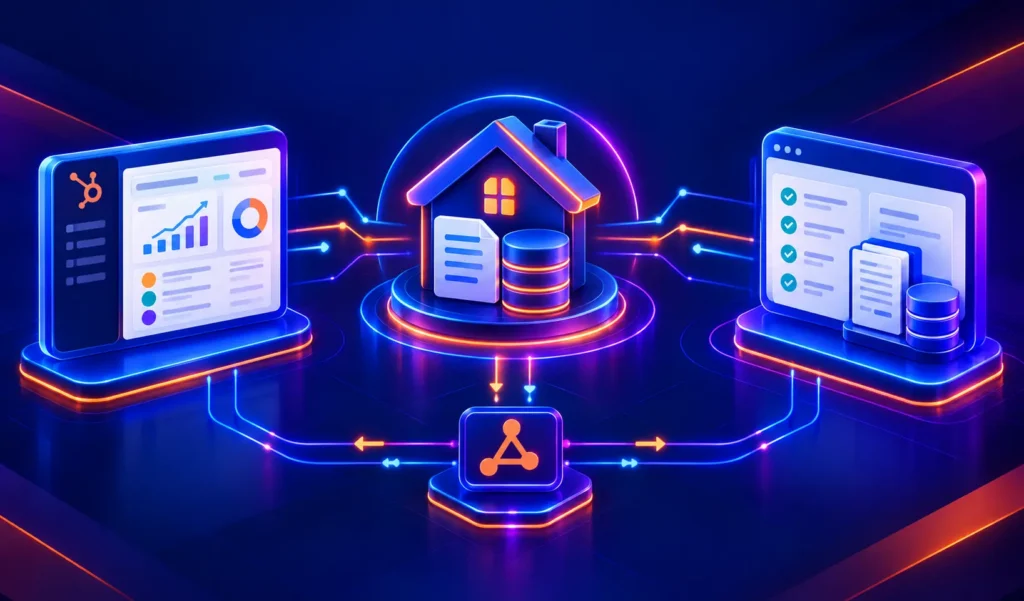
A HubSpot Demio integration connects your webinar platform to HubSpot syncing registration, attendance and engagement data so marketing and sales teams can measure event ROI and follow up based on real attendee behavior.
How does the HubSpot Demio integration work?
The integration maps Demio registrants and event sessions to HubSpot contacts and timeline events. Registration, attendance and engagement data, focus time, poll answers, UTM parameters, sync into HubSpot, while HubSpot workflows can register contacts for upcoming sessions automatically.

Turn HubSpot Into A Real-Time SMS Engine with Message IQ
 Two-Way Conversations
 Shared Team Inbox
 Automation Triggers
 Advanced Reporting
 Compliance Tools
- 98% SMS read within 3 min
- 78% Buy from first responder
- 21× More likely to qualify

*MessageIQ is an IntegrateIQ product – built natively for HubSpot by the same team.
Does HubSpot have a native Demio integration?
Yes. Demio offers a genuine, actively maintained native HubSpot integration, available on Demio’s Premium plan and above, that syncs standard registration and attendance data along with UTM parameters and engagement metrics to properties of your choosing.
Can custom registration field data trigger HubSpot workflows?
Not with the native integration alone. Demio’s native HubSpot integration syncs custom registration field data, like specific question answers, only as timeline properties, which can’t be used to trigger workflows or build segmented lists in HubSpot. A custom integration promotes that data to real contact properties so it’s actually usable.
How long does a HubSpot Demio integration take to build?
A custom HubSpot Demio integration typically takes 6 to 8 weeks: 1 to 2 weeks of discovery and field mapping, 3 weeks of build and staging, and the remaining weeks for testing and go-live support.
What happens to historical webinar data if we switch integration approaches?
It depends on how the change is handled. Demio’s own documentation confirms that removing the native integration causes loss of access to historical “Registered,” “Attended,” and “Missed” timeline events already in HubSpot. A custom integration or migration should include a data-preservation step so switching approaches doesn’t strand your event history.
Three Ways to Connect Demio and HubSpot
Not every team needs custom. Here is the honest comparison, currently absent from the page.
| Factor | Native Demio App (Premium+) | Zapier / Generic iPaaS | Custom Integration (Integrate IQ) |
|---|---|---|---|
| Best for | Standard registration, attendance, and engagement syncing on a qualifying Demio plan | Simple one-way trigger automation | Teams needing custom field data usable in workflows and lists, not just timeline events |
| Custom registration field usability | Timeline properties only, not usable for workflows or segmentation | Not supported | Promoted to real HubSpot contact properties, usable in lists and workflows |
| Plan requirements | Requires Demio Premium plan or higher | No Demio tier lock, but subject to Zapier task limits | No forced Demio tier upgrade required |
| Sync direction | True two-way for contacts; event data flows into HubSpot | One-way per trigger | True bi-directional, configurable per object |
| Business logic | Fixed within Demio’s integration settings | Basic conditional logic | Custom rules, e.g. multi-session series scoring, UTM-to-deal attribution rollup |
| Volume handling | Built for standard event volume | Task limits and throttling at scale | Built for large summits with thousands of simultaneous attendees |
| Maintenance | Vendor-managed | You manage it | Monitored, maintained, and supported |
Demio’s native HubSpot integration is genuinely solid for standard registration and attendance syncing on a qualifying plan. Once custom registration field data needs to actually drive workflows or segmentation, not just appear on a timeline, a custom integration is what makes that data usable.
Additional Event Workflows You Can Automate Once Demio Data Lives in HubSpot
This page already covers 1-click registration, attendee personalization, session management automation, full event lifecycle tracking, post-event nurture, attendance-based lead scoring, and custom field capture. The five below are deliberately new.
- Custom Registration Field Segmentation Beyond Timeline Events. Since Demio’s native integration limits custom registration field data to timeline-only properties that can’t drive workflows or lists, a custom integration promotes that data to real HubSpot contact properties, enabling actual segmentation and workflow triggers based on how someone answered a registration question.
- Multi-Session Series Attendance Scoring. For webinar series or multi-part event tracks, HubSpot can score a contact based on cumulative attendance across the whole series, not just a single session, identifying the most engaged prospects across an entire nurture campaign.
- UTM-to-Deal Attribution Rollup. Beyond syncing UTM parameters to a contact record, the integration rolls webinar-sourced UTM data up into deal-level attribution reporting, so marketing can show which specific webinar campaigns actually influenced closed revenue.
- Replay Engagement Re-Scoring. Since Demio tracks Replay View Status, a contact who watches most of a replay after missing the live session gets re-scored and re-routed into the appropriate nurture track, distinct from someone who never engaged with the content at all.
- Historical Data Continuity During Integration Changes. Since removing Demio’s native integration causes loss of access to historical timeline event data in HubSpot, a custom integration includes a data-preservation step so switching connectors or upgrading the sync doesn’t strand historical attendance records.
What Breaks in a Demio HubSpot Sync, and How We Prevent It
This section is currently absent from the page entirely.
- Duplicate records and identity resolution. Registrants using a different email for the webinar than what’s on file in HubSpot, a work email versus a personal email, can create duplicate contacts. We match on multiple identifiers, not email alone.
- System-of-record conflicts. Marketing may update a contact’s engagement score in HubSpot while Demio’s own sync also writes attendance data to the same record around the same time. We define clear field ownership so simultaneous updates don’t overwrite each other.
- Custom fields trapped as timeline-only data. Demio’s native HubSpot integration syncs custom registration fields, focus time, and poll answers as timeline properties only; this data can’t be used to trigger workflows or build segmented lists in HubSpot, a real, documented limitation. A custom integration promotes this data to genuine contact properties so it’s actually usable, not just visible.
- Historical data access risk during integration changes. Removing or replacing Demio’s native HubSpot connector causes loss of access to historical “Registered,” “Attended,” and “Missed” timeline events already synced. We build a data-preservation step into any migration or upgrade so switching approaches doesn’t strand your event history.
- API rate limits at high-attendance event volume. Large webinars or summits with thousands of simultaneous attendees can generate high-volume engagement data, join and exit timestamps, poll responses, that hits API limits during sync. Across 300+ platform integrations moving 20 billion plus fields annually, we batch and throttle high-volume syncs by design, not by accident.
See your 12-month revenue impact with HubSpot CRM
Enter your current numbers — visitors, leads, deal size — and get a personalized projection based on real HubSpot customer benchmarks.
Calculate My ROI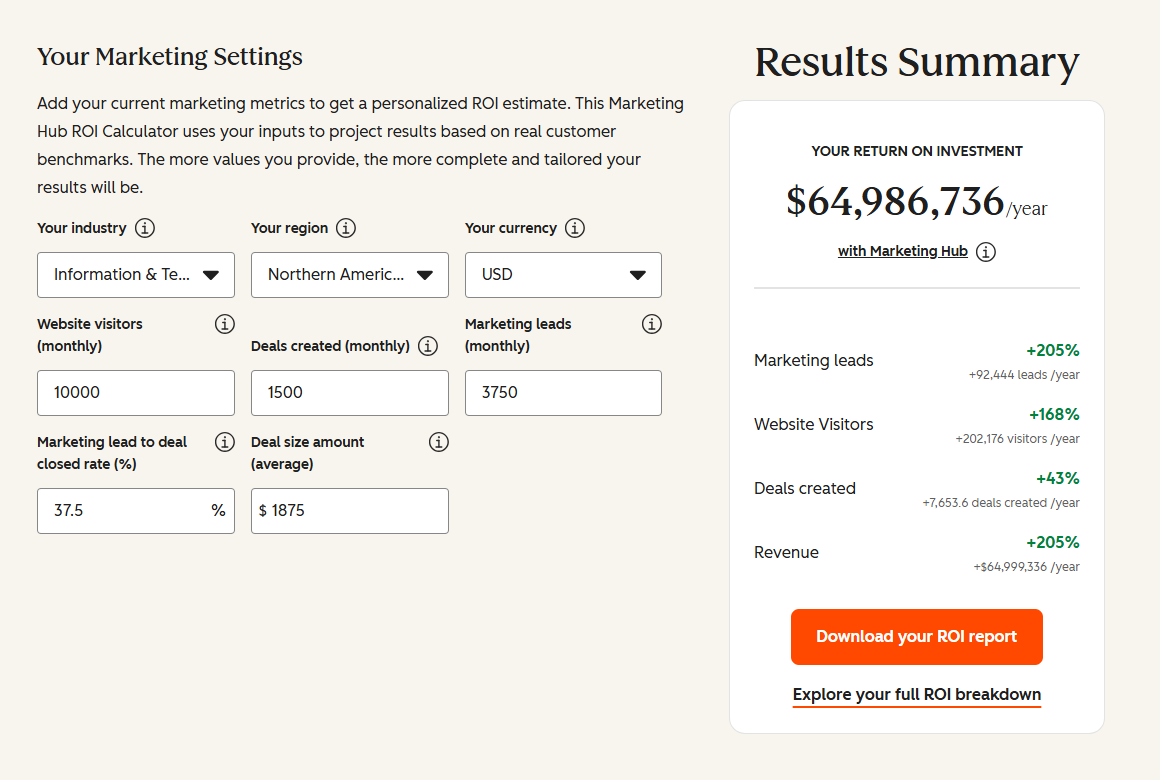
Connect the Rest of Your Marketing Stack
Webinar attribution work well alongside our HubSpot marketing operations services, and custom property promotion or multi-session scoring logic beyond the standard build often needs full-stack development support. Education and training organizations running frequent webinars often pair this with our education industry work. Getting marketing teams onto the new workflow goes faster with HubSpot training. Not sure what any of this is worth to your team? Run the numbers on our Integration ROI Calculator.

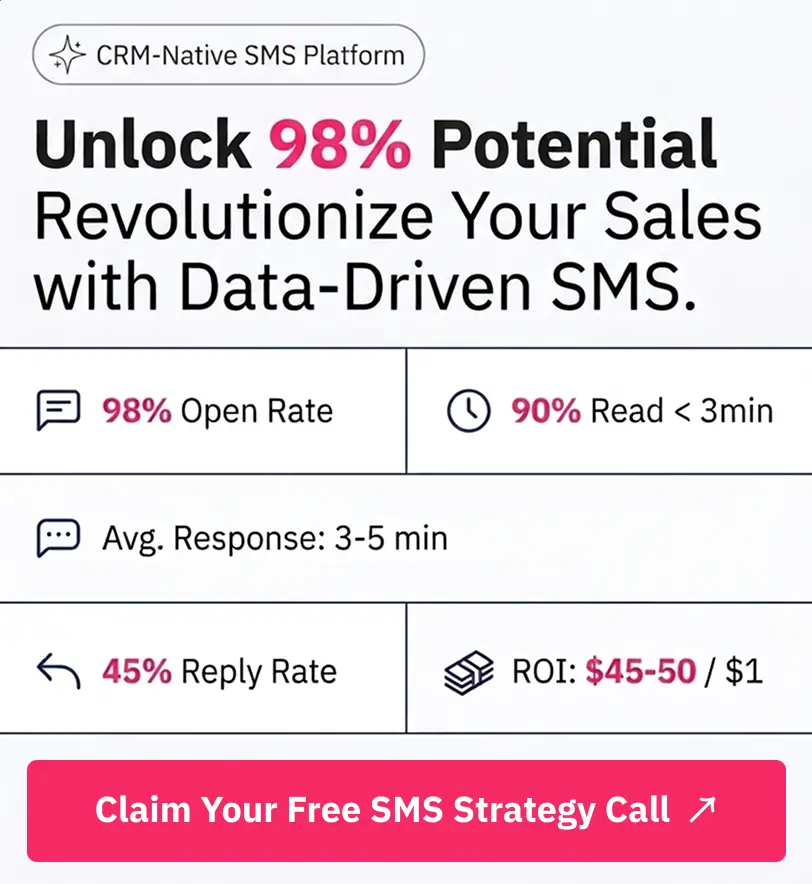
Table of Contents
- What is a HubSpot Demio integration?
- How does the HubSpot Demio integration work?
- Does HubSpot have a native Demio integration?
- Can custom registration field data trigger HubSpot workflows?
- How long does a HubSpot Demio integration take to build?
- What happens to historical webinar data if we switch integration approaches?
- Three Ways to Connect Demio and HubSpot
- Additional Event Workflows You Can Automate Once Demio Data Lives in HubSpot
- What Breaks in a Demio HubSpot Sync, and How We Prevent It
- Connect the Rest of Your Marketing Stack