








































What is a HubSpot Egnyte integration?
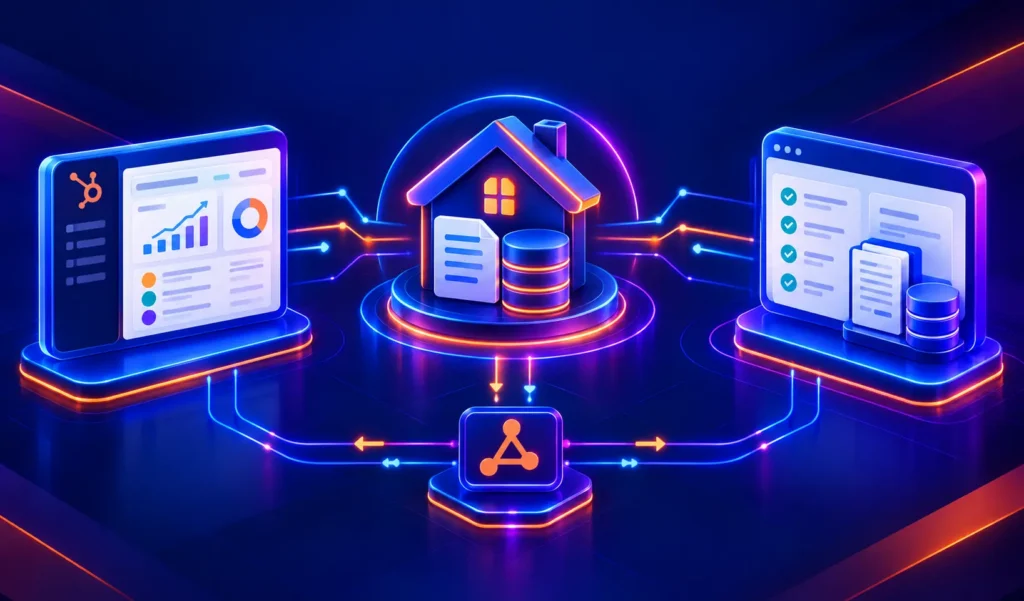
A HubSpot Egnyte integration connects your secure content governance platform to your CRM, syncing folder structures, file metadata and permissions so sales teams can access compliant, up-to-date documents directly from a deal or company record.
How does the HubSpot Egnyte integration work?
The integration maps HubSpot deals, companies, and contacts to Egnyte’s client folders, project folders, and permission structures. A Closed-Won deal can automatically provision a standardized Egnyte folder hierarchy, while file activity and version status sync back to the HubSpot record.

Turn HubSpot Into A Real-Time SMS Engine with Message IQ
 Two-Way Conversations
 Shared Team Inbox
 Automation Triggers
 Advanced Reporting
 Compliance Tools
- 98% SMS read within 3 min
- 78% Buy from first responder
- 21× More likely to qualify

*MessageIQ is an IntegrateIQ product – built natively for HubSpot by the same team.
Does HubSpot have a native Egnyte integration?
No dedicated, officially listed native connector exists between HubSpot and Egnyte in HubSpot’s marketplace. Zapier and Make offer basic automation templates, and Egnyte also provides an open API and developer platform for custom connections, but most businesses wanting deep folder and permission logic build a custom integration.
Is Egnyte’s API available on every Egnyte plan?
No. Egnyte’s own help documentation confirms its Public API is not available on Trial, Platform Team, or Legacy Connect plans, which cover the Business, Office, and Team tiers. Confirming your actual Egnyte plan and API access is a necessary first step before scoping any integration beyond basic automation templates.
How long does a HubSpot Egnyte integration take to build?
A custom HubSpot Egnyte integration typically takes 8 weeks: 2 weeks of discovery, including confirming Egnyte plan and admin access, 3 weeks of build and staging, and the remaining weeks for testing and go-live support.
Do files actually move from Egnyte into HubSpot?
No. Files stay in Egnyte for security and storage efficiency; only links and metadata sync to HubSpot, so nothing gets duplicated or stored twice, and Egnyte’s own permission rules still govern who can actually open a file.
Additional Document Workflows You Can Automate Once Egnyte Data Lives in HubSpot
This page already covers automated folder provisioning, secure external sharing, version control confidence, in-context file access, activity logging, and workflow triggers on client upload. The five below are deliberately new.
- Plan-Tier Verification Before Kickoff. Since Egnyte’s own Public API isn’t available on Trial, Platform Team, or Legacy Connect plans, the integration process confirms the client’s actual Egnyte plan and API access during discovery, before any development work begins, avoiding a costly mid-project discovery that the underlying access simply isn’t available.
- Domain Admin and Service Account Coordination. Since Egnyte only approves API keys for domain Admins and recommends Service Accounts over individual user credentials for Access Tokens, the integration setup coordinates this access explicitly with the client’s Egnyte administrator rather than assuming a sales stakeholder can provision it.
- Bulk Contact Sync Beyond the 5,000-Record Cap. Since generic automation platforms cap bulk contact retrieval at 5,000 records per call, a custom integration paginates and batches larger HubSpot contact lists explicitly, so growing databases don’t silently truncate data flowing into Egnyte-side folder or permission logic.
- Restricted Folder Auto-Redaction for External Sharing Links. Beyond simply generating a password-protected link, the integration can automatically verify that a shared link only exposes folders tagged as externally shareable, adding a safeguard against a rep accidentally sharing a restricted “Legal” or “Internal” folder alongside client-facing materials.
- File Request Fulfillment Deadline Tracking. Beyond notifying a deal owner when a client uploads a requested file, HubSpot can track and escalate File Request links that remain unfulfilled past a defined deadline, similar to a proposal follow-up sequence but for document collection specifically.
What Breaks in an Egnyte HubSpot Sync, and How We Prevent It
This section is currently absent from the page entirely.
- Duplicate records and identity resolution. A client contact created independently in Egnyte’s folder-sharing system and separately in HubSpot can create mismatched permission assignments. We match on a stable identifier across both systems, not name or email matching alone.
- System-of-record conflicts. IT may adjust folder permissions directly in Egnyte while a HubSpot workflow still assumes the original access level, creating a mismatch between what a rep sees in the CRM card and what they can actually access in Egnyte. We define Egnyte as the source of truth for permissions, with HubSpot reflecting rather than overriding them.
- Egnyte’s own Public API is plan-gated. Egnyte’s own help documentation confirms its Public API is not available on Trial, Platform Team, or Legacy Connect plans, which cover the Business, Office, and Team tiers. Any integration approach beyond Egnyte’s most basic connectors requires confirming the client is on a qualifying plan first; skipping this check risks scoping a project against API access that doesn’t actually exist for that account.
- Generic automation platforms have real record and field limits. Documented limits on tools like Make.com cap bulk contact retrieval from HubSpot at 5,000 records per call, and while Zapier does support custom field sync between the two platforms, bulk historical syncs and complex folder-permission logic generally exceed what these generic tools were built for. We architect around actual data volume from the start.
- API rate limits and admin-access requirements at scale. Egnyte only approves API keys for domain Admins, not general users, and recommends Service Accounts for ongoing access tokens. Combined with standard API rate limits, high-volume folder and permission syncing needs to be planned deliberately with the client’s Egnyte admin team, not assumed to work out of the box.
See your 12-month revenue impact with HubSpot CRM
Enter your current numbers — visitors, leads, deal size — and get a personalized projection based on real HubSpot customer benchmarks.
Calculate My ROI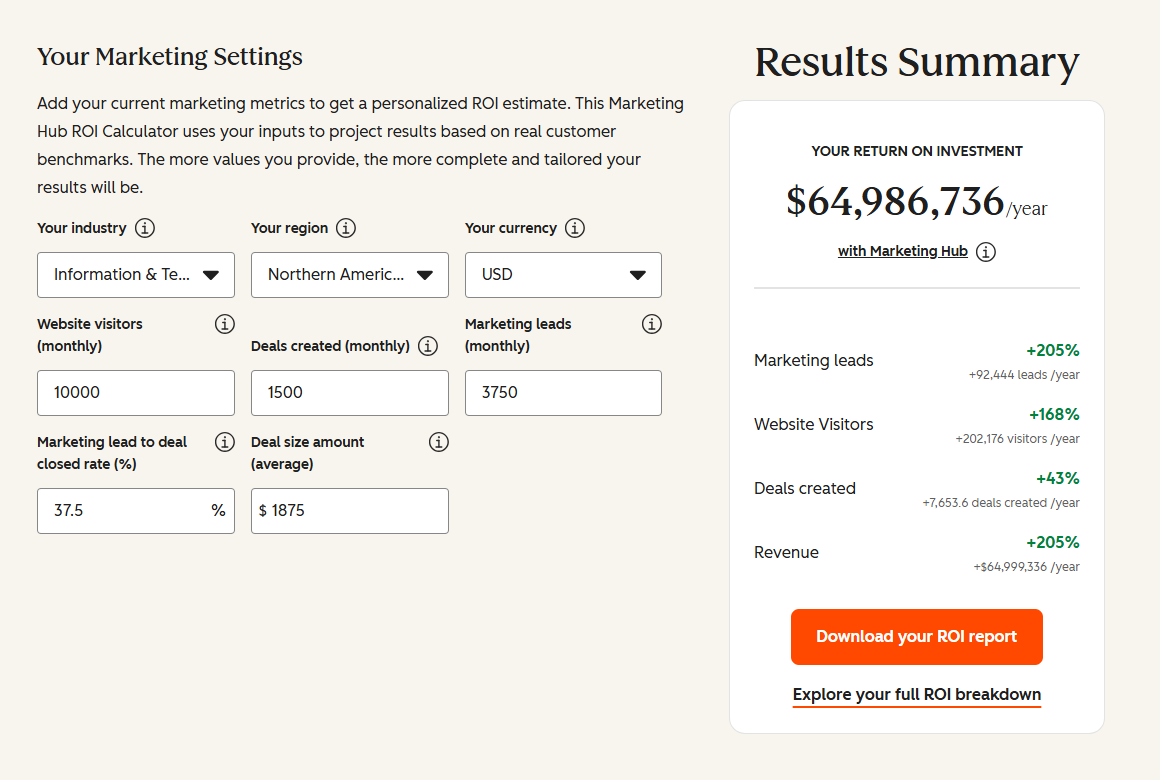
Connect the Rest of Your Deal Desk
See our dedicated banking and finance industry work for the broader governance and compliance picture. Custom permission logic or folder-redaction rules beyond the standard build often needs full-stack development support. Getting sales and legal teams onto the new workflow goes faster with HubSpot training. Migrating off a legacy CRM at the same time? Our CRM migration services cover that too. Not sure what any of this is worth to your team? Run the numbers on our Integration ROI Calculator.

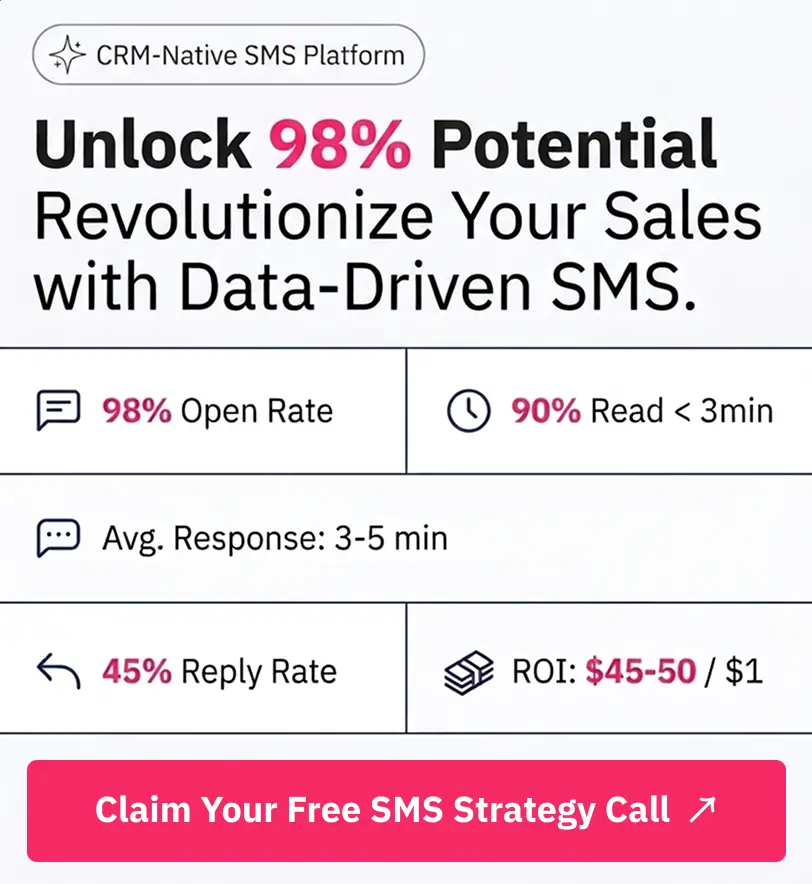
Table of Contents
- What is a HubSpot Egnyte integration?
- How does the HubSpot Egnyte integration work?
- Does HubSpot have a native Egnyte integration?
- Is Egnyte’s API available on every Egnyte plan?
- How long does a HubSpot Egnyte integration take to build?
- Do files actually move from Egnyte into HubSpot?
- Additional Document Workflows You Can Automate Once Egnyte Data Lives in HubSpot
- What Breaks in an Egnyte HubSpot Sync, and How We Prevent It
- Connect the Rest of Your Deal Desk