







































What is a HubSpot Jack Henry integration?
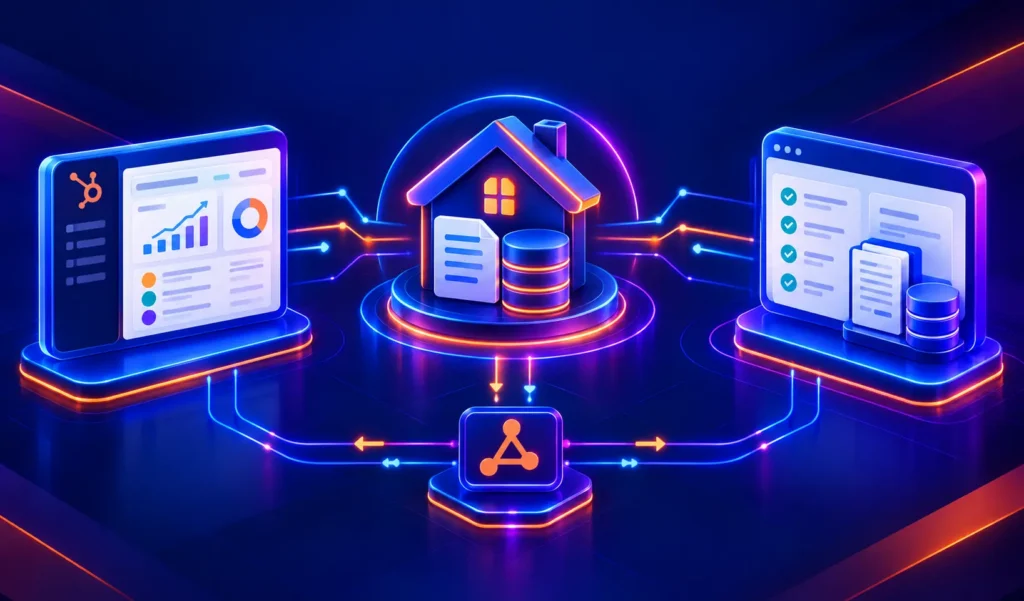
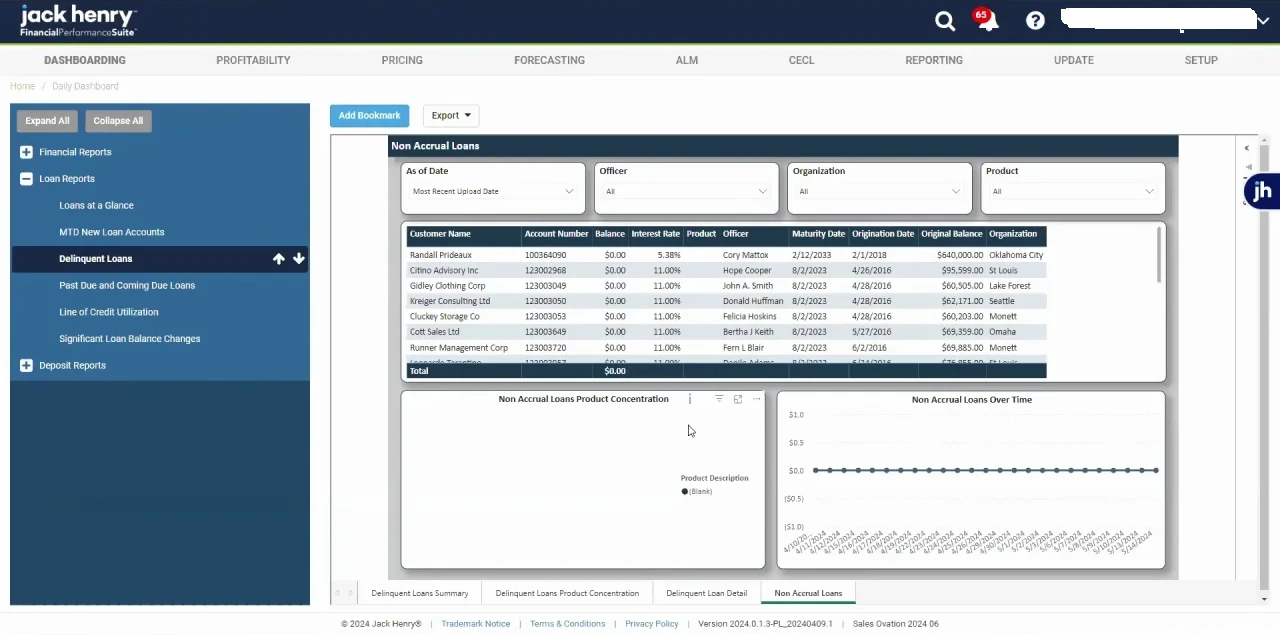
A HubSpot Jack Henry integration is a secure data connection that syncs customer or member records, account holdings, product mix, and loan data between Jack Henry cores (SilverLake, CIF 20/20, Core Director, Symitar/Episys) and HubSpot. It enriches contact records so marketing runs on real account data and bankers see marketing context before every conversation.
How does the HubSpot Jack Henry integration work?
It works through governed data pathways: scheduled SFTP file exports from the core to secure middleware for lower-risk batch sync, or near-real-time API sync through partners like Hightouch for time-sensitive events. Data is anonymized and mapped with unique identifiers (member ID plus email) to reconcile the account-centric Jack Henry model with the email-centric HubSpot model without duplicates.

Turn HubSpot Into A Real-Time SMS Engine with Message IQ
 Two-Way Conversations
 Shared Team Inbox
 Automation Triggers
 Advanced Reporting
 Compliance Tools
- 98% SMS read within 3 min
- 78% Buy from first responder
- 21× More likely to qualify

*MessageIQ is an IntegrateIQ product – built natively for HubSpot by the same team.
Does HubSpot have a native Jack Henry integration?
No. HubSpot does not maintain a native Jack Henry connector, and Jack Henry does not publish a HubSpot app on its marketplace. Community banks and credit unions build custom against Jack Henry APIs, the Synergy API Toolkit, or governed SFTP exports processed by middleware. Most mid-market institutions choose custom because native tools cannot handle multi-charter setups.
Is a HubSpot Jack Henry integration secure and compliant enough for banking data?
Yes when architected correctly. HubSpot holds SOC 2 Type II certification. A proper integration operates inside SOC 2-compliant middleware with end-to-end encryption, minimizes PII flowing to HubSpot marketing properties, keeps sensitive account data anonymized or bucketed, and supports FFIEC third-party vendor risk requirements and NCUA compliance obligations for credit unions.
How long does a HubSpot Jack Henry integration take to build?
A HubSpot Jack Henry integration takes about 8 weeks from kickoff to production. Discovery runs two weeks for compliance review, Jack Henry platform confirmation (SilverLake, Symitar, or other), field mapping with PII boundaries, and data pathway selection (SFTP vs API). Build and staging runs three weeks, backfill runs one, cutover and hypercare cover the final two weeks.
What data can sync between HubSpot and Jack Henry?
Members and customers, contacts, account records, products owned (checking, savings, loans, credit cards, mortgages), account balances (bucketed for compliance), loan status, credit tier, tenure, product open dates, and branch assignments. Custom objects in HubSpot can represent multi-account relationships. HubSpot marketing engagement (campaign attribution, email opens, form fills) flows back to the core institution’s data warehouse for reporting.
How a HubSpot Jack Henry Integration Actually Works
A HubSpot Jack Henry integration keeps a modern marketing and service engine in agreement with the core banking system your institution has trusted for decades. Jack Henry owns the operational relationship: member and customer records, account holdings, transaction history, loan status, credit tiers, product open dates, and branch assignments. HubSpot owns the marketing and service relationship: campaign attribution, form fills, email engagement, lifecycle stage and cross-channel touch history.
The sync moves through governed pathways designed for financial services compliance. For lower-risk batch data (member lists, product mix, tenure), the core exports nightly or periodic files to secure SFTP, and middleware processes those files into HubSpot custom objects and contact records. For time-sensitive events (new account opened, loan funded, product cancelled), API-based sync through partners like Hightouch delivers near-real-time updates so member onboarding and cross-sell campaigns fire on the day the trigger happens, not the week after.
The important part is what stays inside the core. A properly architected HubSpot Jack Henry integration keeps sensitive PII, transaction detail, and regulatory data inside Jack Henry, and syncs only marketing-safe attributes (product mix, tenure, engagement, campaign-safe segmentation) into HubSpot. Field-level marketing-safe boundaries and identity resolution rules (member ID plus email plus tenure) get defined during discovery so nothing that should stay inside the core leaks into HubSpot marketing properties.
Three Ways to Connect Jack Henry and HubSpot
No native connector exists. Here is the honest comparison of the three real paths institutions actually take.
| Factor | SFTP File Exports (Middleware) | API via Hightouch / Reverse ETL | Custom (Integrate IQ) |
|---|---|---|---|
| Best for | Community institutions comfortable with nightly batch cadence | Mid-size banks/credit unions wanting near-real-time triggers | Multi-charter institutions, multi-core environments, or Symitar with heavy customization |
| Sync freshness | Nightly batch (24-hour lag) | Near real-time (5 to 30 minute lag) | Choose per object: nightly for bulk data, real-time for triggers |
| Compliance posture | Lower risk, easier to approve from security review | Requires vendor BAA and security review | Full SOC 2-compliant architecture with FFIEC/NCUA alignment built in |
| Jack Henry platform coverage | SilverLake, CIF 20/20, Core Director, Symitar all work | Depends on Hightouch source support | All Jack Henry platforms plus Banno, Synergy, and custom API endpoints |
| Multi-charter or acquired institution support | One SFTP feed per charter, manual reconciliation | One flow per source, brittle across charters | Unified integration across multiple charters with source tagging preserved |
| Custom object mapping (loans, accounts, products) | Manual configuration per object | Standard objects only, custom fields limited | Full custom object support with association records |
| Historical member data backfill | Batch export handles it | Requires ETL replay | Full backfill validated against core reports |
| Post-launch monitoring | Manual file arrival checks | Vendor dashboard | Monitored proactively with error alerts and reconciliation |
If your institution runs a single Jack Henry instance, does most marketing on monthly cadence, and prefers the security review path of least resistance, nightly SFTP works well. Hightouch or a similar reverse ETL fits mid-size institutions comfortable with a vendor BAA and near-real-time triggers. Anywhere you run multiple charters, acquired institutions on different Jack Henry platforms, deep Symitar customizations, or need Banno digital banking data alongside core data, a custom HubSpot Jack Henry integration wins. Our custom HubSpot integration services cover the build, backfill, and post-launch monitoring, and our banking and finance industry practice covers the compliance specifics.
Banking Revenue Workflows Once Jack Henry Data Lives in HubSpot
- 90-day new account onboarding. A new checking account opened in Jack Henry fires a HubSpot workflow that enrolls the member in a 90-day multi-channel onboarding sequence: welcome, digital banking setup (Banno), direct deposit enrollment, savings account offer, and a check-in call from the branch. Each step suppresses automatically when the member completes that action in the core.
- Cross-sell umbrella of products. A HubSpot smart list surfaces members with checking accounts but no auto loan and household deposits above a defined threshold. They enter an auto loan cross-sell sequence with pre-qualification offers. When Jack Henry records the funded loan, the sequence stops and the loan officer gets a task with the full member history attached.
- Dormant relationship reactivation. A HubSpot workflow surfaces members whose Jack Henry activity has dropped (no debit card usage in 60 days, no digital banking logins in 90 days) and enrolls them in a we-miss-you sequence with an incentive relevant to their prior product usage. When core activity resumes, the sequence stops and the branch manager gets notified.
- Loan officer coverage model. Relationship managers and business bankers get HubSpot dashboards showing every member in their book of business with product mix, tenure, last core activity, and open marketing engagement. Scattered spreadsheets get replaced with a structured coverage model that surfaces the members most likely to expand next quarter.
- Loan application to funded revenue attribution. A HubSpot form submission from a rate landing page tags the marketing source (Google Ads campaign, referral partner, digital banner). When Jack Henry records the funded loan, the deal closes in HubSpot with the original attribution preserved. Marketing dashboards show cost-per-funded-loan by campaign instead of cost-per-application.
What Breaks in a Jack Henry HubSpot Sync, and How We Prevent It
- Symitar account-centric vs HubSpot email-centric identity model. Symitar identifies members by member ID plus account number. HubSpot identifies contacts by email. A single member with three accounts creates three records in Symitar and often one in HubSpot with no way to reconcile. We define identity keys (member ID plus email plus date of birth) up front and use HubSpot custom object association labels to represent the multi-account relationships cleanly.
- PII and account data leaking into HubSpot marketing properties. Sensitive fields (SSN, exact balances, account numbers, credit scores) landing in HubSpot marketing properties is a compliance red flag under FFIEC and NCUA guidance. We define field-level marketing-safe boundaries during discovery so the core keeps regulator-facing data and HubSpot only sees campaign-safe attributes (product owned, tenure bucket, balance range, engagement).
- Multi-charter and acquired institution data mixing. Institutions running two or three Jack Henry environments after acquisition (one bank on SilverLake, one on Symitar, or two Symitar instances) commonly find that syncs collapse charter data. Consolidated HubSpot reporting misrepresents member counts and product mix by brand. We tag every synced record with source charter so reporting stays clean by brand, region, or acquired entity.
- Banno digital banking signals separated from core data. Banno tracks digital login activity, mobile deposit behavior, and channel usage. Native HubSpot does not see any of this. Marketing runs cross-sell campaigns without knowing whether the member checks their account weekly or monthly. We integrate Banno alongside the core so digital engagement signals feed HubSpot segmentation.
- WORM archiving requirements for marketing communications. Firms with strict Write Once Read Many retention obligations (some broker-dealers, wealth management units inside banks) cannot rely on HubSpot’s default email logging for regulatory archiving. We plan for a third-party WORM archiving integration (Smarsh, Global Relay) alongside HubSpot as part of discovery, so the compliance officer signs off before build starts, not after go-live.
Implementation Timeline: What to Expect
Most HubSpot Jack Henry integrations complete inside eight weeks of kickoff. Discovery covers two weeks: Jack Henry platform confirmation (SilverLake, CIF 20/20, Core Director, Symitar), field mapping with PII boundaries defined per field, identity resolution rules design (member ID plus email plus DOB), multi-charter scoping if applicable, and data pathway selection (nightly SFTP for lower-risk batch, near-real-time API for triggers). Weeks three to five are build and unit testing against a staging Jack Henry environment and a HubSpot sandbox. Week six runs the historical member data backfill and reconciliation against core reports. Weeks seven and eight cover user acceptance testing with marketing, compliance, and branch operations, cutover, and hypercare. Multi-charter institutions or environments with heavy Symitar customization add discovery time, not build time. Post-launch monitoring is included, so if Jack Henry pushes an API update or your Banno configuration changes, we see it before your onboarding sequences break. Full detail is on our HubSpot integration process page, and 98.5% of clients renew for a follow-on scope.
See your 12-month revenue impact with HubSpot CRM
Enter your current numbers — visitors, leads, deal size — and get a personalized projection based on real HubSpot customer benchmarks.
Calculate My ROI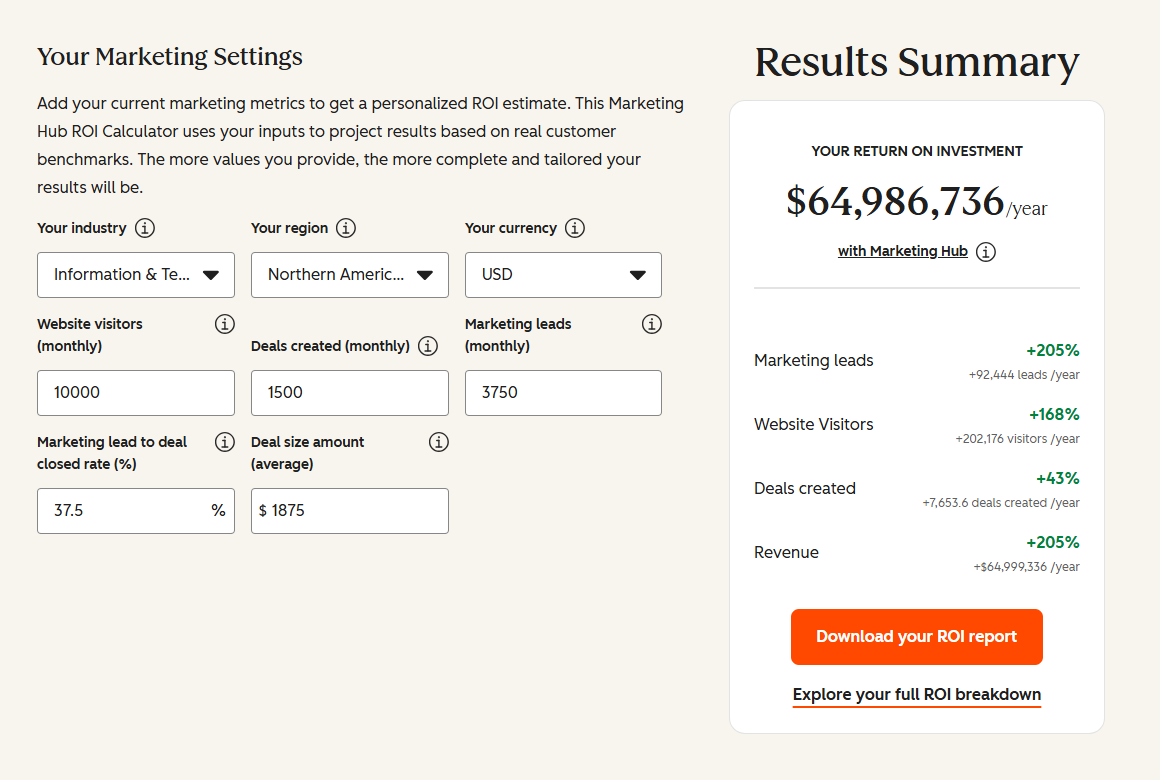
Connect the Rest of Your Revenue Stack
Jack Henry rarely lives alone in the community bank or credit union stack. Institutions running mortgage lending alongside core banking pair this build with a HubSpot Encompass integration so loan officer marketing runs on real LOS data. Banks and credit unions running additional core platforms after acquisition often add a HubSpot FIS integration or HubSpot Fiserv integration to the same HubSpot portal. Wealth management units use a HubSpot Envestnet integration or HubSpot AdvisorEngine integration for advisor-side data. Marketing teams adding SMS reminders for appointment scheduling, rate alerts and post-transaction confirmations layer in Message IQ, an Integrate IQ product built natively for HubSpot that fires SMS from workflow triggers with 98% read rate and TCPA compliance controls. For broader financial services context, our banking and finance industry page covers adjacent build patterns, and the integration ROI calculator turns the case into a number.

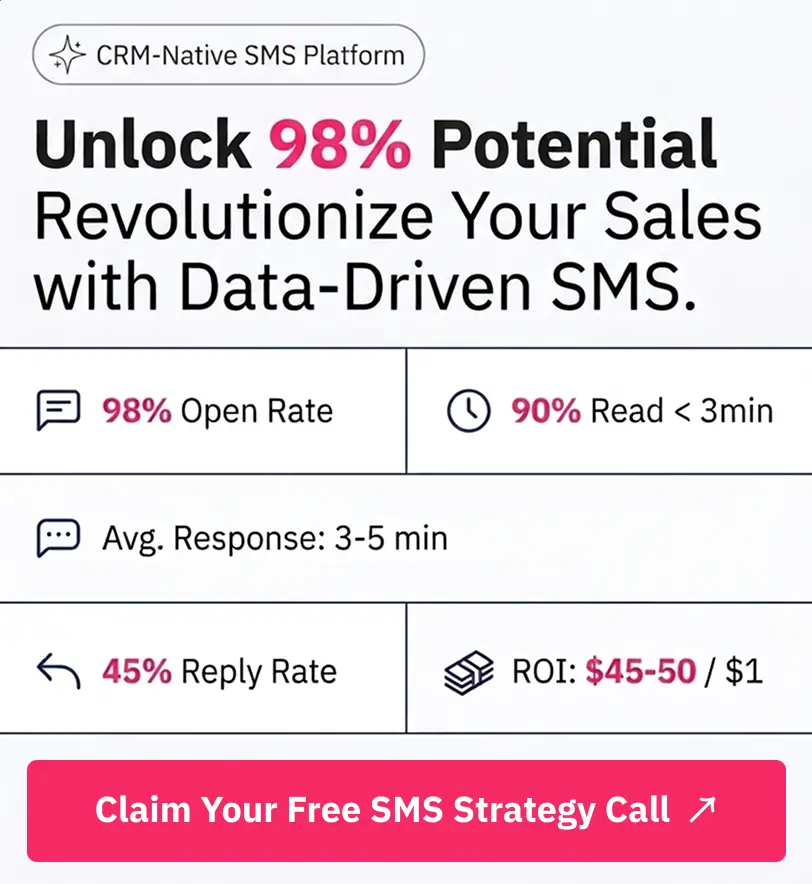
Table of Contents
- What is a HubSpot Jack Henry integration?
- How does the HubSpot Jack Henry integration work?
- Does HubSpot have a native Jack Henry integration?
- Is a HubSpot Jack Henry integration secure and compliant enough for banking data?
- How long does a HubSpot Jack Henry integration take to build?
- What data can sync between HubSpot and Jack Henry?
- How a HubSpot Jack Henry Integration Actually Works
- Three Ways to Connect Jack Henry and HubSpot
- Banking Revenue Workflows Once Jack Henry Data Lives in HubSpot
- What Breaks in a Jack Henry HubSpot Sync, and How We Prevent It
- Implementation Timeline: What to Expect
- Connect the Rest of Your Revenue Stack