



































HubSpot Diamond Solutions Partner

HubSpot Linear Integration: Align Customer Feedback with Engineering Execution

Bridge the gap between front-line teams and developers. Automatically push HubSpot tickets into Linear issues to ensure bugs and feature requests reach engineering instantly, without manual triage or lost context.

98.5%
Client Retention
300+
Platforms Integrated
20B+
Fields Synced Annually
HubSpot Diamond Partner

Get Your Free HubSpot Consultation + Claim The 2026 CRM Growth Playbook Instantly for FREE

Discover how top companies use their CRM to power marketing, sales & growth. No spam. No sales pitch. Just expert insights from certified HubSpot professionals.

  • Proven Playbooks from top-performing companies
  • Strategies to drive more leads, pipeline & revenue
  • Actionable insights from HubSpot experts
Lead Magnet Book Image
🎁Bonus: Submit the form to Instantly download The 2026 CRM Growth Playbook for highest ROI
(Offer valid for Limited Time Only)

Your 12-Month Revenue Impact with HubSpot CRM

Get personalized projections based on real HubSpot customer data — matched to your industry and region.

1
Add Your Current Numbers

Visitors · Leads · Deals · Close Rate · Avg. Deal Size

2
Choose Your Industry & Region

Benchmarks that actually match your market

3
See Your Projected Growth

Leads · Pipeline · Revenue

4
Download Your ROI Report

Instant PDF, ready to share

ROI Calculator Preview

Make the case to your leadership

Two guides that turn this integration into the business case your VP wants to hear, with the framing and numbers ready to go.

Pitch your Sales Leadership

Forecast credibility, deal velocity, expansion revenue, in CRO language.

Read the sales guide

Pitch your Marketing Leadership

Attribution, budget defensibility, segmentation, in CMO language.

Read the marketing guide

Pitch your Operations Leadership

Cost per order, cycle time compression, team capacity at higher volume, in COO language.

Read the operations guide
HubSpot Diamond Partner

Get a scoped estimate not a guess

ERPs, custom objects, legacy databases, real-time bi-directional sync. Every estimate is built by the same engineers who ship the integration.

  • Scope-based pricing. From $3,450 - scales with actual complexity, never padded flat fees.
  • 98.5% year-one retention. The engineers who quote it are the ones who build it.
  • 300+ platforms shipped. Your edge case is likely already in production somewhere in our library.
Build your estimate

60-second ballpark · No back-and-forth

Standard on every build

Every estimate already includes all six

Bi-directional sync

One-way or two-way, built to your data flow

Granular field mapping

Every property mapped, validated, tested

Real-time + scheduled

Instant triggers and batched syncs together

Custom sync logic

Your business rules, written into the build

Error handling

Monitoring, alerts, retry logic baked in

Year 1 continuity

License, maintenance, ongoing support

Streamline HubSpot Ticket to Linear Issue Tracking

Engineering shouldn't operate in a vacuum. Integrating with HubSpot provides developers with the "why" behind every issue by attaching direct customer context to the code they are shipping.

Automated Issue Creation: Generate Linear issues directly from HubSpot tickets with a single click or workflow trigger, eliminating copy-paste errors.

Contextual Insight: Attach customer quotes, revenue impact, and urgency from HubSpot directly to the Linear issue description.

Cycle Sync: Automatically triage requests into specific Linear teams or project cycles based on the ticket type or product line.

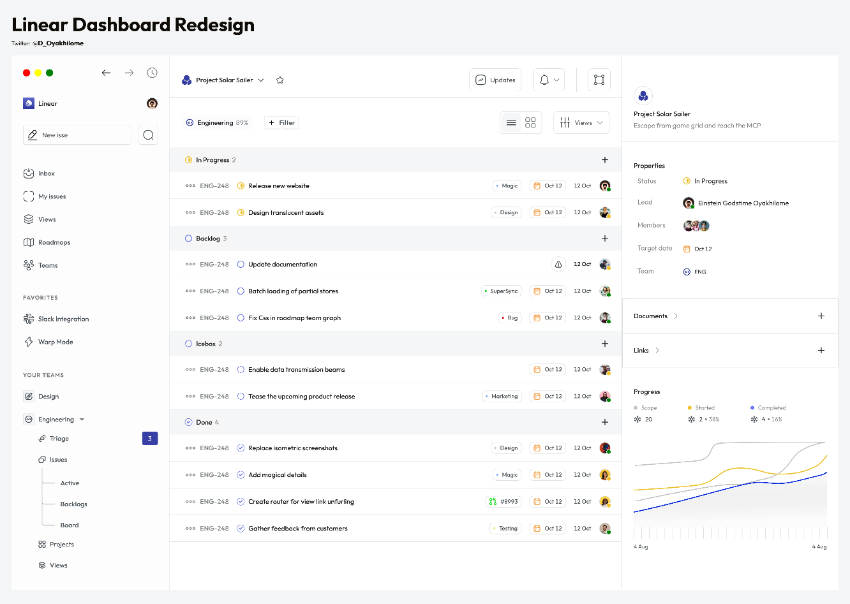
linear dashboard

Engineering shouldn't operate in a vacuum. Integrating with HubSpot provides developers with the "why" behind every issue by attaching direct customer context to the code they are shipping.

Integrate IQ has consistently shown they can be trusted with even the most complex projects. I know our customers are in great hands and that the job will always get done right.

Kathleen Rush

Manager, Strategic Partner Development Team at HubSpot

Close the Loop with a Bi-Directional HubSpot Linear Sync

Sales and Support teams lose credibility when they can't provide updates. This integration gives revenue teams real-time visibility into the status of bugs and features without distracting engineers.

Status Visibility: Sync Linear issue states (e.g., "In Progress," "Done") back to the HubSpot ticket so agents know exactly when to update the customer.

Roadmap Clarity: View linked Linear projects on the Deal or Company record to see if critical features are on track for a prospect.

Automated Notifications: Trigger HubSpot emails to customers automatically when the associated Linear issue is marked "Completed."

HubSpot Report

Sales and Support teams lose credibility when they can't provide updates. This integration gives revenue teams real-time visibility into the status of bugs and features without distracting engineers.

A Flexible HubSpot Linear Sync Architecture

Built for Your Business Process Native integrations often lack depth. We build logic that respects your engineering triage process, ensuring data flows correctly between your support queues and development sprints without disrupting the developer experience.

Built for Your Business Process

Standard, out-of-the-box connectors are built for simple, one-way data pushes. They can't handle the dynamic, tag-based segmentation or project management functions of Linear. We build your integration around your specific automations, mapping custom fields and project data bi-directionally.

  • Bi-Directional & Uni-Directional Sync:: Push tickets to Linear to report bugs, and pull status updates back to HubSpot to inform the account team.
  • Real-time & Scheduled Syncs:: Use webhooks for instant issue creation during critical outages, while using scheduled syncs for roadmap status updates to manage API usage.
  • Custom Sync Logic & Triggers:: Apply specific rules, such as only syncing "High Priority" tickets to the "Urgent" Linear triage queue, while routing feature requests to the "Backlog."
  • High-Volume Data Handling:: Our architecture is capable of handling high-velocity ticket volumes without hitting API limits or slowing down your Linear instance.

Comprehensive HubSpot Linear Object and Field Mapping

We map your CRM architecture directly to your product management hierarchy.

HubSpot

Linear

  • Ticket
  • Ticket Status
  • Ticket Priority
  • Ticket Description
  • Contact / Company
  • Deal (Feature Request)
  • Issue
  • Issue Status / Workflow State
  • Issue Priority
  • Issue Description
  • Requester / Customer Context
  • Project
  • Ticket Issue
  • Ticket Status Issue Status / Workflow State
  • Ticket Priority Issue Priority
  • Ticket Description Issue Description
  • Contact / Company Requester / Customer Context
  • Deal (Feature Request) Project

Transparent, Project-Based Pricing

No surprises. Clear scope, clear acceptance tests. We believe in straightforward pricing so you know exactly what to expect before we begin.

We fix what others can't: 50% Of our customers hired us to fix a failed integration.

A failed integration is more than a technical problem: it's a drain on time, budget, and morale. We are the specialists that leading companies like MetLife trust to handle their most mission-critical data flows. We don't rely on fragile connectors or simplistic platforms because we know they can't handle enterprise scale. Our approach is built on robust, custom development and a deep understanding of both HubSpot and the systems you need to connect it to. Partnering with us isn't just another attempt; it's an investment in certainty.

Trusted by Leaders, Proven by Results

Trusted by High-Growth Companies

See why leaders at scaling companies partner with Integrate IQ's experts.

I've been working with Integrate IQ for over 2 years now. We've had several outside systems that we wanted integrated with our HubSpot instance. From project planning and scoping, through build, and after deployment support, the team at Integrate IQ has been exemplary to work with. They've delivered on all commitments, helped established reasonable time frames for deliverables, and kept lines of communication open.

Marohn, M

We've partnered with Integrate IQ for over five years to develop integrations between our complex and not-so-widely-known ERP. They understand HubSpot's strengths, weaknesses and limitations, and are able to easily adapt to our evolving needs. They had an ownership change a few years ago, but that did not impact their expertise/service. We really appreciate our relationship with IIQ and recommend them to anyone looking to embed HubSpot deeper into their organization's systems.

Craychee, A

Integrate IQ has been great to work with! As someone who can be intimidated when things get too technical, they made the process of outlining our integration very approachable and understandable. They're great to work with and built the integration that we asked for, and then continued to work with us to fine-tune the tool over time as we figured out exactly what we needed.

Lauren Little

Integrate has been fantastic to work with. They helped us implement our CRM, design a framework for our pipeline that works perfectly and they built out an integration between HubSpot and Netsuite which allows our data to flow seamlessly. They've been an invaluable partner in our growth.

Whipple, M

We worked with Integrate IQ on a complex integration and now we have a fantastic solution that makes HubSpot work even better!

Ben Donahower

HubSpot Is the Platform. We Make It Perform

Why Businesses Trust Integrate IQ for a Smarter HubSpot Experience

Category
HubSpot Direct
Integrate IQ
Setup Approach
Guided setup with best-practice coaching.
Done-for-you configuration — we build and optimize everything for you.
Integrations
Standard native apps and limited connectors.
Custom integrations with 300+ platforms — fully tested and supported.
CRM Migrations
Basic import support.
Complete migration from any CRM — clean data, mapped fields, zero downtime.
Technical Capability
Advisory-focused.
Engineer-led builds with API, automation, and custom object expertise.
Ongoing Support
Ticket-based, reactive
Dedicated partner support, proactive optimization & monitoring
Team Expertise
Generalists across thousands of accounts
Senior HubSpot engineers with 300+ complex integrations delivered

What is a HubSpot Linear integration?

A HubSpot Linear integration is a two-way data connection that syncs tickets, issue status, priority, and customer context between HubSpot Service Hub and Linear in near real time. It keeps engineering progress visible inside HubSpot and pushes customer urgency and revenue impact into Linear so engineers triage with full context.

How does the HubSpot Linear integration work?

It works through the HubSpot and Linear REST APIs and webhooks, with field mapping, deduplication, and a defined system of record for every object. When a ticket is created in HubSpot or an issue status changes in Linear, the sync writes the change to the other system within minutes, in either direction.

for HubSpot

Turn HubSpot Into A Real-Time SMS Engine with Message IQ

chat icon Two-Way Conversations inbox icon Shared Team Inbox thunder icon Automation Triggers chart icon Advanced Reporting shield icon Compliance Tools
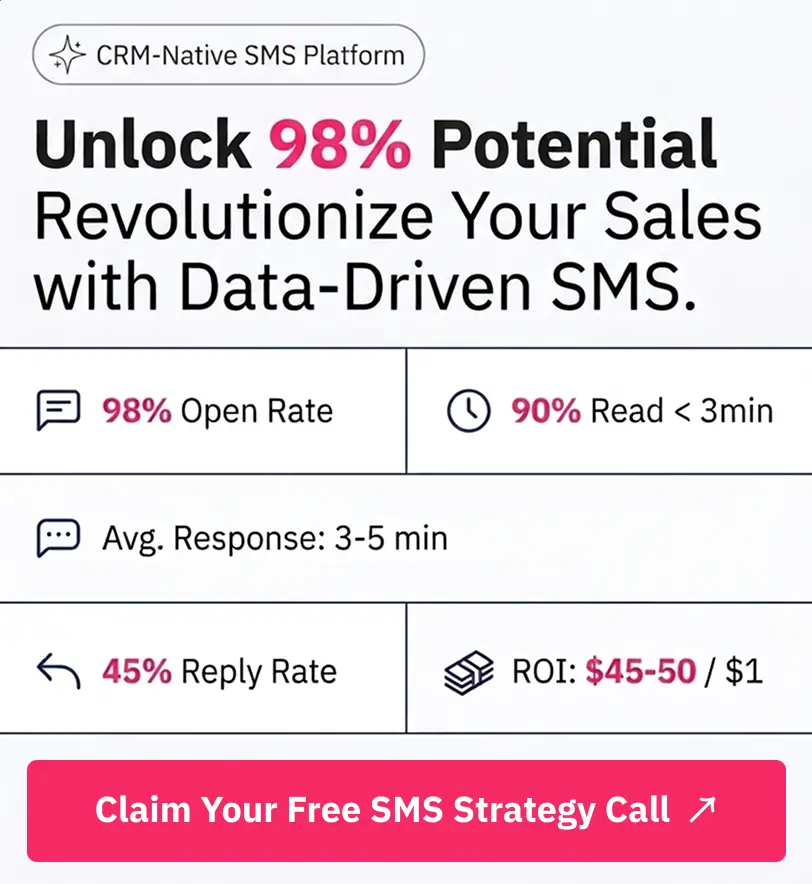
  • 98% SMS read within 3 min
  • 78% Buy from first responder
  • 21× More likely to qualify
Proven results
98% open rate 3–5 min avg response $45–$50 ROI / $1

*MessageIQ is an IntegrateIQ product – built natively for HubSpot by the same team.

Does HubSpot have a native Linear integration?

HubSpot does not maintain a first-party Linear integration. The marketplace lists third-party apps that handle basic one-click ticket-to-issue creation, but they lack custom ticket field mapping, SLA-based routing, and multi-team triage. Teams with advanced support-to-engineering workflows typically move to a custom-built integration.

How long does a HubSpot Linear integration take to build?

A custom HubSpot Linear integration takes about 8 weeks from kickoff to production. Discovery runs two weeks, build and staging tests run three, historical backfill runs one, and cutover with hypercare covers the final two weeks. Timelines extend for accounts with multiple Linear teams or complex triage rules.

Can HubSpot and Linear sync bi-directionally?

Yes. Bi-directional sync is standard in a custom HubSpot Linear integration. You define system of record at the field level, so issue status and engineering comments flow from Linear, while ticket priority and customer context flow from HubSpot, and conflicts are resolved by rule. Native marketplace apps only sync HubSpot to Linear.

What data can sync between HubSpot and Linear?

Tickets, ticket status, priority, and description sync with Linear issues, issue status, priority and description, along with contact and company context, deal or feature-request links, and internal comments. Field mapping is configured per project so only relevant data flows and each field has a clear owner.

How a HubSpot Linear Integration Actually Works

A HubSpot Linear integration works by giving each system ownership of the data it generates natively. HubSpot owns customer truth: who reported the issue, how urgent it is to the business, and what revenue is attached. Linear owns delivery truth: issue status, priority, cycle, and engineering comments.

When a support ticket is created or its priority changes in HubSpot, that context writes to a new or existing Linear issue. When an engineer moves an issue to a new workflow state in Linear, that status writes back to the HubSpot ticket so the support team can update the customer without pinging engineering directly.

Neither side syncs everything by default. Field-level rules decide exactly what crosses the boundary and in which direction, so engineers do not end up triaging sales fields and support does not end up managing Linear’s project and cycle structure.

Three Ways to Connect Linear and HubSpot

Not every team needs custom. Here is the honest comparison.

Factor Native Marketplace App Zapier / iPaaS Custom (Integrate IQ)
Best for A small team testing basic one-click issue creation Simple one-way triggers between the two tools Support and engineering orgs syncing status, priority, and context at volume
Sync direction Mostly one-way, HubSpot to Linear only One-way per Zap, multiple Zaps needed for two-way True bi-directional sync with field-level system of record
Custom objects/fields Standard fields only, limited custom property mapping Field mapping possible but breaks silently on schema changes Full support for HubSpot custom ticket properties and Linear custom fields
Ticket routing and SLA sync Not supported, no priority-based routing Possible with multiple chained Zaps, fragile at scale Native: HubSpot SLA and priority drive automatic routing to the correct Linear team or cycle
Business logic None, one-click issue creation only Basic filters and conditional Zaps Full custom rules: priority-based triage, team routing, escalation logic
Volume handling Degrades past a small number of tickets Rate-limited per Zapier plan tier Built for high-velocity ticket volume without hitting API limits
Historical backfill Not supported, syncs go live forward only Manual export/import workaround required Included as a dedicated project phase
Maintenance You manage field and workflow changes manually You own broken Zaps when either API changes IntegrateIQ monitors, alerts, and maintains the sync


If your team files a handful of bug reports a month and just needs one-click issue creation, a marketplace app is genuinely enough. The moment you need SLA-based routing, multi-team triage, or reliable status translation at volume, marketplace apps and Zapier both start costing more in manual cleanup than a custom build would. That is where our custom HubSpot integration services (opens in a new tab) come in.

Support and Engineering Workflows You Can Automate Once Linear Data Lives in HubSpot

  • Ticket volume spike from a strategic account. When a high-value account files three or more tickets in a week, HubSpot flags the pattern and alerts the CSM and AE, while the linked Linear issues get tagged so engineering sees the account context, not just isolated bugs.
  • SLA breach escalation. A HubSpot ticket approaching SLA breach automatically raises priority on its linked Linear issue and pings the assigned engineer, so support does not have to chase status updates manually.
  • Support-detected upsell opportunity. When a support ticket reveals a feature gap tied to expansion revenue, HubSpot creates a task for the AE with the linked Linear issue attached, so sales can set expectations without guessing at delivery timing.
  • Product feedback loop. Tickets tagged as feature requests automatically create Linear issues routed to the correct product team’s backlog, with the original customer quote and revenue impact preserved in the issue description.
  • Status visibility back to the customer. When a Linear issue moves to “Done,” the linked HubSpot ticket updates automatically and can trigger a customer notification email, closing the loop without an engineer or agent typing a manual update.

What Breaks in a Linear HubSpot Sync, and How We Prevent It

  • Duplicate records and identity resolution. When multiple HubSpot tickets reference the same underlying bug, naive syncs create a separate Linear issue for each one. We match on issue title and metadata and append new ticket links to an existing issue instead of duplicating it.
  • System-of-record conflicts. Both systems can technically hold a status field. We define ownership per field up front, either HubSpot ticket status drives updates or Linear issue state does, so an edit in the wrong system does not silently overwrite the correct value.
  • Field mapping and custom property drift. HubSpot custom ticket properties and Linear custom fields are not guaranteed to stay aligned when either team adds a field. We version the mapping and alert on schema drift instead of failing silently.
  • Ticket status and workflow state mismatch. HubSpot ticket pipelines and Linear workflow states use different labels and different numbers of stages. Without a mapped translation layer, an issue marked “In Review” in Linear can show as “Closed” in HubSpot, confusing the customer-facing team. We build an explicit status translation layer instead of a 1-to-1 guess.
  • API rate limits at volume. Across our client base we move 20 billion plus fields annually across 300 plus platforms, so we batch, checkpoint, and throttle syncs by design instead of by accident. We took the same disciplined approach to high-volume, status-mapping-heavy data (opens in a new tab) on a large staffing platform integration.

Implementation Timeline: What to Expect

Most HubSpot Linear integrations complete inside eight weeks of kickoff. The first two weeks cover discovery: object inventory in both systems, field-by-field mapping, system of record decisions, and a review of how your Linear teams and cycles are currently structured. Weeks three to five are build and unit testing against a staging Linear workspace and a HubSpot sandbox. Week six runs the historical backfill and reconciliation. Weeks seven and eight cover user acceptance testing, cutover, and hypercare. Post-launch monitoring is included, so if Linear changes a workflow state or HubSpot updates its ticket API, we see it before support or engineering does. Full detail is on our HubSpot integration process (opens in a new tab) page, and 98.5% of clients renew for a follow-on scope.

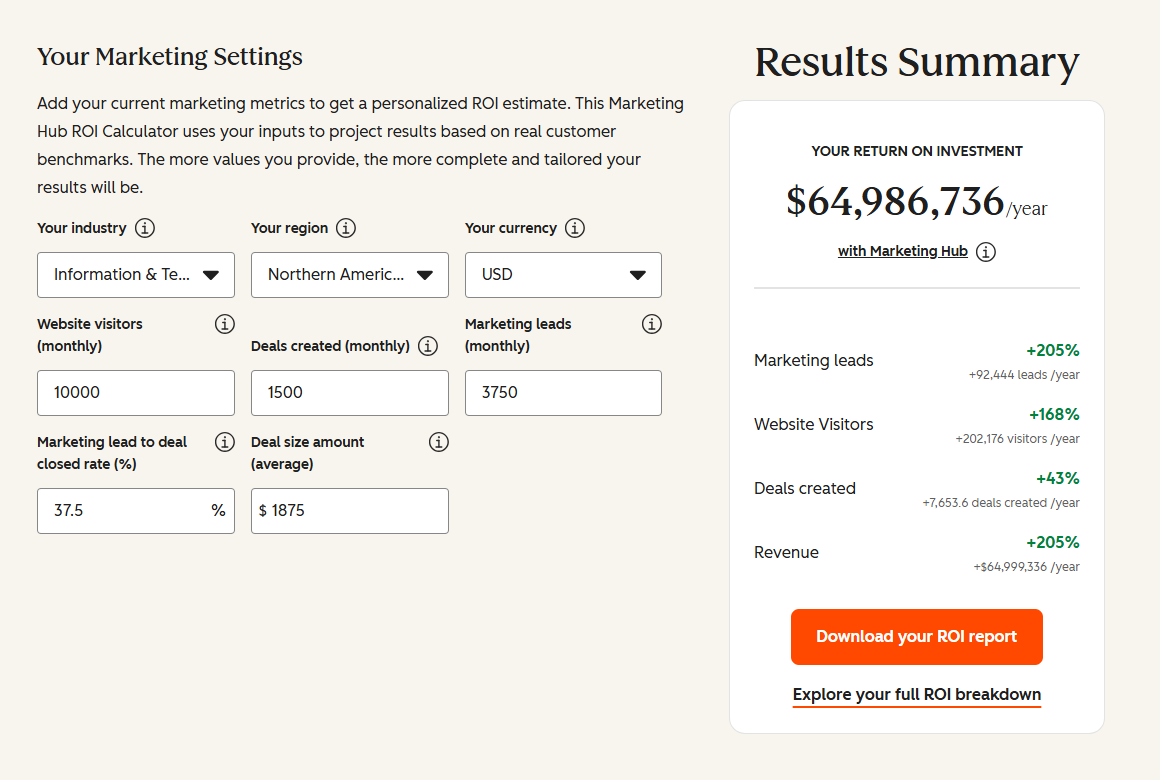
Free ROI Calculator

See your 12-month revenue impact with HubSpot CRM

Enter your current numbers — visitors, leads, deal size — and get a personalized projection based on real HubSpot customer benchmarks.

Calculate My ROI
ROI Calculator Preview

Connect the Rest of Your Revenue Stack

A HubSpot Linear integration rarely stands alone. If your support queue also needs to reconcile with a competing ticketing tool during a migration, our HubSpot Zendesk comparison (opens in a new tab) breaks down where each platform’s ticketing model fits. Teams pairing support data with a broader build often bring in our full-stack development team (opens in a new tab) for custom internal tooling around the sync. Before scoping either, run the numbers with our Integration ROI Calculator (opens in a new tab) to see what manual ticket-to-issue handoffs are already costing your team.

Tim Ritchie

Tim Ritchie

CEO of Integrate IQ

An admitted HubSpot fanboy, Tim has been in the HubSpot ecosystem as a consumer of the platform from the beginning. Tim believes that Message IQ’s success begins and end with the success of our customers and partners.

Integration CTA Image Message IQ CTA Image
Frequently Asked Questions

HubSpot Linear Integration FAQs

Yes. This is critical for tracking the volume of requests for a specific bug or feature. We can configure the sync to append new ticket links to existing Linear issues.

Yes. We can pass image URLs or file attachments from the HubSpot ticket directly into the Linear issue so developers can see the bug in action.

Yes. We can push internal HubSpot notes to Linear comments to provide extra context, or pull Linear engineering comments back to HubSpot (optional, based on privacy needs).

This is a managed integration solution. We configure the API endpoints specifically for your workflow to ensure it handles your custom properties and team structures reliably.

Cost depends on how many Linear teams and HubSpot pipelines need to sync, whether the sync is one-way or bi-directional, and how much historical ticket data needs backfilling. Rather than quote a flat number, we scope every project individually. Run our Integration Cost Estimate tool (opens in a new tab) for a 60-second ballpark, or book a discovery call for an exact quote.

A standard build runs 8 weeks from kickoff to production: 2 weeks discovery, 3 weeks build and staging, 1 week historical backfill, and 2 weeks UAT, cutover, and hypercare. Full detail is on our HubSpot integration process (opens in a new tab) page.

If you only need one-click ticket-to-issue creation for a small team, a marketplace app or a simple Zapier flow is enough. If you need SLA-based routing, multi-team triage, or reliable status translation past a handful of tickets a week, custom is the safer long-term choice.

Post-launch monitoring is included in every build. If Linear changes a workflow state or HubSpot updates its ticket API, our team catches it before support or engineering notices a broken sync. That ongoing support is a large part of why 98.5% of clients renew.

Ready to Ship Faster with a HubSpot Linear Integration?

Eliminate the game of "telephone" between support and engineering. Let’s build a workflow where customer feedback drives product development directly and transparently.

Schedule Your Integration Discovery Call

Post You May Like

Contact Us Book A Meeting