









































What is a HubSpot Proposify integration?
A HubSpot Proposify integration connects your proposal and quoting software to HubSpot, syncing deal data into proposals and syncing signed document status, value, and activity back into HubSpot so sales and RevOps teams work from one accurate closing pipeline.
How does the HubSpot Proposify integration work?
The integration maps HubSpot deals, contacts, and line items to Proposify clients and proposals. A HubSpot deal can auto-populate a proposal with pricing and contact details, while proposal status, views, and signatures sync back to update the HubSpot deal record.

Turn HubSpot Into A Real-Time SMS Engine with Message IQ
 Two-Way Conversations
 Shared Team Inbox
 Automation Triggers
 Advanced Reporting
 Compliance Tools
- 98% SMS read within 3 min
- 78% Buy from first responder
- 21× More likely to qualify

*MessageIQ is an IntegrateIQ product – built natively for HubSpot by the same team.
Does HubSpot have a native Proposify integration?
Yes. Proposify offers a genuine native HubSpot integration, confirmed directly by Proposify’s own support documentation, that lets you select object types and fields to sync and create or edit proposals from within a HubSpot deal. It handles standard use cases well, with real limits around complex line-item structures and custom workflow triggers.
Does Proposify’s native integration handle bundled products and tiered pricing?
Not reliably. The native integration’s line-item mapping is built around straightforward pricing rather than bundled products or multi-tier pricing structures, which can collapse into oversimplified data once synced to HubSpot. A custom integration maps these complex pricing models explicitly.
How long does a HubSpot Proposify integration take to build?
A custom HubSpot Proposify integration typically takes 6 to 8 weeks: 1 to 2 weeks of discovery and pricing-structure mapping, 3 weeks of build and staging, and the remaining weeks for testing and go-live support.
How much proposal volume can a generic iPaaS tool like Zapier or Make realistically handle?
Independent implementation guides suggest generic low-code tools are best suited to organizations syncing fewer than roughly 1,000 records a month; beyond that, per-task pricing escalates quickly and polling delays for non-webhook triggers become a real bottleneck.
Three Ways to Connect Proposify and HubSpot
Not every team needs custom. Here is the honest comparison, currently absent from the page.
| Factor | Native Proposify Integration | Generic iPaaS (Zapier/Make) | Custom Integration (Integrate IQ) |
|---|---|---|---|
| Best for | Standard proposals with straightforward, single-tier pricing | Organizations syncing fewer than roughly 1,000 records a month | Complex pricing structures, custom objects, and high-volume quoting |
| Bundled / tiered pricing support | Struggles, can collapse into oversimplified line items | Limited, depends on trigger configuration | Full mapping of bundled products and tiered pricing structures |
| Setup access requirements | Requires a HubSpot admin login to connect | Requires admin-level API access | Scoped and coordinated during discovery |
| Custom objects | Limited to what’s exposed in Proposify’s configuration UI | Not typically supported | Full support for objects specific to your business |
| Volume handling | Fine for standard proposal volume | Per-task pricing escalates quickly; polling delays on non-webhook triggers | Built for high-volume quoting periods without timeouts |
| Business logic | Fixed within Proposify’s integration settings | Basic conditional logic | Custom rules, e.g. rejection-reason capture, renewal sequencing |
| Maintenance | Vendor-managed | You manage it | Monitored, maintained, and supported |
If your proposals are straightforward, single-tier pricing at moderate volume, the native integration is a genuinely solid choice. Once bundled products, tiered pricing, custom objects, or high proposal volume matter, a custom integration is what keeps your quotes accurate instead of flattened into oversimplified data.
Additional Closing Workflows You Can Automate Once Proposify Data Lives in HubSpot
This page already covers auto-populated proposals, approval workflows, content library locking, instant view/sign notifications, automated Closed-Won movement, signed PDF sync, unopened-proposal follow-up, and deal amount updates. The five below are deliberately new.
- Bundled Product and Tiered Pricing Mapping. Since the native integration’s line-item mapping struggles with bundled products or tiered pricing structures, a custom integration handles these complex pricing models explicitly, so a multi-tier proposal doesn’t collapse into a single flat line item in HubSpot.
- Proposal Expiration and Renewal Reminder Sequencing. Beyond a simple unopened-proposal reminder, HubSpot can track proposal validity periods and trigger a renewal or re-quote sequence automatically as a proposal’s expiration date approaches, preventing stale pricing from being accepted after terms have changed.
- Multi-Signer Approval Chain Visibility. For proposals requiring sign-off from multiple stakeholders at the client’s organization, HubSpot can show which specific signer is holding up the deal, rather than a single generic “pending signature” status.
- Custom Object Support Beyond Deals and Line Items. Since the native integration’s object selection is limited to what’s exposed in Proposify’s own configuration UI, a custom integration can extend proposal data to HubSpot custom objects specific to your business, not just standard deals and line items.
- Rejected Proposal Reason Capture. When a proposal is declined rather than simply going unsigned, HubSpot can capture and categorize the stated rejection reason, feeding real, structured loss-reason data back into sales reporting instead of a generic “Closed Lost.”
What Breaks in a Proposify HubSpot Sync, and How We Prevent It
This section is currently absent from the page entirely.
- Duplicate records and identity resolution. A contact created independently in Proposify and separately in HubSpot before the integration syncs them can create duplicate client records. We match on a stable identifier, not name or email matching alone.
- System-of-record conflicts. A sales rep may edit a proposal’s pricing directly in Proposify after it’s been sent, while HubSpot’s deal amount still reflects the original quote. We define clear field ownership and refresh timing so the two don’t silently diverge.
- Native integration setup requires HubSpot admin access, and customization is limited to the exposed UI. Proposify’s own documentation confirms linking the two platforms requires a HubSpot admin login, and customization is limited to choosing from available object types and fields within Proposify’s configuration screen, not free-form mapping. Complex line-item structures like bundled products or tiered pricing, and custom workflow triggers, often fall outside what this configuration supports.
- Generic iPaaS and low-code tools have real volume ceilings. Independent implementation guides note that low-code workflow tools connecting Proposify and HubSpot are best suited to organizations syncing fewer than roughly 1,000 records per month, with per-task pricing that escalates quickly at higher volume and polling delays for non-webhook-based triggers. Growing proposal volume can outgrow this approach faster than expected.
- API rate limits at high-volume quoting periods. Sales teams sending large volumes of proposals during a specific selling season or promotional push can hit API limits during bulk syncs. Across 300+ platform integrations moving 20 billion plus fields annually, we batch and throttle high-volume syncs by design, not by accident.
See your 12-month revenue impact with HubSpot CRM
Enter your current numbers — visitors, leads, deal size — and get a personalized projection based on real HubSpot customer benchmarks.
Calculate My ROI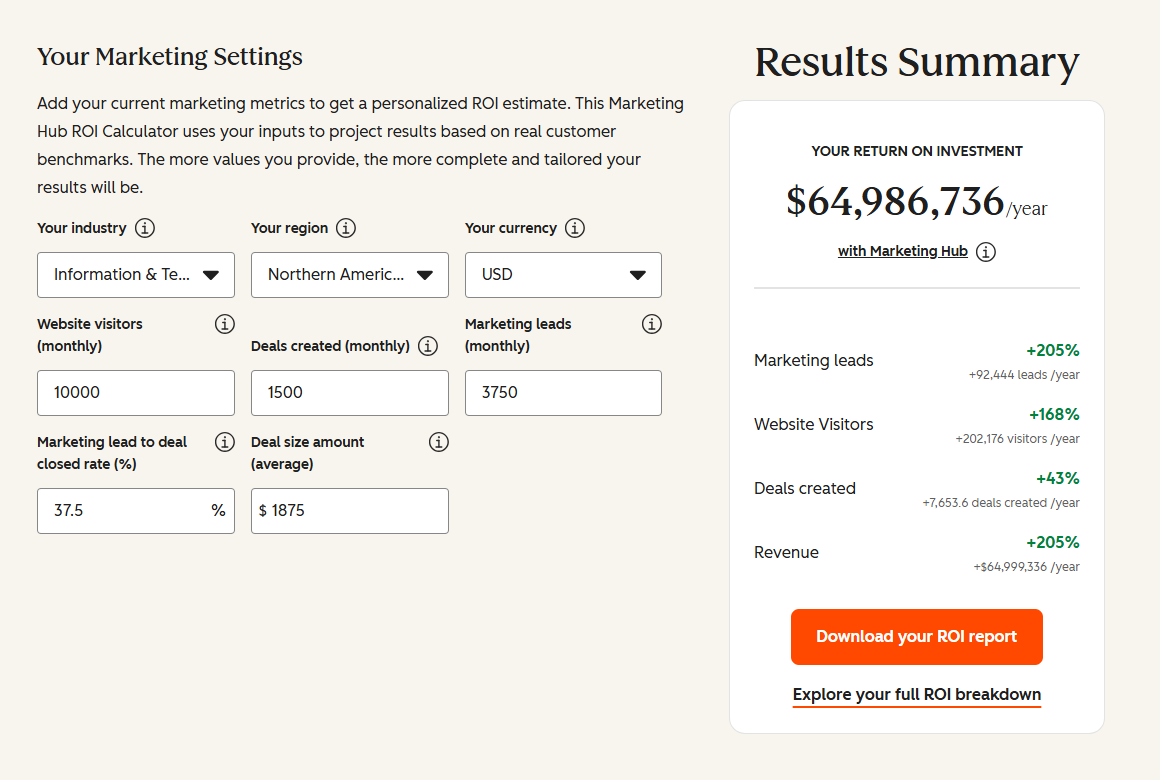
Connect the Rest of Your Deal Desk
Complex pricing or custom object logic beyond the standard build often needs full-stack development support. Getting sales teams onto the new workflow goes faster with HubSpot training. Migrating off a legacy CRM at the same time? Our CRM migration services cover that too. Not sure what any of this is worth to your team? Run the numbers on our Integration ROI Calculator

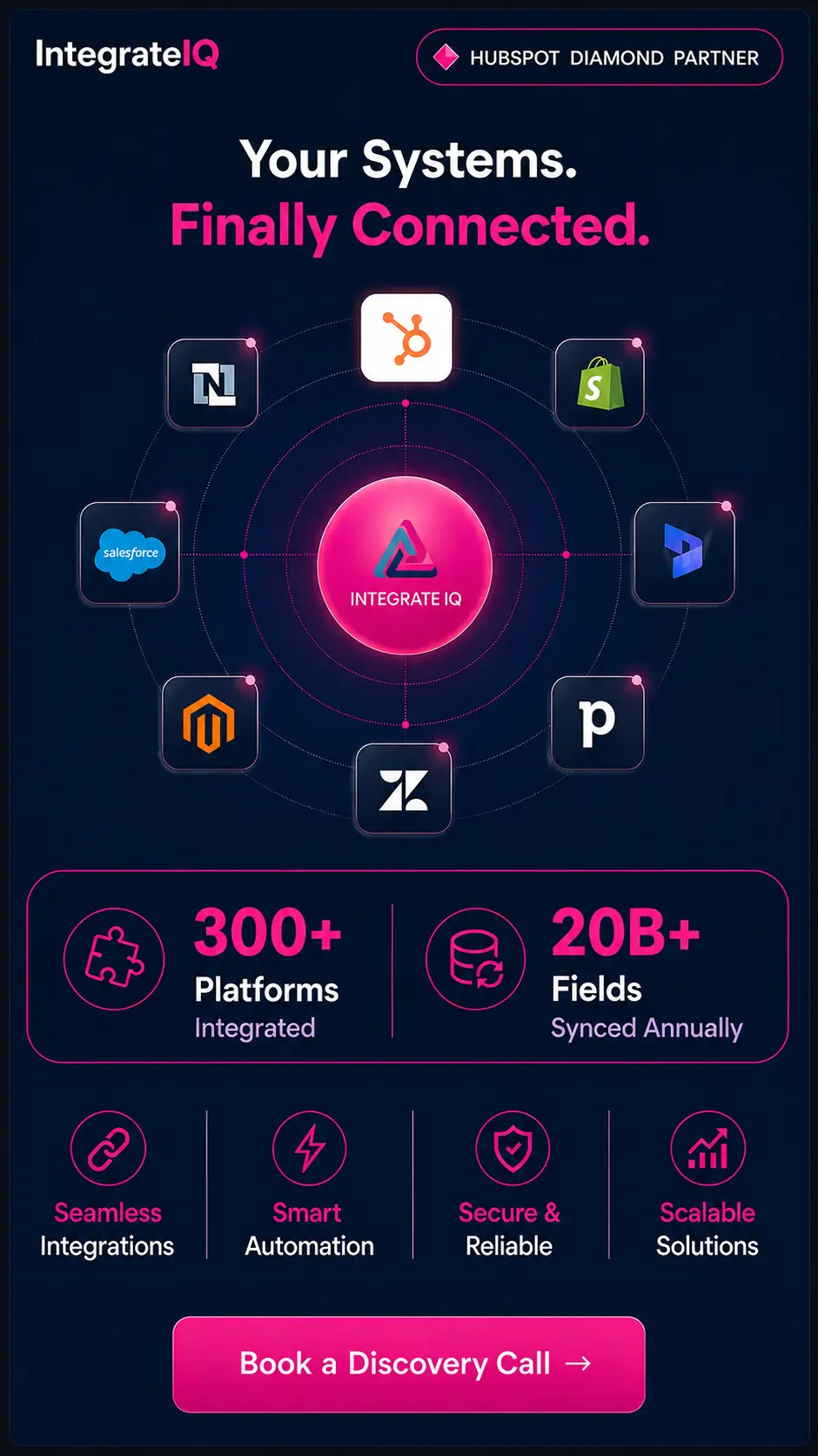
Table of Contents
- What is a HubSpot Proposify integration?
- How does the HubSpot Proposify integration work?
- Does HubSpot have a native Proposify integration?
- Does Proposify’s native integration handle bundled products and tiered pricing?
- How long does a HubSpot Proposify integration take to build?
- How much proposal volume can a generic iPaaS tool like Zapier or Make realistically handle?
- Three Ways to Connect Proposify and HubSpot
- Additional Closing Workflows You Can Automate Once Proposify Data Lives in HubSpot
- What Breaks in a Proposify HubSpot Sync, and How We Prevent It
- Connect the Rest of Your Deal Desk