






Explore this article with AI:
Free estimator
Know what your HubSpot project costs before the first call.
Select your services and get a transparent price range in minutes. No sales call needed to get a number.
Connect HubSpot to your ERP, billing platform, or database field mapping, custom logic, and support included.
Pipelines, workflows, email templates, and reporting configured for how your team actually works.
Live, role-based sessions with recordings and written guides built around a custom plan for your team.
HubSpot Partner
Client retention
Platforms integrated
Key Takeaways
-
AI Engine Optimization (AEO) is the practice of making your content discoverable and usable by AI assistants like ChatGPT, Gemini, and Perplexity.
-
Unlike SEO, AEO focuses on earning AI mentions, citations, and visibility in generated answers.
-
HubSpot’s AEO Grader benchmarks your current visibility across AI engines and provides recommendations.
-
Best practices include Q&A formatting, schema markup, semantic clarity, modular content blocks, and authoritative citations.
-
Companies that act now will prepare for declining organic traffic and lead the AI-first discovery era.
What Is AI Engine Optimization (AEO)?
AI Engine Optimization (AEO) is the process of structuring your content so it can be easily cited and surfaced by AI assistants. Instead of optimizing just for links on Google, you’re optimizing for AI outputs that synthesize answers.
You’ll also see this same practice called Answer Engine Optimization, AI Discovery Optimization, or AI Experience Optimization, depending on which vendor or platform is using the term. The name varies; the underlying goal doesn’t: getting your content recognized, trusted, and cited by AI systems instead of just ranked by them.
HubSpot’s AEO Grader defines success not by rankings but by mention frequency, sentiment, and accuracy in AI-generated responses. This is a fundamental shift — instead of measuring clicks, you’re measuring inclusion in AI answers.
Turn HubSpot Into A Real-Time SMS Engine with
Message IQ

Two-Way Conversations

Shared Team Inbox

Automation Triggers

Advanced Reporting

Compliance Tools
-
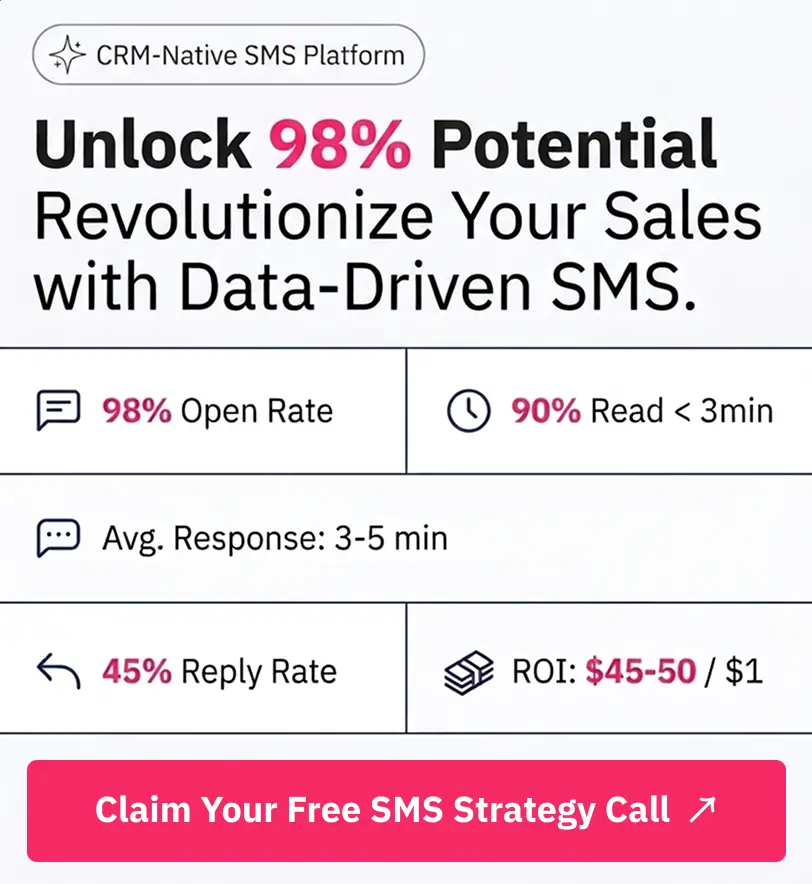
98%
SMS read within 3 min -
78%
Buy from first responder -
21×
More likely to qualify
3–5 min avg response
$45–$50 ROI / $1

*MessageIQ is an IntegrateIQ product – built natively for HubSpot by the same team.
Why AEO Matters in 2025
AI assistants are quickly becoming a starting point for discovery. According to HubSpot, more buyers are turning to tools like ChatGPT and Gemini instead of search engines. That means:
-
Organic traffic will decline as AI delivers answers directly.
-
Visibility depends on authority: if AI doesn’t recognize your content as trustworthy, it won’t cite you.
-
Mid-market brands can compete: AI often favors clear, structured answers over brand size.
Without AEO, you risk becoming invisible in the places buyers are now asking their questions.
7 Best Practices for AI Engine Optimization
- Use Q&A Structure – AI assistants prefer content written in a question + answer format. Add subheads like “What is AEO?” or “How does AEO differ from SEO?” with concise answers that can be lifted directly.
- Write Modular, Standalone Sections – AI extracts content in “chunks.” Create self-contained blocks under H2/H3s that each address one topic. Lists, bullets, and short paragraphs improve extractability.
- Add Schema Markup – Structured data helps AI engines understand your content. Use FAQ, QA, and HowTo schema to signal clear answers. HubSpot’s AEO Grader specifically checks for schema implementation.
- Strengthen Semantic Signals – Reference entities like HubSpot, AEO, SEO, and AI assistants consistently. Use synonyms and related terms so AI clearly connects your content with the concepts it covers.
- Build Authoritative Citations – AI prefers trustworthy content. Reference external studies, link to primary sources, and earn backlinks from authoritative sites. Mentions across the web strengthen your brand’s credibility inside AI outputs.
- Refresh Content Frequently – AI engines weight freshness. Update key pages regularly with new stats, examples, and insights so your content continues to surface in evolving AI models.
- Benchmark With the HubSpot AEO Grader – Use HubSpot’s AEO Grader to test your current visibility across AI engines. The tool shows where your brand is cited, what sentiment it carries, and how accurate AI descriptions are.
What to Look for in an AEO Tool
Content practices only get you so far; at some point you need software that tells you whether they’re working. A growing category of “prompting-aware” AEO tools now tests how your brand actually shows up when real prompts are run against live models, not just whether your schema validates. The features that separate a genuinely useful tool from a glorified rank tracker:
- Multi-model prompt testing that runs the same query across ChatGPT, Gemini, Perplexity, and Google AI Overviews, since each model weighs your content differently and a tool checking only one gives you a partial picture
- Citation and mention tracking that shows not just whether you’re mentioned, but how often, in what context, and alongside which competitors
- Sentiment analysis on how AI describes your brand, a mention isn’t automatically a good outcome if the surrounding language is neutral or unfavorable
- Prompt-variation testing, since real users don’t ask the same question the same way twice; a tool that only tests exact-match phrasing misses how you actually get discovered
- Schema and structured data validation that flags broken or missing FAQ, QA, and HowTo markup before it costs you a citation
- Historical trend tracking so you can see whether a content change actually moved your AI visibility, not just a one-time snapshot
- Competitive benchmarking that shows which competitors get cited for the same prompts you’re targeting, and why
HubSpot’s AEO Grader covers several of these (mention frequency, sentiment, accuracy) natively; for deeper multi-model prompt testing and competitive benchmarking, teams often pair it with a dedicated AEO platform.
Things To Watch Out For
-
Over-optimizing for AEO can make content choppy — balance readability with structure.
-
Incorrect or spammy schema can backfire. Validate markup before publishing.
-
Authority takes time; thin content won’t earn mentions. Invest in depth.
-
Different LLMs (ChatGPT, Gemini, Perplexity) weigh content differently. Test across platforms.
What Marketers Should Do Now
-
Run your brand through HubSpot’s AEO Grader to see where you stand.
-
Convert high-value content into Q&A formats with clear answers.
-
Add FAQ sections to existing blogs and apply schema markup.
-
Build external credibility through guest posts, press, and data citations.
-
Create internal links to reinforce topic clusters (for example, link to your Marketing Studio and Segments & Personalization posts).
FAQs About AI Engine Optimization
How is AEO different from SEO?
SEO optimizes for search rankings; AEO optimizes for inclusion in AI-generated answers.
Why is AEO important now?
Because AI assistants are replacing traditional search for many buyers, and content must be structured for AI to cite it.
How can I measure AEO success?
Tools like HubSpot’s AEO Grader track mention frequency, sentiment, and accuracy across AI engines.
Do I still need SEO if I invest in AEO?
Yes. SEO builds foundational visibility; AEO ensures your content survives the AI-first future.
What is HubSpot’s approach to AEO (AI Engine Optimization)?
HubSpot’s primary AEO tool is the AEO Grader, a free benchmarking tool that tests how often your brand is mentioned across AI engines like ChatGPT, Gemini, and Perplexity, what sentiment those mentions carry, and how accurately the AI describes your products or services. Rather than reporting keyword rankings, it reports inclusion: whether your content actually shows up inside the answer an AI generates. HubSpot pairs the Grader with its Content Hub, which is built to produce the structured, modular content (Q&A formatting, schema markup, clear headings) that AEO best practices call for, so the grading and the content creation live in the same ecosystem instead of two disconnected tools.
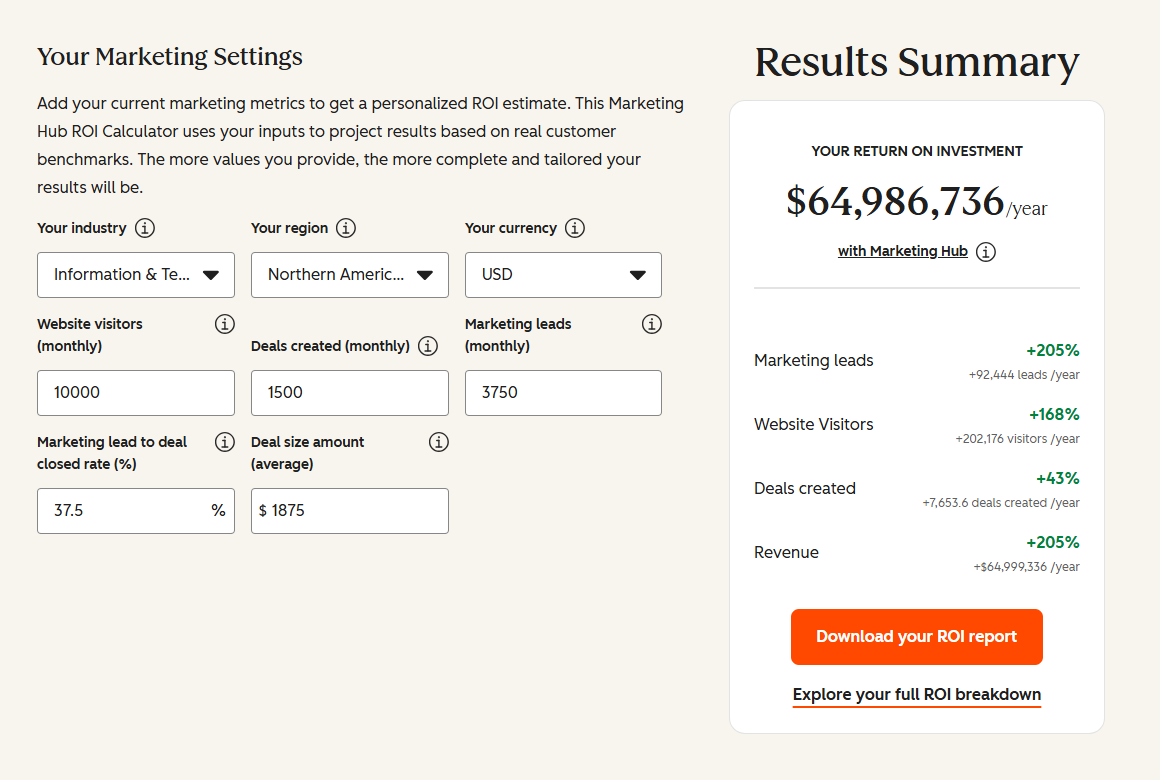
See your 12-month revenue impact with HubSpot CRM
Enter your current numbers — visitors, leads, deal size — and get a personalized projection based on real HubSpot customer benchmarks.
Bottom Line
AI is changing how people discover answers, and your brand needs to be part of that shift. AI Engine Optimization (AEO) is the new frontier of visibility — ensuring your content isn’t just ranked but cited inside AI outputs.
With Q&A formatting, schema, semantic clarity, authoritative citations, and tools like HubSpot’s AEO Grader, you can prepare your business for the AI-first search era.