







































What is a HubSpot BILL integration?
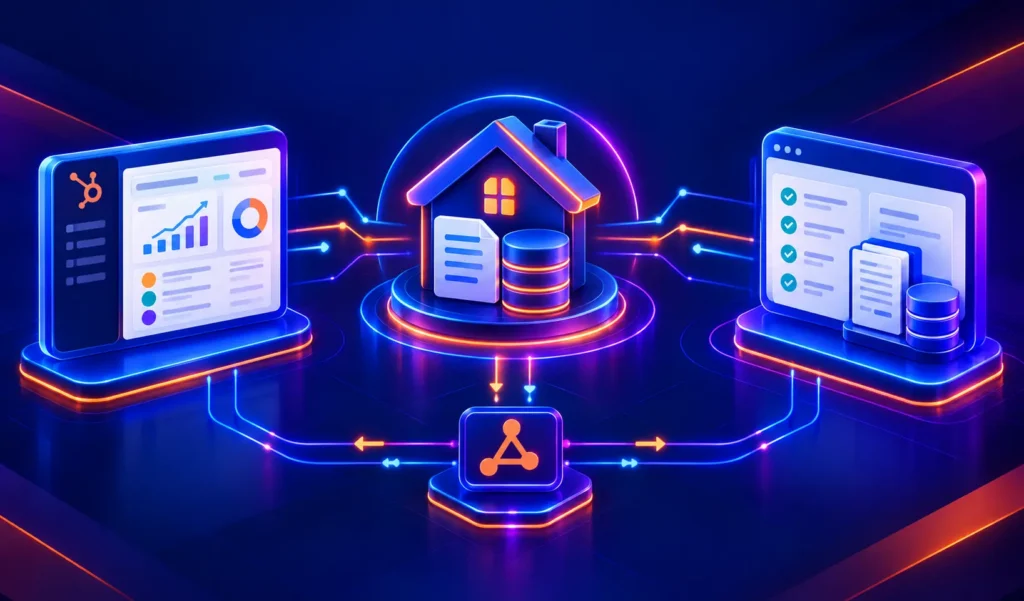
A HubSpot BILL integration is a custom two-way data connection that syncs customer records, AR invoices, and payment events between HubSpot and BILL in near real time. It keeps invoice and payment status visible inside HubSpot and pushes closed-won deal data to BILL, giving sales and finance one shared quote-to-cash picture.
How does the HubSpot BILL integration work?
It runs on HubSpot’s REST API and BILL’s v3 REST API, using BILL’s webhook support for real-time invoice and payment events instead of polling. Deal and company data flow from HubSpot to BILL to create customers and invoices, while BILL payment status flows back to update HubSpot properties and trigger workflows.

Turn HubSpot Into A Real-Time SMS Engine with Message IQ
 Two-Way Conversations
 Shared Team Inbox
 Automation Triggers
 Advanced Reporting
 Compliance Tools
- 98% SMS read within 3 min
- 78% Buy from first responder
- 21× More likely to qualify

*MessageIQ is an IntegrateIQ product – built natively for HubSpot by the same team.
Does HubSpot have a native BILL integration?
No. BILL has no native connector in HubSpot’s App Marketplace and BILL’s own integrations focus on QuickBooks, Xero, NetSuite, and Sage Intacct. Zapier and Make offer basic BILL connectors, but they only handle simple trigger-action flows, without AR customer setup, invoice creation, or payment webhook logic. Teams needing that move to a custom build.
How long does a HubSpot BILL integration take to build?
A custom HubSpot BILL integration takes about 8 weeks from kickoff to production. Discovery and data mapping run two weeks, build and sandbox testing run two more, user acceptance testing with finance and account management runs two weeks and go-live with active monitoring covers the final two weeks.
Can HubSpot and BILL sync bi-directionally?
Yes. A custom HubSpot BILL integration is bi-directional: HubSpot deal and company data flows to BILL to create customers and invoices, while BILL invoice status, payment date, and outstanding balance flow back to HubSpot to update records and trigger workflows. Field-level rules decide which system owns each piece of data.
What data can sync between HubSpot and BILL?
Deal amounts, line items, company and contact billing details, and payment terms sync from HubSpot to BILL to create AR customers and invoices. BILL invoice status, payment date, amount paid, and outstanding balance sync back to HubSpot contact and company properties, alongside the marketing engagement data HubSpot already owns.
How a HubSpot BILL Integration Actually Works
BILL owns invoice and payment truth. HubSpot owns the customer relationship, from first touch through renewal. The integration draws a hard line between the two: HubSpot never tries to be an AR system, and BILL never tries to be a CRM. Each system stays the system of record for what it does best.
Going one direction, a HubSpot deal reaching Closed Won creates or updates a BILL Customer and generates the AR invoice, pulling company details, line items, and amounts straight from the deal. Going the other direction, BILL’s webhooks report invoice sent, viewed, paid, overdue, and partially paid events in real time, and the integration writes each one back to the HubSpot contact, company, or deal timeline and fires the matching workflow.
Nothing syncs by default. Every field mapping and every trigger is scoped during discovery, so a HubSpot property never gets overwritten by a BILL event it shouldn’t own, and a BILL invoice never gets touched by a HubSpot field it shouldn’t control.
Three Ways to Connect BILL and HubSpot
Not every team needs custom. Here is the honest comparison.
| Factor | Native Marketplace App | Zapier / iPaaS | Custom (Integrate IQ) |
|---|---|---|---|
| Best for | No native app exists to compare | Simple one-way triggers, low invoice volume | Full AR automation tied to deal stages and finance rules |
| Sync direction | N/A | One-way per Zap; two-way needs multiple Zaps | True bi-directional, field-level ownership rules |
| Custom objects/fields | N/A | Standard fields only; customs need extra config | Full custom object and custom field support |
| Invoice and payment status sync | N/A, no native connector exists | Basic invoice-created trigger, no payment webhook logic | Real-time invoice and payment webhooks mapped to HubSpot workflows |
| Business logic | N/A | Simple if/then per Zap | Deal-stage gating, approval checks, custom rules |
| Volume handling | N/A | Rate limits and task-based pricing at scale | Built for high invoice and payment event volume |
| Historical backfill | N/A | Not supported | Full historical customer and invoice backfill |
| Maintenance | N/A | You maintain every Zap yourself | Monitored and maintained by IntegrateIQ |
If all you need is a new HubSpot contact showing up as a BILL customer with no invoice logic attached, a basic Zap is genuinely fine, don’t overbuild it. The moment you need invoice creation tied to deal line items, or payment and overdue status flowing back into HubSpot workflows, that’s where off-the-shelf connectors run out of road and a custom HubSpot integration pays for itself.
AR Workflows You Can Automate Once BILL Data Lives in HubSpot
- Invoice viewed but unpaid. BILL’s webhook fires when a customer views an invoice with no payment logged after a set number of days. HubSpot enrolls the billing contact in a reminder sequence from their account owner, so finance never has to send the first nudge manually.
- Partial payment balance task. When BILL logs a partial payment, HubSpot creates a task for the account owner showing the remaining balance and due date, so a bill never gets mistaken as fully settled inside the CRM.
- Reopened deal re-syncs the customer. A closed-lost deal that later closes won triggers a fresh check against the existing BILL Customer record instead of a blind create, so reopened deals never generate a duplicate customer.
- High-value invoice alert. A BILL invoice above a configurable amount fires a HubSpot notification to the deal owner with the invoice link and due date, keeping sales in the loop on large invoices without a finance login.
- Retainer invoice heads-up. Before a recurring AR invoice for a retainer generates in BILL, HubSpot creates a CSM task to confirm scope, so no surprise invoice reaches a customer without a human check first.
HubSpot BILL Integration: Connecting Your CRM to AP/AR Automation
Companies using BILL (formerly Bill.com) for accounts payable and AR automation and HubSpot for CRM and marketing are managing two financial lifecycle gaps manually. When a deal closes in HubSpot, someone logs into BILL to set up the customer record and configure their first invoice. When BILL marks an invoice as paid, account managers in HubSpot don’t see it they’re calling finance to ask what the payment status is.
No native HubSpot connector for BILL exists in HubSpot’s App Marketplace. BILL primarily integrates with accounting platforms QuickBooks, Xero, NetSuite, and Sage Intacct and the CRM connection is the gap. BILL does offer a well-documented v3 REST API with webhook support, which makes a custom integration with HubSpot fully viable.
We’re IntegrateIQ, a HubSpot Diamond Solutions Partner with custom integration accreditation. We’ve processed over 20 billion records annually across 300+ platform integrations. Here’s how the HubSpot BILL integration works and what it takes to build it.
What BILL Is and Where HubSpot Fits
BILL is a financial operations platform built for mid-market businesses. Its three core modules are:
- BILL Accounts Payable (AP): AI-powered invoice capture, multi-step approval workflows, and payment processing to vendors via ACH, check, card, or international wire.
- BILL Accounts Receivable (AR): Customer invoicing, automated payment reminders, online payment acceptance, and AR reporting. This is where the HubSpot connection delivers the most value.
- BILL Spend & Expense: Corporate card spend management, expense reporting, and employee reimbursements.
BILL syncs automatically with accounting software it’s designed to be the AP/AR layer between your business operations and your books. HubSpot is the CRM/marketing layer that sits upstream: it tracks the customer relationship before and after they become a billing account. The integration connects the moment a prospect becomes a paying customer.
Does a Native HubSpot BILL Integration Exist?
No. BILL doesn’t appear in HubSpot’s App Marketplace as a native connector. Zapier and Make have basic BILL connectors but they’re limited to simple trigger-action flows that don’t handle the AR customer setup, invoice creation, or payment webhook complexity that makes the integration genuinely useful.
What does exist is BILL’s API Platform the v3 REST API with real-time webhook support that powers BILL’s native accounting software integrations. The API exposes Customers (AR), Vendors (AP), Bills, Invoices, and Payments. A custom integration built on the BILL v3 API and HubSpot’s API connects the two platforms with the exact logic your revenue cycle requires. You can review BILL’s API documentation at developer.bill.com.
What a Custom HubSpot BILL Integration Connects
Direction 1: HubSpot to BILL (AR)
| HubSpot Event | BILL Action |
| Deal moves to ‘Closed Won’ | BILL Customer record created from HubSpot Company/Contact data (company name, billing address, payment terms, contact email) |
| Deal with line items moves to ‘Closed Won’ | BILL AR invoice created with deal line items, amounts, and due date populated from HubSpot deal properties |
| HubSpot contact billing address updated | BILL Customer record updated to reflect the new billing address |
| Deal amount changes before invoice is sent | BILL invoice draft updated to match the revised deal amount |
Direction 2: BILL to HubSpot
| BILL Event | HubSpot Action |
| Invoice sent to customer | HubSpot deal/contact timeline updated: ‘Invoice sent [amount] due [date]’ |
| Invoice paid | HubSpot contact property updated with payment date; workflow trigger: enrol in onboarding sequence, update CLV property, alert account manager |
| Invoice overdue (past due date, unpaid) | HubSpot workflow trigger: enrol contact in overdue payment follow-up email sequence; create account manager task |
| Invoice partially paid | HubSpot contact property updated with partial payment amount and outstanding balance |
Use Cases for Finance and RevOps Teams

Deal-to-Invoice Without Manual Customer Setup
A professional services company closes a retainer deal in HubSpot. The custom integration immediately creates a BILL Customer record from the HubSpot Company data billing address, contact email, payment terms and generates a recurring AR invoice for the first month’s retainer amount, pulled from the HubSpot deal properties. Finance opens BILL and sees the invoice ready for approval, pre-populated from the CRM deal data. No manual entry. No delay between contract signed and first invoice sent.
Overdue Invoice Follow-Up from HubSpot
When BILL marks an invoice as overdue, the integration fires a HubSpot workflow. The primary billing contact at the account gets enrolled in a timed overdue payment sequence an initial polite reminder from their account manager, followed by a formal overdue notice at 15 days, and an escalation task for the finance team at 30 days. The sequence stops automatically when BILL records the payment. Account managers handle the relationship side; finance handles the escalation both from their own platforms without logging into each other’s systems. For companies building similar workflows, our HubSpot QuickBooks integration guide covers comparable AR automation patterns.
Payment-Received Triggers Post-Sale Onboarding
When BILL receives a customer’s first payment, the integration fires a HubSpot workflow immediately: the contact gets enrolled in a new customer onboarding sequence, a kickoff call task is assigned to the account manager, and the deal’s ‘First Payment Date’ property is populated. The customer experience transitions from prospect to paying client the moment money moves not the moment a sales rep manually updates a deal stage.
AP Payment Visibility for Procurement Tracking
For operations teams using BILL’s AP module to pay vendors, the integration can push vendor payment status to HubSpot company records when vendors are also tracked as contacts in the CRM. Project teams can see whether a subcontractor has been paid from the HubSpot company record relevant for professional services firms managing client projects where subcontractor payments affect project billing.
BILL’s API Architecture for the Integration
BILL’s v3 API is REST-based with JSON payloads and real-time webhook support a clean integration target. Key API capabilities relevant to the HubSpot connection:
- Customers API: Create, read, update BILL Customer records for AR. Maps to HubSpot Company and Contact objects.
- Invoices API: Create AR invoices, update invoice status, retrieve payment history.
- Payments API: Read payment records, payment date, amount paid, and outstanding balance.
- Webhooks: Real-time event notifications for invoice status changes (sent, viewed, paid, overdue, partial payment). This is what makes the HubSpot-to-BILL direction event-driven rather than polling-based.
BILL’s Legal, Risk & Compliance (LRC) verification runs automatically on new organizations and users registered through the API a feature that matters for companies building integration logic that creates new BILL entities.
See your 12-month revenue impact with HubSpot CRM
Enter your current numbers — visitors, leads, deal size — and get a personalized projection based on real HubSpot customer benchmarks.
Calculate My ROI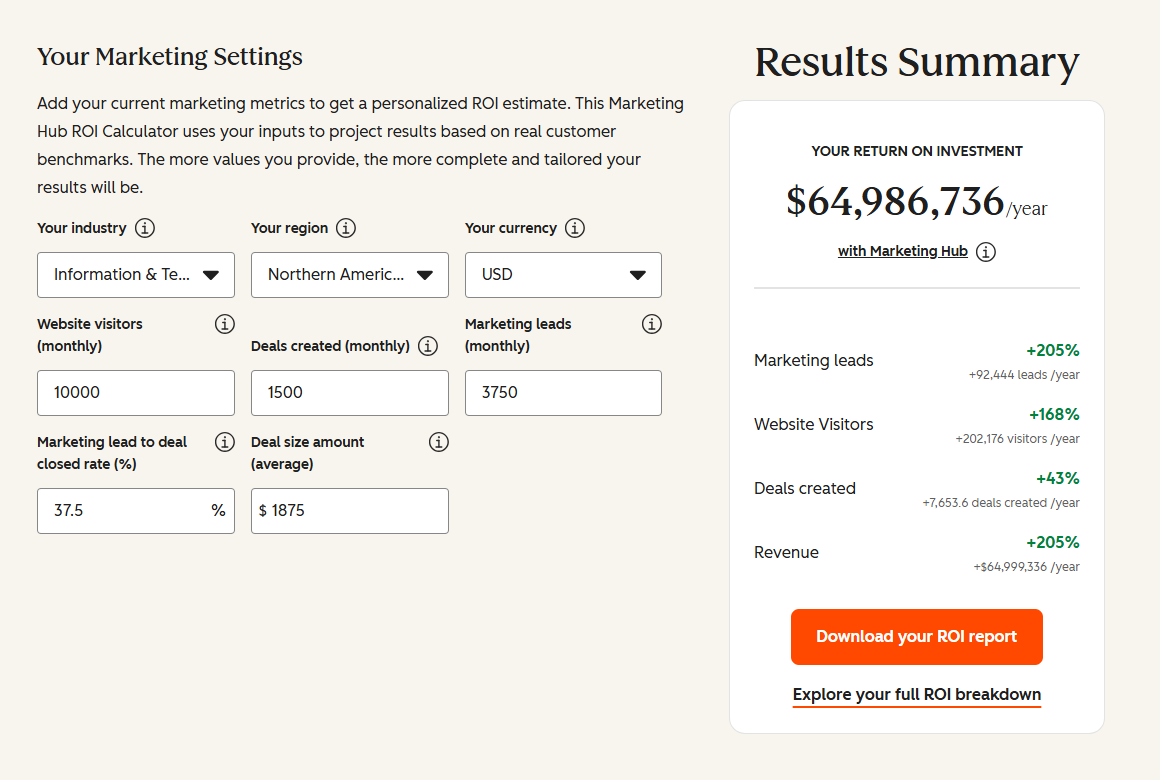
What to Expect from the Build
- Weeks 1-2: Discovery and Data Mapping. Map HubSpot deal and company properties to BILL Customer and Invoice fields. Define trigger events (which deal stages create BILL customers? which deal stages create invoices?). Confirm BILL API access and webhook configuration.
- Weeks 3-4: Build and Sandbox Testing. Build against BILL’s v3 API and HubSpot’s API. Test Customer creation from deal data, invoice generation with line item mapping, and webhook handling for payment events.
- Weeks 5-6: UAT. Finance team validates that Customer records and invoices are creating correctly in BILL. Account managers validate that payment status and overdue alerts appear on HubSpot records and trigger the right workflows.
- Weeks 7-8: Go-Live and Monitoring. Production deployment with active monitoring. Payment webhooks are event-driven the integration responds in real time when BILL processes a payment.
For companies that also use HubSpot NetSuite integration or HubSpot Xero integration alongside BILL, we scope the full financial stack connection as a single architecture. See how our integration process works.

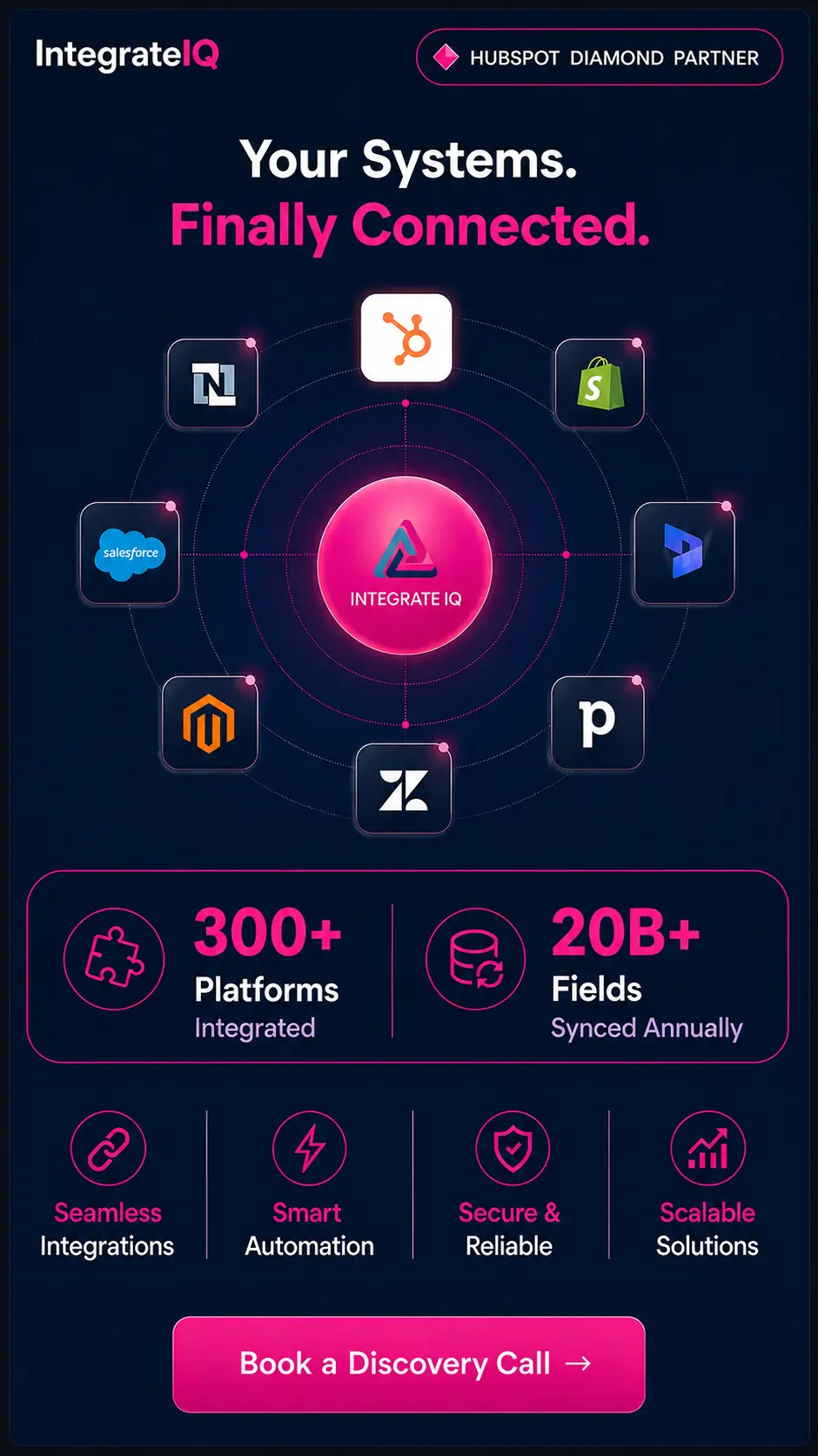
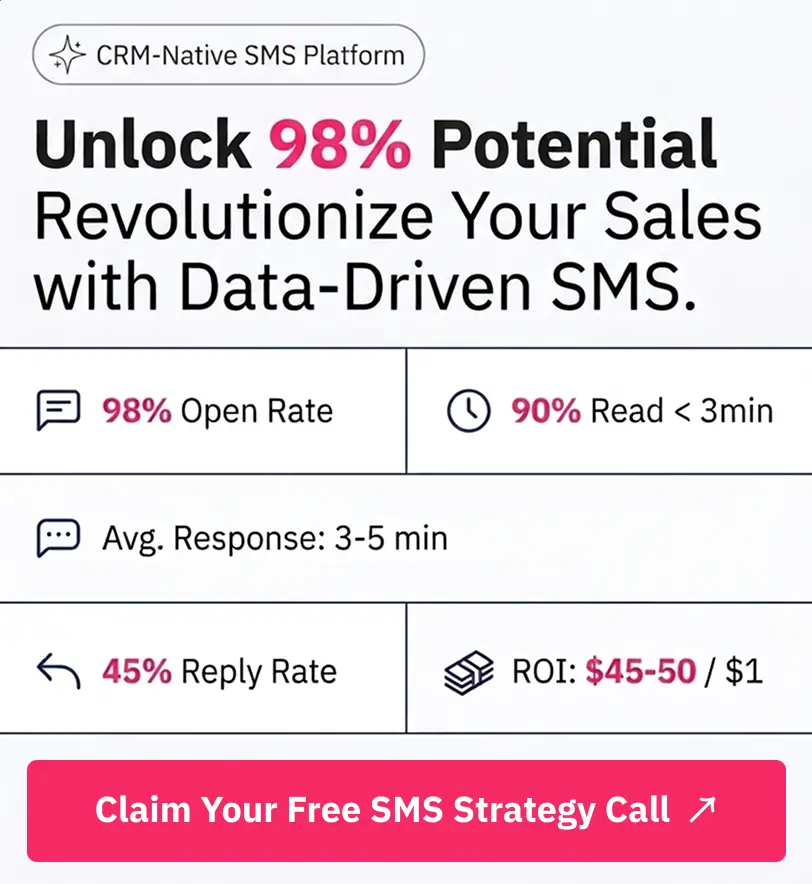
Table of Contents
- What is a HubSpot BILL integration?
- How does the HubSpot BILL integration work?
- Does HubSpot have a native BILL integration?
- How long does a HubSpot BILL integration take to build?
- Can HubSpot and BILL sync bi-directionally?
- What data can sync between HubSpot and BILL?
- How a HubSpot BILL Integration Actually Works
- Three Ways to Connect BILL and HubSpot
- AR Workflows You Can Automate Once BILL Data Lives in HubSpot
- HubSpot BILL Integration: Connecting Your CRM to AP/AR Automation
- What BILL Is and Where HubSpot Fits
- Does a Native HubSpot BILL Integration Exist?
- What a Custom HubSpot BILL Integration Connects
- Use Cases for Finance and RevOps Teams
- BILL’s API Architecture for the Integration
- What to Expect from the Build