















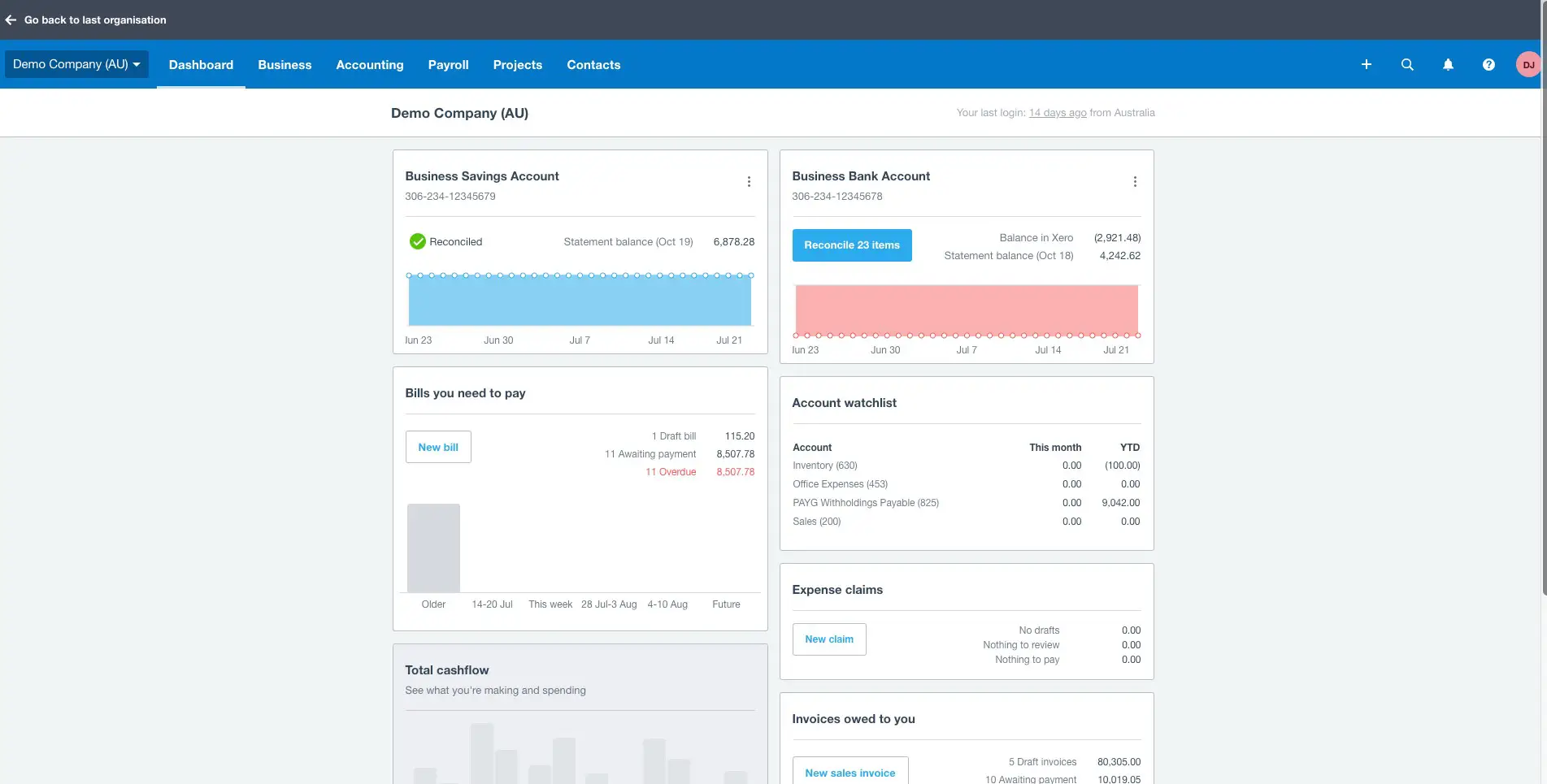
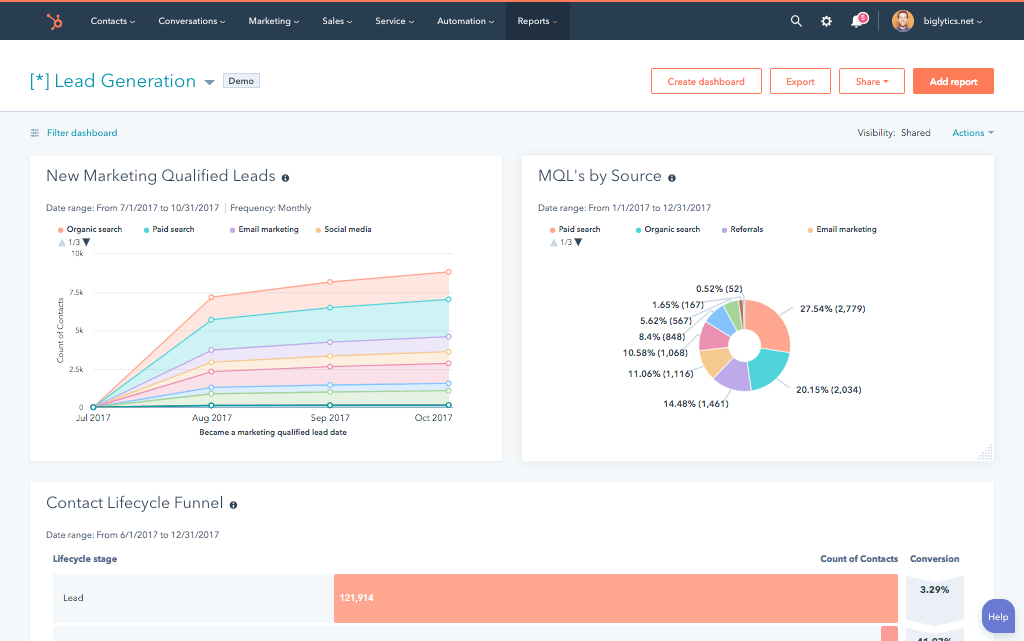


What is a HubSpot Xero integration?
A HubSpot Xero integration is a data connection that syncs contacts, products, invoices, and payments between HubSpot CRM and Xero accounting. It automates the quote-to-cash handoff between sales and finance, brings invoice and payment status into HubSpot deal records for account manager visibility, and eliminates the manual reconciliation that happens when sales and finance work from separate spreadsheets.
How does the HubSpot Xero integration work?
HubSpot maintains a native Data Sync connector that syncs Contacts, Products, Invoices, and Payments on a 30-minute polling interval. Custom integrations built on Xero’s REST API run event-driven with instant triggers, support invoice creation on Closed Won, and handle multi-currency, multi-tenant, and deal-to-invoice association the native app cannot.

Turn HubSpot Into A Real-Time SMS Engine with Message IQ
 Two-Way Conversations
 Shared Team Inbox
 Automation Triggers
 Advanced Reporting
 Compliance Tools
- 98% SMS read within 3 min
- 78% Buy from first responder
- 21× More likely to qualify

*MessageIQ is an IntegrateIQ product – built natively for HubSpot by the same team.
Does HubSpot have a native Xero integration?
Yes. HubSpot ships a free native Data Sync connector for Xero. It works for basic contact and invoice sync but hits limits fast: 30-minute polling delay, no event-triggered invoice creation from HubSpot deals, only 6 currencies (USD, CAD, EUR, GBP, AUD, NZD), no multi-tenant support, and invoices don’t associate with HubSpot deals.
Can HubSpot create Xero invoices automatically when a deal closes?
Not with the native connector reliably. The native app pushes invoices from HubSpot to Xero with limitations and does not auto-generate a Xero invoice when a deal moves to Closed Won. A custom integration adds an event-driven trigger that creates a Xero invoice at deal close, with full line item mapping, tax codes, and billing contact resolution.
How long does a custom HubSpot Xero integration take to build?
A custom HubSpot Xero integration takes about 8 weeks from kickoff to production. Discovery and field mapping spec runs two weeks, API build and sandbox testing runs two weeks, UAT with finance and RevOps runs two weeks, and go-live with active monitoring covers the final two weeks. Multi-entity or multi-currency setups add discovery time, not build time.
Does the HubSpot Xero integration support multi-currency and multi-tenant setups?
Not natively. The native Data Sync app supports six currencies (USD, CAD, EUR, GBP, AUD, NZD) and one Xero tenant. Multi-currency businesses operating outside those six or organizations running multiple Xero entities (common in franchises, holding companies, international operations, or acquired subsidiaries) need a custom integration. This is one of the earliest limitations mid-market teams hit with the native connector.
How to Set Up the HubSpot Xero Integration (and When to Go Beyond the Native App)
The HubSpot Xero integration connects your CRM deal data directly to your accounting platform so sales and finance stop working from different spreadsheets and start sharing a single source of truth. When a deal closes in HubSpot, your finance team knows about it in Xero. When an invoice goes overdue, your sales rep can see it on the contact record without calling accounting.
HubSpot ships a native Data Sync connector for Xero, and for a lot of teams it’s a perfectly good starting point. But mid-market and growing companies tend to hit its ceiling faster than expected. This guide walks through the native setup step by step, then names the specific scenarios where the native app runs out of road and a custom-built integration becomes the right call.
We’re Integrate IQ, a HubSpot Diamond Solutions Partner with custom integration accreditation. We’ve connected over 300 platforms to HubSpot and processed more than 20 billion records annually including a lot of Xero builds for companies that started with the native connector and needed more.
What the HubSpot Xero Integration Actually Does
At its core, the HubSpot Xero integration syncs four types of objects between the two platforms: Contacts, Products/Items, Invoices, and Payments. Here’s how each one works and what direction the data flows.
| Object | Sync Direction (Native) | Notes |
| Contacts | Bi-directional | Syncs between Xero Contacts and HubSpot Contacts. Either system can be the source of truth. |
| Products / Items | Xero to HubSpot (recommended default) | Pulls Xero Items into HubSpot’s product library for use on deals and quotes. |
| Invoices | Bi-directional (with caveats) | Xero to HubSpot works reliably. HubSpot to Xero requires specific setup conditions and has known limitations. |
| Payments | Bi-directional | Payment status on invoices syncs automatically when invoice sync is enabled. |
A few things worth flagging before you get into setup:
- Data Hub Starter is required for custom field mappings. The basic connection is available on any HubSpot plan, but if you want to map fields beyond the defaults say, linking a Xero reference number to a custom HubSpot deal property you’ll need at least the Data Hub Starter tier.
- Six currencies are supported natively: USD, CAD, EUR, GBP, AUD, and NZD. If your business operates in other currencies, the native connector won’t cover you.
- Multi-tenant Xero accounts aren’t supported. If your organisation runs multiple Xero entities under one umbrella, the native app can’t handle that structure.
- Setup order matters. Xero requires a Contact and Products to exist before it will accept an Invoice sync. Get the order wrong and you’ll hit sync errors.
How to Set Up the HubSpot Xero Integration (Step-by-Step)
The native setup runs through HubSpot’s Connected Apps settings. Follow this sequence exactly skipping ahead on Invoice sync before Contacts are configured is the most common reason teams hit errors on day one.
Step 1: Install the Xero Data Sync App
- Navigate to the HubSpot Marketplace. In your HubSpot account, click the Marketplace icon in the top navigation bar and select HubSpot Marketplace. Search for ‘Xero by HubSpot (Data Sync)’ and click Install.
- Authenticate your Xero account. You’ll be prompted to enter your Xero credentials. Review the permissions HubSpot requests and click Accept. If your Xero account has two-factor authentication enabled, complete that step before proceeding a known issue is the app flagging 2FA as incomplete even when it’s active. If that happens, log out of Xero, log back in, and retry the connection.
- Confirm the connection. Once connected, HubSpot automatically imports your Xero tax rates into HubSpot’s tax library. You don’t need to do this manually.
Step 2: Configure Contact Sync
- Go to Settings > Integrations > Connected Apps > Xero > CRM Syncs > Contact Sync.
- Choose your sync direction: bi-directional (both systems update each other), HubSpot to Xero only, or Xero to HubSpot only.
- Set your data conflict resolution rule. This decides which system ‘wins’ when the same field has been updated in both places since the last sync.
- Review the default field mappings. Default mappings cover the essentials (name, email, phone). To add custom field mappings, you’ll need Data Hub Starter. Turn off any default mappings you don’t need.
- Add filters if needed. By default, all Xero contacts sync to HubSpot. If you only want contacts associated with active invoices, set that filter now to avoid importing noise.
Step 3: Configure Product Sync
- Navigate to the Product Sync tab. Set direction to Xero to HubSpot (this is the recommended direction Xero is the source of truth for your product/service catalogue).
- Map the SKU field. Make sure the HubSpot SKU property maps to the Item Code in Xero. This connection is what allows invoice line items to pull correctly later.
Step 4: Configure Invoice Sync
Do not start Invoice sync until Contact sync and Product sync are running. Xero will reject an invoice sync if the associated contact or product doesn’t already exist in Xero.
- Go to Invoice Sync and select your direction. For most teams, bi-directional is the goal but start with Xero to HubSpot to validate the connection before pushing the other way.
- Set filters on outbound sync (HubSpot to Xero). HubSpot recommends filtering to invoices where status is not ‘Draft’ and create date is after today’s date. This stops historical draft invoices from flooding Xero.
Common Sync Errors and How to Fix Them
- ‘Invoice should have an associated customer’: The contact on the HubSpot invoice doesn’t match a contact in Xero by email address. Update the contact email in one system so they match, then re-trigger sync.
- Invoice edited in Xero after creation in HubSpot: If a HubSpot-created invoice is modified in Xero (adding line items, changing pricing), the sync breaks. Reverse the Xero changes, make the same adjustments in HubSpot, and the sync will resume.
- PO Number not syncing: PO Number isn’t a default Xero invoice field. You’ll need to add it as a custom field in Xero before it appears in the sync mapping.
- Changes from Xero taking 30 minutes to appear in HubSpot: This is expected native behaviour. The connector polls every 30 minutes. Use the ‘Sync Now’ button on the CRM Syncs tab for on-demand updates.
What the Native HubSpot Xero Connector Cannot Do
The native connector works well for the basics. But there’s a set of limitations that mid-market teams discover quickly, usually after they’ve already invested time in the setup. Here they are, named directly.
| Limitation | What It Means in Practice |
| 30-minute sync delay | Changes from Xero to HubSpot aren’t real-time. For payment status updates or overdue invoice alerts, that half-hour gap creates friction between teams. |
| No event-triggered HubSpot-to-Xero invoice creation | You can’t automatically generate a Xero invoice the moment a deal closes in HubSpot. You still need to create invoices manually or use a third-party app. |
| Only 6 currencies supported | USD, CAD, EUR, GBP, AUD, NZD. Any other currency requires a custom integration. |
| No multi-tenant Xero support | Organisations running multiple Xero entities (common in franchises, holding companies, or international operations) can’t connect them all through the native app. |
| Custom field mappings require Data Hub Starter | Beyond the default field set, any custom property mapping requires a paid tier that not all teams have. |
| Invoice objects don’t associate with HubSpot Deals | Invoices synced from Xero into HubSpot aren’t automatically linked to the deal that generated them. This breaks deal-level revenue reporting. |
| Contact deduplication logic is basic | At scale, teams with thousands of contacts in both systems often find merge logic creates duplicates rather than resolving them. |
None of these are criticisms of HubSpot’s product decisions. The native connector is built for simplicity and covers most small business use cases cleanly. The problem shows up when you have deal-driven invoicing, multi-entity accounting, or real-time sync requirements baked into how your revenue team operates.
Native App vs. iPaaS vs. Custom Integration: Which Fits Your Business?
Three real options exist for connecting HubSpot and Xero, each with a different ceiling. This table is designed to help you make the call, not sell you on any one path.
| Factor | Native Data Sync App | iPaaS (Zapier / Make) | Custom API Integration |
| Setup time | 30-60 minutes | Hours to days depending on workflow complexity | 6-8 weeks (IntegrateIQ typical delivery) |
| Cost | Free to low (Data Hub Starter for custom mappings) | $50-$500/month depending on volume and plan | One-time build cost + maintenance agreement |
| Sync depth | Contacts, Items, Invoices, Payments fixed objects only | Trigger-action automations; limited to pre-built connectors | Any object, any custom property, any direction |
| Field flexibility | Default mappings + limited custom (Data Hub Starter required) | Moderate limited by connector field exposure | Full any field in Xero’s or HubSpot’s API is mappable |
| Error handling | Minimal sync logs only, no automated retry logic | Basic error notifications; no complex error resolution | Built-in retry logic, error alerts, conflict resolution rules |
| Scalability | Works up to low-mid volume; degrades with contact deduplication at scale | Volume limits on lower plans; latency on high-frequency triggers | Scales to enterprise volume with no degradation |
| Maintenance | Managed by HubSpot updates automatic but changes can break custom mappings | Managed by your team Zap breaks require manual fixes | Managed by Integrate IQ proactive monitoring and updates |
Three Questions That Point You Toward a Custom Build
If you answer yes to any of these, the native connector won’t scale for your operation:
- Do you need a Xero invoice to generate automatically when a deal closes or reaches a specific pipeline stage in HubSpot?
- Does your business operate across multiple Xero entities, multiple currencies, or more than six currencies?
- Do you need the invoice record in HubSpot to associate with the originating deal for revenue reporting or CLV tracking?
If yes to any of the above, explore what a custom HubSpot integration build looks like.
Use Cases Where a Custom HubSpot Xero Integration Pays Off
SaaS Companies: Subscription Billing Tied to Deal Stage
When a SaaS deal closes in HubSpot, the custom integration triggers an invoice creation in Xero automatically, mapped from the HubSpot deal’s line items, subscription term, and billing contact. Recurring invoices generate on the same schedule as the subscription. Finance doesn’t touch HubSpot; sales doesn’t touch Xero. The invoicing cycle that used to take 2-3 days of back-and-forth drops to same-day.
Professional Services: Time Tracking to Billable Invoice
Teams using HubSpot’s Service Hub for project delivery can connect tracked hours directly to Xero billable amounts. When a service ticket closes, the integration pulls the logged hours, maps them to the correct Xero service item with its rate and tax code, and creates a draft invoice for finance to approve. No manual entry. No missed billable hours. The outcome for one professional services firm we work with: a 60% reduction in unbilled revenue at month close.
B2B Product Companies: Multi-Line Deal to Multi-Line Xero Invoice
Complex B2B deals with multiple SKUs, discount tiers, and separate tax codes per line item don’t map cleanly through the native connector. A custom integration reads every HubSpot line item from a closed deal, maps each one to the correct Xero product with its account code and tax rate, and generates a structured invoice that finance can approve immediately. It also handles the contact matching logic if a HubSpot company has multiple billing contacts, the integration selects the right one based on a deal property rather than defaulting to the first email match.
For finance and RevOps teams operating in banking and finance environments, this deal-to-invoice accuracy is non-negotiable for audit and compliance purposes.
See your 12-month revenue impact with HubSpot CRM
Enter your current numbers — visitors, leads, deal size — and get a personalized projection based on real HubSpot customer benchmarks.
Calculate My ROI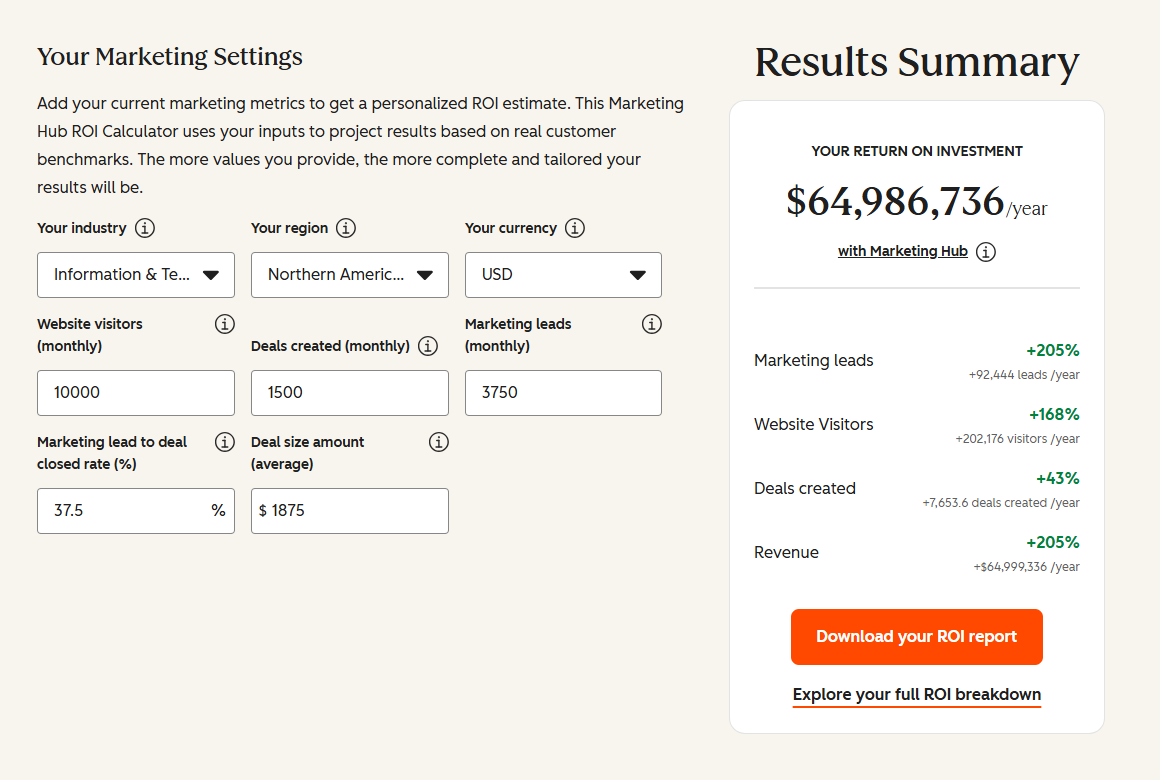
What to Expect from the IntegrateIQ HubSpot Xero Build
Most custom HubSpot Xero integrations we build go live within 8 weeks of project kickoff. Here’s how that timeline breaks down:
- Weeks 1-2: Discovery and Field Mapping Spec. We map every data object that needs to move between HubSpot and Xero, define sync directions and triggers, agree on conflict resolution logic, and spec out error handling requirements. This is the most important phase gaps here create rework later.
- Weeks 3-4: API Build and Sandbox Testing. We build against both the Xero API and HubSpot’s API in a sandboxed environment. Every field mapping gets tested with real data shapes before we touch production.
- Weeks 5-6: UAT with Your Team. Your RevOps lead and finance team run user acceptance testing. We fix what doesn’t match your workflow before go-live, not after.
- Weeks 7-8: Go-Live and Monitoring. We flip to production and monitor the integration actively for the first two weeks. All clients move to a maintenance agreement after go-live proactive monitoring is included, so you won’t get an invoice for troubleshooting a sync issue we should have caught.
We’ve processed over 20 billion records annually across 300+ platform integrations. The 98.5% client retention rate comes directly from building integrations that hold up after go-live, not just on demo day.
For teams that also need to manage HubSpot QuickBooks integration or are evaluating HubSpot NetSuite or HubSpot Sage Intacct as accounting platforms, we scope those builds the same way.

Table of Contents
- What is a HubSpot Xero integration?
- How does the HubSpot Xero integration work?
- Does HubSpot have a native Xero integration?
- Can HubSpot create Xero invoices automatically when a deal closes?
- How long does a custom HubSpot Xero integration take to build?
- Does the HubSpot Xero integration support multi-currency and multi-tenant setups?
- How to Set Up the HubSpot Xero Integration (and When to Go Beyond the Native App)
- What the HubSpot Xero Integration Actually Does
- How to Set Up the HubSpot Xero Integration (Step-by-Step)
- What the Native HubSpot Xero Connector Cannot Do
- Native App vs. iPaaS vs. Custom Integration: Which Fits Your Business?
- Use Cases Where a Custom HubSpot Xero Integration Pays Off
- What to Expect from the IntegrateIQ HubSpot Xero Build