








































What is a HubSpot Fullbay integration?
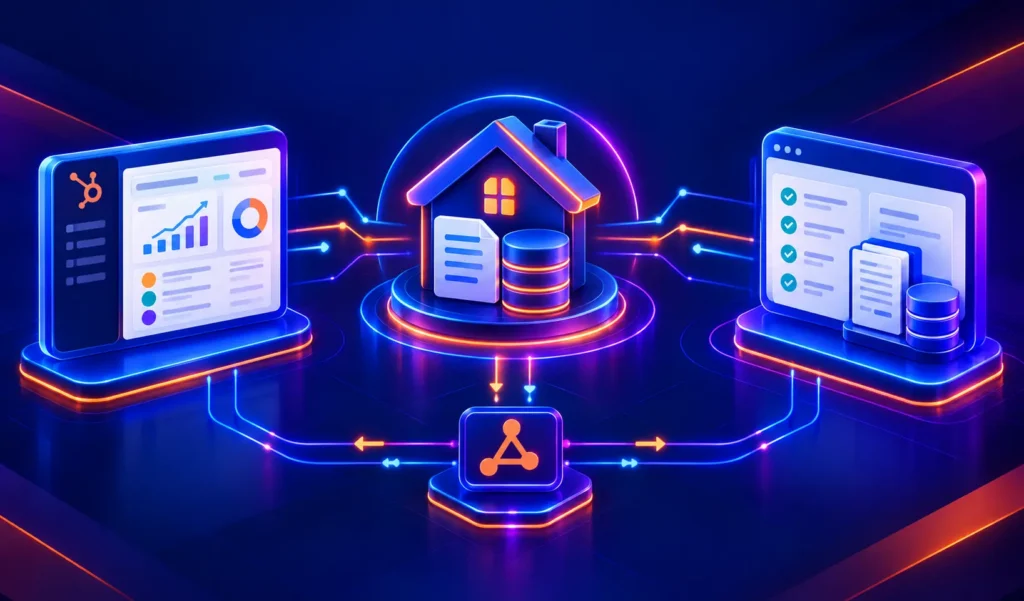
A HubSpot Fullbay integration is a two-way data connection that syncs customers, Units, Estimates, Service Orders and Invoices between HubSpot and Fullbay in near real time. It keeps shop floor activity visible inside HubSpot and pushes marketing and sales context back into Fullbay, so both teams work from the same customer record.
How does the HubSpot Fullbay integration work?
It works through the HubSpot and Fullbay open REST APIs, with field mapping, deduplication and a defined system of record for every object. When a Service Order or Invoice updates in Fullbay, the sync writes the change to HubSpot within minutes, and bi-directional rules control which fields flow which direction.

Turn HubSpot Into A Real-Time SMS Engine with Message IQ
 Two-Way Conversations
 Shared Team Inbox
 Automation Triggers
 Advanced Reporting
 Compliance Tools
- 98% SMS read within 3 min
- 78% Buy from first responder
- 21× More likely to qualify

*MessageIQ is an IntegrateIQ product – built natively for HubSpot by the same team.
Does HubSpot have a native Fullbay integration?
No. HubSpot does not maintain a first-party Fullbay integration, and Fullbay’s own marketplace does not list a native HubSpot connector either. Shops typically rely on Zapier for very basic one-way contact sync. Teams that need Service Order, Invoice, or Unit data in HubSpot move to a custom built integration instead.
How long does a HubSpot Fullbay integration take to build?
A custom HubSpot Fullbay integration takes about 8 weeks from kickoff to production. Discovery runs two weeks, build and staging tests run three, historical backfill runs one, and cutover with hypercare covers the final two weeks. Timelines extend for shops with multiple locations or heavy custom object use.
Can HubSpot and Fullbay sync bi-directionally?
Yes. Bi-directional sync is standard in a custom HubSpot Fullbay integration. You define system of record at the field level, so service and invoice data flows from Fullbay to HubSpot, while marketing engagement and lifecycle stage flow the other way. Conflicts resolve by rule, not by whoever updated last.
What data can sync between HubSpot and Fullbay?
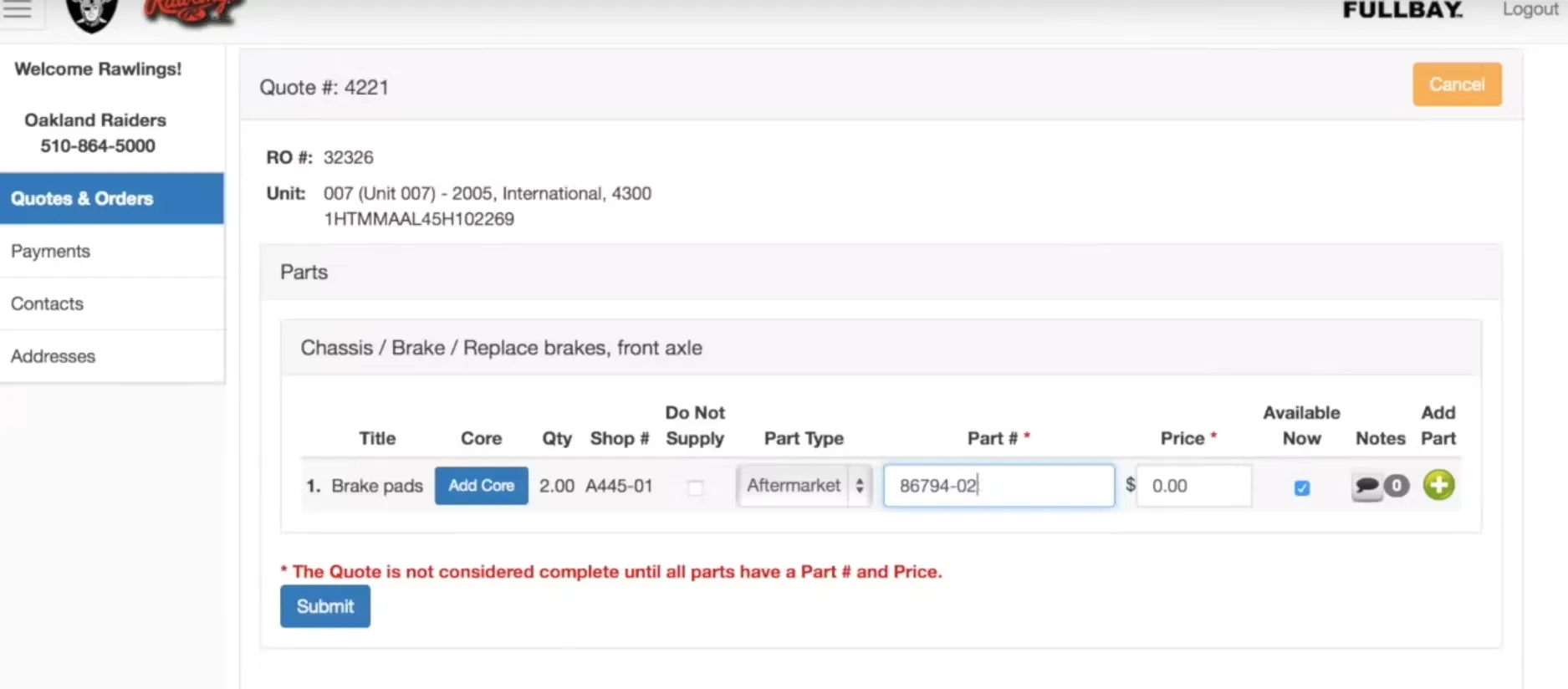
Customers, Units and vehicles, Estimates, Service Orders, Invoices, and Parts and Labor Items, plus HubSpot marketing activity, lifecycle stage, and lead score. Field mapping is configured per project so only relevant data flows and each field has a clear owner. Custom Fullbay fields are supported through Fullbay’s open API.
How a HubSpot Fullbay Integration Actually Works
A HubSpot Fullbay integration connects your shop management platform to your CRM so sales, marketing, and service all see the same customer. Fullbay owns the truth for service orders, invoices, and vehicle history. HubSpot owns the truth for marketing engagement, deal stage, and lifecycle stage. Neither system tries to do the other’s job.
New customers created in HubSpot flow to Fullbay automatically, arriving ready for a service writer to open a work order. In the other direction, closed invoices, PM schedules, and fleet size sync back to HubSpot so sales and marketing can act on real shop activity instead of guessing.
Field-level rules decide exactly what moves. A new Estimate can trigger a HubSpot deal without dragging every line item over. Nightly syncs update revenue totals and service history, while real-time triggers handle new leads the moment they hit Fullbay. You control what syncs, when, and in which direction.
Three Ways to Connect Fullbay and HubSpot
Not every team needs custom. Here is the honest comparison.
| Factor | Native Marketplace App | Zapier / iPaaS | Custom (Integrate IQ) |
|---|---|---|---|
| Best for | No native app exists for Fullbay | Basic one-way contact sync for very small shops | Full quote-to-invoice GTM data flow |
| Sync direction | Not applicable | One-way per Zap; two-way needs multiple Zaps stacked together | True bi-directional sync with a field-level system of record |
| Custom objects/fields | Not applicable | Limited; every custom field needs its own Zap step | Full support for Units, Estimates, and any custom Fullbay field |
| Job and route sync | Not applicable | Breaks down at real shop volume (rate limits, missed triggers) | Service order and job data synced with smart filtering, so HubSpot stays clean |
| Business logic | Not applicable | Basic if/then triggers only | Your rules: sync only SQLs to Fullbay, auto-create a deal on every new Estimate |
| Volume handling | Not applicable | Not built for daily invoice and service order volume | Built for thousands of service records moving every week |
| Historical backfill | Not applicable | Manual, one record at a time | Full historical backfill included in every build |
| Maintenance | Not applicable | You maintain every Zap yourself | Monitoring, alerts, retry logic, and year-one support included |
Zapier works if you only want new Fullbay customers logged as HubSpot contacts. It breaks down once you need Service Order data, Invoice totals, or PM schedules flowing into HubSpot at real shop volume. That’s when a custom HubSpot integration pays off.
Revenue Workflows You Can Automate Once Fullbay Data Lives in HubSpot
- Estimate-to-deal pipeline. When a technician creates a new Estimate in Fullbay, we auto-create a HubSpot deal in the right pipeline stage with the estimate amount attached, so sales can follow up on quotes that are sitting unapproved.
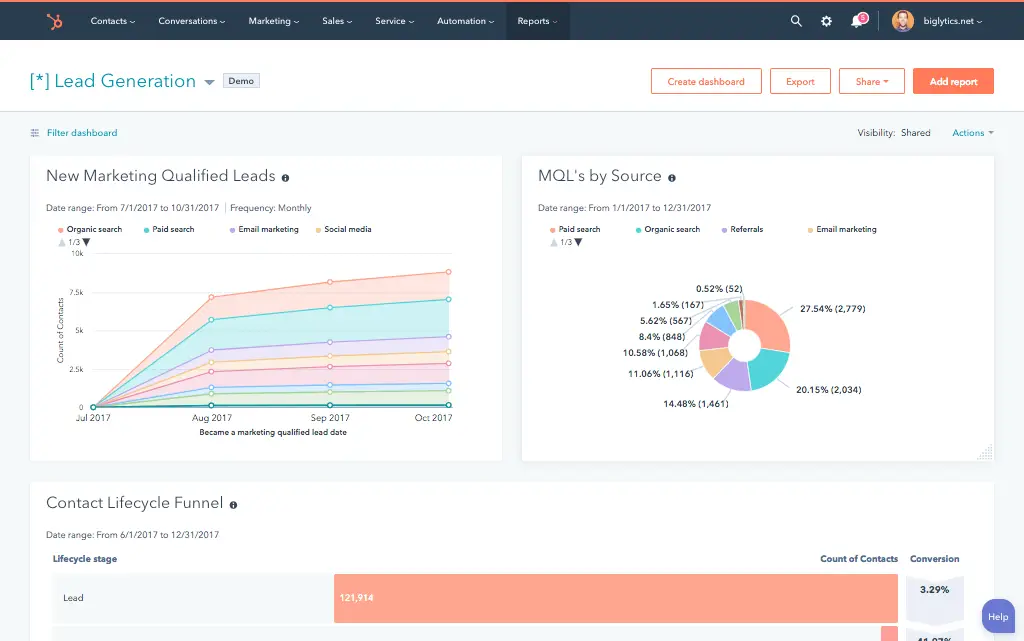
- Fleet account health scoring. We roll up total spend, open Estimates, and days since last invoice onto the HubSpot company record, so account managers spot fleets quietly slipping away before it shows up as lost revenue.
- Parts pattern alert to sales. When Fullbay logs a spike in a specific part or labor category across a fleet, we trigger a HubSpot task for the account owner to pitch a maintenance contract before the next breakdown.
- New vehicle, cross-sell trigger. When a new Unit is added to an existing customer’s fleet in Fullbay, we notify the account owner in HubSpot so they can pitch additional service coverage for it.
- Shop capacity to sales calendar. We sync open job backlog from Fullbay into HubSpot so sales knows when to slow promotional pushes the shop floor can’t fulfill on time.
What Breaks in a Fullbay HubSpot Sync, and How We Prevent It
- Duplicate records and identity resolution. A Fullbay customer created from a phone call and the same customer later filling out a HubSpot form can create two records. We match on phone, email, and company name before either system creates anything new.
- System-of-record conflicts. Fullbay owns the truth for service and billing status. HubSpot owns the truth for marketing engagement and lifecycle stage. We define that split at the field level so updates never overwrite each other.
- Field mapping and status value drift. Fullbay’s Estimate and Invoice statuses don’t share names with HubSpot deal stages. We build a translation layer so a status change in Fullbay always lands on the correct HubSpot stage, not a guess.
- Recurring service and route data volume. A single shop can generate hundreds of service orders a week. Left unfiltered, that volume floods HubSpot with operational noise that drowns out marketing signal. We filter and batch what syncs so only GTM-relevant events reach HubSpot.
- API rate limits at volume. Across our client base we move 20 billion plus fields annually, so we batch, checkpoint, and throttle by design instead of by accident.
Implementation Timeline: What to Expect
Most HubSpot Fullbay integrations complete inside eight weeks of kickoff. The first two weeks cover discovery: object inventory in both systems, field-by-field mapping, system of record decisions, and confirming how Fullbay’s Units, Estimates, and Invoices should map to HubSpot deals and custom objects. Weeks three to five are build and unit testing against a staging Fullbay instance and a HubSpot sandbox. Week six runs the historical backfill and reconciliation. Weeks seven and eight cover user acceptance testing, cutover, and hypercare. Post-launch monitoring is included, so if Fullbay changes its API or HubSpot pushes an update, we see it before your reports do. Full detail is on our HubSpot integration process page and 98.5% of clients renew for a follow-on scope.
See your 12-month revenue impact with HubSpot CRM
Enter your current numbers — visitors, leads, deal size — and get a personalized projection based on real HubSpot customer benchmarks.
Calculate My ROI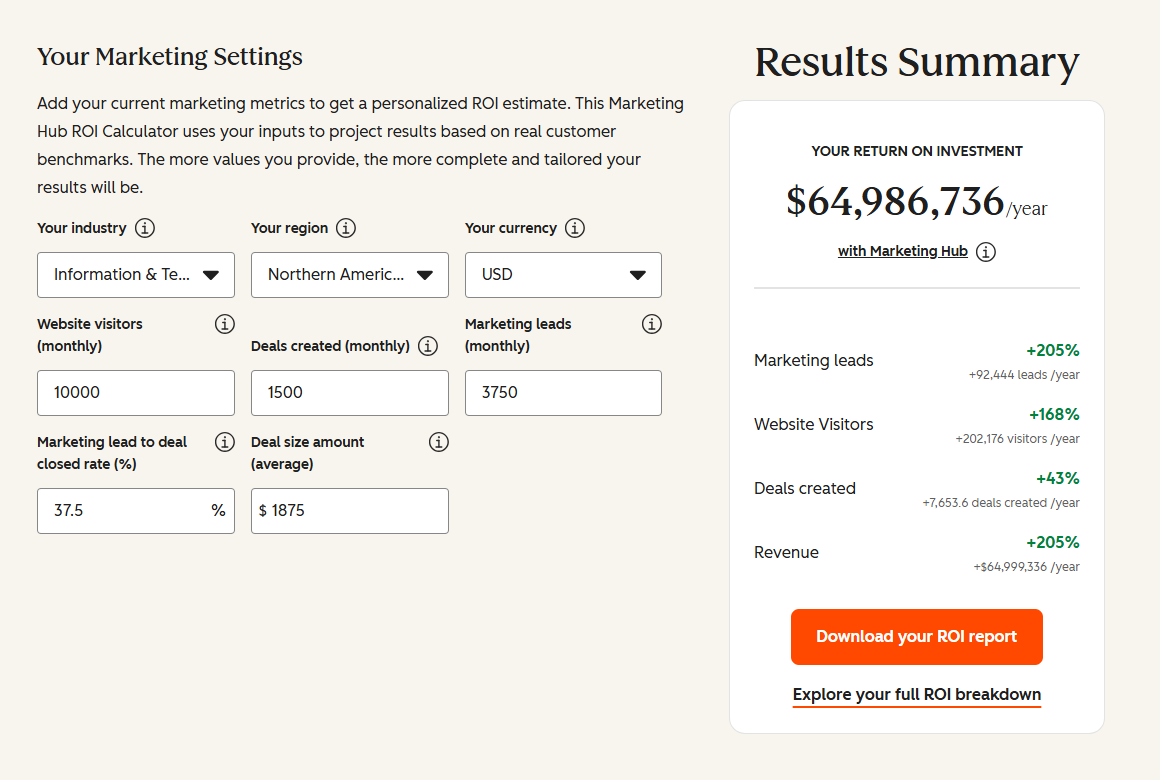
Connect the Rest of Your Revenue Stack
If Fullbay is one piece of a bigger revenue stack, we can connect the rest. Shops running QuickBooks for accounting benefit from a HubSpot QuickBooks integration so invoice data lines up on both sides. Multi-location shops running an ERP get the same treatment with a HubSpot NetSuite integration. For service reminder and dispatch alerts, a HubSpot Twilio integration adds SMS to the workflows above. Curious how a Fullbay build compares to other native, middleware, and custom options? Our guide to the best HubSpot integrations breaks down all three approaches. And to see the size of the problem before you fix it, run your numbers through our Integration ROI Calculator .


Table of Contents
- What is a HubSpot Fullbay integration?
- How does the HubSpot Fullbay integration work?
- Does HubSpot have a native Fullbay integration?
- How long does a HubSpot Fullbay integration take to build?
- Can HubSpot and Fullbay sync bi-directionally?
- What data can sync between HubSpot and Fullbay?
- How a HubSpot Fullbay Integration Actually Works
- Three Ways to Connect Fullbay and HubSpot
- Revenue Workflows You Can Automate Once Fullbay Data Lives in HubSpot
- What Breaks in a Fullbay HubSpot Sync, and How We Prevent It
- Implementation Timeline: What to Expect
- Connect the Rest of Your Revenue Stack