





































What is a HubSpot PestPac integration?
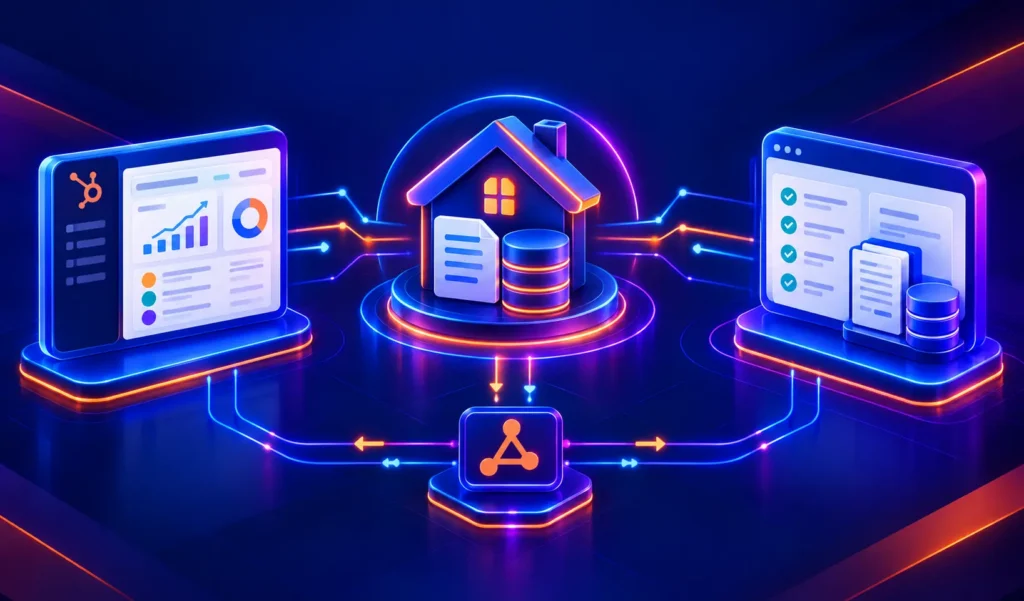
A HubSpot PestPac integration is a two-way data connection that syncs customers, jobs, work orders, and service history between HubSpot and PestPac in near real time. It keeps route and service data visible inside HubSpot and pushes closed-won deals back to PestPac as new service orders, powering service-based marketing automation.
How does the HubSpot PestPac integration work?
It works through the HubSpot and PestPac REST APIs, with field mapping, deduplication, and a defined system of record for every object. When a job status changes in PestPac or a deal closes in HubSpot, the sync writes the change to the other system within minutes. Bi-directional rules control which fields flow which direction.

Turn HubSpot Into A Real-Time SMS Engine with Message IQ
 Two-Way Conversations
 Shared Team Inbox
 Automation Triggers
 Advanced Reporting
 Compliance Tools
- 98% SMS read within 3 min
- 78% Buy from first responder
- 21× More likely to qualify

*MessageIQ is an IntegrateIQ product – built natively for HubSpot by the same team.
Does HubSpot have a native PestPac integration?
HubSpot does not maintain a first-party PestPac integration. The marketplace lists third-party connectors that handle basic contact sync, but they collapse work order detail and drop route or technician data. Pest control teams with multi-location billing or recurring service logic typically move to a custom-built integration.
How long does a HubSpot PestPac integration take to build?
A custom HubSpot PestPac integration takes about 8 weeks from kickoff to production. Discovery runs two weeks, build and staging tests run three, historical backfill runs one, and cutover with hypercare covers the final two weeks. Timelines extend for operations with heavy commercial billing complexity or high job volume.
Can HubSpot and PestPac sync bi-directionally?
Yes. Bi-directional sync is standard in a custom HubSpot PestPac integration. You define system of record at the field level, so service and job status flow from PestPac to HubSpot, marketing and lifecycle data flow the other way, and conflicts are resolved by rule. Third-party apps sync bi-directionally only for basic contact fields.
What data can sync between HubSpot and PestPac?
Contacts, companies, deals and custom properties in HubSpot can sync with Bill-To records, Locations, Service Setups, Target Pests, and Service Calls in PestPac, alongside marketing activity, lifecycle stage, and lead score. Field mapping is configured per project so only relevant data flows and each field has a clear owner.
How a HubSpot PestPac Integration Actually Works
A HubSpot PestPac integration keeps PestPac as the system of record for anything operational, jobs, routes, service history, and technician notes, while HubSpot stays the system of record for marketing and pipeline. Neither system tries to own the other’s data.
When a deal closes in HubSpot, the sync creates the corresponding Service Order or Location in PestPac and schedules the initial visit. When a technician marks a job Completed or a customer’s status flips to Inactive in PestPac, that status pushes back to HubSpot within minutes so sales and marketing see it without opening a second screen.
Field-level rules decide what crosses over. Route density and job volume stay in PestPac unless a workflow explicitly needs them, so HubSpot does not fill up with operational noise that marketing has no use for.
Three Ways to Connect PestPac and HubSpot
Not every team needs custom. Here is the honest comparison.
| Factor | Native Marketplace App | Zapier / iPaaS | Custom (Integrate IQ) |
|---|---|---|---|
| Best for | Single-location shops syncing basic contact fields | Multi-step alerts and simple field pushes between HubSpot and PestPac | Multi-location pest control operations with commercial and residential mixed volume |
| Sync direction | One-way, HubSpot to PestPac only | Two-way, but each step is a separate zap with no shared logic | True bi-directional, with system of record set at the field level |
| Custom objects/fields | Not supported | Limited, breaks on PestPac custom fields | Full support for Service Setups, Target Pests, and custom Bill-To fields |
| Job and route sync | Not supported, contact fields only | Possible but fragile at volume, jobs often arrive out of order | Filtered by design so route and job volume never floods HubSpot |
| Business logic | None | Basic if-this-then-that only | Custom rules, e.g. route Commercial leads to a different pipeline than Residential |
| Volume handling | Struggles past a few hundred jobs a week | Rate-limited, zaps queue and delay under load | Built for thousands of weekly service records without slowdown |
| Historical backfill | Not available | Manual, one record at a time | Full historical backfill included in the build |
| Maintenance | None, breaks silently on PestPac updates | You maintain every zap yourself | Monitored and maintained by the team that built it |
If you run one location and only need basic contact fields moving, a marketplace app or a handful of Zapier steps will hold you for a while. Custom wins the moment you have commercial Bill-To/Location hierarchy, recurring Service Setups, or job volume you want filtered before it hits HubSpot. That is where our customHubSpot integration services come in.
Pest Control Workflows You Can Automate Once PestPac Data Lives in HubSpot
- Estimate-to-job handoff. A technician quotes a job in PestPac, the estimate creates a deal in HubSpot with the full service address and pest issue attached, and sales follows up before the lead goes cold.
- Post-completion review request. A service call closes as Completed in PestPac, HubSpot fires an email or SMS review request at the moment satisfaction peaks, before the next invoice resets the customer’s attention.
- Cancellation save-play. A customer’s status flips to Inactive in PestPac, HubSpot enrolls them in a win-back sequence timed to peak pest season, and the account owner gets a task to call before the churn is final.
- Recurring service reminders. A recurring Service Setup is created in PestPac, HubSpot builds a communication cadence around the service frequency so customers get reminders and upsell offers between visits, not just an invoice.
- Territory alignment from route data. PestPac route density by zip code flows into HubSpot, and sales territories and lead routing rules adjust to match where technicians already run, so new business lands where service capacity exists.
What Breaks in a PestPac HubSpot Sync, and How We Prevent It
- Duplicate records and identity resolution. A homeowner calls in twice under slightly different names, or a commercial account has five service addresses. We match on address and account hierarchy, not just name and email, before a record is ever created.
- System-of-record conflicts. A technician updates a service note in PestPac while a rep edits the same account in HubSpot. We assign system of record per field, so PestPac always wins on service data and HubSpot always wins on marketing data, no race conditions.
- Field mapping / picklist / status value drift. PestPac status labels and HubSpot deal stages rarely match one to one. We map internal values, not display labels, so reports do not silently break when someone renames a status in the UI.
- Recurring service and route data volume. PestPac generates thousands of jobs a week per customer. Left unfiltered, that noise floods HubSpot and buries the marketing team in operational records. We filter to the events sales and marketing actually need, so HubSpot stays a CRM, not a job log.
- API rate limits at volume. Across our client base we move 20 billion plus records annually and 55 million fields daily, so we batch, checkpoint, and throttle by design instead of by accident.
Implementation Timeline: What to Expect
Most HubSpot PestPac integrations complete inside eight weeks of kickoff. The first two weeks cover discovery: object inventory in both systems, field-by-field mapping, system of record decisions, and mapping your Bill-To and Location hierarchy for commercial accounts. Weeks three to five are build and unit testing against a staging PestPac instance and a HubSpot sandbox. Week six runs the historical backfill and reconciliation. Weeks seven and eight cover user acceptance testing, cutover, and hypercare. Post-launch monitoring is included, so if a PestPac configuration changes or HubSpot pushes an API update, we see it before your reports do. Full detail is on our HubSpot integration process page and 98.5% of clients renew for a follow-on scope.
See your 12-month revenue impact with HubSpot CRM
Enter your current numbers — visitors, leads, deal size — and get a personalized projection based on real HubSpot customer benchmarks.
Calculate My ROI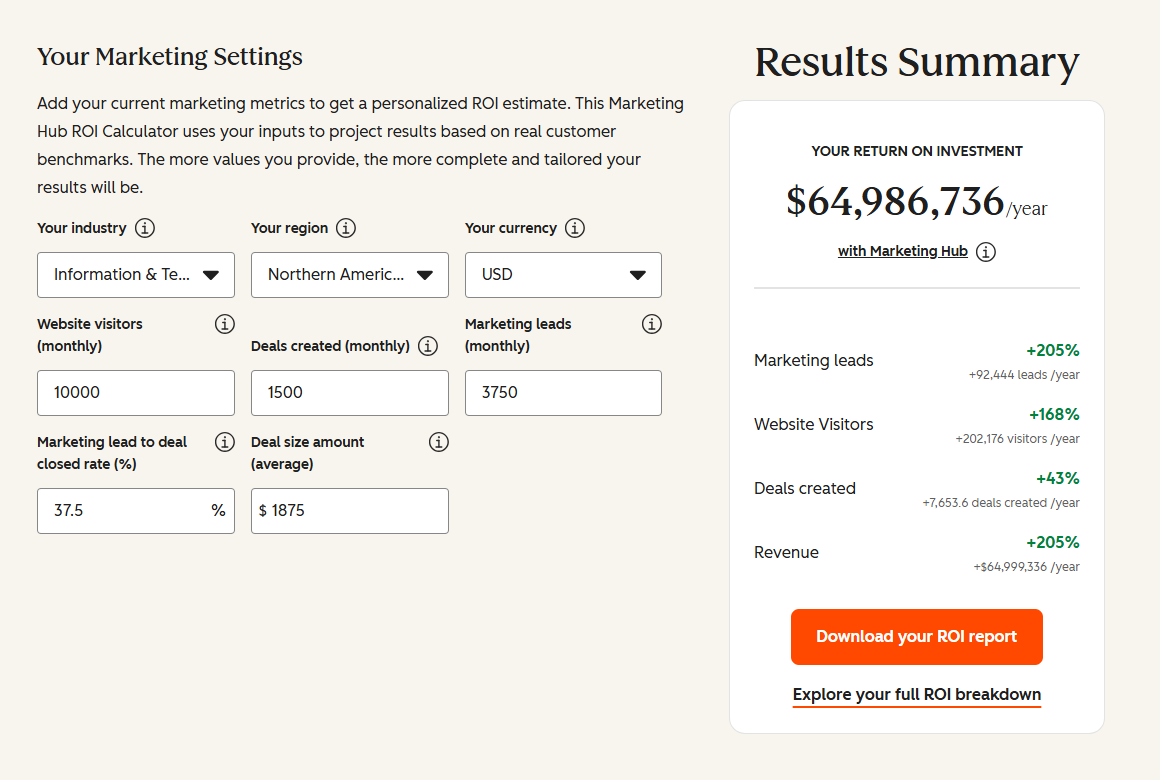
Connect the Rest of Your Revenue Stack
PestPac rarely runs alone. If your operation also books through a HubSpot RealGreen integration for lawn side work, or reconciles invoices in a HubSpot QuickBooks integration we build one connected stack instead of three disconnected syncs. Multi-service operators can also see how HubSpot fits lawn care and pest control more broadly, or compare CRM options in our roundup of the best CRMs for lawn care and pest control.

Table of Contents
- What is a HubSpot PestPac integration?
- How does the HubSpot PestPac integration work?
- Does HubSpot have a native PestPac integration?
- How long does a HubSpot PestPac integration take to build?
- Can HubSpot and PestPac sync bi-directionally?
- What data can sync between HubSpot and PestPac?
- How a HubSpot PestPac Integration Actually Works
- Three Ways to Connect PestPac and HubSpot
- Pest Control Workflows You Can Automate Once PestPac Data Lives in HubSpot
- What Breaks in a PestPac HubSpot Sync, and How We Prevent It
- Implementation Timeline: What to Expect
- Connect the Rest of Your Revenue Stack