










Explore this article with AI:
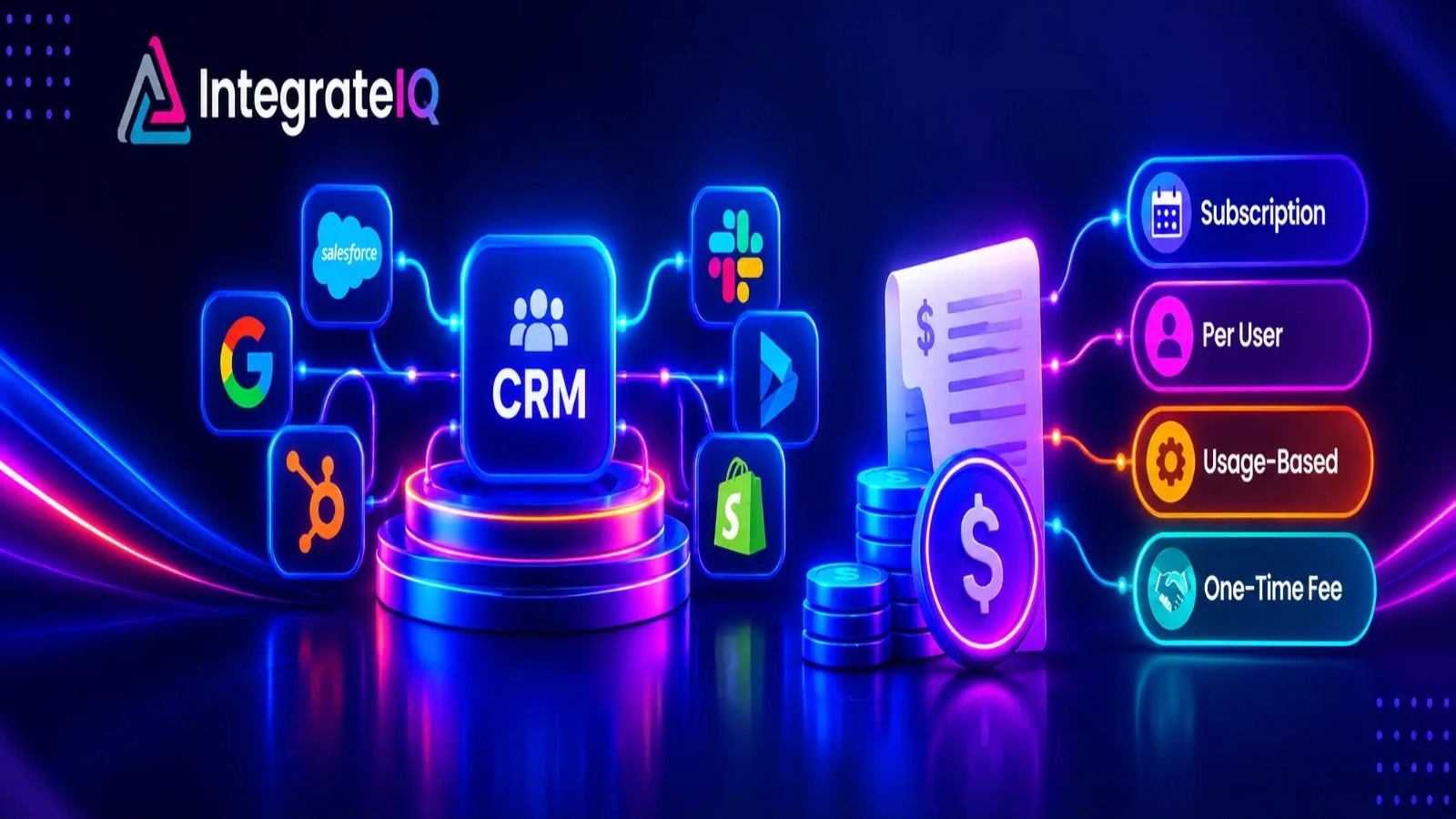
If you ask three vendors to quote a CRM integration, you’ll often get three numbers that don’t add up. He says $8,000. $40,000, offers another. A third will make you pay for a discovery phase before even giving you a number.
Your systems determine the scope of the work. Who pays when that scope turns out to be bigger than expected depends on the vendor’s pricing model. This guide includes what drives CRM integration cost, the five pricing models you’ll see in quotes, and what each one costs over 3 years.
Since 2013, we’ve been a HubSpot Diamond Partner and have built integrations across 300+ platforms. About half of our clients hire us after a first integration attempt failed. So the numbers below are based on real rebuilds, as well as new builds.
What is CRM integration cost? CRM integration cost is the dollar amount you pay to connect your CRM to other business systems like an ERP, billing platform or support desk, and to maintain that connection. There are three components: set-up (design, build and testing), platform or license fees, and continuing maintenance. Most budgets plan for the first part and forget the other two.
Free estimator
Know what your HubSpot project costs before the first call.
Select your services and get a transparent price range in minutes. No sales call needed to get a number.
Connect HubSpot to your ERP, billing platform, or database field mapping, custom logic, and support included.
Pipelines, workflows, email templates, and reporting configured for how your team actually works.
Live, role-based sessions with recordings and written guides built around a custom plan for your team.
HubSpot Partner
Client retention
Platforms integrated
What drives CRM integration cost
Almost every CRM integration is priced on four variables: the number of objects you sync, the direction of the sync, the amount of custom logic, and ongoing maintenance. When quotes are 5x apart, vendors generally scoped one of these four differently.
Number of objects
Each object you sync adds engineering work. Contacts, companies, deals, tickets, line items, products, quotes and custom objects all have their own fields, association rules and edge cases. A contacts-only sync is a small job. A four-object sync between HubSpot and NetSuite with custom objects is a different project.
Sync direction
A one-way sync sends data from one system to another. A two-way sync needs to figure out what to do if both systems make changes to the same record at the same time. Two-way sync in our projects is about 33% more engineering than one-way, mostly to build and test those conflict rules.
Custom logic
If both systems store data the same way then off the shelf connectors work. They have difficulty with calculated fields, deduplication rules, conditional logic and mismatched schemas. Each such rule increases build and test time.
Maintenance after launch
APIs evolve. Business rules shift. Six months later, edge cases appear. This is the cost that buyers underestimate more than any other. It is why many integrations break silently and get rebuilt two years later.
Integration can also be more expensive than the CRM itself. Nucleus Research analysis of CRM ROI case studies revealed that companies spent an average of 3.5 times their annual CRM license cost on integration outside the CRM.
CRM integration pricing models compared
You’ll see five pricing models in CRM integration quotes. Each one moves cost and risk to a different place.
1. Hourly (time and materials)
The vendor charges on an hourly basis. Big consultancies can command $200 to $400 an hour, sometimes with six-figure minimums. Hourly billing is suitable for transformation work of unknown duration. There is no ceiling for a defined integration so you take the risk of any surprise.
2. Platform subscription (iPaaS and DIY tools)
And you pay for the software that powers the integration. DIY tools like Zapier, Make and n8n work well for simple, low-volume flows and cost between about $20 and $600 per month. Enterprise iPaaS platforms like Workato, Boomi and MuleSoft are often $25,000 to $75,000+ per year in platform fees, plus $50,000 to $150,000 to implement through a partner. The fees usually rise with the volume of tasks or number of connections. In our Zapier vs. custom integration guide we discuss when the DIY approach stops working.
3. In-house build
The integration is designed and owned by your engineers. A mid level dev is around $120k to $180k a year fully loaded. The knowledge is often with one person and an integration we deliver in eight weeks can take three to six months for an in-house team.”
4. Native sync included in your CRM tier
Some CRMs have data sync in a higher tier. HubSpot’s Operations Hub (now Data Hub) Professional has native two-way sync with the apps it supports. If you’re already paying for that tier, it’s free. But it only has HubSpot’s list of pre-built apps and standard field mappings. It won’t get to most ERPs, and it won’t handle custom transform logic.
5. Fixed, Outcome-Based price
The vendor provides a fixed price for a defined scope of work before any work commences. If it takes longer than that, the vendor eats it. Price changes only if you change the scope. Here’s how we price things at IntegrateIQ, and the sections below break down the numbers.
| Pricing model | Typical setup cost | Ongoing cost | Time to live | Who pays for overruns |
|---|---|---|---|---|
| Hourly (large consultancy) | $100K to $300K+ | Retainer for fixes | 6 to 12 months | You |
| DIY tools (Zapier, Make) | Low | $20 to $600/mo | Days | You (workarounds) |
| Enterprise iPaaS | $50K to $150K | $25K to $75K+/yr platform fees | 3 to 6 months | You |
| In-house build | $120K to $180K/yr loaded salary | Maintenance and rebuilds | 3 to 6 months | You |
| Native CRM sync | Included in tier | CRM subscription | Days | Limited to supported apps |
| Fixed, Outcome-Based (IntegrateIQ) | $3,450 to $18,400 | $250 to $500/mo continuity | About 8 weeks | Vendor |

Turn HubSpot Into A Real-Time SMS Engine with
Message IQ

Two-Way Conversations

Shared Team Inbox

Automation Triggers

Advanced Reporting

Compliance Tools
-
98%
SMS read within 3 min -
78%
Buy from first responder -
21×
More likely to qualify
3–5 min avg response
$45–$50 ROI / $1

*MessageIQ is an IntegrateIQ product – built natively for HubSpot by the same team.
CRM integration cost over three years
The year-one setup gets the attention, but the three-year total cost is the number that decides if an integration was a good buy. And post-launch, platform fees, maintenance and rebuilds pile up.
Here’s the representative comparison we publish for a two-object, two-way HubSpot integration:
| Path | Year 1 | Years 2 and 3 | 3-year total |
|---|---|---|---|
| In-house build | $80K to $120K (developer time) | $40K to $80K (maintenance and rebuilds) | $120K to $200K |
| Zapier, scaled | $7K to $12K | $5K to $10K (workarounds and overages) | $12K to $22K |
| Workato or Boomi | $90K to $200K | $50K to $150K (platform and maintenance) | $140K to $350K |
| Large consultancy | $150K to $300K | $30K to $80K (retainer fixes) | $180K to $380K |
| IntegrateIQ | $15,200 ($9,200 setup + $6,000 year-1 continuity) | $12,000 | About $27,200 |
But we’re not always the cheapest year one option. A simple scope keeps the cost of a DIY tool down up front. When you need custom objects, two-way sync, or an ERP connection, a fixed build with maintenance included is usually the lowest three-year cost that still works at scale.
What IntegrateIQ charges for CRM integration
Our HubSpot integration services use one fixed price per project. Two things set it: how many HubSpot objects you sync and the sync direction.
| Objects | One-way sync | Two-way sync |
|---|---|---|
| 1 | $3,450 | $4,600 |
| 2 | $6,900 | $9,200 |
| 3 | $10,350 | $13,800 |
| 4 | $13,800 | $18,400 |
Pricing scales the same way beyond four objects. Each project includes:
- Project management from kickoff to launch
- Integration design with your team, using recipes we’ve refined over a decade
- Custom triggers, sync logic and data transformation for your business rules
- Support for every HubSpot object, including custom objects, engagements and attachments
- A typical eight-week timeline (see our integration process)
- 12 months of continuity, prepaid
Continuity is $250/month for one-way sync, $500/month for two-way. $0 down. $0 monthly payments. $0 due at signing. Monthly billing in month 14. This includes monitoring, error handling, keeping things in sync as your business rules change, and engineering work as APIs change. If something breaks we fix it, we don’t bill by the hour. It also supports our middleware, which manages over 20 billion fields annually for our clients.
Related services use the same fixed model. HubSpot onboarding is $4,000 per hub on Professional and $6,000 per hub on Enterprise. Live, role-based training is $5,000 per team. Consulting outside these scopes is $200 per hour. If you’re moving off another CRM first, our CRM migration services cover that step.
Hidden costs that don’t show up in a CRM integration quote
Most quotes list the build and leave out the costs that show up later. Ask about each of these before you sign:
- A failed first attempt. About half of our clients already paid for an integration that didn’t work. They pay twice.
- Engineering time pulled off your roadmap. Every week your team spends on sync code is a week it doesn’t spend on product work.
- Platform fees that climb. iPaaS tools price by tasks, connections or data volume. Your year-two tier is rarely your day-one tier.
- Paid discovery. Some vendors sell discovery as a separate project before they quote the build.
- Uncapped hours. Hourly work has no ceiling. A fixed price does.
- Silent sync failures. A sync that runs but writes bad data is worse than one that fails loudly, because the errors stay hidden until reports go wrong.
- Unscoped data cleanup. Duplicates and messy fields surface during mapping. Our system integration budget guide shows how to plan for them.
How to compare CRM integration quotes
Put every quote through the same seven questions. The answers tell you what you’re really buying.
- Is this a fixed price or an estimate?
- What exactly counts as a scope change, and how is it priced?
- Which objects does the build support? Ask about custom objects, engagements and attachments.
- Who fixes the integration after launch, and how is that billed?
- What’s the three-year total, including platform or license fees?
- Who builds it: senior engineers, junior staff, or a subcontractor?
- How do you monitor errors, and how fast will we hear about a failed sync?
A vendor who answers all seven in writing is giving you a number you can budget against.
What this means for your budget
Match the pricing model to the job:
- Contacts only, one direction, low volume: a DIY tool is fine. Revisit it when volume or complexity grows.
- Two-way sync, custom objects, or an ERP like Salesforce, NetSuite or Microsoft Dynamics 365: budget for a fixed build plus maintenance, and compare three-year totals.
- A central integration team managing dozens of systems: an enterprise iPaaS can make sense if you can staff it.
Cost is half the decision. The other half is what manual work costs you today. Our integration ROI calculator puts a number on hours lost to re-entry, error fixes and slow handoffs, then compares it to the three-year investment.
FAQ
How much does CRM integration cost?
You can pay anywhere from a few hundred dollars per year for a simple DIY sync, to $100,000+ for enterprise iPaaS or consultancy projects. IntegrateIQ has a fixed-price HubSpot integration that costs $3,450 to $18,400 based on the sync direction and number of objects. Plan for maintenance as well, which often determines the three-year total.
How much does a HubSpot integration cost?
IntegrateIQ’s custom HubSpot integration is $3,450 for one object with one-way sync and $18,400 for four objects with two-way sync. Continuity is $250/month one way or $500/month two way with year 1 paid at signing. That tier includes native sync, but only for supported apps, through HubSpot’s Operations Hub.
Why does two-way sync cost more than one-way?
Two-way sync must resolve conflicts when both systems update the same record. That means more rules, testing, and error handling. In our projects, two-way sync takes roughly 33% more engineering than one-way.
Is iPaaS cheaper than a custom integration?
For simple, low volume flows, a DIY iPaaS tool is typically more cost effective in year one. Enterprise iPaaS platforms can cost $25,000 to $75,000+ per year, plus implementation. A custom build with maintenance is often cheaper over three years for mid-market companies.
What is Outcome-Based pricing for integrations?
Outcome-Based pricing is you pay one fixed price, agreed beforehand, for an agreed scope. You only change the price when you change the scope. The vendor bears the risk of extra build time, not you.
How long does a CRM integration take?
IntegrateIQ integrations go live in about eight weeks. Week one is kickoff and data mapping. Week two and three is the build. The rest of the weeks are review, second sync direction and refinement. Typically, in-house builds like this take three to six months.
Do I need to pay for maintenance after launch?
Yes, in some fashion. APIs and business rules change so all integrations have to be monitored and updated. The question is, are you paying a set monthly fee or are you paying by the hour every time something breaks.
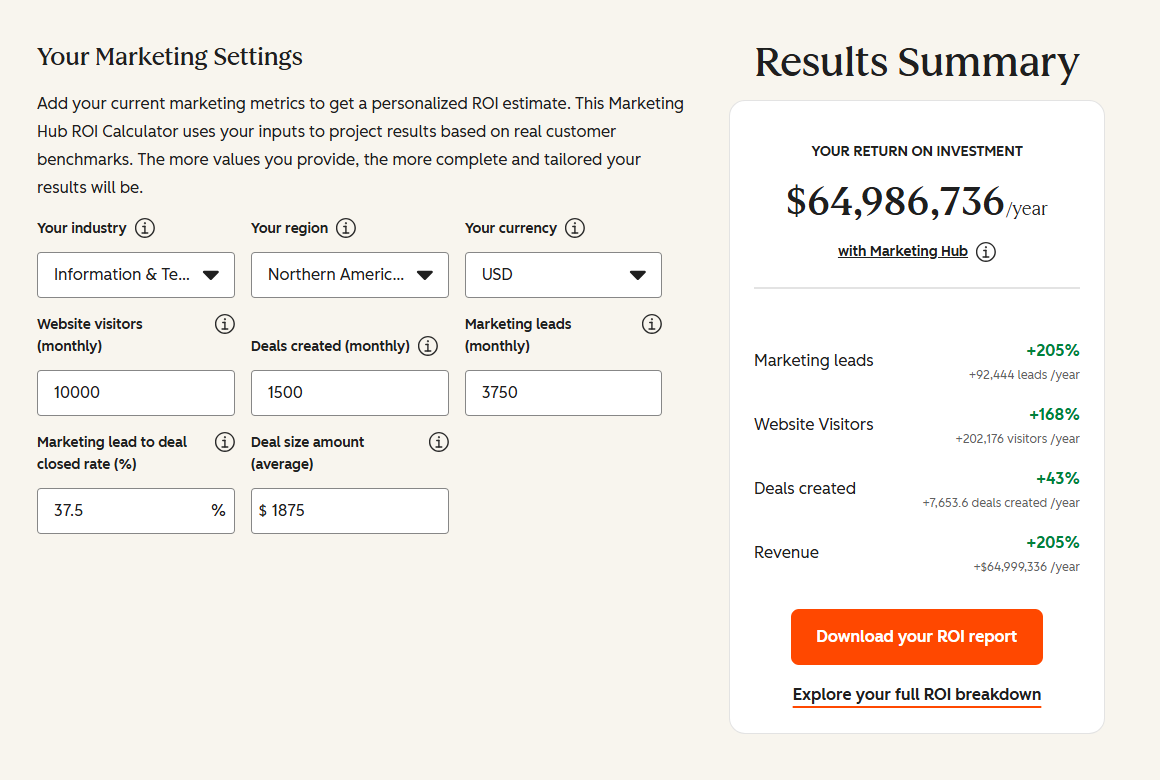
See your 12-month revenue impact with HubSpot CRM
Enter your current numbers — visitors, leads, deal size — and get a personalized projection based on real HubSpot customer benchmarks.
Get a fixed price for your integration
If you’re comparing quotes right now, start with a number you can check. Our integration cost estimate takes about 60 seconds and shows your setup fee and year-one continuity before you talk to anyone. A free 30-minute discovery call then turns that into a fixed, itemized Outcome-Based quote.
We’ve kept a 98.5% client retention rate by pricing work this way. If we’re not the right fit for your project, we’ll tell you on that call.

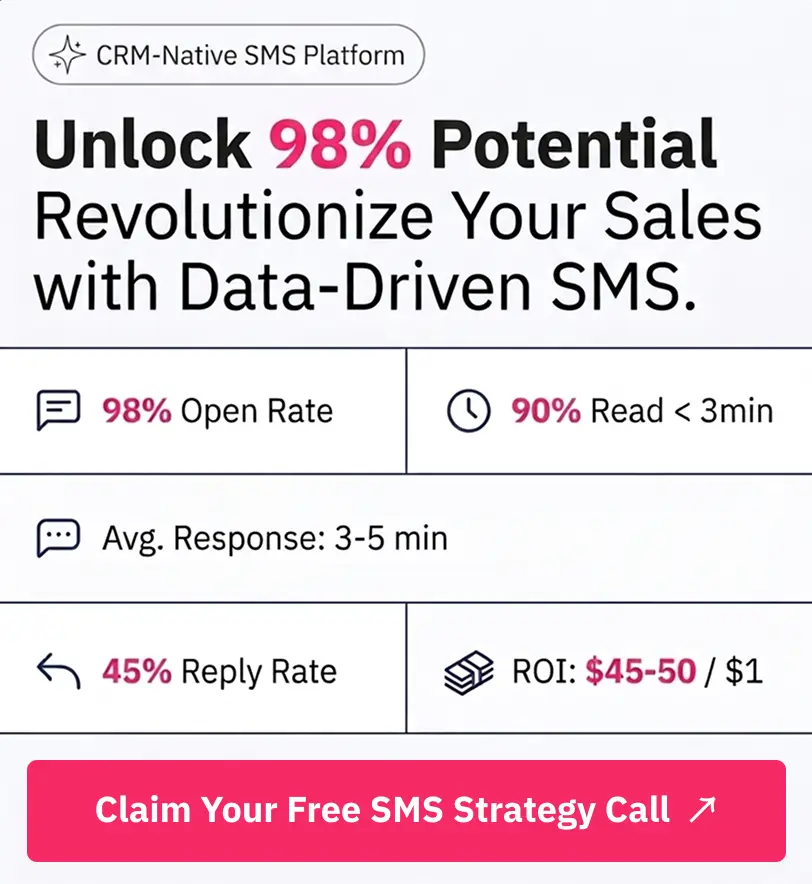
Table of Contents
- What drives CRM integration cost
- CRM integration pricing models compared
- CRM integration cost over three years
- What IntegrateIQ charges for CRM integration
- Hidden costs that don’t show up in a CRM integration quote
- How to compare CRM integration quotes
- What this means for your budget
- FAQ
- Get a fixed price for your integration