











Explore this article with AI:

Watch the full webinar: HubSpot Spring 2026 Feature Spotlight with IntegrateIQ and HubSpot
Featuring Brett Larson(Integrate IQ), Tim Ritchie(CEO, Integrate IQ) and Alessandra Kopp(HubSpot Partner Development Manager).
HubSpot’s Spring 2026 Spotlight didn’t just ship new features. It redefined what a CRM is supposed to do. The shift is fundamental: HubSpot is moving from being a system of record to a system of execution, one that doesn’t just store your customer data, but actively uses it to help your marketing, sales, and service teams move faster and make better decisions.
The framing from HubSpot’s CPTO Duncan Lennox sets the context: most AI tools have access to data. What they don’t have is context. Context is why something happened, not just what happened. It’s deep knowledge of your customers, your market, and how your team works. That knowledge grows with every interaction. Without it, AI gives you generic output. With it, you get real outcomes.
One headline stat: organic traffic for HubSpot customers is down 27% year-over-year, while AI referral traffic has tripled. The way buyers search is changing fast, and your CRM strategy needs to change with it.
At our Spring 2026 Feature Spotlight webinar, our team hosted Alisandra from HubSpot to walk through seven of the most impactful releases. Below we break down each feature and add our perspective on what it means for how you run HubSpot today.
Free estimator
Know what your HubSpot project costs before the first call.
Select your services and get a transparent price range in minutes. No sales call needed to get a number.
Connect HubSpot to your ERP, billing platform, or database field mapping, custom logic, and support included.
Pipelines, workflows, email templates, and reporting configured for how your team actually works.
Live, role-based sessions with recordings and written guides built around a custom plan for your team.
HubSpot Partner
Client retention
Platforms integrated
Feature 1: Breeze Assistant for Loop Marketing
Public Beta | Available on all products and plans
Breeze Assistant is not a generic AI chatbot bolted onto HubSpot. It is purpose-built to power loop marketing, a different way to think about your marketing motion.
The traditional inbound funnel pours leads in the top and drops them out the bottom. Loop marketing changes that model. Every action you take feeds the next one. A customer case study, for example, should not just sit in a PDF. It should loop back into your social media, sales enablement materials, and email nurture sequences.
Breeze Assistant is the engine that drives that loop. It lives as a widget inside your HubSpot portal, acts as a specialized consultant, and because it has access to your CRM context, including your actual business data, brand settings, and HubSpot Academy best practices, it does not give you generic advice. It knows your brand voice, your fonts, your colors, and your customer relationships. You feed it one idea and it helps you turn it into a full-circle campaign.
HubSpot has now trained Breeze Assistant on Loop Marketing, its own playbook for AI-powered marketing. That means it can help teams define ideal customer profiles, build brand guides, and create campaign briefs, all grounded in actual portal data.
Integrate IQ Insight | Set Up Your Brand Kit Before You Touch This Feature
Breeze Assistant only performs as well as the data it draws from. If your brand kit is not configured, including fonts, colors, voice, and positioning, the output will be generic. Alisandra walked through a real-world example on the call: take a finished blog post, hand it to Breeze Assistant, and it repurposes it into social posts, email nurture copy, and sales enablement content, all on-brand, all in one workflow.
The key mindset shift: stop thinking about content as a one-time deliverable. Every piece of content is a starting point for a loop. Breeze Assistant makes execution fast, but only if your brand kit is built out and your content is structured inside HubSpot first. Before you activate this for your team, run an audit of your brand settings and content library. We do this as part of our HubSpot onboarding and optimization work.
Learn more about our HubSpot onboarding services.

Turn HubSpot Into A Real-Time SMS Engine with
Message IQ

Two-Way Conversations

Shared Team Inbox

Automation Triggers

Advanced Reporting

Compliance Tools
-
98%
SMS read within 3 min -
78%
Buy from first responder -
21×
More likely to qualify
3–5 min avg response
$45–$50 ROI / $1

*MessageIQ is an IntegrateIQ product – built natively for HubSpot by the same team.
Feature 2: HubSpot AEO (Answer Engine Optimization)
Public Beta | Marketing Hub Pro and Enterprise | Also available standalone at $50/month
Search is no longer just Google. Buyers are now asking questions in ChatGPT, Gemini, Perplexity, and similar tools, and the businesses that show up in those answers are winning deals before a sales rep gets involved.
Nearly 60% of Google searches are now zero-click, meaning users get their answer without ever visiting a website. At the same time, HubSpot data shows that AI-referred sessions saw a 527% year-over-year increase, and that traffic converts at higher rates than traditional search. The opportunity has shifted.
HubSpot AEO is a new tool built specifically for this shift. It helps marketing teams understand, track, and optimize how their brand appears in AI-powered answer engines. The tool includes a Brand Visibility Scorecard that tracks how often and how accurately your company is cited by AI models, identifies competitor share of voice, and surfaces recommendations grounded in your actual CRM data.
What makes it distinct: it scans what AI engines are currently saying about your company, compares that against your website content and CRM data, identifies knowledge gaps, and recommends which specific pages to update to feed the AI the right context about your business. It also lives inside your HubSpot portal, so you can see your score, review recommendations, and take action without switching tools.
HubSpot made AEO available as a $50/month standalone hub, separate from any Marketing Pro subscription. That decision signals how seriously they view this category. They want every customer, regardless of plan tier, to be able to access it.
Integrate IQ Insight | AEO Is an Ongoing Activity, Not a One-Time Setup
Brett flagged something during the webinar that often gets buried in feature announcements: AEO is not set-and-forget. Your visibility in AI answers fluctuates as models update, competitors optimize, and your own content changes. You need dedicated dashboards and reports inside HubSpot to monitor how your prompts are performing over time.
The tool will surface recommendations, but your team still has to review, prioritize, and implement them. Build AEO into a recurring workflow, not a quarterly check-in. And like every feature on this list, the quality of your CRM data directly determines the quality of what the tool surfaces. If your lifecycle stages are inconsistent or your buyer personas are outdated, the prompt recommendations will be less relevant.
If you want to understand whether your HubSpot instance is positioned to get real value from AEO, reach out and let’s talk.
Feature 3: Smart Deal Progression
Public Beta | Sales Hub Pro and Enterprise | Also available with Service Hub Pro and above
Sales reps spend a significant portion of their week on CRM admin, updating deal properties, writing follow-up emails, logging call notes, and figuring out next steps. Smart Deal Progression automates that entire post-meeting workflow.
After every meeting, the feature surfaces AI-suggested CRM updates, draft follow-up emails, and recommended next steps, all informed by your full deal history and the pipeline definitions your team has already configured. It does not just summarize the last call. It actively audits your conversations against your CRM properties and provides cited evidence for every suggestion, linking directly to the exact second in the recording or the exact line in the transcript where the information was discussed.
That citation layer matters. Reps are not being asked to trust the AI blindly. They can verify, edit, and approve each suggestion. The deal moves because a real milestone in the conversation was met, not because a rep decided it was time to advance the stage.
It also extends beyond sales. A CSM using Service Hub Pro can have the tool flag when a customer mentions a new project on a call and suggest creating a task or ticket right then. The use cases across the customer lifecycle are significant.
Integrate IQ Insight | Forecast Accuracy Improves When Stage Movement Is Evidence-Based
Two webinar stats stood out. First, reps using Smart Deal Progression are saving 2 to 3 hours per week on manual CRM tasks. Second, and this one matters more for leadership, forecast accuracy improves because deals only advance when a specific milestone in the conversation is confirmed by the AI.
If your pipeline is currently built on rep judgment about when to move a deal forward, you likely have stale deals and inflated forecasts. Smart Deal Progression creates an audit trail that managers can actually trust. That is a different relationship with your pipeline data.
Also from the call: the feature works with third-party calling and transcription tools, including Zoom, Teams, and Google Meet, not just HubSpot native calling. As long as the transcript syncs back into HubSpot, the feature picks it up. Before rolling this out, run a pipeline audit to make sure your deal stages and properties are clearly defined. The AI produces better suggestions when the pipeline structure underneath it is solid.
Feature 4: Prospecting Agent
Public Beta | Sales Hub Pro and Enterprise | $1 per recommended lead with 28-day free trial
Prospecting has always been one of the most time-intensive parts of the sales motion, from researching accounts to identifying the right contacts, building buying committee maps, and writing personalized outreach. Prospecting Agent handles all of that.
It works through a three-step process powered by your CRM context. First, it monitors your target accounts for buying signals, including recent funding rounds, new technology adoptions, job postings that suggest expansion, and more. Second, it identifies the full buying committee: not just one contact, but the decision makers and influencers across the account, sourced from your CRM and connected third-party providers like Apollo or ZoomInfo. Third, it drafts personalized, signal-based outreach for your reps to review before anything goes out.
The system behind this is called Plays. A Play is a blueprint you configure that tells the agent which accounts to monitor, which signals to watch for, which job titles to target, and what your value propositions and pain points are. The better your Play is set up, the smarter the agent performs. It is not plug-and-play out of the box; it rewards intentional configuration.
Pricing is outcome-based: $1 per qualified lead recommended. Not per seat, not per month. You pay for results, which makes ROI straightforward to measure.
Integrate IQ Insight | 2x Industry Response Rates and a Real Use Case for Staffing Firms
The performance benchmark Alisandra shared: customers using Prospecting Agent are seeing outreach response rates at twice the industry benchmark. That gap exists because outreach is going out at the right moment, to the right person, with signal-based context baked in.
A concrete use case from the Q&A on our call: staffing companies. If Prospecting Agent detects that a target account just announced a new office opening in Austin and is posting roles, a staffing firm can have a personalized, relevant outreach email drafted and ready within minutes, before any competitor makes contact. That is the window this tool opens.
The broader shift worth internalizing: HubSpot is explicitly moving away from activity-volume selling. More calls, more emails, more sequences, that playbook is losing effectiveness. The move is toward account-level precision: fewer contacts, better timing, more relevant context. If your HubSpot reporting still measures reps on logged activities, this is a good moment to rethink what you are actually tracking.
Feature 5: Customer Agent
Generally Available | Service Hub Pro and Enterprise | $0.50 per resolved conversation with 28-day free trial
Customer Agent is HubSpot’s AI for customer service, and with the Spring 2026 update, it now handles email in addition to chat. It resolves routine support questions around the clock, pulling from your documentation, customer data, and full conversation history to deliver contextual answers.
It is built on three pillars. First, it learns from your truth: trained directly on your knowledge base, product catalogs, and even image attachments shared by customers. Second, it abides by your guidelines: you set the rules, such as never discussing pricing or always using an empathetic tone with frustrated customers, and it respects them. Third, the percentage rollout feature gives you control over how much traffic the agent handles. You can start at 25%, evaluate results, and dial up to 50% or 100% as confidence builds.
When the agent cannot resolve something, it does not leave the customer hanging. It hands the conversation off to a human rep with a full summary and a suggested reply already drafted, so the rep picks up right where the agent left off.
Integrate IQ Insight | 50% Ticket Resolution Boost and Why the Rollout Approach Matters
The stat from the webinar: HubSpot reports that teams using Customer Agent alongside Help Desk are seeing 50% more tickets resolved. Resolution rates continue to improve as the product matures.
The percentage rollout feature is the right way to introduce AI into a customer-facing workflow. You are not flipping a switch and hoping for the best. You start small, measure, and expand as the agent earns trust. That measured approach also gives you time to strengthen the documentation the agent draws from, because that is what determines resolution quality. If your knowledge base is outdated or incomplete, the agent will either give wrong answers or escalate tickets it should be able to close on its own.
Alisandra made one point from the call worth remembering: buyer behavior is shifting. People increasingly prefer to get an initial answer from an agent before escalating to a human. A customer who emails at 2am on a Sunday with a technical question and gets a correct, immediate response has a fundamentally different experience than one who waits until Monday. That gap in NPS is real and it is growing.
Feature 6: Data Enrichment
Generally Available | All HubSpot Starter plans and above | No credits required
Dirty CRM data is one of the most common reasons AI features underperform. You open a record and find a first name, a personal email, and nothing else. No industry, no company size, no context for outreach. That empty record is why sales outreach feels generic and why marketing segmentation fails.
Data Enrichment is HubSpot’s native fix. The moment a lead enters your portal, HubSpot matches the domain against a verified database of business information and automatically fills in 11 key company properties, including headquarters, employee count, annual revenue, and industry. Enrichment runs continuously in the background, refreshing records as company information changes.
The Spring 2026 update has two major changes. First, it is now available on all Starter-tier subscriptions and above, not just higher plans. Second, it no longer consumes HubSpot credits to enrich contact and company records. Rich data is no longer a premium feature; it is the default.
Integrate IQ Insight | The Two-Field Form Strategy and the End of Expensive Data Subscriptions
Data Enrichment removes a trade-off that marketers have always had to make: more form fields for better data, or fewer fields for higher conversion. With enrichment running in the background, you can move to a two-field form, name and email only, and HubSpot fills in the rest automatically. Your marketing team gets segmentation-ready data. Your prospect gets a frictionless experience.
The second implication: if your team is currently paying for a separate third-party subscription just to populate company size and industry on your HubSpot records, that cost is now eliminated. Worth reviewing your current data stack against what HubSpot is now providing natively.
The broader point we always make to clients: every AI feature on this list — Breeze Assistant, AEO, Smart Deal Progression, Prospecting Agent, and Customer Agent, produces better outputs when the underlying data is clean, structured, and consistently maintained. Data Enrichment helps, but it is not a substitute for a data governance strategy. We work with clients to establish field-level standards, import protocols, and validation rules that keep records accurate over time.
If your CRM has accumulated significant technical debt, a CRM data migration and cleanup engagement is often the right starting point before enabling the AI features above.
Feature 7: Buyer Intent
Generally Available | All products and plans
Buyer Intent gives sales teams a significant advantage: knowing which companies are actively thinking about buying, even before they fill out a form. It is built on two distinct engines that serve different strategic goals.
Research Intent: The Hunter
Research Intent looks outside your existing CRM. It monitors third-party sites to identify companies that are researching your product category or your competitors, companies that do not know you yet but are actively looking for a solution like yours. These net-new accounts can be pulled into your CRM and reached before your competition even knows they are in market.
Visitor Intent: The Closer
Visitor Intent looks inside your digital walls. It uses reverse IP technology to identify which companies are already visiting your website, including your pricing page and case study pages, and matches them against your target market profile. These are your warm leads: companies that are familiar with you and are sending signals that they are thinking about a purchase.
Both engines feed into an Intent Score that aggregates company news signals, including executive hires, funding rounds, and product launches, to give every account a probability-weighted rank. Your reps stop guessing who to call. The system tells them who is ready.
Integrate IQ Insight | The Three-Filter Power Move and Why ICP Quality Determines Everything
Alisandra’s framing from the webinar is the clearest way to explain Buyer Intent to your team: Research Intent is the hunter (finds net-new companies outside your CRM researching your category), and Visitor Intent is the closer (identifies warm companies already browsing your pricing page or case studies right now).
The most powerful configuration she demonstrated: combine three filters simultaneously, companies showing visitor intent, companies that match your target market profile, and companies not yet in your CRM. Every company in that saved view is a qualified, intent-showing prospect you have never spoken to. Automate adding them to your CRM and you have a pipeline engine running continuously without manual list-building. As Alisandra put it: it builds pipeline while you sleep.
Brett’s live comment from the call was direct: generating net-new leads is the hardest problem partners and clients are dealing with right now. This tool addresses it, and it is already live in your HubSpot portal on qualifying plans. The caveat: Buyer Intent surfaces accounts based on the target market parameters you configure. If your ICP definition is vague or has not been updated to reflect who actually closes, the intent scores will surface the wrong accounts. Align your ICP properties and firmographic filters with your closed-won data before configuring this. We help clients run that analysis as part of our CRM strategy work.
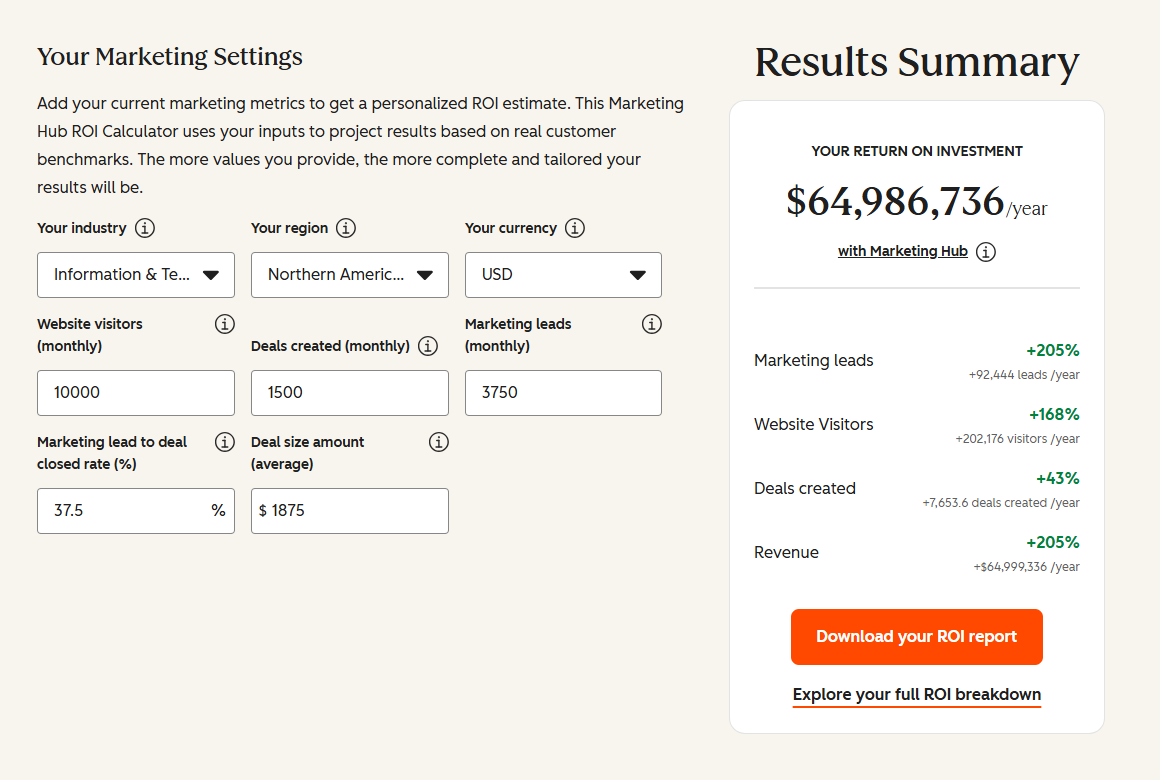
See your 12-month revenue impact with HubSpot CRM
Enter your current numbers — visitors, leads, deal size — and get a personalized projection based on real HubSpot customer benchmarks.
The Bigger Shift: From Record-Keeping to Execution
Every feature in this release follows the same logic: your CRM data, when it is clean and well-structured, becomes a competitive advantage that AI can act on. The companies that get the most value out of Spring 2026 will not be the ones who activate these features first. They will be the ones whose HubSpot portals are already built around clear lifecycle stages, consistent deal properties, reliable source attribution, and accurate contact records. The AI amplifies what is already there.
That is the work IntegrateIQ does. We are a HubSpot Diamond Solutions Partner focused on the technical and strategic foundation that makes these tools perform. If you watched our webinar and saw features you want to activate, or if you are not sure whether your HubSpot instance is ready for them, we are the right team to talk to.
Ready to put Spring 2026 to work?
Reach out to the Integrate IQ team to discuss which of these features make sense for your HubSpot portal right now, and what foundation work you need to get the most out of them.
Contact us at sales@integrateiq.com
Watch the full webinar: HubSpot Spring 2026 Feature Spotlight with IntegrateIQ and HubSpot

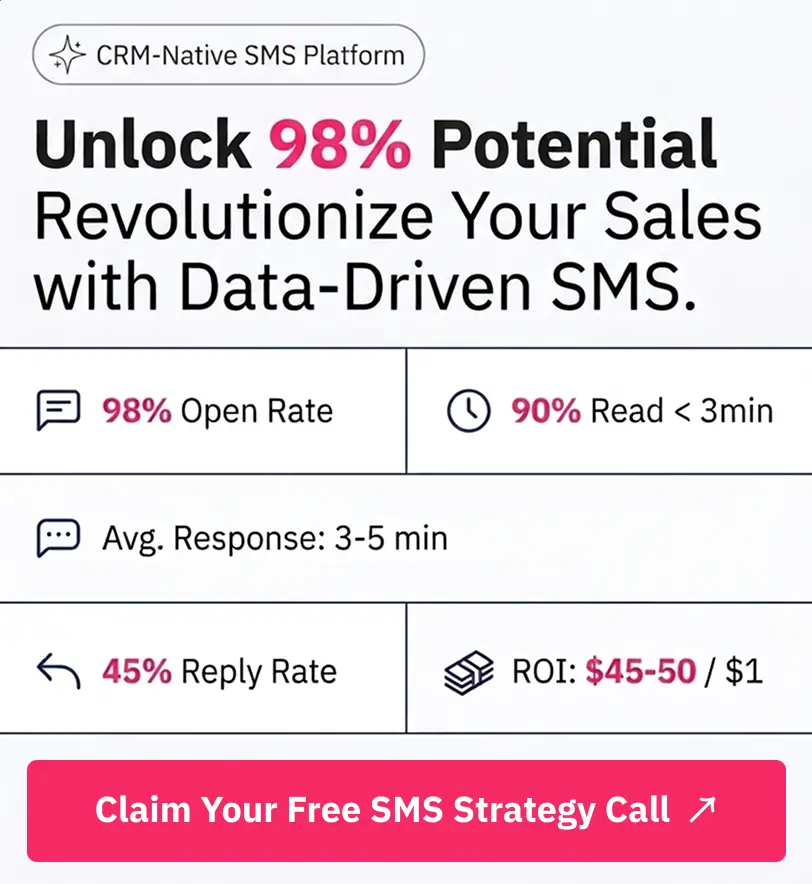
Table of Contents
- Feature 1: Breeze Assistant for Loop Marketing
- Integrate IQ Insight | Set Up Your Brand Kit Before You Touch This Feature
- Feature 2: HubSpot AEO (Answer Engine Optimization)
- Integrate IQ Insight | AEO Is an Ongoing Activity, Not a One-Time Setup
- Feature 3: Smart Deal Progression
- Integrate IQ Insight | Forecast Accuracy Improves When Stage Movement Is Evidence-Based
- Feature 4: Prospecting Agent
- Integrate IQ Insight | 2x Industry Response Rates and a Real Use Case for Staffing Firms
- Feature 5: Customer Agent
- Integrate IQ Insight | 50% Ticket Resolution Boost and Why the Rollout Approach Matters
- Feature 6: Data Enrichment
- Integrate IQ Insight | The Two-Field Form Strategy and the End of Expensive Data Subscriptions
- Feature 7: Buyer Intent
- Integrate IQ Insight | The Three-Filter Power Move and Why ICP Quality Determines Everything
- The Bigger Shift: From Record-Keeping to Execution