

Explore this article with AI:

A lawn care CRM migration replaces route sheets and disconnected tools with a shared system for scheduling context, customer history, and operational visibility. Moving to HubSpot centralizes service data and ownership so teams work from the same information as the business scales..
Free estimator
Know what your HubSpot project costs before the first call.
Select your services and get a transparent price range in minutes. No sales call needed to get a number.
Connect HubSpot to your ERP, billing platform, or database field mapping, custom logic, and support included.
Pipelines, workflows, email templates, and reporting configured for how your team actually works.
Live, role-based sessions with recordings and written guides built around a custom plan for your team.
HubSpot Partner
Client retention
Platforms integrated
Key Takeaways
- Lawn care CRM migration centralizes customer and service context previously spread across route sheets and inboxes
- Route sheet to CRM transitions improve visibility into scheduling changes and follow-ups
- HubSpot for lawn care connects customer communication to real service activity
- Lawn care scheduling automation depends on consistent data definitions and system alignment
- Field service CRM migration breaks down when workflows and ownership are unclear
Why Lawn Care CRM Migration Becomes Necessary as Operations Scale
As lawn care businesses grow in volume, services, and territories, coordination breaks down when scheduling, communication, and service history live in separate tools. A lawn care CRM migration consolidates customer and operational data so teams can see how work moves across the business.
Route sheets cannot represent the full customer lifecycle
Route sheets document where crews go, not how customers progress from inquiry to renewal. When cancellations, complaints, or upsell conversations occur outside the schedule, that context is lost.
This leads to:
- Scheduling decisions made without customer history
- Repeated customer questions that require manual investigation
- Escalations caused by missing or outdated information
A route sheet to CRM transition replaces fragmented updates with a persistent customer record.
Customer communication requires operational context
When communication tools operate independently from scheduling systems, messages are sent without awareness of service status. Customers receive confirmations or reminders that no longer match reality.
HubSpot for lawn care ties communication directly to the customer record so teams can reference recent service activity before responding.

Turn HubSpot Into A Real-Time SMS Engine with
Message IQ

Two-Way Conversations

Shared Team Inbox

Automation Triggers

Advanced Reporting

Compliance Tools
-
98%
SMS read within 3 min -
78%
Buy from first responder -
21×
More likely to qualify
3–5 min avg response
$45–$50 ROI / $1

*MessageIQ is an IntegrateIQ product – built natively for HubSpot by the same team.
Lawn Care CRM Migration and Scheduling Automation in Practice
Scheduling automation fails when systems do not share consistent definitions or real-time context. CRM migration influences scheduling not by replacing dispatch tools, but by ensuring customer data and service status remain aligned across teams.
Lawn care scheduling automation depends on shared definitions
Before automating reminders or follow-ups, teams must agree on what scheduled, completed, delayed, and canceled mean. Without this alignment, automation produces conflicting internal signals and incorrect customer messages.
Once definitions are established, HubSpot workflows can:
- Trigger customer reminders based on actual service windows
- Create internal tasks when schedules change
- Support follow-ups tied to service outcomes
HubSpot for lawn care works as the system of record
Most lawn care organizations continue using specialized tools for routing and dispatch. HubSpot does not replace those systems. It connects to them.
Many teams prioritize HubSpot integrations for field service platforms so customer records remain accurate while crews continue using tools designed for execution.
Lawn Care CRM Migration Improves Customer Tracking Across Teams
Customer information in lawn care organizations is often fragmented across route sheets, inboxes, and spreadsheets. A lawn care CRM migration consolidates this information so teams can access service history and communication context without reconstructing it manually.
One customer record replaces scattered notes
When service history, communication, and preferences live in a single CRM record, teams respond with full context.
This supports:
- Consistent service delivery across crews
- Faster resolution of customer issues
- Clear ownership of follow-ups
The CRM becomes the reference point instead of individual inboxes.
Marketing decisions reflect service reality
Marketing teams often lack visibility into what happens after a service is sold. CRM migration connects marketing engagement to actual service delivery.
This enables segmentation based on service frequency, renewal behavior, and customer type. Organizations that treat this as part of a broader data integration strategy avoid campaigns that conflict with operational capacity.
Field Service CRM Migration and Competitive Response Time
Response speed depends on how quickly teams can identify ownership and access customer context. When inquiries enter disconnected systems, delays occur before any action is taken. A field service CRM migration reduces this friction by centralizing context and ownership.
Clear ownership replaces inbox monitoring
When inquiries enter a CRM with defined ownership rules, follow-ups no longer depend on who checks email first. Teams see the inquiry, customer history, and prior communication immediately.
This is where HubSpot workflow automation supports faster response without adding manual coordination.
Reporting reflects current operational state
Route sheet reporting is retrospective and incomplete. CRM reporting reflects the current state of scheduling, customer activity, and pipeline.
When scheduling status and customer data live together, leadership can compare demand against capacity and identify patterns in cancellations without reconciling spreadsheets.
Executing Lawn Care CRM Migration Without Disrupting Daily Work
CRM migration introduces operational risk when system design does not match existing workflows. Disruption occurs when teams are asked to change tools without clarity on data structure or integration behavior.
Data structure must match real workflows
If service names, lifecycle stages, or ownership rules do not reflect reality, teams bypass the CRM. Cleaning and standardizing data before migration prevents shadow systems after launch.
Integration behavior must be defined before launch
When field service, accounting, or quoting tools remain in place, teams must define which system owns each data type. Without this clarity, updates conflict and manual reconciliation becomes routine.
Organizations that define HubSpot integration behavior early avoid duplicate entry between systems.
Common Failure Patterns in Lawn Care CRM Migration
Most lawn care CRM migration failures surface after launch, when teams discover that lifecycle stages, ownership rules, or integrations do not reflect how scheduling and service operate day to day.
Watch for:
- Migrating data without prioritizing active workflows
- Treating CRM as a sales-only system
- Automating before definitions are agreed upon
- Allowing spreadsheets to remain unofficial systems
- Skipping role-based training
What Marketing and Operations Teams Should Do Next
Marketing and operations influence different parts of the CRM, but both depend on the same customer data. Migration efforts stall when these teams define requirements independently.
Concrete actions include:
- Mapping the customer lifecycle from inquiry to renewal
- Identifying where communication breaks today
- Defining which systems remain and how they connect
- Designing automation around service delivery
- Planning role-based training before launch
FAQs About Lawn Care CRM Migration
What changes first during a lawn care CRM migration?
A lawn care CRM migration changes how information is accessed. Teams stop searching across tools and work from a shared customer record.
Does lawn care CRM migration replace dispatch or routing software?
Lawn care CRM migration typically connects HubSpot to existing field tools rather than replacing them.
How does route sheet to CRM migration affect retention?
Route sheet to CRM migration improves follow-up consistency and renewal visibility by centralizing service and communication history.
Why do lawn care CRM migrations stall after launch?
Lawn care CRM migrations stall when teams do not trust the data or understand how the CRM fits into daily workflows.
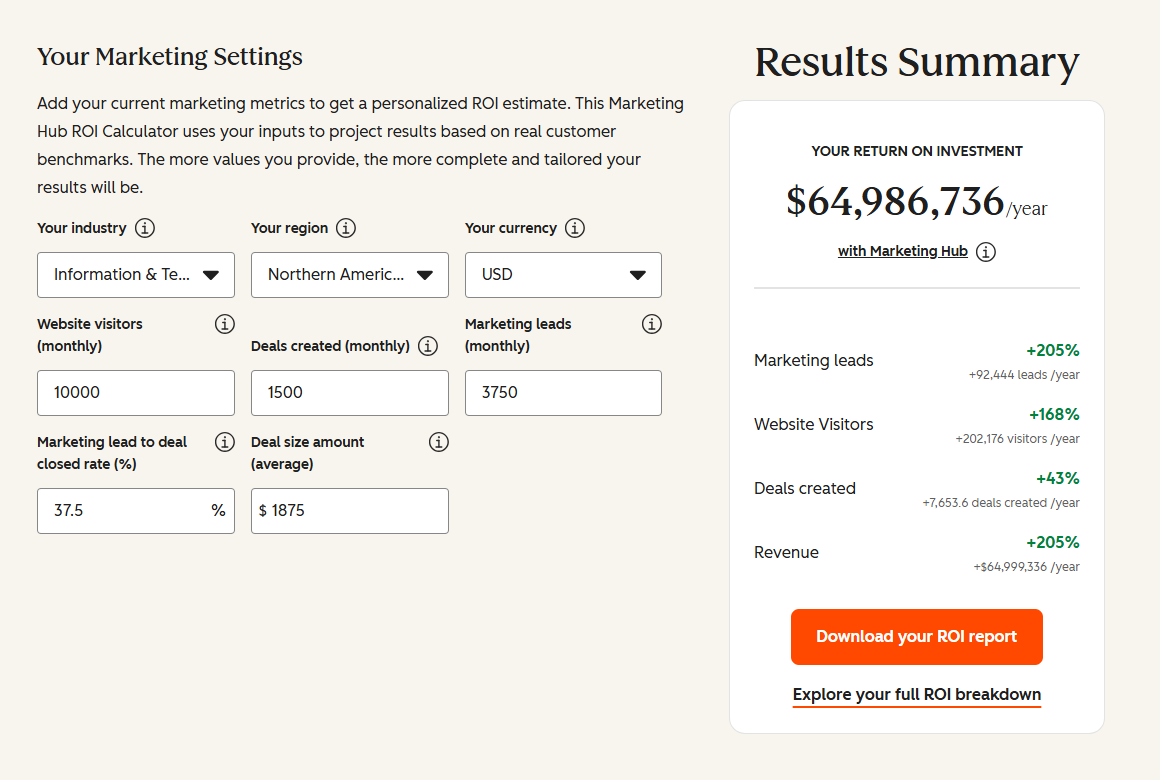
See your 12-month revenue impact with HubSpot CRM
Enter your current numbers — visitors, leads, deal size — and get a personalized projection based on real HubSpot customer benchmarks.
Bottom Line Hero Section
Replacing route sheets with a CRM changes how lawn care companies manage scheduling context, customer relationships, and accountability. A lawn care CRM migration works when HubSpot reflects real operational workflows and integrates with the field systems crews already rely on.
Integrate IQ is a HubSpot Diamond Partner specializing in CRM migrations, integrations, and AI-driven automation. If you are planning a lawn care CRM migration, Contact Us to design a system that supports growth without disrupting daily operations.



Table of Contents
- Key Takeaways
- Why Lawn Care CRM Migration Becomes Necessary as Operations Scale
- Lawn Care CRM Migration and Scheduling Automation in Practice
- Lawn Care CRM Migration Improves Customer Tracking Across Teams
- Field Service CRM Migration and Competitive Response Time
- Executing Lawn Care CRM Migration Without Disrupting Daily Work
- Common Failure Patterns in Lawn Care CRM Migration
- What Marketing and Operations Teams Should Do Next
- FAQs About Lawn Care CRM Migration
- Bottom Line Hero Section