


A Pipedrive to HubSpot migration typically happens when teams outgrow basic pipeline tracking and need deeper reporting, automation, and cross-team visibility. While records can be moved with relative ease, historical deal context requires deliberate handling to remain usable after migration.
Deal stages, activities, and pipeline movement form the foundation of forecasting and performance analysis. This guide explains how to migrate Pipedrive data into HubSpot while retaining historical continuity, based on how each platform stores and interprets deal information.
Key Takeaways
- Pipedrive and HubSpot use different data models to represent deal history
- Pipeline movement is derived from stored properties rather than timelines
- Activities must be migrated as structured engagements
- Pipeline configuration affects how historical data is interpreted
- Validation confirms whether historical context is preserved
Why Pipedrive to HubSpot Migration Requires a Different Approach
Pipedrive and HubSpot are designed around different assumptions about how deal progress should be recorded. These differences become significant once teams rely on historical reporting rather than current deal status alone.
Pipedrive emphasizes activity timelines as indicators of momentum, while HubSpot expects deal movement to be represented through explicit stage values and timestamps. During a Pipedrive to HubSpot migration, this difference determines how much historical context survives the transition.
How Deal Progress Is Captured in Pipedrive
In Pipedrive, deal progression is closely associated with sales activities such as calls, meetings, and tasks. These activities provide context for stage movement, even when stage transitions are not stored as discrete historical records.
As a result, much of a deal’s progression exists implicitly within the activity timeline rather than as structured stage-change data.
How HubSpot Interprets Deal History
HubSpot represents deal history through stored properties, including stage values and the timestamps associated with those stages. Reporting, automation, and forecasting features reference these fields directly.
Historical progression must therefore be present as explicit data at import time in order to remain visible after migration.

Turn HubSpot Into A Real-Time SMS Engine with
Message IQ

Two-Way Conversations

Shared Team Inbox

Automation Triggers

Advanced Reporting

Compliance Tools
-
98%
SMS read within 3 min -
78%
Buy from first responder -
21×
More likely to qualify
3–5 min avg response
$45–$50 ROI / $1

*MessageIQ is an IntegrateIQ product – built natively for HubSpot by the same team.
What Pipeline History Represents in HubSpot
Pipeline history in HubSpot is assembled from multiple stored attributes rather than a single chronological log. These attributes collectively describe how deals move, change, and interact with sales activity over time.
Understanding which attributes must be preserved determines how historical data should be prepared before migration.
Stage Movement and Time in Stage
Stage entry and exit timestamps are used to calculate metrics such as sales velocity, conversion rates, and pipeline aging. These calculations rely on stored values rather than inferred behavior.
Activities Associated With Deals
Activities in HubSpot are stored as engagement objects that can be associated with deals, contacts, and companies. These engagements populate activity timelines and activity-based reports.
Accurate association ensures that deal movement can be viewed alongside the actions that occurred during each stage.
Changes in Deal Value
Deal amount changes are not tracked automatically as historical records unless they are stored explicitly. When value evolution is part of reporting requirements, this information must be retained during migration.
Planning a Pipedrive to HubSpot Migration
Migration planning defines how data behaves after import. Decisions made at this stage affect pipeline structure, reporting logic, and downstream automation.
Preparation focuses on aligning existing data with HubSpot’s expected structure.
Reviewing Pipelines Before Migration
Pipeline stages often accumulate over time as processes evolve. Reviewing and consolidating stages before migration simplifies Pipedrive pipeline mapping and ensures stage values align with current sales motion.
Aligning Lifecycle Definitions
Lifecycle stages in HubSpot influence reporting, automation, and handoff logic. Consistent definitions across teams ensure that migrated deals are interpreted correctly once they enter HubSpot.
Early misalignment is a common source of post-migration reporting issues.
Preserving Deal History in HubSpot
HubSpot does not reconstruct deal progression from activity timelines alone. Historical accuracy depends on how deal context is stored within the deal object.
Preserving history therefore requires explicit representation of prior states.
Exporting Deals With Complete Context
Deal exports should include ownership, created date, updated date, close date, and current stage. These fields form the basis for reconstructing progression after import.
Recreating Pipelines Before Importing Deals
Pipelines must exist in HubSpot prior to deal import so that stage values map correctly. This ensures consistent Pipedrive pipeline mapping across reports and workflows.
Storing Historical Context Using Custom Properties
HubSpot does not natively import historical stage transitions from Pipedrive. Original stage names and stage entry dates must be stored in custom deal properties to maintain analytical continuity during a Pipedrive to HubSpot migration.
Migrating Activities Without Losing Context
Activities form the operational record of sales interaction. In HubSpot, their value depends on correct structure and association.
Migration must reflect how HubSpot expects engagements to be stored.
Importing Activities as Engagements
When teams migrate Pipedrive data, activities should be imported as HubSpot engagements with original timestamps, ownership, and deal associations preserved. These challenges reflect broader CRM migration mistakes that teams tend to underestimate before implementation begins.
Validating the Migration
Validation ensures that migrated data behaves as expected within HubSpot’s reporting and automation framework. Verification focuses on structure rather than volume alone.
Stage distribution, pipeline configuration, and engagement associations should be reviewed before HubSpot becomes the primary system.
Things To Watch Out For
Several issues commonly arise during Pipedrive to HubSpot migrations due to differences in how the two platforms handle stages, ownership, and historical data. These risks are typically introduced during data mapping and import sequencing.
- Importing deals before pipelines are configured
- Losing activity ownership during user mapping
- Over-customizing instead of simplifying structures
- Assuming migration tools preserve history automatically
- Skipping post-migration validation
What Marketers Should Do Now
Marketing teams are directly affected by how lifecycle stages, deal history, and activities are represented in HubSpot. Coordinated action before and immediately after migration helps maintain attribution accuracy.
- Identify historical data required for attribution
- Align lifecycle and pipeline definitions
- Review reports before full adoption
- Plan post-migration optimization
FAQs
How do you preserve history during a Pipedrive to HubSpot migration?
Preserving history during a Pipedrive to HubSpot migration requires exporting stage and activity data and storing that context using custom deal properties and HubSpot engagement records.
Can you migrate Pipedrive data without losing activities?
Yes. Activities can be imported as HubSpot engagements with original timestamps and ownership preserved.
Is there a native way to move deals to HubSpot with full pipeline history?
No. Historical stage transitions must be reconstructed using stored properties.
Who should own a Pipedrive to HubSpot migration?
Revenue operations leaders typically own migration strategy, with technical execution handled by HubSpot specialists.
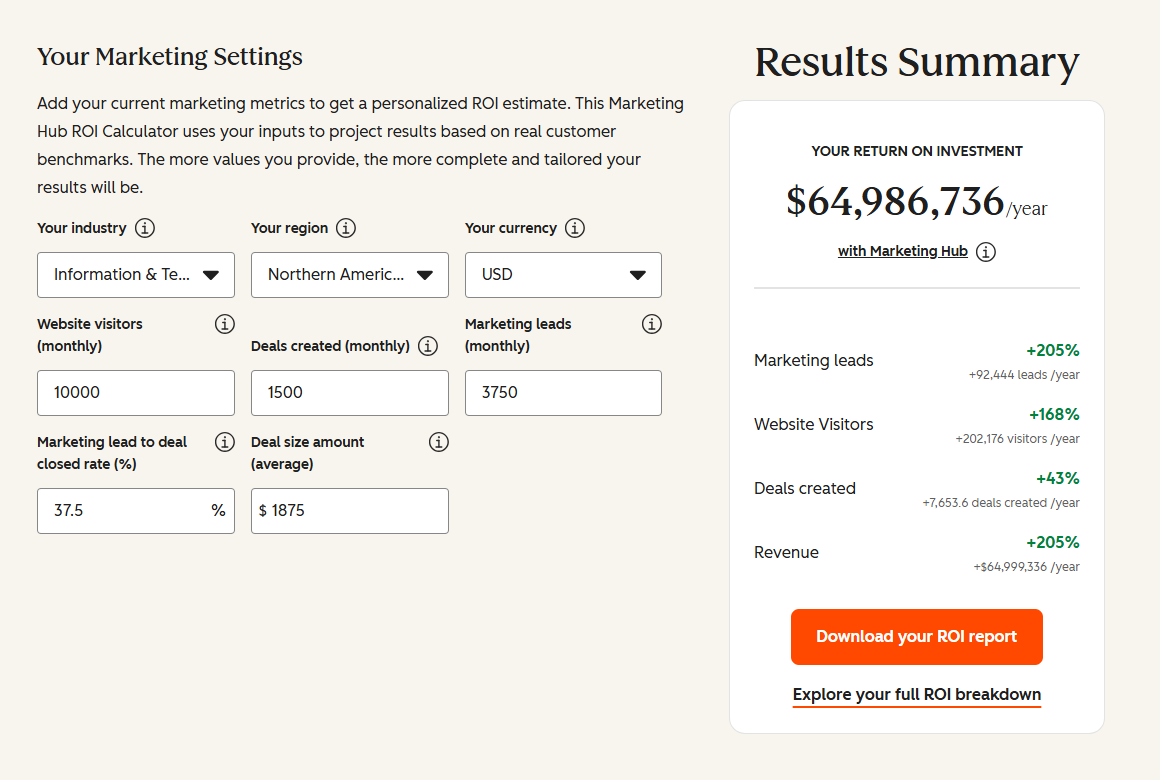
See your 12-month revenue impact with HubSpot CRM
Enter your current numbers — visitors, leads, deal size — and get a personalized projection based on real HubSpot customer benchmarks.
Bottom Line
A Pipedrive to HubSpot migration succeeds only when historical deal context is preserved alongside records. Without that context, forecasting and performance analysis become unreliable.
If you are planning a migration and want to protect pipeline and activity history, Contact Us at Integrate IQ. As a HubSpot Diamond Partner, the team supports CRM migrations that prioritize continuity, accuracy, and long-term usability.



Table of Contents
- Key Takeaways
- Why Pipedrive to HubSpot Migration Requires a Different Approach
- What Pipeline History Represents in HubSpot
- Planning a Pipedrive to HubSpot Migration
- Preserving Deal History in HubSpot
- Migrating Activities Without Losing Context
- Importing Activities as Engagements
- Validating the Migration
- Things To Watch Out For
- What Marketers Should Do Now
- FAQs
- Bottom Line
