

Small businesses are increasingly moving away from the “complexity tax” of legacy enterprise systems. While Salesforce once stood alone as the gold standard, the 2026 landscape offers leaner, AI-first platforms that deliver better value without requiring a dedicated administrator. If you find your team spending more time managing your CRM than managing your customers, it is time to look at the alternatives that prioritize agility and adoption.
Key Takeaways
- Total Cost of Ownership (TCO): Salesforce alternatives like HubSpot typically cost 60–70% less over three years by eliminating “hidden” admin and implementation fees.
- AI Accessibility: Modern platforms now offer native AI assistants (like HubSpot’s Breeze or Zoho’s Zia) that automate data entry and lead scoring without complex configuration.
- Time-to-Value: Most alternatives can be deployed in days to weeks, whereas Salesforce often requires months of specialized consulting.
- Niche Specialization: Platforms like Copper and Insightly offer deep native integrations for Google Workspace or project management that Salesforce often lacks out-of-the-box.
The Bigger Picture: Why Small Businesses Are Pivoting
The “safe choice” is no longer the most strategic one. In 2026, the competitive advantage for small to mid-market firms lies in speed and data quality. Legacy systems often become “data graveyards” because they are too difficult for sales reps to use consistently. This leads to a breakdown in the data quality required for meaningful AI insights.
The shift toward Salesforce alternatives is driven by the need for a “Unified Customer Platform” rather than a collection of stitched-together apps. Modern leaders are looking for tools that combine sales, marketing, and service into a single source of truth without the enterprise-level friction.
1. HubSpot: The All-in-One Growth Engine
HubSpot remains the top alternative for businesses that want a powerful, unified platform that scales. Unlike the modular and often fragmented nature of Salesforce, HubSpot is built on a single codebase.
- Why it wins: It offers a consumer-grade user experience that sales teams actually enjoy using. Its new Breeze AI provides user-friendly automation for email sequences and lead routing.
- Small Business Edge: The “Starter” tiers are highly affordable, and the platform can scale to thousands of users as you grow.
- Internal Link: To see how this compares to other legacy setups, read our guide on legacy system integration with HubSpot.
See your 12-month revenue impact with HubSpot CRM
Enter your current numbers — visitors, leads, deal size — and get a personalized projection based on real HubSpot customer benchmarks.
Calculate My ROI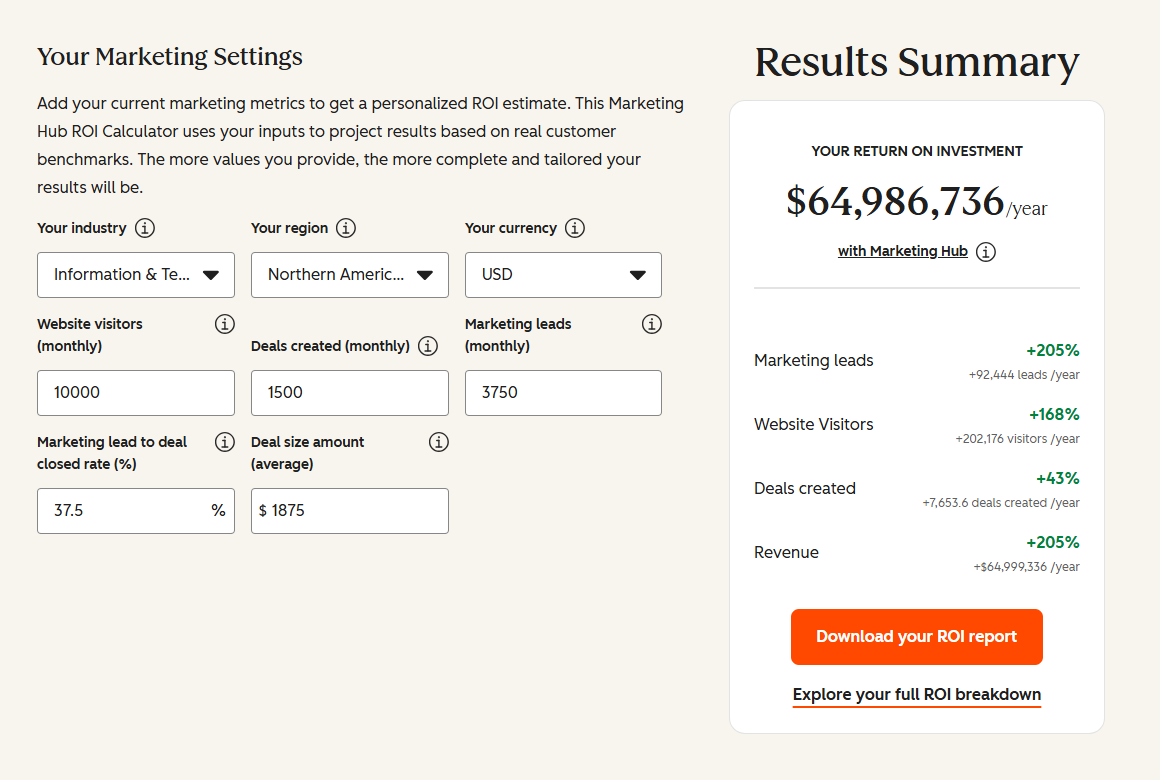
2. Zoho CRM: The Value King
Zoho is often cited as the most flexible alternative for businesses on a budget. It offers near-limitless customization and a massive ecosystem of 45+ native apps.
-
Key Feature: Zia, Zoho’s AI, can predict deal success and suggest the best time to contact a lead based on historical data.
-
Best For: Teams that want an all-in-one suite (finance, HR, and CRM) under one roof.
3. Monday CRM: Visual Workflow Mastery
Monday.com has evolved from a project management tool into a robust, highly visual sales CRM. It is built for teams that prioritize flexibility over rigid database structures.
-
Why it wins: You can build custom workflows with no-code drag-and-drop tools in minutes.
-
Best For: Companies where sales and project delivery are closely linked.
4. Pipedrive: Built for Sales Execution
Pipedrive is designed by salespeople for salespeople. Its philosophy is centered on the “activity-based” selling model, focusing on the actions that move a deal forward.
-
Small Business Edge: It has a low learning curve and a visual pipeline that makes it impossible to lose track of deals.
-
Pitfall: It lacks native marketing automation, often requiring an add-on or Zapier integration.
5. Freshsales: AI-Powered Simplicity
Part of the Freshworks suite, Freshsales (formerly Freshworks CRM) specializes in ease of use and built-in communication tools like phone and chat.
-
Key Feature: Freddy AI analyzes contact profiles to suggest “next best actions” for closing deals.
-
Best For: Small teams that need an AI-assisted CRM without the enterprise price tag.
6. Bigin by Zoho: The “First CRM” Specialist
Bigin is a “micro-CRM” purpose-built for startups and solopreneurs who find even standard CRMs too complex.
-
Why it wins: It focuses on the essentials like pipelines, contacts, and tasks and allows for a seamless upgrade to the full Zoho CRM later.
7. Keap: The Automation Workhorse
For service-based small businesses, Keap (formerly Infusionsoft) offers the most robust automation for the entire customer lifecycle, from lead capture to invoicing.
-
Best For: Small businesses that need to automate “the boring stuff” like appointment reminders and payment collection.
8. Insightly: CRM Meets Project Management
Insightly is a unique alternative that places equal importance on the sale and the post-sale project delivery.
-
Why it wins: It allows you to convert won opportunities directly into projects, ensuring no data is lost during the handoff.
9. Copper CRM: The Google Workspace Native
Copper is the only CRM designed specifically for Google Workspace. It lives inside your Gmail inbox, meaning your team never has to switch tabs to update a lead.
-
Best For: Agency and creative teams that live in Google Docs and Gmail.
10. ActiveCampaign: Marketing-First CRM
While known for email marketing, ActiveCampaign’s CRM features are built around behavioral automation. It triggers sales tasks based on how a lead interacts with your website or emails.
-
Why it wins: It offers industry-leading deliverability and sophisticated multi-branch automation.
Things To Watch Out For
- Feature Gaps: Cheaper alternatives often lack advanced features like territory management or granular field-level permissions.
- The “Add-On” Trap: Platforms like Pipedrive may seem cheap, but the cost can skyrocket when you add necessary “extras” for lead gen or marketing.
- Migration Headaches: Moving data from Salesforce is complex. Ensure your new partner has a proven CRM migration blueprint to avoid downtime.
What Marketers Should Do Now
- Audit Your Usage: Identify which Salesforce features you actually use. If it’s less than 20%, you are overpaying for complexity.
- Evaluate Integration Needs: Determine if your next CRM needs to talk to your ERP or internal systems. Check our list of HubSpot integrations for inspiration.
- Run a Pilot: Most of these alternatives offer free trials or tiers. Put your most vocal sales rep on a trial to test the user experience.
FAQs
Is HubSpot a better Salesforce alternative for small businesses?
For most small to mid-market firms, yes. HubSpot wins on ease of use, implementation speed, and total cost of ownership. While Salesforce is more customizable for massive enterprises, HubSpot’s unified platform is more efficient for growth-focused teams.
How do I migrate data to a Salesforce alternative?
Most modern CRMs have built-in migration tools for Salesforce. However, for complex data structures, you may need a partner to ensure your historical data and custom objects remain intact during the move to a Salesforce alternative.
What is the most affordable Salesforce alternative?
Zoho CRM and HubSpot’s “Starter” tiers are generally the most cost-effective. However, the most “affordable” choice is always the one that results in the highest team adoption, as a CRM no one uses is a 100% loss on investment.
Bottom Line
Choosing a CRM in 2026 isn’t about finding the most powerful engine; it’s about finding the one your team will actually drive. Salesforce alternatives for small businesses have reached a level of maturity where you no longer have to sacrifice power for price. Whether you need the all-in-one power of HubSpot or the visual simplicity of Monday, the best choice is the one that turns your data into a competitive asset rather than an administrative burden.
