









































What is a HubSpot PatientNow integration?
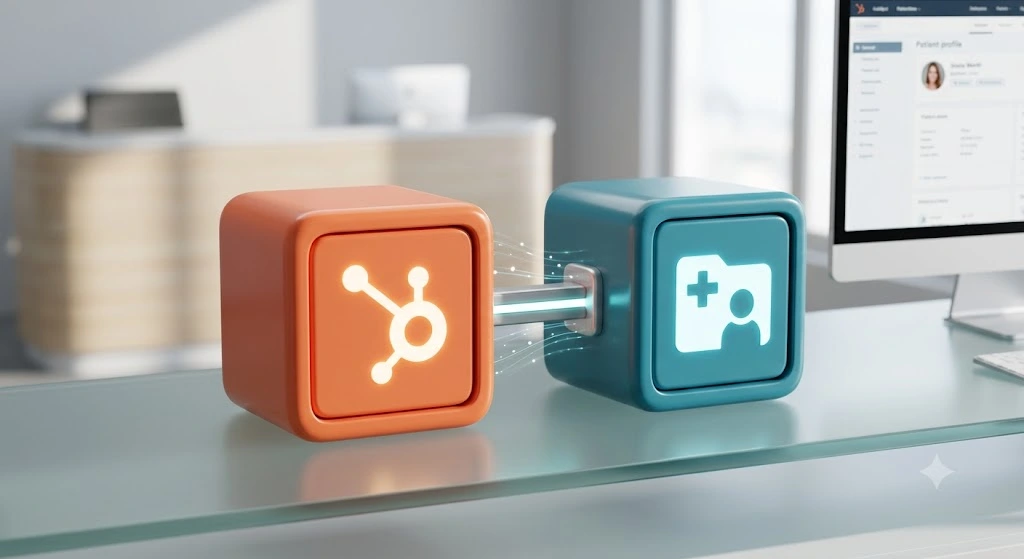
A HubSpot PatientNow integration is a data connection that syncs patient leads, appointments, procedures and revenue between HubSpot and the PatientNow EMR in near real time. It sends new leads from HubSpot forms into PatientNow instantly and returns procedure revenue and appointment data to HubSpot so marketing can tie campaigns to profitable treatments.
How does the HubSpot PatientNow integration work?
It works through HIPAA-compliant APIs on both platforms with encrypted data in transit and a defined system of record per field. New HubSpot form submissions create patient records in PatientNow with lead source tagged. Completed procedures and paid invoices write revenue back to the corresponding HubSpot deal so ROI reporting reflects real treatment revenue.
Does HubSpot have a native PatientNow integration?
No. HubSpot does not maintain a native PatientNow connector, and PatientNow does not list a native HubSpot app on its marketplace. Third-party no-code tools like Keragon offer template-based flows, but multi-location practices, HIPAA compliance requirements, and custom procedure-to-revenue mapping typically need a custom-built integration to hold up in production.
Is the HubSpot PatientNow integration HIPAA compliant?
Yes when built correctly. HIPAA compliance is a shared responsibility. We build the integration with encryption in transit, BAA signed with the client, PHI kept out of HubSpot marketing fields, and field-level separation between clinical data (owned by PatientNow) and marketing engagement data (owned by HubSpot). Custom builds allow the level of field-level control that off-the-shelf connectors do not offer.
How long does a HubSpot PatientNow integration take to build?
A HubSpot PatientNow integration takes about 8 weeks from kickoff to production. Discovery runs two weeks for HIPAA compliance review, field mapping including PHI boundaries, and multi-location scoping. Build and staging runs three, backfill runs one, cutover and hypercare cover the final two weeks. Multi-location practices with distinct PatientNow instances add discovery time, not build time.
What data can sync between HubSpot and PatientNow?
Patient demographics, leads, appointments, procedures, treatment interests, invoices, and revenue between the two platforms, along with marketing engagement (form fills, email opens, campaign attribution) and lifecycle stage from HubSpot. Field mapping is configured per project so PHI stays inside PatientNow while marketing-safe attributes flow to HubSpot for segmentation and reporting.
How a HubSpot PatientNow Integration Actually Works
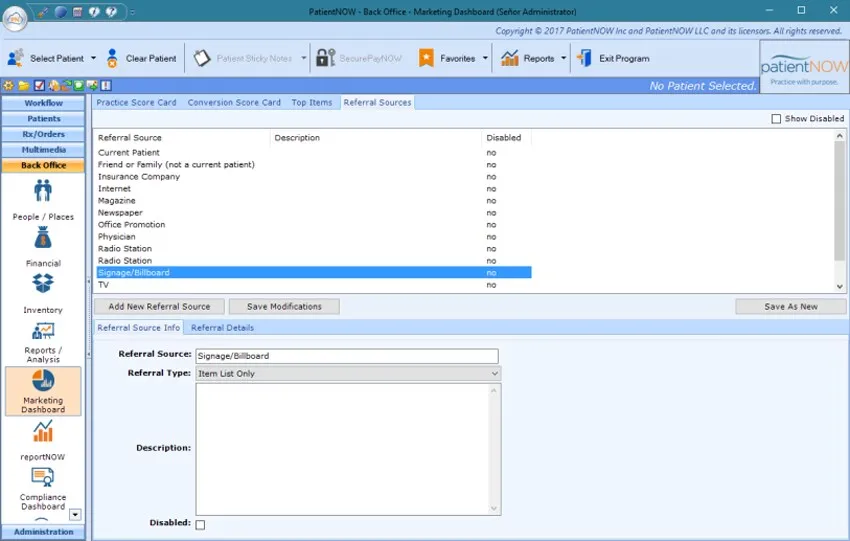
A HubSpot PatientNow integration keeps a marketing engine and a clinical system in agreement without asking front-desk staff to copy data between them. PatientNow owns the clinical relationship: patient demographics, treatment interests, appointment history, procedure records, clinical notes, invoices, and follow-up compliance.
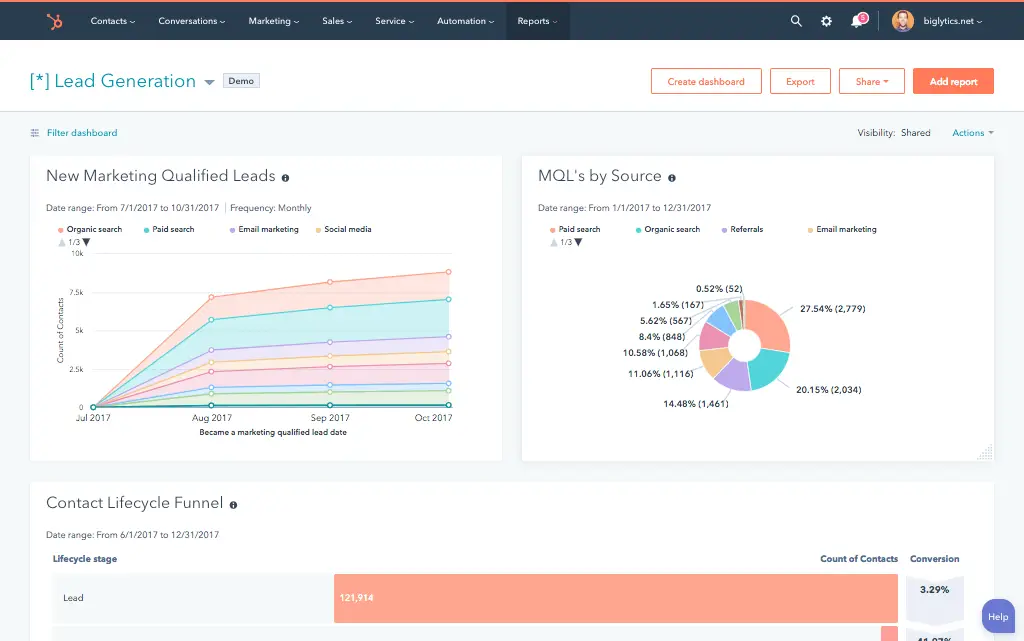
HubSpot owns the marketing relationship: form fills, ad source, email engagement, lifecycle stage, campaign attribution, review requests and re-engagement sequences.
The sync moves both directions with clear PHI boundaries. New leads captured through HubSpot forms (Google Ads landing pages, website consultations, Facebook lead forms) flow into PatientNow as patient records with the original marketing source tagged. Completed procedures, appointment outcomes, and paid invoices flow back to HubSpot as deal amounts and lifecycle stage updates, so marketing can attribute revenue to the campaign that drove it.
The important part is what stays inside PatientNow. A HIPAA-compliant HubSpot PatientNow integration keeps protected health information (diagnoses, clinical notes, medication history, chart data) inside PatientNow, and syncs only marketing-safe attributes (treatment interest, appointment scheduled, revenue amount, campaign source) to HubSpot. Field-level system of record decisions get made during discovery so PHI never leaks into an unsecured HubSpot property.
Three Ways to Connect PatientNow and HubSpot
Every option handles basic lead sync. Only one holds up at multi-location scale with strict PHI boundaries.
| Factor | No-Code Middleware (Keragon, Zapier) | In-House DIY Build | Custom (Integrate IQ) |
|---|---|---|---|
| Best for | Single-location practices testing lead sync | Practices with a full-time developer on staff | Multi-location practices, HIPAA-first builds, procedure-to-revenue attribution |
| HIPAA compliance posture | Depends on vendor BAA, limited PHI controls | You own compliance end to end | BAA signed, PHI kept inside PatientNow, field-level marketing-safe boundaries |
| Multi-location and multi-provider support | One flow per location, brittle | Depends on internal engineering time | One integration, multiple locations, provider-level attribution |
| Procedure-to-revenue attribution | Basic invoice sync, no campaign match | Requires custom logic your team maintains | Full attribution: procedure to deal to campaign to ad spend |
| Custom object mapping (revenue, treatment plans) | Not supported | Manual per object | Full support, procedure records mapped as HubSpot custom objects |
| Post-launch monitoring | Vendor-side status only | Your team owns every broken flow | Sync logs, error alerts, and reconciliation included |
| Cost trajectory | Monthly subscription plus per-task limits | Salaried engineer plus opportunity cost | Fixed project cost with predictable maintenance |
| Failure mode when it breaks | Silent Zapier task failures | Whoever built it left the company | Monitored, alerted, resolved before your front desk notices |
If you run a single-location med spa with a handful of form leads a week, Keragon or Zapier will get you through the first year. Practices with in-house developers can go the DIY route, though HIPAA compliance is entirely on your team. Anywhere you run multiple locations, want procedure revenue tied to campaign spend, or need field-level PHI boundaries a compliance officer will actually sign off on, a custom HubSpot PatientNow integration wins. Our custom HubSpot integration services cover the build, backfill, and post-launch monitoring, and our healthcare industry practice covers the HIPAA specifics.

Turn HubSpot Into A Real-Time SMS Engine with Message IQ
 Two-Way Conversations
 Shared Team Inbox
 Automation Triggers
 Advanced Reporting
 Compliance Tools
- 98% SMS read within 3 min
- 78% Buy from first responder
- 21× More likely to qualify

*MessageIQ is an IntegrateIQ product – built natively for HubSpot by the same team.
Revenue Workflows for Aesthetic Practices Once PatientNow Data Lives in HubSpot
- Google Ads lead to booked consultation. A HubSpot form submission on a treatment landing page creates a lead in PatientNow with the ad campaign and ad set tagged. The front desk sees the lead within minutes, books the consultation, and PatientNow writes the consultation date back to HubSpot for follow-up nurture timing.
- Consultation booked to pre-consult sequence. A consultation scheduled in PatientNow triggers a HubSpot sequence that sends pre-consult content (procedure explainer, financing options, provider bio) timed to arrive at the right moment before the appointment. If the appointment is cancelled, the sequence stops automatically.
- Procedure complete to review request and cross-sell. A completed procedure in PatientNow enrolls the patient in a HubSpot post-procedure sequence: thank you note, review request timed for peak satisfaction, and cross-sell suggestions for complementary treatments (Botox for a filler patient, laser for a skincare patient) filtered by prior treatment history.
- Procedure revenue to campaign attribution. Paid invoices in PatientNow write revenue back to the corresponding HubSpot deal, so marketing dashboards show cost-per-acquired-procedure by campaign, not cost-per-lead. Ad spend gets shifted toward campaigns driving profitable treatments, not just form fills.
- Lapsed patient re-engagement. A HubSpot smart list surfaces patients whose last PatientNow appointment was 6 to 12 months ago and enrolls them in a we-miss-you sequence with a limited-time offer on their prior treatment category. When the patient books again in PatientNow, the sequence stops and the CSM gets a notification.
What Breaks in a PatientNow HubSpot Sync, and How We Prevent It
- PHI leaking into HubSpot properties. Field-level control is not obvious in no-code tools, and clinical fields like diagnosis, medication, or provider notes can end up in HubSpot marketing properties by accident. We define field-level marketing-safe boundaries during discovery so PHI stays inside PatientNow and only campaign-safe attributes sync to HubSpot.
- Duplicate patient records across locations. Multi-location practices often run one HubSpot instance and multiple PatientNow instances. Without identity resolution rules, the same patient books at two locations and appears as three records total. We define patient identity keys (email plus phone plus date of birth) up front so multi-location patients stay unified.
- Missing procedure-to-campaign attribution. Simple lead sync captures form submissions but never ties completed procedures back to the campaign that generated them. Marketing runs blind on ROI. We map paid invoice events to the original deal source so cost-per-procedure by campaign is visible on day one.
- Multi-location and multi-provider data volume. Aesthetic groups running 3 to 10 locations generate thousands of appointments per week per location. Naive syncs overwhelm HubSpot with operational noise and marketing loses context. We filter by relevance so only revenue events, campaign-attribution events, and re-engagement triggers hit HubSpot.
- Silent failures on treatment status changes. When a scheduled procedure is cancelled, rescheduled, or converted to a different treatment, no-code flows often miss the state change and downstream HubSpot sequences continue firing as if the appointment held. We build logging, retry logic, and status-change monitoring so the front desk never sends a thank-you note for a cancelled procedure.
Implementation Timeline: What to Expect
Most HubSpot PatientNow integrations complete inside eight weeks of kickoff. Discovery covers two weeks: HIPAA compliance review, BAA execution, field mapping with PHI boundaries, multi-location and multi-provider scoping, and campaign-attribution rules. Weeks three to five are build and unit testing against a staging PatientNow instance and a HubSpot sandbox. Week six runs the historical backfill and reconciliation. Weeks seven and eight cover user acceptance testing (front-desk staff, marketing, provider teams), cutover, and hypercare. Multi-location practices with distinct PatientNow instances extend discovery, not build. Post-launch monitoring is included, so if PatientNow releases an EMR update or HubSpot changes a workflow action, we see it before your front desk does. Full detail is on our HubSpot integration process page and 98.5% of clients renew for a follow-on scope.
See your 12-month revenue impact with HubSpot CRM
Enter your current numbers — visitors, leads, deal size — and get a personalized projection based on real HubSpot customer benchmarks.
Calculate My ROI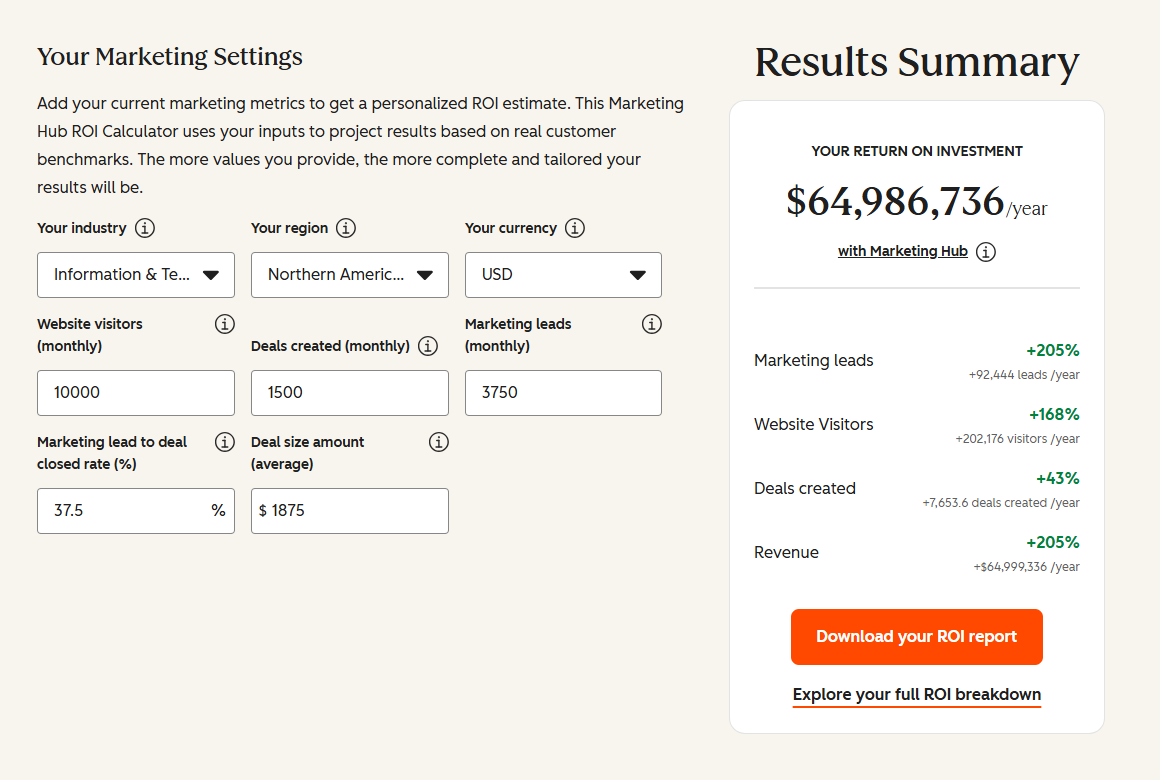
Connect the Rest of Your Revenue Stack
PatientNow rarely lives alone in the aesthetic practice stack. Multi-location groups running clinical operations across specialties often review our HubSpot athenahealth integration alongside this build. Practices adding SMS reminders and two-way patient texting layer in Message IQ as a HubSpot-native SMS engine for appointment reminders and re-engagement. Financial-side teams pair this build with a HubSpot QuickBooks integration for practice-level accounting sync. For broader context on healthcare-specific HubSpot builds, our healthcare industry page covers the compliance and integration patterns we deploy across clinical and non-clinical practices, and the integration ROI calculator turns the case into a number.

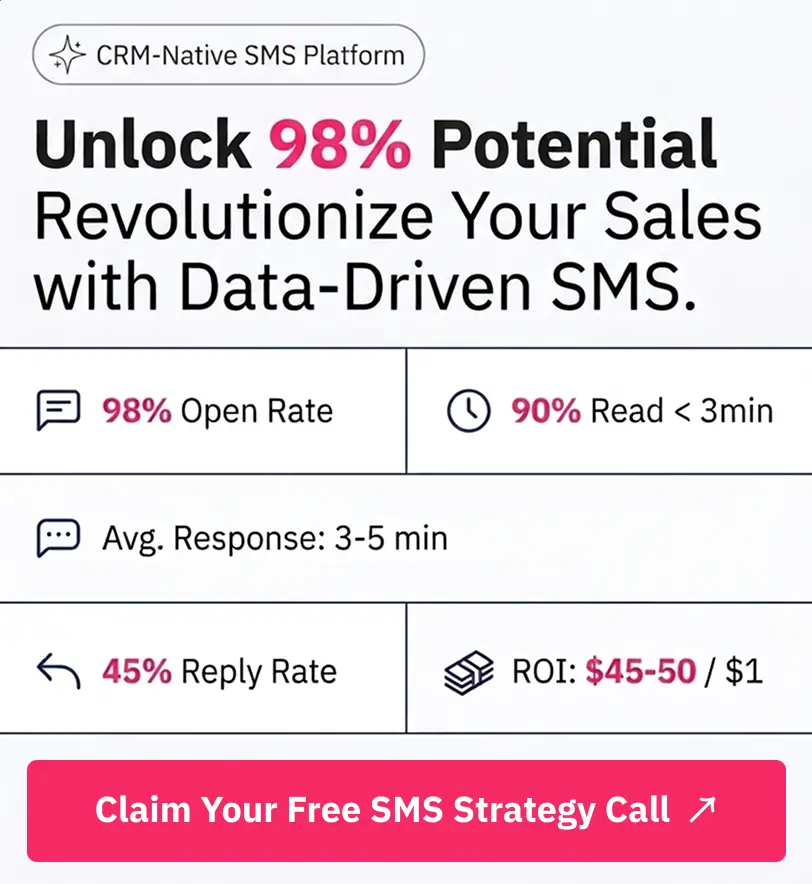
Table of Contents
- What is a HubSpot PatientNow integration?
- How does the HubSpot PatientNow integration work?
- Does HubSpot have a native PatientNow integration?
- Is the HubSpot PatientNow integration HIPAA compliant?
- How long does a HubSpot PatientNow integration take to build?
- What data can sync between HubSpot and PatientNow?
- How a HubSpot PatientNow Integration Actually Works
- Three Ways to Connect PatientNow and HubSpot
- Revenue Workflows for Aesthetic Practices Once PatientNow Data Lives in HubSpot
- What Breaks in a PatientNow HubSpot Sync, and How We Prevent It
- Implementation Timeline: What to Expect
- Connect the Rest of Your Revenue Stack