


If you’ve been in the HubSpot ecosystem long enough, you’ve probably noticed something: everyone talks about HubSpot like it’s perfect. The company’s marketing is incredibly effective, the platform is genuinely solid, and most partners make good money implementing it. So nobody says anything critical. Not publicly, anyway.
We’ve been a HubSpot Diamond Solutions Partner for years, managing 16 billion-plus records across 275+ platform integrations. We’ve implemented HubSpot for everyone from mid-market SaaS companies to enterprise organizations. We know the platform inside and out. And honestly? There are some things about HubSpot that nobody wants to talk about, but everybody should.
This isn’t a hit piece. HubSpot is genuinely good at what it does. But being good doesn’t mean being perfect. Being good doesn’t mean it’s the right choice for every company. And being good doesn’t mean the company doesn’t have some structural quirks that drive customers and partners absolutely crazy.
Here are five things we think more people should say out loud about HubSpot.
Free estimator
Know what your HubSpot project costs before the first call.
Select your services and get a transparent price range in minutes. No sales call needed to get a number.
Connect HubSpot to your ERP, billing platform, or database field mapping, custom logic, and support included.
Pipelines, workflows, email templates, and reporting configured for how your team actually works.
Live, role-based sessions with recordings and written guides built around a custom plan for your team.
HubSpot Partner
Client retention
Platforms integrated
What We’re Really Talking About
Before we dive in, context matters. These five opinions come from managing integrations for hundreds of HubSpot customers. We’ve architected implementations for companies ranging from $2 million to over $500 million in annual revenue. We’ve debugged workflows that nobody understood. We’ve untangled data that was corrupted by conflicting automation rules. We’ve rebuilt integrations that were never documented.
Most importantly, we do this work for companies that are paying good money expecting excellent results. We can’t afford to sugarcoat things. Our customers rely on us to tell them the truth about what will work and what won’t. That includes being honest about HubSpot itself.
HubSpot’s Free and Starter Tiers Are Loss Leaders That Make Implementation Economics Terrible
HubSpot’s pricing strategy is brilliant from a marketing standpoint. Free tier. Starter tier at $45-$50 per month. Great for getting people hooked. Terrible economics for anyone trying to actually implement it properly.
Here’s the reality: a proper HubSpot implementation costs money. You need clean data, proper workflows, custom integrations, training, ongoing optimization. A $45-per-month customer doesn’t generate enough recurring revenue to justify that investment. So what happens? Either the customer gets a cut-rate implementation that leaves them frustrated six months in, or they never implement properly and they churn. Either way, everybody loses.
The company knows this, which is why they eventually move these customers to higher tiers. But it creates a false sense of affordability that sets up disappointment. Partners walk that tightrope: be honest that you need $15,000-$30,000 to implement HubSpot correctly, and you lose the deal. Promise to do it cheaper, and you end up eating costs or delivering a subpar implementation.
What we’ve found works: skip the free tier conversation entirely. Start at the tier that actually makes implementation economics work, and position that as the real cost of getting value. You lose some leads, but you win better deals.
The reality is this: companies that try to implement HubSpot on a shoestring budget almost always fail. Either they don’t get the implementation done properly, or they get it done and then nobody uses it because the training was inadequate. The platform itself can’t fix poor implementation economics. And HubSpot’s freemium strategy makes a lot of companies have unrealistic expectations about what’s possible.

Turn HubSpot Into A Real-Time SMS Engine with
Message IQ

Two-Way Conversations

Shared Team Inbox

Automation Triggers

Advanced Reporting

Compliance Tools
-
98%
SMS read within 3 min -
78%
Buy from first responder -
21×
More likely to qualify
3–5 min avg response
$45–$50 ROI / $1

*MessageIQ is an IntegrateIQ product – built natively for HubSpot by the same team.
The Workflow Builder Is Good Until You Actually Need Conditional Logic Beyond 3 Levels Deep
This one feels petty until you hit it, and then it’s enraging.
HubSpot’s workflow builder is actually pretty good for a native tool. Drag-and-drop logic, good UI, handles most of what companies need. But the moment you need sophisticated conditional logic, the interface breaks down. You’re nesting if-then statements three layers deep, the visual flow becomes unreadable, and you start praying you don’t need to edit it six months from now because you’ll spend an hour figuring out what you were thinking.
Does HubSpot need a professional workflow language underneath the visual builder? Probably. But they haven’t built it, which means complex automations either get shoved into the workflow builder (creating unmaintainable spaghetti) or they get pushed to custom integrations or tools like Zapier (adding cost and complexity to the stack).
For any company with moderately complex business logic, this becomes a real constraint. And nobody talks about it because the salespeople don’t want to, the customers haven’t hit it yet, and the partners know raising it means losing the deal.
We’ve watched clients spend weeks trying to make the workflow builder do something it’s just not designed for. They create workarounds. They add extra platforms. They build integration layers that shouldn’t need to exist. And all of it could’ve been avoided if the workflow builder had been architected to handle enterprise-level conditional logic natively. This is a solvable problem, and we’re confident HubSpot will address it eventually. But as of now, it’s a meaningful limitation.
Data Quality Problems Usually Stem From HubSpot’s Schema Design, Not Your Implementation
Here’s something we see constantly: a company implements HubSpot, and after a year or two, their data gets messy. Duplicates. Incomplete fields. Inconsistent naming conventions. Everyone blames the implementation. “You didn’t train our team properly.” “Your workflows weren’t set up right.” Sometimes that’s true. But not as often as people think.
HubSpot’s data schema, by default, allows way too much flexibility. Custom properties are easy to create. There are minimal constraints on what data goes where. The system is forgiving, which sounds good until you realize it means there’s no pressure to enforce data standards. Your sales team creates custom fields instead of using the defaults. They use contact fields for company-level data. They put free-form text where you need structured data.
A more opinionated platform would force data quality from day one. HubSpot doesn’t. It’s flexible, which is great for customization and terrible for governance. So you end up with data quality problems that require expensive cleanup work that could’ve been prevented with better upfront architecture.
The irony: we spend millions helping customers fix data quality in HubSpot because the platform itself doesn’t enforce it. That’s not really a criticism of HubSpot, it’s just a structural reality that the company’s sales messaging doesn’t mention.
What we recommend: if you’re implementing HubSpot, build strict data governance from day one. Create templates for fields. Set up validation rules. Establish a clear data dictionary. Create workflows that catch bad data before it enters the system. This work takes time and energy upfront, but it saves you from doing expensive data remediation work later. Companies that skip this step almost always regret it.
Native Integrations Sound Better Than They Are, Which Is Why So Many Companies Actually Need Custom Ones
HubSpot has an app marketplace. 500+ pre-built integrations. Sounds amazing until you actually need to use one for something specific.
Most HubSpot native integrations are built to 80% of use cases. They sync basic data, they run basic workflows, they do standard things. But the moment you need something slightly different, the native integration doesn’t support it. You need to sync custom fields. You need real-time sync instead of daily batch. You need to pull data in a specific format. You need multiple integrations to talk to each other.
So what do most companies do? They layer Zapier on top, or they build a custom integration. Which means you’re paying for the native integration, paying for Zapier (or a custom solution), and suddenly your stack is more complex and expensive than if you’d just built a custom integration from the start.
We’re not saying this to promote our services, we’re saying it because it’s true: for companies with any real complexity, custom integrations often deliver better value than native ones. But nobody says that because it’s not what HubSpot wants to hear, and it’s not what companies want to hear when they’re evaluating the platform.
The financial argument for custom integrations is straightforward. A native integration might cost $200 to set up and $100 per month in subscription fees. But if it doesn’t do exactly what you need, you’re paying that $100 per month plus the cost of Zapier plus the cost of workarounds plus the cost of manual data entry to fill in the gaps. By month six, you’ve spent more on the combination than you would’ve spent on a single custom integration. And custom integrations are actually more maintainable because they’re built for your specific use case, not a generic template.
The Seat-Based Pricing Model Incentivizes Bad Behavior and Discourages Adoption
HubSpot switched to seat-based pricing, and on the surface it makes sense: companies pay for users, not for usage. Simpler model, easier to understand. Except it creates a perverse incentive: companies actively avoid giving HubSpot access to people who should have it.
When a company has 50 people who could benefit from HubSpot access (customer success managers, operations folks, finance people, etc.), they don’t give them access. Too expensive. Instead, one person uses HubSpot and exports data to share with the rest of the organization. Or they create manual workarounds. Or they just don’t use certain HubSpot features because adoption is too expensive.
The per-contact or per-record model that other platforms use has its own problems, but seat-based pricing actively discourages deeper adoption. You’d think HubSpot would want their customers using the platform as deeply as possible. Instead, they’ve priced it in a way that encourages companies to minimize user adoption.
That’s not a sustainable way to build customer lifetime value. Eventually, the company that’s not giving their team access to the tools they need is going to switch platforms or shrink. HubSpot’s pricing architecture is working against their own long-term growth.
We talk to companies regularly that have reached a growth plateau specifically because they can’t afford to add seats to HubSpot. They have processes and departments that would benefit from HubSpot access, but the math doesn’t work when you’re paying per seat. So they hire people who work outside HubSpot, which creates duplicate work and data integrity problems. Other platforms have already figured this out, which is why they’re growing faster than HubSpot in certain segments.
Why We’re Saying This Now
We say all this because we’re actual partners, not just resellers. We make money from HubSpot implementations. We have financial incentive to say HubSpot is the answer to everything. But that’s exactly why we have an obligation to tell the truth instead.
HubSpot is an excellent platform. For companies between $5 million and $100 million in revenue, it’s often the right choice. But for some companies, or for some use cases, it’s not. And pretending otherwise doesn’t help anyone.
The partners who are most helpful to their customers aren’t the ones who tell them what they want to hear. They’re the ones who tell them the truth, even when it’s uncomfortable.
Frequently Asked Questions
Does this mean you don’t recommend HubSpot?
Not at all. We recommend HubSpot all the time. What we’re saying is that we recommend it for the right reasons, and we’re honest about its limitations. There’s a massive difference between “HubSpot is the perfect CRM for everyone” and “HubSpot is a great choice for B2B companies in this revenue range with these needs.” One is marketing, the other is consulting.
Are these opinions specific to IntegrateIQ’s implementation experience, or industry-wide?
Both. We’ve seen these patterns across hundreds of implementations, and we know from peer conversations that other partners see the same things. The difference is that we’re willing to say it publicly. These aren’t unique problems we’ve created, they’re structural characteristics of how HubSpot is built and priced.
What should a company do if they’ve already implemented HubSpot and hit these limitations?
Good news: most of these limitations are workable. A company can re-architect their schema for better data quality. They can build custom integrations to supplement native ones. They can design workflows differently to handle complexity. The key is being intentional about where you’re hitting limits and designing around them rather than trying to force HubSpot to do something it wasn’t built for.
If you’re considering HubSpot and these concerns worry you, should you look elsewhere?
Maybe. Compare HubSpot to Salesforce, Microsoft Dynamics, or other alternatives. Understand their pricing models and their architectural constraints too. But don’t skip HubSpot just because of these limitations. Instead, make sure you understand them, and make sure you’re working with partners who acknowledge them rather than pretend they don’t exist.
Is HubSpot planning to address any of these issues?
HubSpot definitely has these issues on their roadmap in various forms. Workflow improvements. Data quality tooling. Pricing flexibility. The company moves slowly because they’re balancing the needs of thousands of customers with very different use cases. But they do listen. Being direct about what isn’t working is actually helpful to them in the long run.
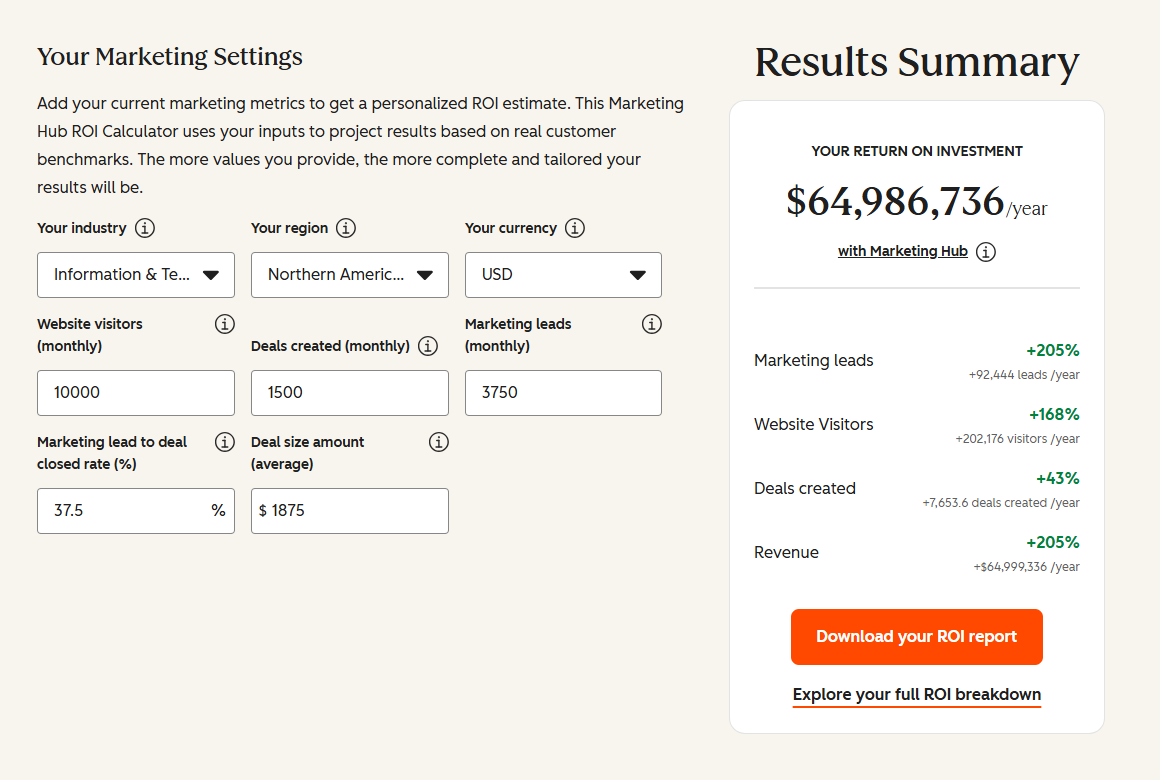
See your 12-month revenue impact with HubSpot CRM
Enter your current numbers — visitors, leads, deal size — and get a personalized projection based on real HubSpot customer benchmarks.
The Bottom Line
HubSpot is a genuinely good platform. That’s precisely why it’s worth being honest about what it’s not as good at. The companies that get the most value from HubSpot are the ones who understand its strengths and its limitations, and who architect their implementations around both.
We could write a salesy blog post that tells you HubSpot is perfect and solves everything. But you probably wouldn’t trust us then anyway. Instead, we’re telling you the truth: HubSpot is excellent for the right companies. If you’re considering it, work with partners who’ll tell you not just what HubSpot can do, but what it can’t. And if you’re already using it, recognize where the real constraints are so you can design around them rather than fight them.


Table of Contents
- What We're Really Talking About
- HubSpot's Free and Starter Tiers Are Loss Leaders That Make Implementation Economics Terrible
- The Workflow Builder Is Good Until You Actually Need Conditional Logic Beyond 3 Levels Deep
- Data Quality Problems Usually Stem From HubSpot's Schema Design, Not Your Implementation
- Native Integrations Sound Better Than They Are, Which Is Why So Many Companies Actually Need Custom Ones
- The Seat-Based Pricing Model Incentivizes Bad Behavior and Discourages Adoption
- Why We're Saying This Now
- Frequently Asked Questions
- The Bottom Line
