


Complex CRM migration requires more than moving records. Multi-object data models and multi-pipeline revenue structures must be mapped, validated, and re-architected in HubSpot to prevent data loss, broken automation, and reporting gaps.
Free estimator
Know what your HubSpot project costs before the first call.
Select your services and get a transparent price range in minutes. No sales call needed to get a number.
Connect HubSpot to your ERP, billing platform, or database field mapping, custom logic, and support included.
Pipelines, workflows, email templates, and reporting configured for how your team actually works.
Live, role-based sessions with recordings and written guides built around a custom plan for your team.
HubSpot Partner
Client retention
Platforms integrated
Key Takeaways
- Complex CRM migration requires structural redesign, not simple data transfer
- Multi-object CRMs demand precise relationship and association planning
- HubSpot multi-pipeline migration succeeds only when pipeline logic is mapped deliberately
- Advanced CRM mapping protects reporting, automation, and revenue visibility
- Enterprise CRM migration fails when legacy complexity is copied instead of resolved
Why Complex CRM Migration Is Fundamentally Different
Unlike standard CRM moves, complex migrations involve custom objects, interdependent pipelines, and deeply embedded automation logic. These systems are designed around real operational workflows, not just contacts and deals.
Treating this level of complexity as a basic export-and-import exercise almost always leads to broken relationships, missing context, or silent reporting errors. This is why complex CRM migration demands a different approach than traditional HubSpot CRM migrations.

Turn HubSpot Into A Real-Time SMS Engine with
Message IQ

Two-Way Conversations

Shared Team Inbox

Automation Triggers

Advanced Reporting

Compliance Tools
-
98%
SMS read within 3 min -
78%
Buy from first responder -
21×
More likely to qualify
3–5 min avg response
$45–$50 ROI / $1

*MessageIQ is an IntegrateIQ product – built natively for HubSpot by the same team.
What Makes a CRM Migration Truly Complex
CRM complexity is rarely driven by record volume alone. It emerges when data models evolve to reflect how a business actually operates.
Multi-Object CRM Structures
Multi-object CRMs rely on custom objects such as subscriptions, assets, policies, or contracts linked to contacts, companies, and deals through layered relationships.
During migration, the real risk isn’t record loss but broken relationships. Parent-child hierarchies, cross-object dependencies, and historical associations must remain intact for HubSpot to function as a true system of record.
Multi-Pipeline Sales and Revenue Models
Multiple pipelines typically exist to support different sales motions, regions, product lines, or deal types. Over time, each pipeline develops its own stage logic, probabilities, and automation dependencies.
A HubSpot multi-pipeline migration must preserve this logic while aligning it with HubSpot’s lifecycle model. When pipelines are flattened or misaligned, forecasting accuracy drops and sales execution becomes inconsistent.
Complex CRM Migration Starts With Structural Discovery
Before data moves, teams must understand how objects, pipelines, and automation interact across the CRM environment. Without this clarity, migrations replicate complexity instead of improving it.
Mapping Objects to HubSpot’s Data Model
HubSpot supports custom objects, but not every legacy object should be recreated. Structural discovery identifies which objects actively drive reporting, automation, and decision-making versus those retained only for historical reference.
This step is foundational to advanced CRM mapping and aligns closely with a disciplined
HubSpot integration process. It ensures HubSpot is designed for the future state of the business, not the limitations of the past.
Advanced CRM Mapping Is the Core of Complex CRM Migration
Advanced CRM mapping determines whether HubSpot becomes simpler or more fragile after migration. It defines how legacy structures translate into HubSpot’s object relationships, properties, and associations.
Preserving Object Relationships Without Overengineering
Every relationship migrated should serve a clear operational purpose. Over-mapping increases reporting complexity and slows adoption, while under-mapping breaks automation and removes visibility.
The objective is functional continuity with improved usability, which is essential in any enterprise CRM migration.
Aligning Properties With Automation and Reporting
Properties should be mapped based on how HubSpot will use them, not how the legacy system stored them. Advanced CRM mapping ensures properties support workflows, segmentation, forecasting, and attribution without introducing redundant fields.
HubSpot Multi-Pipeline Migration Requires Intentional Design
Multiple pipelines increase flexibility, but they also introduce risk if not intentionally designed during migration. Pipeline purpose, stage logic, and lifecycle alignment must be clearly defined before data is moved.
When to Consolidate Pipelines
Many complex CRMs accumulate pipelines over time without governance. Migration provides an opportunity to consolidate pipelines that no longer serve a distinct operational purpose.
Simplifying pipeline structures improves reporting clarity, sales consistency, and long-term maintainability inside HubSpot.
When Separate Pipelines Are Essential
Some pipelines must remain distinct due to revenue models, compliance requirements, or operational workflows. In these cases, migration must preserve stage behavior, probabilities, and downstream automation with precision.
Preventing Data Loss in Complex CRM Migration
Data loss in advanced migrations is rarely obvious at first. It often appears weeks later as missing associations, broken workflows, or subtle reporting inaccuracies.
Protecting Historical Context
Historical data provides essential context for forecasting, customer value analysis, and lifecycle reporting. Complex CRM migration must ensure historical deals, object records, and activity timelines remain accessible and correctly linked in HubSpot.
Validating Data Before and After Migration
Validation must occur at multiple stages. Record counts, associations, pipeline values, and automation behavior should be reviewed before HubSpot becomes the system of record to ensure true parity with the legacy environment.
How Complex CRM Migration Impacts Integrations
Advanced CRM environments rarely operate in isolation. They are connected to ERP systems, finance platforms, marketing tools, and operational software.
A complex CRM migration must account for these dependencies. Clean object design and disciplined pipeline mapping ensure downstream
HubSpot integrations continue functioning without interruption or costly rework.
Common Failure Points in Complex CRM Migration
Most enterprise CRM migration failures follow predictable patterns. Organizations attempt to replicate legacy complexity instead of redesigning it, underestimate the importance of object relationships, or delay validation until after go-live. These mistakes compound risk rather than reduce it.
What Teams Should Do Before Migrating a Complex CRM to HubSpot
Successful migrations are driven by preparation. Teams should document object relationships, define pipeline purpose, map properties intentionally, test automation logic, and validate data at multiple stages. This sequencing reduces disruption and accelerates adoption.
FAQs
What is a complex CRM migration?
A complex CRM migration involves moving systems with custom objects, multiple pipelines, and advanced automation into HubSpot while preserving relationships, reporting, and operational logic.
How does HubSpot handle multi-object CRM migrations?
HubSpot supports custom objects and associations, but success depends on advanced CRM mapping that aligns legacy structures with HubSpot’s data model.
What makes HubSpot multi-pipeline migration challenging?
Multi-pipeline migrations require precise stage alignment, probability mapping, and lifecycle integration. Errors directly impact forecasting and sales execution.
Is HubSpot suitable for enterprise CRM migration?
Yes, when designed intentionally. HubSpot can support enterprise CRM migration when complexity is mapped strategically rather than blindly replicated.
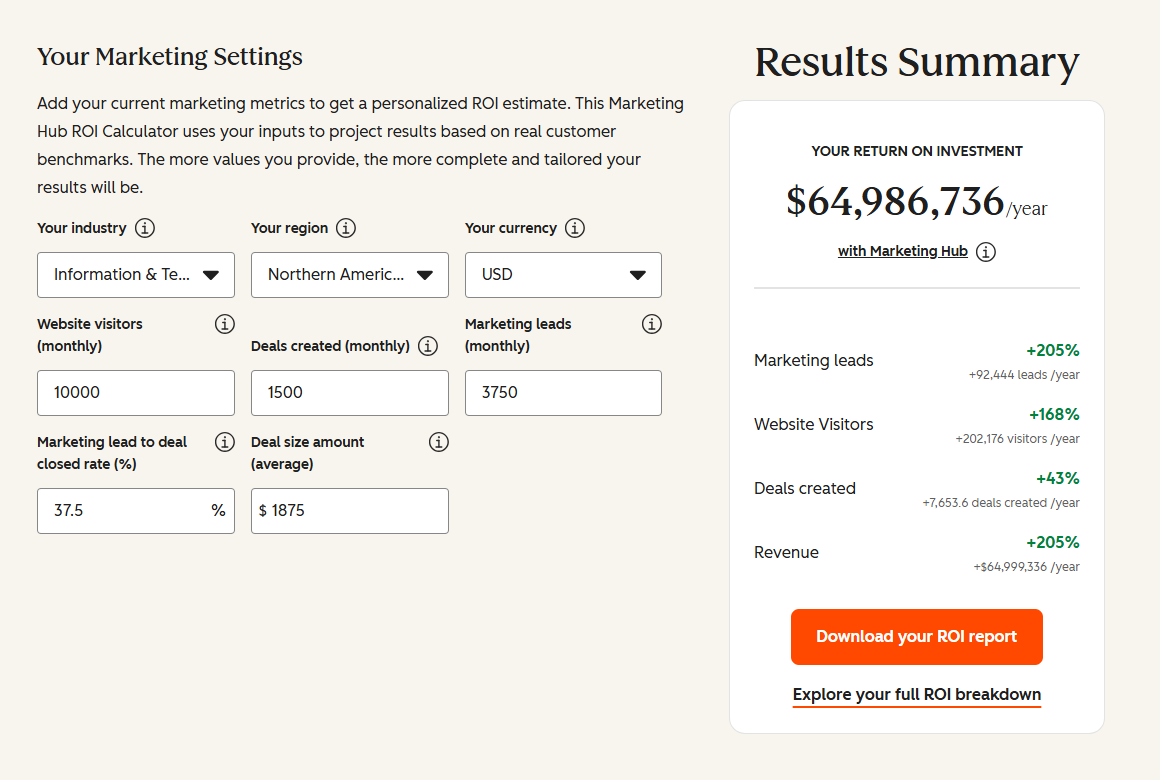
See your 12-month revenue impact with HubSpot CRM
Enter your current numbers — visitors, leads, deal size — and get a personalized projection based on real HubSpot customer benchmarks.
Bottom Line
Complex CRM migration is about transformation, not transfer.
Moving multi-object and multi-pipeline systems into HubSpot demands precise mapping to preserve data, reporting, and automation resulting in a simpler, more scalable CRM.
Integrate IQ designs and executes advanced CRM migrations that protect data integrity and support long-term growth. Explore our CRM migration services or start a conversation to assess the right approach for your environment.



Table of Contents
- Key Takeaways
- Why Complex CRM Migration Is Fundamentally Different
- What Makes a CRM Migration Truly Complex
- Complex CRM Migration Starts With Structural Discovery
- Advanced CRM Mapping Is the Core of Complex CRM Migration
- HubSpot Multi-Pipeline Migration Requires Intentional Design
- Preventing Data Loss in Complex CRM Migration
- How Complex CRM Migration Impacts Integrations
- Common Failure Points in Complex CRM Migration
- What Teams Should Do Before Migrating a Complex CRM to HubSpot
- FAQs
- Bottom Line
