













Explore this article with AI:

CRM data preparation is the foundation of a successful HubSpot migration. This article explains how to clean, structure, and align your customer data before migration so automation, reporting, and growth initiatives work from day one.
Free estimator
Know what your HubSpot project costs before the first call.
Select your services and get a transparent price range in minutes. No sales call needed to get a number.
Connect HubSpot to your ERP, billing platform, or database field mapping, custom logic, and support included.
Pipelines, workflows, email templates, and reporting configured for how your team actually works.
Live, role-based sessions with recordings and written guides built around a custom plan for your team.
HubSpot Partner
Client retention
Platforms integrated
Key Takeaways
- CRM data preparation determines whether your HubSpot migration creates clarity or compounds chaos
- Cleaning data before migration prevents broken automation, unreliable reporting, and low adoption
- Deduplication, formatting, and field mapping are the core pillars of migration-ready CRM data
- Well-prepared data unlocks HubSpot automation, segmentation, and AI-driven insights faster
- Skipping data hygiene shifts risk and cost into post-migration cleanup instead of growth
Why CRM Data Preparation Matters More Than the Migration Itself
Dirty data creates friction immediately after go-live. CRM migrations rarely fail because of software. They fail because unresolved data issues are moved into a new platform and amplified. HubSpot relies on structured data to power automation, personalization, and reporting, which is why CRM data preparation is foundational to any successful HubSpot CRM migration.
The Hidden Cost of Migrating Dirty Data
When poor-quality data enters HubSpot, issues surface immediately.
Teams encounter duplicate records, broken workflows, unreliable dashboards, and declining trust in CRM insights. Instead of accelerating growth, the migration becomes a cleanup project that slows momentum across marketing and sales.

Turn HubSpot Into A Real-Time SMS Engine with
Message IQ

Two-Way Conversations

Shared Team Inbox

Automation Triggers

Advanced Reporting

Compliance Tools
-
98%
SMS read within 3 min -
78%
Buy from first responder -
21×
More likely to qualify
3–5 min avg response
$45–$50 ROI / $1

*MessageIQ is an IntegrateIQ product – built natively for HubSpot by the same team.
CRM Data Preparation Starts With Knowing What You Have
You cannot clean or structure data you do not fully understand.
Customer data often lives across CRMs, marketing tools, finance systems, spreadsheets, and internal databases. Before any cleanup begins, teams need a clear picture of where data originates, how it flows, and which systems act as sources of truth.
Audit Your CRM Data Sources
A proper audit identifies where data originates and how it flows.
This includes reviewing active versus legacy fields, identifying conflicting values, and clarifying data ownership. This discovery phase aligns closely with a structured
HubSpot integration process and informs every downstream preparation decision.
CRM Data Preparation Through Deduplication That Preserves Revenue Context
Duplicate records are one of the most damaging issues in any CRM. They distort reporting, confuse sales teams, and undermine automation logic. In HubSpot, duplicates also disrupt attribution and lifecycle tracking.
How to Clean CRM Data Before Migration Using Deduplication
Effective deduplication requires business context, not bulk deletion.
Teams should define what constitutes a duplicate, select primary records based on engagement or revenue relevance, and merge historical activity so no customer context is lost. Clean deduplication ensures downstream HubSpot integrations function correctly across connected systems.
Why Deduplication Should Happen Before HubSpot
Pre-migration deduplication prevents problems from scaling.
While HubSpot offers native deduplication tools, data enters faster and cleaner when issues are resolved upstream. This reduces automation conflicts and prevents bad data from spreading across objects.
CRM Data Preparation Requires Formatting for HubSpot Compatibility
Inconsistent formatting quietly breaks automation and reporting.
HubSpot depends on structured data to trigger workflows, segment audiences, and produce accurate dashboards. Formatting errors often go unnoticed until systems fail to behave as expected.
Standardize Fields That Drive Automation
Formatting issues commonly include inconsistent date values, free-text fields where dropdowns are required, mixed capitalization, and invalid contact information.
Standardizing these elements ensures workflows trigger correctly and improves adoption during
HubSpot onboarding.
Prepare Data for HubSpot Objects
HubSpot’s object model differs from many legacy CRMs.
Contacts, companies, deals, and custom objects require clear relationships. Proper formatting ensures associations remain intact after migration and reporting remains reliable.
CRM Data Preparation Through Field Mapping That Supports Scale
Field mapping determines how usable HubSpot will be after migration.
Every field migrated should support a clear business outcome. Migrating unused or unclear fields creates clutter, slows adoption, and limits HubSpot’s automation potential.
Map Data to Business Outcomes
Each field should support reporting, automation, sales prioritization, or customer segmentation.
Intentional field mapping enables HubSpot’s AI and automation capabilities to activate immediately, especially when paired with
custom HubSpot integrations
built for scale.
Align Field Mapping With HubSpot Capabilities
HubSpot delivers the most value when fields are structured for lifecycle automation and attribution.
Thoughtful mapping supports clean dashboards and enables integrated sales and marketing reportingacross teams.
Clean Up Your HubSpot CRM Data After Go-Live
Data preparation does not end when the migration finishes.
Even a well-prepared migration needs ongoing hygiene once teams start working in HubSpot. New form submissions, list imports, and integration syncs introduce fresh errors every week. Industry benchmarks suggest that roughly 30% of CRM data decays each year, so a plan to clean up your HubSpot CRM data on a schedule protects everything the migration achieved.
Use HubSpot’s Native Data Quality Tools
HubSpot includes tools built for routine cleanup.
The duplicate management tool flags likely contact and company matches for merging. The Data Quality Command Center in Operations Hub surfaces formatting issues, unused properties, and integrations that push bad records into the portal. Teams should also build active lists that catch records with missing values in key fields, such as contacts with no industry or lifecycle stage, and review them monthly.
Build a Cleanup Schedule and Assign Ownership
Cleanup only sticks when someone owns it.
Assign a CRM admin or RevOps lead to run a recurring audit, monthly for high-volume portals and quarterly for smaller databases. Each cycle should remove hard-bounced and unsubscribed contacts, archive unused properties before they multiply, and close out stalled deals that distort forecasts. Teams that build these habits during HubSpot onboarding keep reporting reliable long after the migration ends.
How CRM Data Preparation Improves Post-Migration Performance
Prepared data accelerates adoption and builds trust.
Clean CRM data improves forecasting accuracy, strengthens automation, and ensures teams rely on HubSpot as a single source of truth across marketing, sales, and operations.
HubSpot CRM Modernization and Data Integration Work Together
A migration moves data. Modernization changes how that data works for the business.
Teams that treat the move to HubSpot as a simple transfer recreate their old system’s limitations in a new interface. HubSpot CRM modernization and data integration means using the migration to redesign data architecture, retire legacy processes, and connect the systems that previously ran in isolation.
Treat Migration as Modernization, Not a Data Transfer
The migration window is the best time to fix structural problems.
Prepared data lets teams rebuild pipelines around how they actually sell, replace brittle legacy workflows with HubSpot automation, and define lifecycle stages that reflect the real customer journey. Multi-object and multi-pipeline systems benefit most from this rethink, which we cover in detail in our guide to complex CRM migrations in HubSpot.
Connect HubSpot to the Systems Your Teams Already Use
Clean data delivers full value only when it flows between systems.
Most mid-market companies run an ERP, a billing platform, and a support desk alongside their CRM. Integrating these with HubSpot after migration, such as a HubSpot and NetSuite integration for order and finance data or a HubSpot and Salesforce sync during a phased transition, turns HubSpot into the single source of truth. Two-way sync keeps records current in both directions, removes manual re-entry, and gives sales and marketing one accurate view of every customer.
Common CRM Data Preparation Pitfalls That Slow HubSpot Adoption
Most data issues are predictable and preventable.
Teams often treat data cleanup as a technical task instead of a business initiative, migrate outdated fields, or delay cleanup until after migration. These missteps reduce ROI and undermine confidence in the new CRM.
How HubSpot Services Partners Protect Data Integrity in Large CRM Migrations
Large migrations carry risks that in-house teams rarely see coming.
Hundreds of thousands of records, custom objects, multiple pipelines, and years of activity history raise the cost of every error. Experienced HubSpot services partners protect data integrity in large CRM migrations through validation processes, staged transfers, and reconciliation checks that internal teams seldom have time to build.
When a Migration Is Too Large to Run In-House
Volume and complexity, not company size, determine when to bring in a partner.
A migration involving custom objects, relational data across contacts, companies, and deals, or consolidation of multiple source CRMs usually exceeds what native import tools handle safely. Accredited partners in the HubSpot Solutions Directory hold credentials such as the Data Migration Accreditation, which HubSpot only grants to partners with proven large-scale migration experience.
How Accredited Partners Safeguard Data Integrity
Partners de-risk large migrations through process, not luck.
A structured engagement includes full backups before any transfer begins, field-level validation after mapping, incremental migration for large datasets, and post-migration reconciliation that compares record counts and key values against the source system. Integrate IQ follows a structured integration and migration process refined across 300+ platform integrations with 98.5% client retention, so historical context, associations, and attribution survive the move intact.
What Teams Should Do Before Migrating to HubSpot
Preparation is about sequencing, not speed.
Teams should audit all data sources, deduplicate records with business context, standardize high-impact fields, map only meaningful data, and validate everything with stakeholders before migration begins.
FAQs
What is CRM data preparation before migrating to HubSpot?
CRM data preparation is the process of auditing, cleaning, and structuring customer data before it is moved into HubSpot so automation, reporting, and segmentation function correctly.
How do I clean up my HubSpot CRM data after migration?
Use HubSpot’s duplicate management tool and Data Quality Command Center to catch new errors, then run a recurring monthly or quarterly audit that removes bounced contacts, archives unused properties, and closes stalled deals.
What does HubSpot CRM modernization and data integration involve?
It involves redesigning pipelines, workflows, and lifecycle stages during migration, then connecting HubSpot to systems like your ERP, billing platform, and support desk so data flows in both directions and HubSpot acts as the single source of truth.
Why do large CRM migrations need a HubSpot services partner?
Large migrations involve custom objects, relational data, and high record volumes that native import tools handle poorly. Accredited partners protect data integrity through backups, staged transfers, field-level validation, and post-migration reconciliation.
Why is CRM data preparation important for HubSpot automation?
HubSpot automation depends on structured data. Without proper CRM data preparation, workflows misfire, segments break, and reporting becomes unreliable.
How long does CRM data preparation usually take?
The timeline depends on data volume and system complexity. For most mid-market teams, CRM data preparation takes weeks and prevents months of post-migration cleanup.
Can CRM data preparation reduce disruption during migration?
Yes. Clean, validated data reduces errors during migration and supports smoother transitions with minimal operational impact.
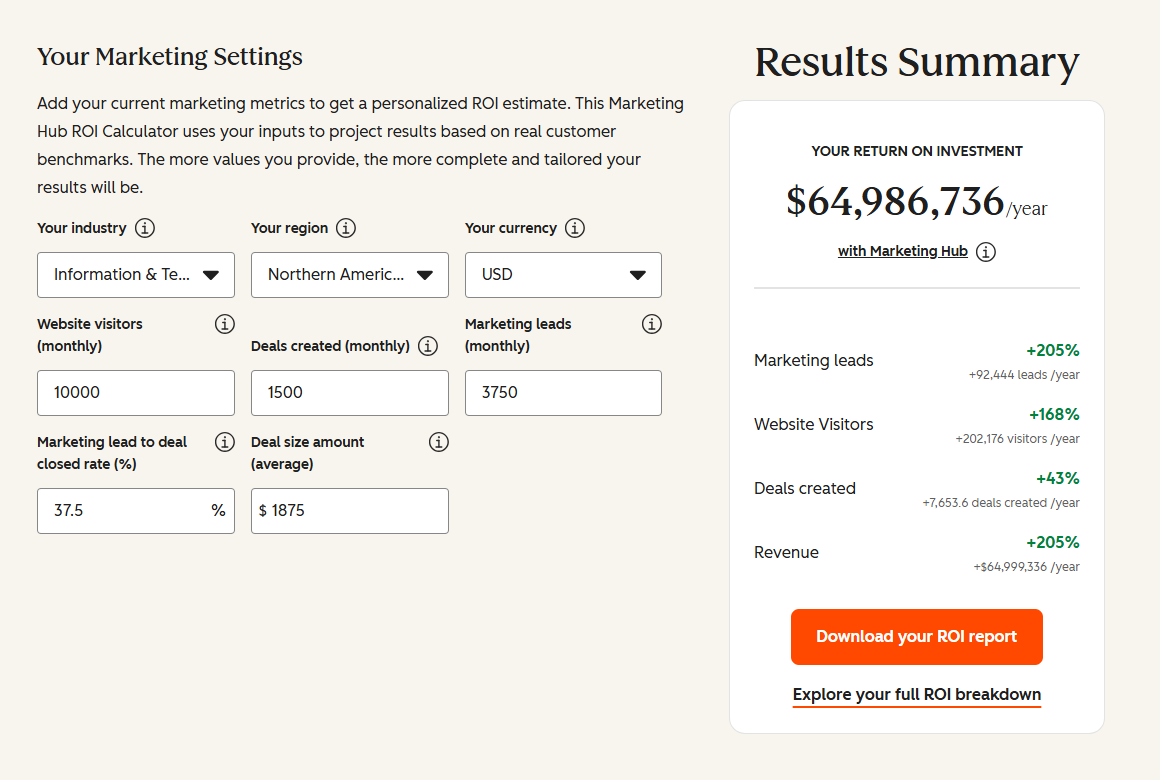
See your 12-month revenue impact with HubSpot CRM
Enter your current numbers — visitors, leads, deal size — and get a personalized projection based on real HubSpot customer benchmarks.
Bottom Line
CRM data preparation determines whether a HubSpot migration delivers momentum or friction.
Clean, structured data allows HubSpot to function as a true growth platform, powering automation, reporting, and customer engagement. If you want to migrate without carrying legacy problems forward, Integrate IQ helps teams prepare, integrate, and activate their data so HubSpot drives outcomes from day one.
Schedule Your Free Migration Consultation



Table of Contents
- Key Takeaways
- Why CRM Data Preparation Matters More Than the Migration Itself
- CRM Data Preparation Starts With Knowing What You Have
- CRM Data Preparation Through Deduplication That Preserves Revenue Context
- CRM Data Preparation Requires Formatting for HubSpot Compatibility
- CRM Data Preparation Through Field Mapping That Supports Scale
- Clean Up Your HubSpot CRM Data After Go-Live
- How CRM Data Preparation Improves Post-Migration Performance
- HubSpot CRM Modernization and Data Integration Work Together
- Common CRM Data Preparation Pitfalls That Slow HubSpot Adoption
- How HubSpot Services Partners Protect Data Integrity in Large CRM Migrations
- What Teams Should Do Before Migrating to HubSpot
- FAQs
- Bottom Line