












Explore this article with AI:

Free estimator
Know what your HubSpot project costs before the first call.
Select your services and get a transparent price range in minutes. No sales call needed to get a number.
Connect HubSpot to your ERP, billing platform, or database field mapping, custom logic, and support included.
Pipelines, workflows, email templates, and reporting configured for how your team actually works.
Live, role-based sessions with recordings and written guides built around a custom plan for your team.
HubSpot Partner
Client retention
Platforms integrated
Key Takeaways
- Breaking the Back-Office Silo: Integrating ERPs like NetSuite and Epicor with HubSpot gives sales teams visibility into inventory, ensuring they never quote out-of-stock items.
- The “Hybrid” Sales Model: Co-existence integrations with Salesforce and Oracle Sales Cloud allow complex manufacturing sales teams to use specialized tools while keeping marketing data centralized.
- Real-Time Quoting: Connecting pricing engines from systems like Infor and Cetec ERP allows for instant, accurate quotes directly within the HubSpot CRM.
- Post-Sale Visibility: Integrations with SAP and Microsoft Dynamics 365 let customer service reps see shipment tracking and order status without logging into the ERP.
- Data-Driven Production: Feeding sales forecast data from HubSpot back into IFS Cloud or Acumatica helps supply chain leaders plan production runs more accurately.
The Bigger Picture: Why the “Front Office” Needs the Factory Floor
In manufacturing and supply chain, the divide between the “Front Office” (Sales & Marketing) and the “Back Office” (Operations & Finance) is often a literal wall. Sales reps promise delivery dates they can’t verify, and production managers plan runs based on gut feelings rather than pipeline reality.
In 2026, this disconnect is an existential threat. Customers demand Amazon-like transparency that they want to know where their order is, real-time pricing, and instant availability.
The solution is a robust HubSpot manufacturing integration strategy. By connecting your heavy-lifting ERP or legacy CRM to HubSpot, you create a “Revenue Operations” layer that sits above the machinery. This isn’t just about efficiency; it’s about agility. It allows a sales rep to see a production delay in SAP and proactively call the client before they get angry. It allows marketing to trigger a “Reorder Now” email based on shipment data from NetSuite.
As we explored in our piece on the manufacturing makeover, connecting these systems is the only way to unleash true efficiency. Here are the ten essential integrations driving manufacturing growth this year.
NetSuite: The Cloud ERP Standard
NetSuite is the heartbeat of many modern manufacturers. A deep NetSuite HubSpot integration is often the first step in digital transformation.
Why it matters:
- Inventory Visibility: Sales reps can see “Quantity Available” directly on the HubSpot Deal record. No more selling ghost inventory.
- Automated Sales Orders: When a deal moves to “Closed-Won” in HubSpot, the integration instantly creates a Sales Order in NetSuite, triggering the pick-pack-ship process without manual entry.
- Financial Health: Sync “Credit Limit” and “Overdue Balance” fields to HubSpot. If a client is on credit hold in NetSuite, your reps will know immediately, preventing wasted sales effort.

Turn HubSpot Into A Real-Time SMS Engine with
Message IQ

Two-Way Conversations

Shared Team Inbox

Automation Triggers

Advanced Reporting

Compliance Tools
-
98%
SMS read within 3 min -
78%
Buy from first responder -
21×
More likely to qualify
3–5 min avg response
$45–$50 ROI / $1

*MessageIQ is an IntegrateIQ product – built natively for HubSpot by the same team.
Salesforce: The Enterprise Co-Pilot
Many manufacturers use Salesforce for complex field sales (CPQ) while using HubSpot for marketing automation. The challenge is keeping them in sync.
The operational edge:
- Lead Handoff: Marketing warms up leads in HubSpot. When a lead reaches a “Marketing Qualified” score, it syncs to Salesforce for the field rep to close.
- Campaign Attribution: Sync closed opportunities from Salesforce back to HubSpot. This allows marketers to see which trade show or whitepaper actually resulted in revenue, proving the ROI of their spend.
- Selective Sync: You don’t need every contact in Salesforce. Use “Inclusion Lists” to only sync high-value leads, keeping your Salesforce storage costs down.
Microsoft Dynamics 365: The Familiar Giant
For manufacturers deep in the Microsoft ecosystem, Dynamics 365 (Business Central or Finance & Operations) is the logic engine.
How it transforms ops:
- Unified Customer View: Push Dynamics order history into HubSpot. This allows you to segment customers based on what they bought (e.g., “Customers who bought Widget A but not the Service Plan”) for targeted upsell campaigns.
- Service Ticket Sync: If you use Dynamics for field service, syncing ticket status to HubSpot ensures that a sales rep doesn’t try to upsell a client who is currently furious about a broken machine.
Epicor: The Industrial Specialist
Epicor is built for the shop floor. Integrating it with HubSpot brings that granular production data into the light of the sales process.
Why it’s essential:
- Quote Accuracy: Epicor’s complex pricing rules (based on raw material costs) can be synced to HubSpot Products. This ensures quotes generated in HubSpot are margin-safe.
- Project Tracking: For custom manufacturers, syncing “Job Status” from Epicor allows account managers to send automated “Your order has entered production” updates via HubSpot, reducing “Where is my stuff?” emails.
- Vendor Management: As seen in our Epicor case study, syncing supplier data can help streamline the supply chain side of the business as well.
Acumatica: The Flexible Cloud Choice
Acumatica’s consumption-based pricing appeals to growing manufacturers. Its API-first nature makes it a dream to integrate.
Key capabilities:
- Self-Service Portals: Use HubSpot Content Hub (formerly CMS) to build a customer portal, and use the integration to pull live order history and invoice PDFs directly from Acumatica.
- RMA Automation: If a customer fills out a “Return Request” form in HubSpot, the integration can check warranty status in Acumatica and automatically issue a Return Merchandise Authorization (RMA) number if valid.
Cetec ERP: The Web-Native Contender
Cetec ERP is popular among electronics and medical device manufacturers for its traceability.
The strategic shift:
- Compliance Tracking: Sync ISO or FDA compliance documents related to a specific batch from Cetec to the HubSpot company record. This helps sales reps provide necessary documentation to clients instantly.
- Part Number Logic: Cetec handles thousands of part variations. A custom integration can map these to HubSpot Product Line Items, allowing for accurate demand forecasting based on CRM pipeline data.
Infor: The Heavy Hitter
Infor (CloudSuite Industrial/SyteLine) powers massive industrial operations. Connecting it to HubSpot humanizes the beast.
Operational wins:
- Distributor Management: If you sell through distributors, track their performance in Infor and sync that data to HubSpot. Use it to trigger “Partner Enablement” emails to underperforming territories.
- Asset Lifecycle: For machinery manufacturers, track the “Installation Date” from Infor in HubSpot. Set up a workflow to remind the client (and the rep) 11 months later that a maintenance contract renewal is due.
SAP: The Global Standard
SAP (S/4HANA or Business One) is the backbone of global supply chains. The HubSpot SAP integration is often about simplifying complexity.
The integration reality:
- Master Data Management: Let SAP remain the “Master” for customer addresses and billing terms. The integration pushes this clean data to HubSpot, preventing sales reps from entering typos that cause shipping errors.
- Global Territory Routing: Use SAP’s complex territory logic to route incoming HubSpot leads to the correct global sales office automatically.
Oracle Sales Cloud: The Enterprise CRM
Like Salesforce, Oracle Sales Cloud is often found in large enterprises alongside Oracle ERP.
Why it matters:
- Customer Intelligence: Integrating Oracle Sales Cloud with HubSpot Marketing Hub enriches your lead data. You can combine Oracle’s transactional depth with HubSpot’s behavioral data (web visits, email clicks) to score leads more accurately.
- Complex CPQ: Use Oracle for the heavy configuration of industrial products, but push the final “Quote” data into HubSpot so the marketing team knows exactly what was pitched.
IFS Cloud: The Service-Centric ERP
IFS excels in industries where service and asset management are as important as manufacturing.
Key Feature:
- Predictive Maintenance Sales: IFS tracks machine health. Sync “Maintenance Alerts” to HubSpot to trigger a sales task: “Call Client X, their machine is showing wear and sell them a replacement part.” This turns a breakdown into a proactive sales opportunity.
Things To Watch Out For
- Dirty Data Propagation: Manufacturing ERPs are notorious for messy data (duplicate vendors, old SKUs). Clean your data before turning on the sync, or you will pollute your pristine HubSpot environment.
- Product Sync Complexity: A “Product” in an ERP might have 50 variations (size, material, finish). HubSpot’s product library is simpler. You need a robust field mapping strategy to handle this complexity without breaking the sync.
- One-Way vs. Bi-Directional: Be careful allowing HubSpot to update the ERP. You usually want the ERP to be the “Source of Truth” for credit limits and addresses, while HubSpot owns email and phone numbers.
- Custom Objects: Standard HubSpot objects (Contacts, Deals) aren’t enough. You will likely need to use HubSpot Custom Objects to store things like “Shipments,” “Assets,” or “Warranties” synced from the ERP.
What Manufacturers Should Do Now
- Audit Your “Swivel Chair” Processes: Identify where your team is manually copying data from the ERP to an email or CRM. That is your integration roadmap.
- Define the “Source of Truth”: explicitly decide which system owns which data point. (e.g., “NetSuite owns Price, HubSpot owns Lead Source”).
- Map Your Customer Journey: Trace the path from “Website Visitor” to “Paid Invoice.” Where does the data visibility break?
- Explore Middleware: For heavy ERPs like SAP or Infor, a direct connector might not be enough. Look into custom integration platforms that can handle the heavy data transformation required.
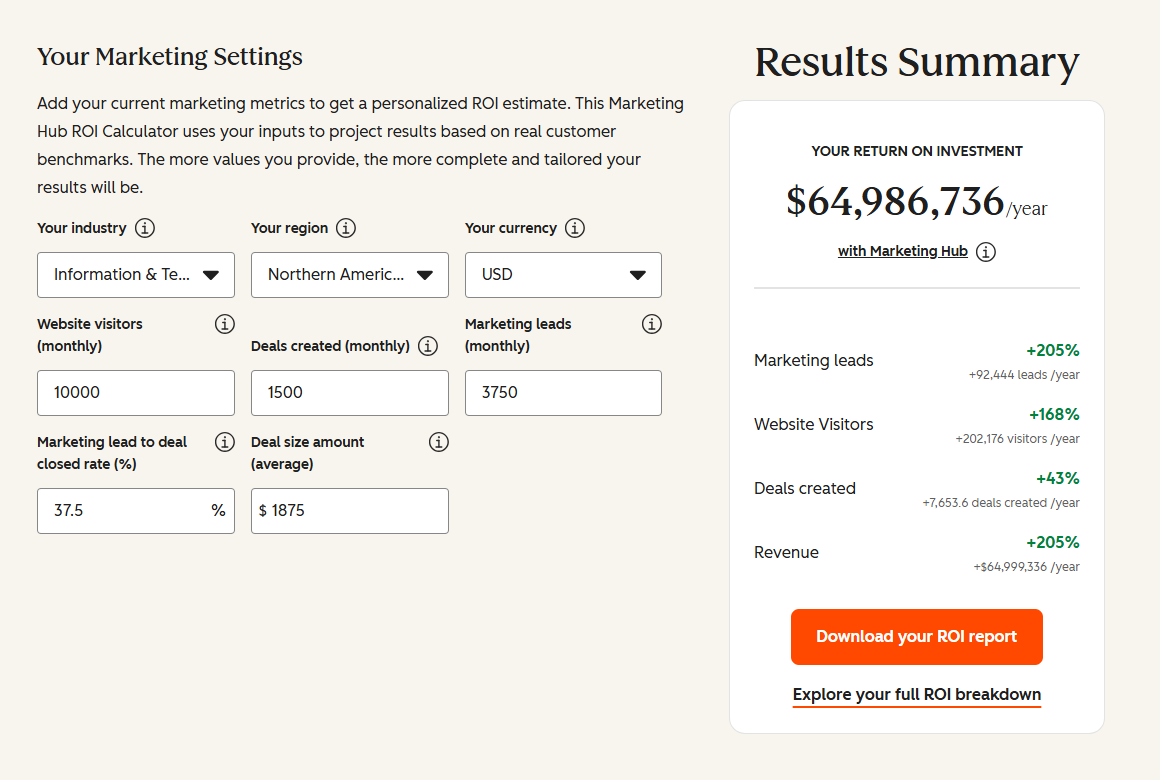
See your 12-month revenue impact with HubSpot CRM
Enter your current numbers — visitors, leads, deal size — and get a personalized projection based on real HubSpot customer benchmarks.
FAQs
Can HubSpot replace my ERP?
No. HubSpot is a CRM and Marketing platform. It does not do General Ledger accounting, MRP (Material Requirements Planning), or shop floor control. It connects to these tools to visualize the data for sales teams.
How do I handle “Bill of Materials” (BOM) in HubSpot?
You generally don’t sync the full BOM to HubSpot. You sync the top-level SKU and price. The complex BOM logic stays in the ERP (e.g., Epicor or Cetec), while HubSpot handles the commercial quote.
Why integrate Salesforce if I have HubSpot?
Many manufacturers use Salesforce for its advanced CPQ (Configure, Price, Quote) tools that handle complex engineering rules. Integrating allows you to keep that power while using HubSpot’s superior marketing automation interface.
Bottom Line
In the modern supply chain, the company with the best data wins. By implementing a HubSpot manufacturing integration, you stop flying blind. Whether you are running NetSuite, Epicor, or SAP, connecting your factory floor to your sales team transforms your operation from a disjointed assembly line into a unified revenue engine.
Don’t let your valuable production data die in the back office. Connect it, and watch your efficiency and revenue soar.

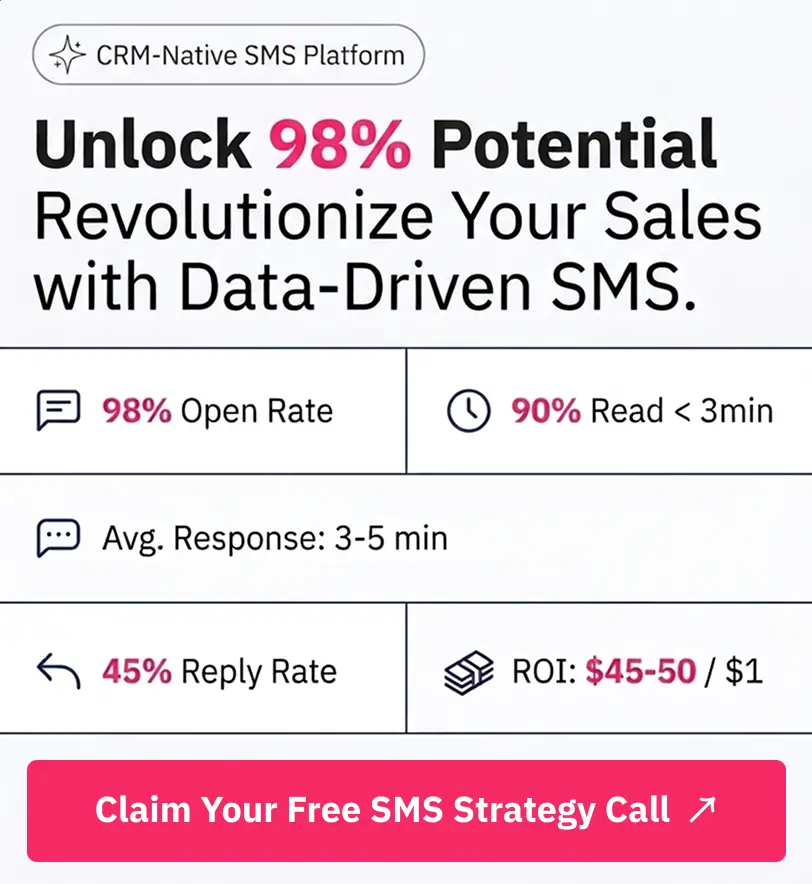
Table of Contents
- Key Takeaways
- NetSuite: The Cloud ERP Standard
- Salesforce: The Enterprise Co-Pilot
- Microsoft Dynamics 365: The Familiar Giant
- Epicor: The Industrial Specialist
- Acumatica: The Flexible Cloud Choice
- Cetec ERP: The Web-Native Contender
- Infor: The Heavy Hitter
- SAP: The Global Standard
- IFS Cloud: The Service-Centric ERP
- FAQs