











Explore this article with AI:
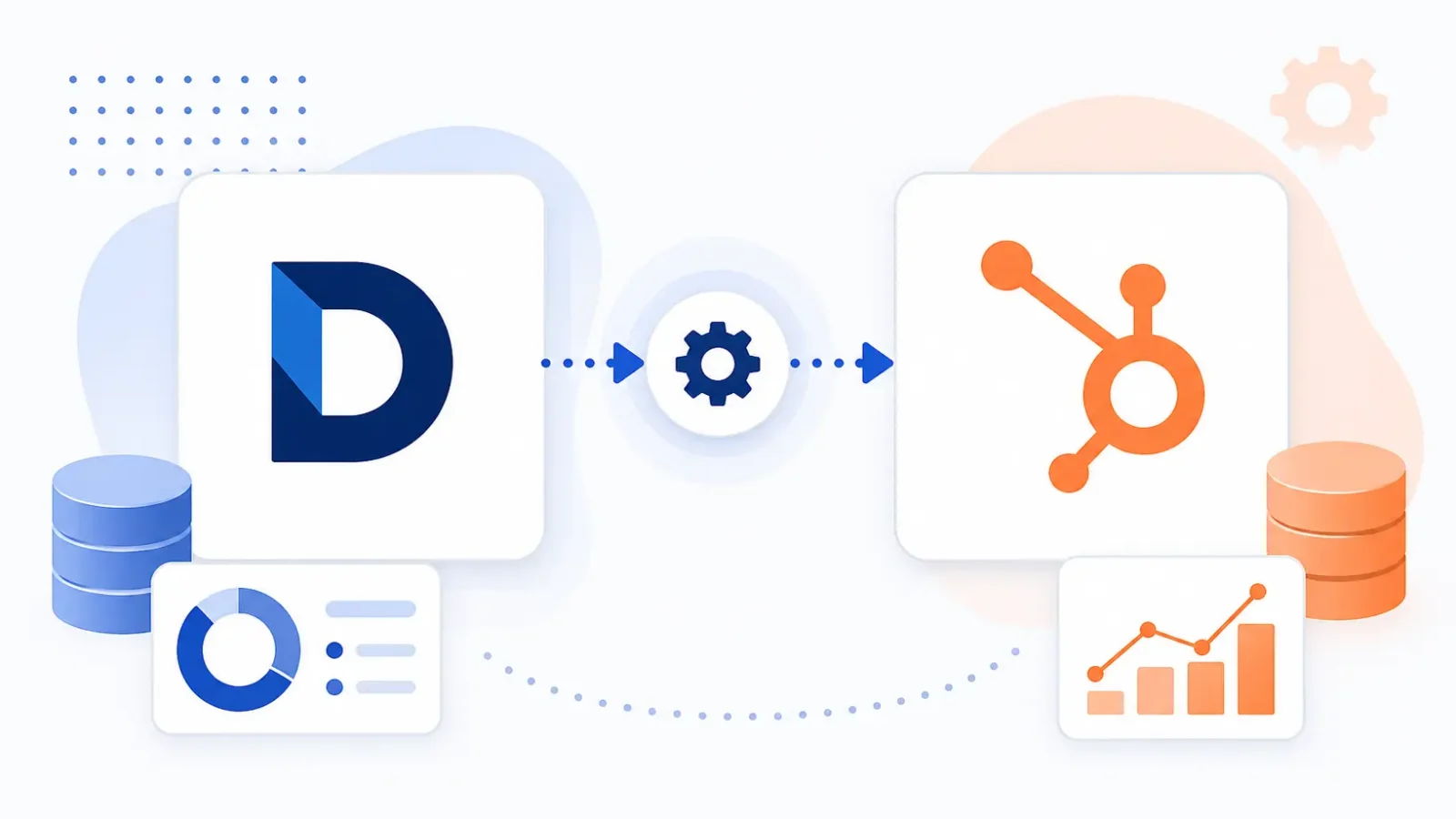
Demandbase produces some of the richest account intelligence available intent signals from over a trillion third-party data points monthly, pipeline predict scores, engagement minutes, buying stage classifications. But that intelligence is only useful when your sales reps can act on it, and sales reps live in HubSpot. If the data stays siloed in Demandbase, you’ve paid for signals nobody sees.
The Demandbase HubSpot integration creates a bidirectional sync between Demandbase’s ABM platform and HubSpot CRM (or HubSpot Marketing Hub), enabling account-level intent data, engagement scores, and account classification to flow into HubSpot’s contact, company, and deal records and HubSpot’s pipeline and engagement data to flow back into Demandbase for account scoring and campaign targeting.
We’re a HubSpot Diamond Solutions Partner with custom integration accreditation, processing 7 million fields synced daily. The Demandbase integration is one we configure and optimize regularly. Here’s the complete setup guide including the parts most documentation skips.
Free estimator
Know what your HubSpot project costs before the first call.
Select your services and get a transparent price range in minutes. No sales call needed to get a number.
Connect HubSpot to your ERP, billing platform, or database field mapping, custom logic, and support included.
Pipelines, workflows, email templates, and reporting configured for how your team actually works.
Live, role-based sessions with recordings and written guides built around a custom plan for your team.
HubSpot Partner
Client retention
Platforms integrated
What the Demandbase HubSpot Integration Does (and Doesn’t Do)
The integration creates a two-way data flow. Demandbase reads company, contact, deal, email event, and web visit data from HubSpot and uses it to enrich account scores, segment audiences, and refine targeting. HubSpot receives Demandbase’s custom fields intent scores, engagement data, pipeline predictions, buying stage classifications as properties on Company records that you can use in segmentation, workflows, and reporting.
Be clear on what the integration doesn’t do. It doesn’t create new records in HubSpot. It doesn’t create new user profiles or permission sets. It doesn’t operate in real time the standard sync runs on a configurable schedule, and the initial data sync takes 2–5 days depending on your record volume. Demandbase updates its custom fields in HubSpot on a daily basis.
Knowing these boundaries prevents the most common configuration disappointment: expecting real-time intent signal delivery in HubSpot and discovering that the sync runs once a day.

Two Integration Paths: HubSpot CRM vs HubSpot MAS
Demandbase offers two distinct integration options for HubSpot users, and they serve different purposes. Choosing the right one or understanding how to use both together determines what data flows where.
| Integration Type | What It Connects | Primary Use Case |
| HubSpot CRM Integration | Demandbase <> HubSpot CRM (contacts, companies, deals, owners) | Sales team access to Demandbase account scores, intent signals, and engagement data inside HubSpot CRM records |
| HubSpot MAS Integration | Demandbase <> HubSpot Marketing Hub (contact-level marketing engagement) | Syncing HubSpot marketing activity (email opens, form submissions, landing page visits) to Demandbase for campaign influence tracking and audience building |
Most teams benefit from both integrations the MAS integration feeds marketing engagement data to Demandbase for audience building, while the CRM integration delivers Demandbase intelligence back into HubSpot for sales activation. If you can only set up one, start with the CRM integration, since that’s where sales team adoption drives ROI.
Important note for MAS integration setup: when configuring the HubSpot MAS connection in Demandbase, do not toggle on ‘Include CRM?’ in the settings. Toggling this on while also having a separate HubSpot CRM integration active creates data conflicts. The CRM integration handles CRM data; the MAS integration handles marketing engagement data.

Turn HubSpot Into A Real-Time SMS Engine with
Message IQ

Two-Way Conversations

Shared Team Inbox

Automation Triggers

Advanced Reporting

Compliance Tools
-
98%
SMS read within 3 min -
78%
Buy from first responder -
21×
More likely to qualify
3–5 min avg response
$45–$50 ROI / $1

*MessageIQ is an IntegrateIQ product – built natively for HubSpot by the same team.
Setting Up the HubSpot CRM Integration in Demandbase
Before you start, verify these prerequisites:
- Super Admin permissions in HubSpot CRM
- Admin privileges in Demandbase
- HubSpot Marketing Hub Professional or Enterprise subscription (for the MAS path) or HubSpot CRM access for the CRM integration path
Step 1: Create a Dedicated HubSpot API User
This step isn’t optional it’s the single most common integration failure point. Demandbase authenticates to HubSpot through a user account’s credentials. If the integration is tied to an individual’s HubSpot account and that person leaves the company or changes roles, the integration breaks immediately. Create a dedicated service account in HubSpot specifically for the Demandbase integration. Name it something like ‘Demandbase Integration User’ and assign it Super Admin permissions.
Step 2: Configure the Integration in Demandbase
- In Demandbase, navigate to Settings > Integrated Systems > Integrations.
- Click New Integration.
- Click HubSpot.
- Toggle on Active.
- Click Save.
- Log in to HubSpot using the dedicated integration user account credentials when prompted.
- Authenticate the integration.
The initial data sync will begin automatically after authentication. Monitor progress at Settings > Demandbase-Wide Settings > Data Sync. Expect 2–5 days for the initial sync to complete, depending on how many records are in your HubSpot instance. After the initial sync, Demandbase queries HubSpot for all records with a last-modified date after the previous sync’s completion timestamp.
Step 3: Monitor and Validate the Sync
After the initial sync completes, navigate to any Demandbase account list and add the Source column. Records sourced from HubSpot CRM will be identified. Verify that expected companies, contacts, and deals from HubSpot have appeared in the Demandbase database.
In HubSpot, navigate to any Company record and check the Properties section for Demandbase custom fields. If the integration is working, you’ll see fields like Demandbase Intent Score, Demandbase Engagement Minutes, Demandbase Pipeline Predict Score, and Demandbase Account Stage. These fields update daily.
The Demandbase Custom Fields That Auto-Create in HubSpot
When the HubSpot CRM integration activates, Demandbase automatically creates a set of custom properties on HubSpot Company records via the API. These fields are where most of the integration’s practical value lives and most teams don’t know what they are or how to use them.
| Demandbase Field | What It Measures | How to Use in HubSpot |
| Intent Score | Account’s research intensity on topics relevant to your product (0–100) | Workflow trigger: if Intent Score >= 75, enroll in Sales Outreach sequence |
| Engagement Minutes | Time the account has spent engaging with your brand across channels (30-day rolling) | List segmentation: Engaged Accounts (Engagement Minutes > 50 in last 30 days) |
| Pipeline Predict Score | Likelihood of the account entering a sales pipeline based on behavioral signals (0–100) | Deal creation trigger: if Pipeline Predict Score >= 80 AND no open HubSpot Deal, create deal and assign to territory owner |
| Account Stage | Demandbase’s classification of where the account is in the buying journey | Lifecycle stage alignment: map Demandbase Account Stage to HubSpot Lifecycle Stage for unified funnel reporting |
| Qualified Account | Boolean — whether the account meets your ICP criteria as scored by Demandbase | List filter: segment all outbound sequences to Qualified Accounts = True only |
| Buying Stage | Aware / Engaged / Opportunity / Customer classification based on engagement patterns | Workflow: trigger different HubSpot content sequences based on Buying Stage value |
To find these fields in HubSpot: navigate to Settings > Properties > Company Properties and filter by ‘Demandbase’ in the search bar. You can add these properties to Company record views, list filters, workflow enrollment triggers, and report filters.
Building ABM Workflows Using Demandbase and HubSpot
The integration is worth nothing if the data sits in Company properties that nobody acts on. The value comes from building HubSpot workflows that use Demandbase signals to trigger the right sales and marketing actions at the right time.
Use Case 1: High-Intent Account Alert Workflow
Trigger: Demandbase Intent Score on a HubSpot Company record reaches or exceeds 80.
Actions: 1) Create a HubSpot Task for the company owner: ‘High-intent signal review Demandbase account page before reaching out.’
2) If the company has an associated contact in the Awareness lifecycle stage, enroll that contact in a nurture sequence.
3) Send an internal notification to the owning sales rep via HubSpot notification or connected Slack integration.
Result: Sales reps get notified the moment an account starts showing serious purchase intent not weeks later in a monthly ABM report.
Use Case 2: Pipeline Acceleration Workflow
Trigger: Demandbase Engagement Minutes crosses 100 AND the company has an associated HubSpot Deal in stage Proposal Sent.
Actions: 1) Create a HubSpot Task for the deal owner flagged as High Priority. 2) Enroll the primary contact on the deal into a ‘Closing Push’ sequence. 3) Update the deal’s close date forecast flag to ‘On Track.’
Result: Deals that are getting real attention from the buying committee get fast-tracked to closing activities automatically, based on behavioral signals rather than guesswork.
Use Case 3: Account-Scoring-Based Lead Routing
Trigger: A new contact submits a HubSpot form AND their company has Demandbase Qualified Account = True AND Demandbase Account Stage = Opportunity.
Actions: 1) Route the contact to the enterprise sales rep for that territory (bypassing SDR triage). 2) Set the contact’s lifecycle stage to SQL immediately. 3) Enroll in a direct sales outreach sequence rather than a marketing nurture track.
Result: High-value inbound leads from target accounts skip the triage queue and land directly with the rep who owns the account with the context they need already in the CRM record.
Cross-Object Filtering: The Segmentation Nobody Talks About
One of the most powerful and most underused capabilities of the Demandbase HubSpot integration is cross-object filtering inside Demandbase. Because HubSpot CRM data (deal stage, contact lifecycle stage, contact role) is synced to Demandbase, you can build audience segments that combine Demandbase signals with HubSpot CRM context in ways that aren’t possible in either platform alone.
A segment that identifies accounts with Intent Score >= 75 AND at least one associated HubSpot contact with the role of Economic Buyer AND an active HubSpot Deal in Negotiation stage that combination identifies your highest-probability-to-close accounts this quarter. Standard HubSpot segmentation can’t build this because it doesn’t have access to Demandbase intent data. Standard Demandbase segmentation couldn’t build this without the CRM deal stage and contact role data. The integration makes it possible.
Build these segments in Demandbase under Audiences > Account Lists or Contact Lists, using the Source column to filter for HubSpot CRM records and adding Demandbase fields as additional filter criteria.
Sync Monitoring and Troubleshooting
Three issues come up consistently after integration setup:
Demandbase fields not appearing in HubSpot. The initial sync hasn’t completed yet. Wait 2–5 days after the initial authentication. If fields still don’t appear after 5 days, verify in Demandbase’s Data Sync settings that the sync status shows ‘Completed’ rather than ‘In Progress’ or ‘Error.’
Sync is stuck at ‘In Progress.’ Large HubSpot databases (100,000+ company records) can extend the initial sync beyond the typical 5-day window. Check System Notifications in Demandbase for any error messages. A common cause is the integration user account not having full Super Admin permissions in HubSpot.
Integration stops syncing after a team change. This is exactly why the dedicated API user recommendation matters. If the HubSpot account tied to the Demandbase integration is deactivated when a team member leaves, the integration breaks immediately. The fix: create a new dedicated integration user in HubSpot and re-authenticate in Demandbase.
Monitor ongoing sync health at Settings > Demandbase-Wide Settings > Data Sync in Demandbase. The status page shows last sync timestamp, record counts per object type, and any error flags that need attention.

When the Native Integration Needs Custom Augmentation
The native Demandbase HubSpot integration covers the standard use case well: daily bidirectional sync of account, contact, deal, and email event data; Demandbase custom fields automatically created in HubSpot; HubSpot pipeline data flowing back to Demandbase for audience segmentation.
The native integration hits its limits in three scenarios:
- Real-time alerting: the native sync runs on a configurable schedule (default is daily). If your sales team needs intent signal alerts within hours of the signal spiking, not the next morning, the native sync frequency isn’t adequate. A custom integration can push Demandbase webhook events directly to HubSpot workflow triggers.
- Custom object mapping: the native integration syncs Demandbase data to standard HubSpot Company and Contact properties. If you need intent signals or account scores to flow into custom HubSpot objects like a custom ABM Account object or a Revenue Operations object the native connector doesn’t support this.
- Multi-portal HubSpot environments: if your organization runs multiple HubSpot portals (common in enterprise setups with business unit separation), the native Demandbase integration connects to one portal. Custom integration architecture handles multi-portal setups with shared Demandbase account data.
We’ve built Demandbase integrations that cover all three of these scenarios. Integrate IQ’s custom integration accreditation means we go beyond what the native connector can do and we deliver in our standard 8-week window.
Frequently Asked Questions
Is Demandbase compatible with HubSpot?
Yes. Demandbase offers two native integrations with HubSpot: one with HubSpot Marketing Hub (MAS) for syncing contact-level marketing engagement data, and one with HubSpot CRM for bidirectional sync of account, contact, deal, and owner data. Both are native integrations that don’t require third-party middleware.
What data syncs between Demandbase and HubSpot?
From HubSpot to Demandbase: company (account), contact, deal, email event, web visit, and owner data including all default and custom fields. From Demandbase to HubSpot: custom properties on Company records including Intent Score, Engagement Minutes, Pipeline Predict Score, Account Stage, Buying Stage, and Qualified Account status. Demandbase updates these fields on a daily basis.
How long does the initial Demandbase HubSpot sync take?
The initial data sync takes 2–5 days depending on the volume of records in your HubSpot account. Monitor progress in Demandbase at Settings > Demandbase-Wide Settings > Data Sync. After the initial sync, ongoing syncs run on a configurable schedule and update records with a last-modified date after the previous sync’s completion.
Can I use Demandbase intent data in HubSpot workflows?
Yes, but with one important caveat: the Demandbase custom fields in HubSpot (including Intent Score) update daily, not in real time. Workflow triggers based on Demandbase field values will fire once per day when the sync runs and updates the property values. If you need real-time workflow triggers based on intent signal changes, a custom integration using Demandbase webhook events is required.
What HubSpot subscription do I need for Demandbase integration?
For the HubSpot CRM integration: you need Super Admin access in your existing HubSpot account regardless of plan tier. For the HubSpot MAS (Marketing Hub) integration: you need Marketing Hub Professional or Enterprise. Custom field mapping via Data Hub requires a separate Data Hub subscription. For the most comprehensive integration capabilities, Sales Hub Professional or Enterprise gives you custom objects and advanced workflow logic that amplifies the integration’s value.
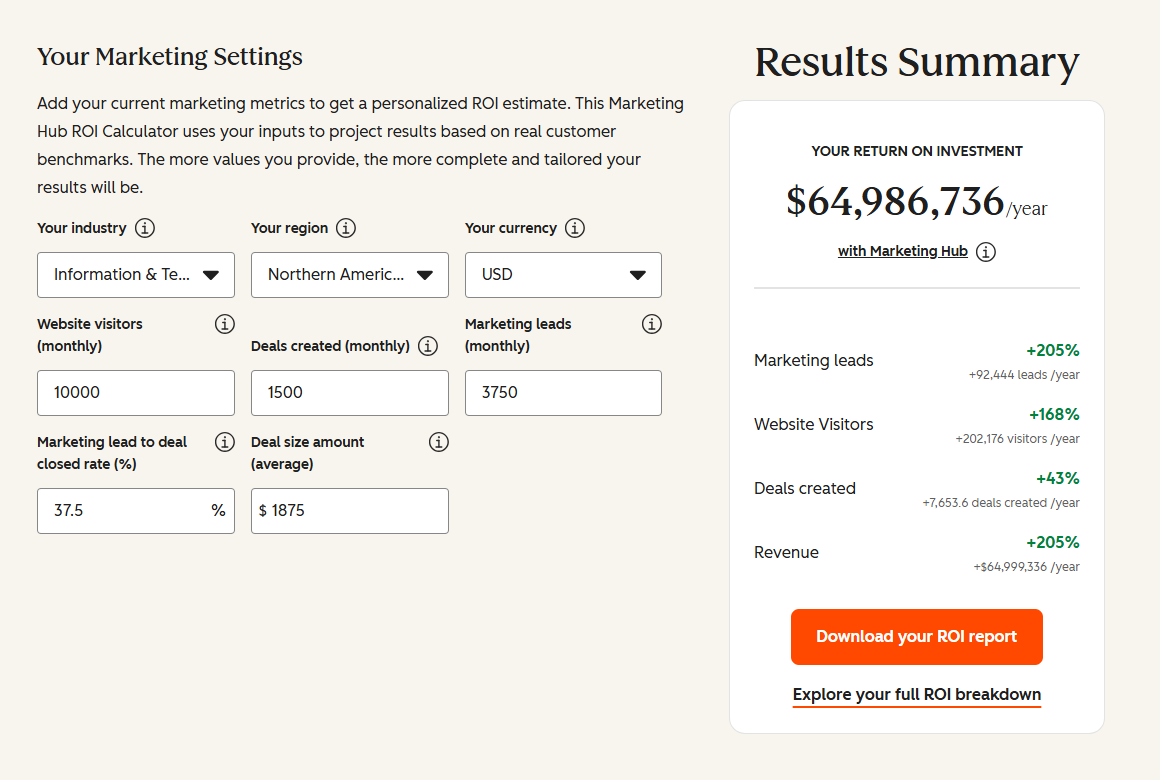
See your 12-month revenue impact with HubSpot CRM
Enter your current numbers — visitors, leads, deal size — and get a personalized projection based on real HubSpot customer benchmarks.
Ready to Build a Demandbase HubSpot Integration That Actually Works?
Having both tools and a broken sync is worse than neither you make decisions based on data that isn’t flowing correctly. Integrate IQ configures the Demandbase HubSpot integration from authentication to workflow architecture, including the cross-object segment logic, custom field utilization, and real-time alerting capabilities the native connector can’t deliver.
We’re a HubSpot Diamond Solutions Partner with custom integration accreditation, 300+ platforms integrated, and 7 million fields synced daily. Standard 8-week delivery from kickoff to a working integration your sales and marketing teams actually use.
Start the conversation at integrateiq.com/our-hubspot-integration-process/ or connect with our team at integrateiq.com/contact-us/

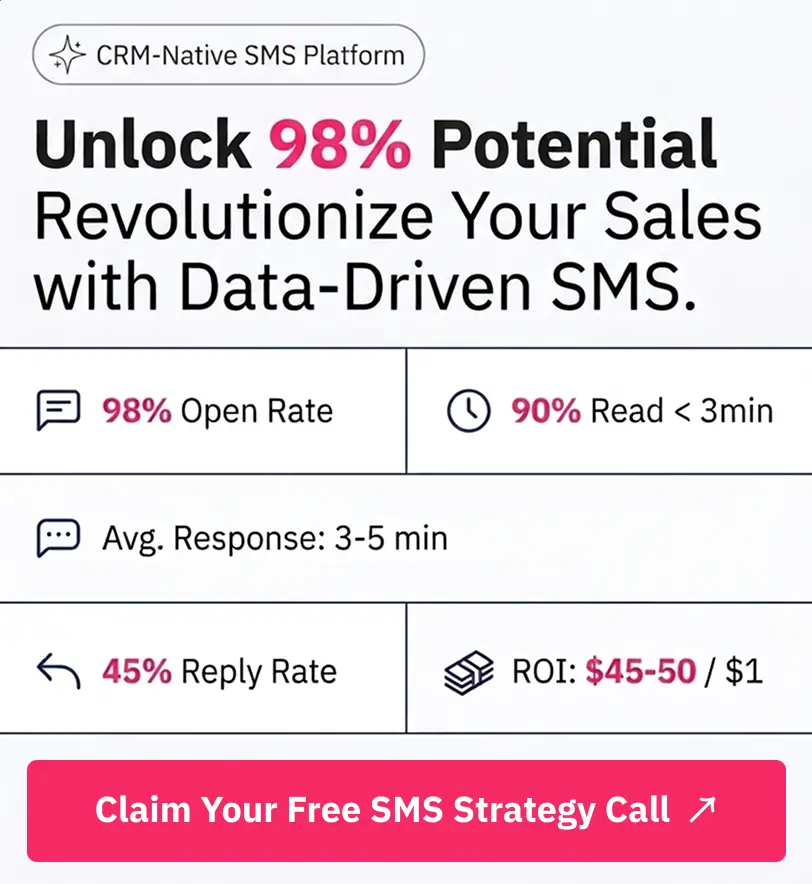
Table of Contents
- What the Demandbase HubSpot Integration Does (and Doesn't Do)
- Two Integration Paths: HubSpot CRM vs HubSpot MAS
- Setting Up the HubSpot CRM Integration in Demandbase
- The Demandbase Custom Fields That Auto-Create in HubSpot
- Building ABM Workflows Using Demandbase and HubSpot
- Cross-Object Filtering: The Segmentation Nobody Talks About
- Sync Monitoring and Troubleshooting
- When the Native Integration Needs Custom Augmentation
- Frequently Asked Questions
- Ready to Build a Demandbase HubSpot Integration That Actually Works?