












Explore this article with AI:
Free estimator
Know what your HubSpot project costs before the first call.
Select your services and get a transparent price range in minutes. No sales call needed to get a number.
Connect HubSpot to your ERP, billing platform, or database field mapping, custom logic, and support included.
Pipelines, workflows, email templates, and reporting configured for how your team actually works.
Live, role-based sessions with recordings and written guides built around a custom plan for your team.
HubSpot Partner
Client retention
Platforms integrated
Key Takeaways
- The “Franken-stack” is a growth killer: Disconnected tools lead to fragmented customer experiences and frustrated sales teams.
- Wealth management needs marketing muscle: Connecting niche CRMs like Redtail and AdvisorEngine to HubSpot allows financial advisors to scale communication without violating compliance.
- Content governance matters: Integrating storage tools like Box ensures your sales team is always pitching with the latest version of your documents.
- ERP is the final frontier: Connecting back-office tools like NetSuite closes the loop between “Marketing Qualified Lead” and “Cash in Bank.”
The Bigger Picture: Stop Letting Your Data Live in Witness Protection
In 2026, the average mid-market company uses over 100 SaaS applications. That is not a “tech stack”; that is a digital junk drawer.
If your CRM, your file storage, and your marketing automation platforms aren’t speaking the same language, you aren’t just losing time, you’re losing revenue. You have valuable customer data hiding in Redtail, updated contracts sitting isolated in Box, and billing data locked away in NetSuite. Meanwhile, your HubSpot account is starving for context.
The goal isn’t just to buy the best software; it is to build the best connections. Here are the top 9 tech stacks you need to connect with HubSpot this year to ensure your data flows as freely as your coffee.
Enterprise CRM and ERP Connectors
These are the heavyweights. Connecting your primary records of truth ensures that marketing knows what sales is doing, and sales knows what finance is doing.
Salesforce
For many enterprises, Salesforce is the system of record, but HubSpot is the engine of engagement. Keeping them separated creates a “civil war” between sales and marketing. A robust integration bridges this gap.
- Bi-Directional Sync: Ensure that changes in Salesforce (like a lead status change to “Disqualified”) instantly update HubSpot to stop marketing emails, protecting your sender reputation.
- Opportunity Visibility: Pass Salesforce Opportunity data into HubSpot so marketers can attribute revenue to specific campaigns, proving ROI beyond just “clicks.”
- Selective Filtering: Use inclusion lists to keep your HubSpot bill manageable. Only sync contacts that are actively being marketed to, rather than your entire legacy database.
- Learn more: HubSpot Salesforce Integration Services
NetSuite
Marketing teams often celebrate when a deal is signed, but they rarely see if the customer actually pays or renews. Integrating NetSuite (ERP) provides the full financial picture.
- Customer Lifetime Value (LTV): Feed actual billing data from NetSuite back into HubSpot. This allows you to segment customers by profitability, not just promised deal size.
- Automated Handover: When a deal is won in HubSpot, automatically create a Sales Order or Customer Record in NetSuite. This eliminates the “fat finger” errors of manual entry.
- Renewal Management: Set up workflows in HubSpot based on NetSuite contract end dates to trigger renewal reminders 90, 60, and 30 days before expiration.
- Learn more: HubSpot NetSuite Integration Services
Zoho CRM
Many organizations run dual environments, perhaps a specific division uses Zoho while corporate uses HubSpot, or you are in the process of a phased migration. Co-existence requires tight integration.
- Data Consistency: Keep contact and company records identical across both platforms. If a rep updates a phone number in Zoho, it should reflect in HubSpot immediately.
- Lead Routing: Capture leads via HubSpot forms and marketing assets, score them, and then push only the “Sales Ready” leads into Zoho for the sales team to work.
- Activity Logging: Ensure that emails sent from HubSpot Marketing Hub are logged as “Notes” or “Activities” in Zoho so the sales rep has full context.

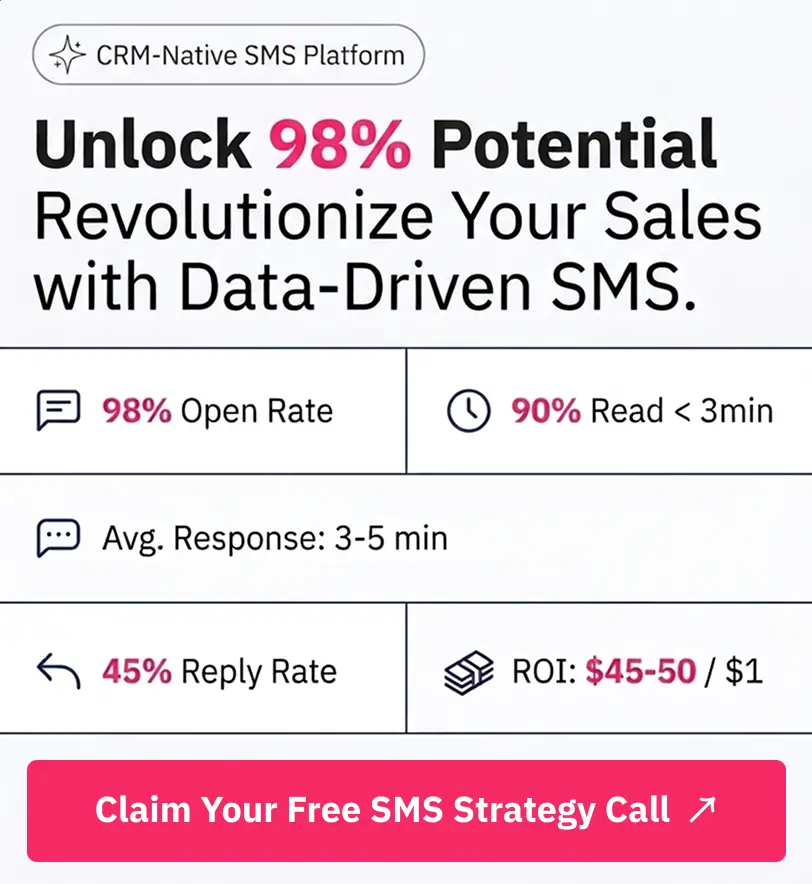
Turn HubSpot Into A Real-Time SMS Engine with
Message IQ

Two-Way Conversations

Shared Team Inbox

Automation Triggers

Advanced Reporting

Compliance Tools
-
98%
SMS read within 3 min -
78%
Buy from first responder -
21×
More likely to qualify
3–5 min avg response
$45–$50 ROI / $1

*MessageIQ is an IntegrateIQ product – built natively for HubSpot by the same team.
Wealth Management and Financial Services
Financial advisors often struggle with “siloed compliance.” They use specialized CRMs for sensitive data but need HubSpot for communication. These integrations allow for compliant growth.
Redtail Technology
Redtail is a giant in the wealth management space. However, it lacks the sophisticated automation of HubSpot. Connecting them allows advisors to nurture clients without double-entry.
- Birthday and Event Sync: Pull client birthdates and anniversaries from Redtail into HubSpot to automate high-touch personal greeting cards or emails.
- Segmentation by Assets: Sync “Assets Under Management” (AUM) fields to HubSpot. This allows you to send different newsletters to High Net Worth clients versus mass-market prospects.
- Note syncing: When a client interacts with a marketing email, push a note to Redtail so the advisor can see the engagement during their next portfolio review.
AdvisorEngine
Similar to Redtail, AdvisorEngine holds the truth about a client’s financial health. Integrating it with HubSpot turns that data into actionable communication strategies.
- Onboarding Automation: When a prospect becomes a client in AdvisorEngine, trigger a “Welcome Series” workflow in HubSpot to educate them on how to use your portal.
- Churn Prevention: If a client’s portfolio drops below a certain threshold or activity ceases in AdvisorEngine, alert the relationship manager via HubSpot.
- Compliance Logging: Ensure that all marketing communications sent via HubSpot are logged back to the AdvisorEngine record for compliance audits.
Content and Specialized Operational Tools
Your sales team needs more than just contact data; they need the right documents and the right operational context.
Box
Sales reps waste an average of 30% of their day looking for content. Integrating Box with HubSpot ensures they access the right collateral without leaving the CRM.
- Centralized Content Library: Access your Box folders directly within the HubSpot Contact, Company, or Deal record. No more digging through desktop folders.
- Version Control: Ensure reps are sending the latest contract or pricing sheet. When Marketing updates a PDF in Box, it is instantly updated in the HubSpot link.
- Proposal Creation: Use Box integrations to auto-populate folders for new clients as soon as a deal reaches the “Contract Sent” stage in HubSpot.
CentraHub
For industries like real estate, construction, or automotive, CentraHub offers vertical-specific CRM capabilities. Integrating it with HubSpot combines industry depth with marketing breadth.
- Project-Based Marketing: Sync project status from CentraHub to HubSpot. If a construction project moves to “Permitting,” send the client an automated “What to Expect Next” guide.
- Unified Contact View: Centralize all stakeholder interactions like architects, buyers, contractors, so that marketing communications are consistent across the project lifecycle.
- Post-Sale Nurturing: Once a project is marked complete in CentraHub, move the contact to a “Referral Request” list in HubSpot.
GetResponse
Sometimes, companies use specialized email tools alongside HubSpot CRM. Connecting GetResponse allows you to maintain a unified database even if you execute campaigns elsewhere.
- Webinar Sync: If you use GetResponse for webinars, sync the attendee list seamlessly into HubSpot to trigger follow-up sequences from your sales team.
- List Hygiene: Ensure that unsubscribes in GetResponse are instantly marked as “Opted Out” in HubSpot to prevent compliance violations.
- Lead Scoring: Pass engagement data (opens/clicks) from GetResponse into HubSpot to adjust lead scores and surface hot leads to sales.
RealGreen
For field service businesses (lawn care, pest control), RealGreen is the operational core. Connecting it to HubSpot automates the friction between “selling the job” and “doing the job.”
- Instant Estimates: Push HubSpot form data directly into RealGreen to create an estimate without manual data entry.
- Service Follow-Up: Trigger HubSpot emails based on service completion in RealGreen. “Your lawn service is complete, here are tips for watering.”
- Upsell Opportunities: Identify customers in RealGreen who have “Lawn Care” but not “Tree Service” and enroll them in a targeted cross-sell campaign in HubSpot.
- Learn more: HubSpot RealGreen Integration Services
Things To Watch Out For: The “Franken-stack” Risks
Connecting tools is great, but connecting them poorly is a disaster.
- Field Mapping Mismatches: If “Industry” is a dropdown in HubSpot but a text field in Redtail, you will break your reporting. Standardize your data values before you integrate.
- GDPR/Compliance Leaks: When moving data between Box, GetResponse, and Salesforce, ensure you are respecting opt-out preferences across all platforms, not just the one the customer clicked “unsubscribe” on.
- One-Way Street Thinking: Don’t just push data to HubSpot. Ensure critical marketing data (like lead source) pushes back to your ERP or Wealth Management tool so the business side understands marketing ROI.
FAQs
Can I connect multiple CRMs to HubSpot at once?
Yes. We frequently see organizations connecting HubSpot tech stack connections like Salesforce (for enterprise sales) and Redtail (for wealth management) into a single HubSpot portal for unified marketing.
Is the Box integration secure for sensitive contracts?
Yes. The integration respects Box’s native permission settings. A user in HubSpot cannot see a file in Box unless they have the appropriate Box permissions.
Why connect GetResponse if I have HubSpot Marketing Hub?
Some legacy workflows or specific webinar features may live in GetResponse. An integration ensures that while the tool is separate, the customer data remains unified in HubSpot.
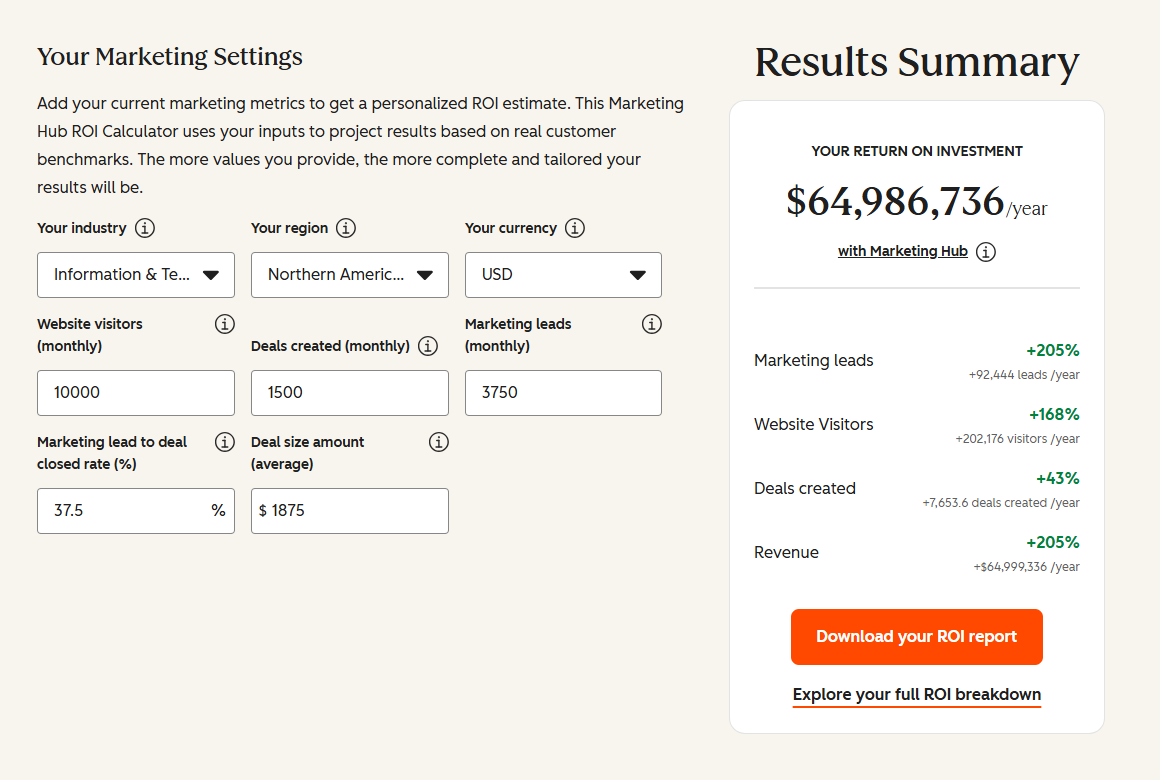
See your 12-month revenue impact with HubSpot CRM
Enter your current numbers — visitors, leads, deal size — and get a personalized projection based on real HubSpot customer benchmarks.
The Bottom Line
Your tech stack is only as strong as its weakest link. In 2026, the competitive advantage doesn’t go to the company with the most software, It goes to the company with the most aligned software. Connecting your back-office and niche tools to HubSpot turns your database into a revenue engine.
Ready to connect the dots? Schedule a conversation with Integrate IQ to discuss your unique tech stack architecture.