












Explore this article with AI:

Free estimator
Know what your HubSpot project costs before the first call.
Select your services and get a transparent price range in minutes. No sales call needed to get a number.
Connect HubSpot to your ERP, billing platform, or database field mapping, custom logic, and support included.
Pipelines, workflows, email templates, and reporting configured for how your team actually works.
Live, role-based sessions with recordings and written guides built around a custom plan for your team.
HubSpot Partner
Client retention
Platforms integrated
Key Takeaways
- Treat Candidates Like Customers: Integrating ATS platforms like Greenhouse and Lever with HubSpot allows you to nurture talent pools using the same sophisticated tools used for sales leads.
- Automate the “Hired” Handoff: Tools like Avionté and Bullhorn can trigger automated onboarding sequences in HubSpot the moment a candidate creates a placement.
- Unified Staffing Operations: For staffing firms, syncing candidate data with deal pipelines helps track the revenue revenue of placements.
- Internal Communications: HRIS integrations (BambooHR, Rippling) keep your internal HubSpot lists up-to-date, ensuring employees receive the right training and culture updates.
- Data Integrity: Automated syncs prevent the manual “copy-paste” errors that often plague payroll and benefits setup.
The Bigger Picture: Why HR Needs Marketing Power
In 2026, the line between “recruiting” and “marketing” has vanished. Top talent is inundated with options, and generic “We’re Hiring” blasts no longer cut it. To compete, recruiting teams need the segmentation, automation, and analytics power of a CRM.
Simultaneously, the onboarding experience has become a critical retention metric. A clunky, paper-heavy start to a new job signals a disorganized culture.
By integrating your Applicant Tracking System (ATS) and HRIS with HubSpot, you solve both problems. You can apply recruitment marketing strategies to attract better candidates and use automated workflows to ensure every new hire feels welcomed and prepared from Day 1.
Here are the eight essential HubSpot integrations that are bridging the gap between HR, sales, and marketing this year.
1. Bullhorn: The Staffing Industry Standard
For staffing and recruiting agencies, Bullhorn is the engine room. But while it excels at candidate management, its marketing features often lag behind.
Why it matters: A custom Bullhorn to HubSpot integration transforms candidates into marketable assets. You can sync “Candidate” records from Bullhorn to “Contacts” in HubSpot. This allows you to run automated email campaigns to re-engage dormant candidates (“We have a new role that matches your skills”) based on their status in Bullhorn.
- Key Workflow: When a candidate status changes to “Placed” in Bullhorn, HubSpot can automatically send a “Good Luck on Your First Day!” email and enroll them in a contractor retention workflow.

Turn HubSpot Into A Real-Time SMS Engine with
Message IQ

Two-Way Conversations

Shared Team Inbox

Automation Triggers

Advanced Reporting

Compliance Tools
-
98%
SMS read within 3 min -
78%
Buy from first responder -
21×
More likely to qualify
3–5 min avg response
$45–$50 ROI / $1

*MessageIQ is an IntegrateIQ product – built natively for HubSpot by the same team.
2. Avionté: End-to-End Staffing Automation
Avionté is a powerhouse for high-volume staffing. Integrating it with HubSpot is often about closing the loop between sales (finding job orders) and recruiting (filling them).
The operational edge:
- Client Sync: Sync client companies from Avionté to HubSpot to give your sales team visibility into which accounts are actively hiring.
- Talent Nurturing: Use HubSpot’s superior email deliverability to keep your Avionté talent pool warm with newsletters and job alerts, tracking exactly who clicks.
- Onboarding Triggers: When a placement is finalized in Avionté, trigger internal tasks in HubSpot for your account managers to follow up with the client after the first week.
3. BambooHR: The Culture Keeper
BambooHR is a favorite for small-to-mid-sized businesses. Connecting it to HubSpot is less about external recruiting and more about internal operations and employee engagement.
How it transforms operations:
- Automated User Provisioning: When a new employee is added to BambooHR, they can be automatically created as a user in HubSpot, assigned the right permissions, and added to the correct teams.
- Internal Marketing: Sync employee data (department, location, start date) to HubSpot lists. This allows you to send targeted internal newsletters (e.g., “Sales Team Updates” vs. “Engineering All-Hands”) without manually updating distribution lists.
- Birthday/Anniversary Automations: Use BambooHR dates to trigger personalized slack messages or emails from leadership via HubSpot workflows.
4. Gusto: Payroll Meets People Ops
Gusto makes payroll and benefits easy. When integrated with HubSpot, it streamlines the administrative side of scaling a team.
Key capabilities:
- Seamless Handoff: Once a candidate signs an offer (managed in HubSpot), their basic data can push to Gusto to start the payroll onboarding process, eliminating double entry.
- Referral Programs: Sync current employee lists from Gusto to HubSpot to run automated “Refer a Friend” campaigns, tracking which employees generate the most successful hires.
5. Greenhouse: The Enterprise ATS Choice
Greenhouse is built for structured hiring. Integrating it with HubSpot creates a powerful Recruitment Marketing engine.
Why it’s essential:
- Candidate Segmentation: Rejected candidates aren’t dead leads; they are future potential. Sync them to HubSpot and nurture them with content about your company culture. When a role opens up in six months, you have a warm pipeline ready to go.
- Source Tracking: Pass “Source” data from HubSpot forms into Greenhouse. This lets you analyze which marketing channels (LinkedIn Ads, Blog posts, Events) are driving the highest quality applicants, not just the highest volume.
6. Lever: Relationship-Centric Recruiting
Lever is known for its focus on relationship management (CRM) within recruiting. Pairing it with HubSpot doubles down on this strength.
Operational wins:
- Nurture Cold Leads: sourcing passive candidates? Sync them from Lever to HubSpot to enroll them in a long-term “drip” sequence that shares executive thought leadership, slowly building interest before a recruiter reaches out.
- Feedback Loops: When a candidate is marked “Hired” in Lever, update the original contact source in HubSpot. This closes the loop for the marketing team, proving the ROI of their employer branding efforts.
7. Rippling: The IT & HR Automation Hero
Rippling creates a “single source of truth” for employee data across IT and HR. Integrating with HubSpot automates the access side of onboarding.
What it does:
- Instant Access Control: Hire a sales rep in Rippling? The integration can automatically provision their HubSpot Sales Hub seat, set up their email signature, and assign them to the correct sales territory.
- Offboarding Security: When an employee is terminated in Rippling, their access to HubSpot is instantly revoked, protecting your CRM data without manual intervention.
8. Paylocity: The Mid-Market Workhorse
For larger organizations, Paylocity handles complex payroll and HR needs. Integration ensures data consistency across your back-office and front-office teams.
The strategic shift:
- Sales Commission Accuracy: Sync closed-won deal data from HubSpot to Paylocity (via custom integration or middleware) to calculate sales commissions accurately and faster.
- Org Chart Visibility: Keep the “Owner” fields in HubSpot up to date by syncing organizational hierarchy changes from Paylocity. If a sales manager changes, all their team’s deals in HubSpot can automatically re-route approval processes.
Things To Watch Out For
- Data Privacy (GDPR/CCPA): Candidate data is sensitive. Ensure your integration respects “Right to be Forgotten” requests. If a candidate asks to be deleted in HubSpot, that request must cascade to your ATS.
- The “Black Hole” Effect: Don’t just dump candidates into HubSpot and forget them. Ensure you have automated onboarding workflows set up before you turn on the sync.
- Field Mapping Headaches: Job titles vary (e.g., “Sr. Dev” vs. “Senior Developer”). Standardize your dropdown menus in both systems to prevent messy data reporting.
- One-Way vs. Bi-Directional: Decide who wins. Usually, the ATS is the “master” for candidate status, while HubSpot is the “master” for contact info (email/phone).
What HR & Ops Leaders Should Do Now
- Map the Candidate Journey: Draw out the flow from “Stranger” to “Applicant” to “Employee.” Identify the friction points where data is currently manually moved.
- Audit Your “Rejected” Pool: How many silver-medalist candidates are sitting in your ATS doing nothing? These are your low-hanging fruit for a HubSpot nurture campaign.
- Secure Internal Buy-In: Recruiting and Marketing often work in silos. bring them together to define shared goals (e.g., “Cost per Hire” or “Time to Fill”).
- Start with the “Hired” Trigger: The highest value integration point is often the moment a candidate accepts an offer. Automate the “Welcome” email and internal IT ticket creation first.
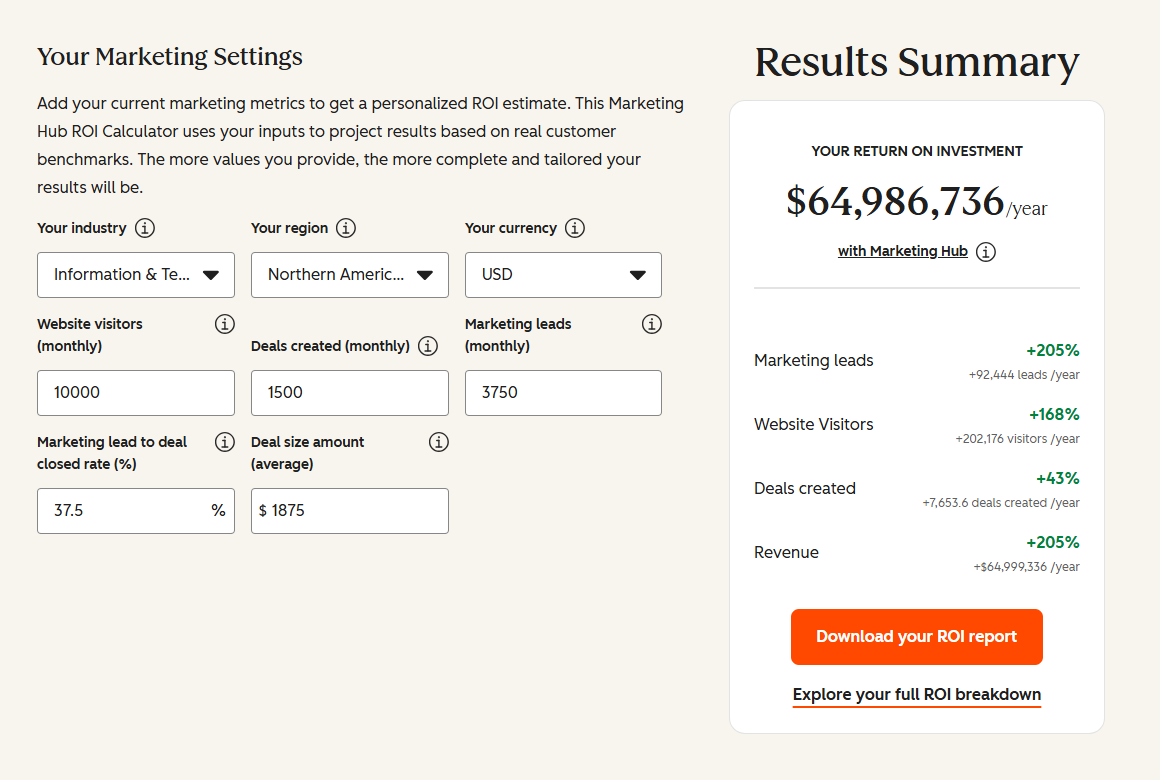
See your 12-month revenue impact with HubSpot CRM
Enter your current numbers — visitors, leads, deal size — and get a personalized projection based on real HubSpot customer benchmarks.
FAQs
Can HubSpot replace an ATS like Greenhouse or Bullhorn?
Generally, no. HubSpot is not designed for resume parsing, interview scheduling, or compliance tracking (EEOC). It compliments your ATS by handling the communication and relationship building.
How do I handle candidate confidentiality in HubSpot?
Use HubSpot’s “Partitioning” features. You can restrict access to candidate contacts so that only the HR and Recruiting teams can view them, keeping sensitive data away from the general sales team.
Is there a native integration for all these tools?
Many have native apps in the HubSpot Marketplace (like BambooHR and PandaDoc). Others, especially legacy staffing tools like older versions of Bullhorn, may require a custom integration solution to function exactly how you need.
Bottom Line
Your people are your most valuable asset, yet the systems used to find and keep them are often the most disconnected. By integrating your recruiting and HR stack with HubSpot, you bring the same level of sophistication to your talent pipeline that you apply to your sales pipeline.
Whether you are a staffing firm looking to place more candidates or a corporate HR team trying to improve the new hire experience, the connection between your ATS and your CRM is the key to scaling your culture.
Streamline Your Hiring & Onboarding with HubSpot — Get a Custom Integration Plan

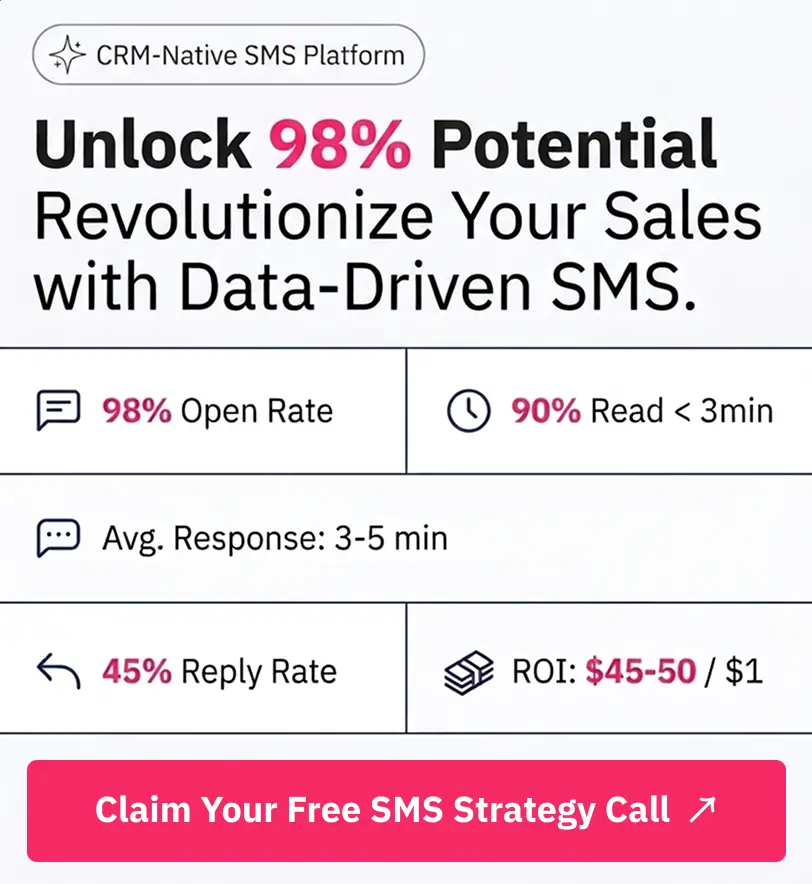
Table of Contents
- Key Takeaways
- 1. Bullhorn: The Staffing Industry Standard
- 2. Avionté: End-to-End Staffing Automation
- 3. BambooHR: The Culture Keeper
- 4. Gusto: Payroll Meets People Ops
- 5. Greenhouse: The Enterprise ATS Choice
- 6. Lever: Relationship-Centric Recruiting
- 7. Rippling: The IT & HR Automation Hero
- 8. Paylocity: The Mid-Market Workhorse
- FAQs