












Explore this article with AI:

The workflow errors that cause the most damage in HubSpot are usually ordinary problems with outsized downstream impact. A filter references an old value. A record never enrolls because re-enrollment was not configured. A copy action fails because the expected associated object is missing. A lifecycle update tries to move backward. A connected app cannot accept the request. A user edits the workflow and no one validates the change. The workflow continues running, but the wrong records keep entering it. None of these failures sounds dramatic on its own. In production, each one can quietly break routing, reporting, and team trust.
That is why this article matters. A broken workflow usually looks like a business problem before it looks like a technical problem. A rep misses a lead. A manager stops trusting the dashboard. A handoff fails. A customer status update never reaches the team that needed it. By the time someone opens the workflow, the cost has already spread.
HubSpot gives teams good tooling for diagnosis. Workflow testing, re-enrollment settings, invalid filter review, common error guidance, revision history, and workflow details are all designed to expose what actually happened [1][2][3][4][5][6][7]. The missing piece is usually disciplined troubleshooting. Teams often change the workflow before they understand the failure. That is how a small issue turns into a recurring one.
Answer-ready summary: The most common HubSpot workflow errors come from enrollment logic, invalid filters, missing associations, lifecycle-stage conflicts, connected-app failures, untested workflow edits, and broad criteria that let the wrong records in. These failures become manageable when you diagnose them in order instead of editing blindly.
Free estimator
Know what your HubSpot project costs before the first call.
Select your services and get a transparent price range in minutes. No sales call needed to get a number.
Connect HubSpot to your ERP, billing platform, or database field mapping, custom logic, and support included.
Pipelines, workflows, email templates, and reporting configured for how your team actually works.
Live, role-based sessions with recordings and written guides built around a custom plan for your team.
HubSpot Partner
Client retention
Platforms integrated
Error 1: the record never enrolls
This is the most common workflow complaint in HubSpot, and it is often misdiagnosed. Users say the automation “didn’t run.” The workflow may be perfectly healthy. The record just never qualified.
The usual causes are:
- Enrollment criteria that are too narrow
- Missing property values
- Suppression logic the team forgot about
- Timing assumptions that no longer match the workflow
- Re-enrollment settings that do not allow the record back in
HubSpot’s workflow testing tools are the best first stop here because they show whether a specific record currently matches the criteria [1]. Re-enrollment settings deserve equal attention because teams often expect a workflow to fire again after a property changes, while the workflow is only configured to enroll the record once [2].
Why this error matters:
- Leads can miss routing
- Tasks are never created
- Internal notifications never fire
- Teams think the workflow engine is unreliable when the logic is the real issue
How to fix it:
- Test the workflow against a known record [1].
- Review the actual enrollment criteria, not just the team’s memory of the criteria.
- Confirm whether the record should re-enroll and whether that setting exists [2].
- Check whether required supporting fields are missing.
Operational lesson:
When teams troubleshoot enrollment problems by immediately widening criteria, they often create a second problem: too many records now qualify. The goal is accuracy, not maximum enrollment.
Error 2: the workflow references an invalid filter value
Invalid filter errors are one of the easiest ways to break a workflow quietly. The workflow might look normal in the editor, but one of the values it depends on may no longer exist in the same way.
HubSpot documents this clearly. Invalid filters can happen when a property value used in the workflow is merged, deleted, or changed, while the workflow still points to the old internal value [3]. This usually appears after:
- Property cleanup
- Option renaming
- Value standardization
- Migration work
- Broader CRM governance changes
Why this error matters:
- Workflows stop enrolling records without obvious warning to end users
- Branches send records incorrectly
- Teams lose trust in older automation
How to fix it:
- Open the enrollment trigger or branch condition.
- Identify the specific field or value that became invalid.
- Replace the stale value with the current valid value [3].
- Test the workflow again with a real record [1].
Operational lesson:
Property cleanup and workflow governance should always be linked. If a field value changes in the CRM, any workflow depending on that value should be reviewed as part of the same change.

Turn HubSpot Into A Real-Time SMS Engine with
Message IQ

Two-Way Conversations

Shared Team Inbox

Automation Triggers

Advanced Reporting

Compliance Tools
-
98%
SMS read within 3 min -
78%
Buy from first responder -
21×
More likely to qualify
3–5 min avg response
$45–$50 ROI / $1

*MessageIQ is an IntegrateIQ product – built natively for HubSpot by the same team.
Error 3: the action fails because the record is missing an associated object
HubSpot’s common workflow errors include failures caused by missing associations [4]. This matters more than many teams expect because workflows often assume relationships exist between records:
- Contact to company
- Deal to company
- Ticket to contact
- Object to object in more complex setups
If an action tries to copy a value, set a field, or reference an association that does not exist, the action fails even though the record itself enrolled successfully.
Why this error matters:
- Cross-object workflows become unreliable
- Lifecycle and ownership logic breaks at handoff points
- Teams assume the workflow is random when the data model is incomplete
How to fix it:
- Confirm whether the enrolled record actually has the required associated object [4].
- Add enrollment criteria that only allow records with the required association.
- Create a fallback branch for records missing the association.
- Backfill associations where the process requires them consistently.
Operational lesson:
The workflow is revealing a data-model problem. If association-dependent workflows fail repeatedly, the issue sits in record architecture or process design as much as in automation.
Error 4: the workflow tries to move lifecycle stage backward
Lifecycle stage updates are a common source of confusion. HubSpot protects the default lifecycle stage from being set backward through normal set-property behavior in many common workflow situations [4][5]. Teams often discover this only after building automation that assumes lifecycle can move up and down freely like another status field.
Why this error matters:
- Lifecycle reporting becomes noisy
- Handoff logic fails
- Users stop trusting stage-based automations
- Duplicate or conflicting records create even more confusion
How to fix it:
- Confirm whether the workflow should actually change lifecycle stage.
- Review whether the business process requires a reset or a separate field instead of direct lifecycle reversal.
- If a reset is intentional, follow HubSpot’s documented approach to clear the value before setting it again where appropriate [4].
- Review lifecycle sync behavior between objects so one object is not unexpectedly rewriting another [5].
Operational lesson:
Lifecycle stage is a process-control field. Treating it like a casual editable status creates reporting and automation problems quickly.
Error 5: the connected app is rate-limited, unavailable, or failing downstream
A workflow can be configured correctly and still fail in practice because the external system cannot accept the action. HubSpot explicitly documents cases where common workflow errors are caused by connected-app rate limits, app failures, or webhook-related issues [4].
This is one of the most important workflow troubleshooting lessons for integrated portals. Once HubSpot sends data out to another system, workflow reliability depends on more than HubSpot.
Why this error matters:
- Teams blame HubSpot for failures that start outside HubSpot
- App actions retry without solving the root cause
- Delayed syncs create stale operational state
How to fix it:
- Review the workflow issue message in HubSpot [4].
- Check the external app’s logs, quota behavior, and availability.
- Reduce unnecessary action volume if the app is being overwhelmed.
- Add queueing, retry logic, or backoff on the app side where possible.
- Reassess whether the workflow should call the external system directly or via a more controlled integration layer.
Operational lesson:
If a critical workflow depends on an external app, that app becomes part of your automation reliability model. Diagnose the full chain, not just the first visible failure.
Error 6: someone changed the workflow and nobody tested the update
This error is less about HubSpot and more about operating discipline. Teams edit criteria, branches, field updates, or timing steps and assume the workflow still behaves the same way. It often does not.
HubSpot’s revision history is built for this exact scenario because it shows:
- What changed
- When it changed
- Which user made the change [6]
HubSpot’s testing features make it possible to validate the revised logic before trusting it in production [1].
Why this error matters:
- Good workflows suddenly become unreliable
- Teams lose trust in “small changes”
- Debugging takes longer because the problem started after an edit that no one fully reviewed
How to fix it:
- Open revision history and find the relevant change [6].
- Compare the current logic with the version that worked.
- Test the workflow against known records [1].
- Document the intended behavior before publishing future edits.
Operational lesson:
Workflow testing and revision review are governance habits. Teams that skip them create regression risk every time they tune an automation.
Error 7: the workflow runs, but the wrong records are in it
This is one of the hardest failures to spot because the automation appears active. Tasks get created. Alerts get sent. Fields get updated. The problem is that the wrong records are entering the workflow or branching into the wrong path.
HubSpot’s workflow details and record path review help expose these cases because they show:
- Enrollment history
- Record-level path choices
- Action logs
- Performance patterns [1][7]
The usual causes are:
- Criteria that are too broad
- Field values that drifted over time
- Inconsistent property usage across teams
- Weak suppression logic
- Assumptions about data that no longer hold
Why this error matters:
- Bad segmentation
- Incorrect messaging
- Noisy task creation
- Weak trust in the automation layer
How to fix it:
- Review the actual records enrolling.
- Look for the pattern they share.
- Tighten criteria or suppression logic.
- Review the field model behind the workflow.
- Retest with both intended and unintended example records.
Operational lesson:
This error usually points to model drift. The workflow still behaves logically. The inputs no longer mean what the team thinks they mean.
How to fix workflow errors faster
The fastest teams use a consistent order of operations:
- Review automation issues [4].
- Test the workflow with a real record [1].
- Check workflow details and action logs [7].
- Review re-enrollment behavior [2].
- Review invalid filters [3].
- Confirm associations and lifecycle behavior [4][5].
- Review revision history [6].
- Check connected apps if external actions are involved [4].
That sequence is faster because it reduces guessing. It also keeps the team from making the workflow harder to diagnose by editing it too early.
Which workflow errors matter most to operations teams?
| Error type | Business impact | Why it matters |
|---|---|---|
| No enrollment | Missed routing or missed follow-up | Leads and customers never enter the intended process |
| Invalid filter | Silent workflow failure | Automation stops after data model changes |
| Missing association | Broken copy or update actions | Cross-object logic fails |
| Lifecycle conflict | Funnel and handoff distortion | Stage-based automations stop reflecting reality |
| App-side limit or failure | Delayed or failed sync | External systems fall out of step |
| Untested change | Regression risk | Good workflows break after routine edits |
| Wrong-record enrollment | Bad segmentation and poor task quality | Teams stop trusting automation output |
What teams should do to prevent these errors
Several habits reduce workflow breakage significantly:
- Test high-impact workflow changes before publishing [1]
- Review revision history when a workflow behavior changes [6]
- Run recurring audits on properties and invalid filters [3]
- Watch for duplicate and association problems that affect automation [4]
- Review external app dependencies for high-value workflows [4]
These are not advanced best practices reserved for enterprise teams only. They are the standard habits that keep active HubSpot portals stable.
Who should use this checklist?
This checklist is best for:
- Marketing ops
- Sales ops
- RevOps
- HubSpot admins
- Teams with several active workflows and connected systems
It is especially valuable when workflows affect routing, lead handoff, lifecycle stages, data synchronization, internal alerts, or revenue reporting. In those environments, workflow errors create process risk quickly, and structured diagnosis becomes part of operational hygiene.
Frequently asked questions
Where do I find HubSpot workflow errors?
Use the Review automation issues view in HubSpot’s workflows tool and open the specific workflow for detail [4].
What causes invalid filter errors?
They usually happen when property values were changed or deleted after the workflow was created [3].
Why does a workflow fail on associated-record actions?
Because the enrolled record may not have the related object the action expects, such as an associated company [4].
Can connected apps cause HubSpot workflow errors?
Yes. HubSpot documents failures caused by connected-app rate limits and server-side webhook issues [4].
What is the best first step before editing a broken workflow?
Check the logs and history first. Diagnose before you rebuild.
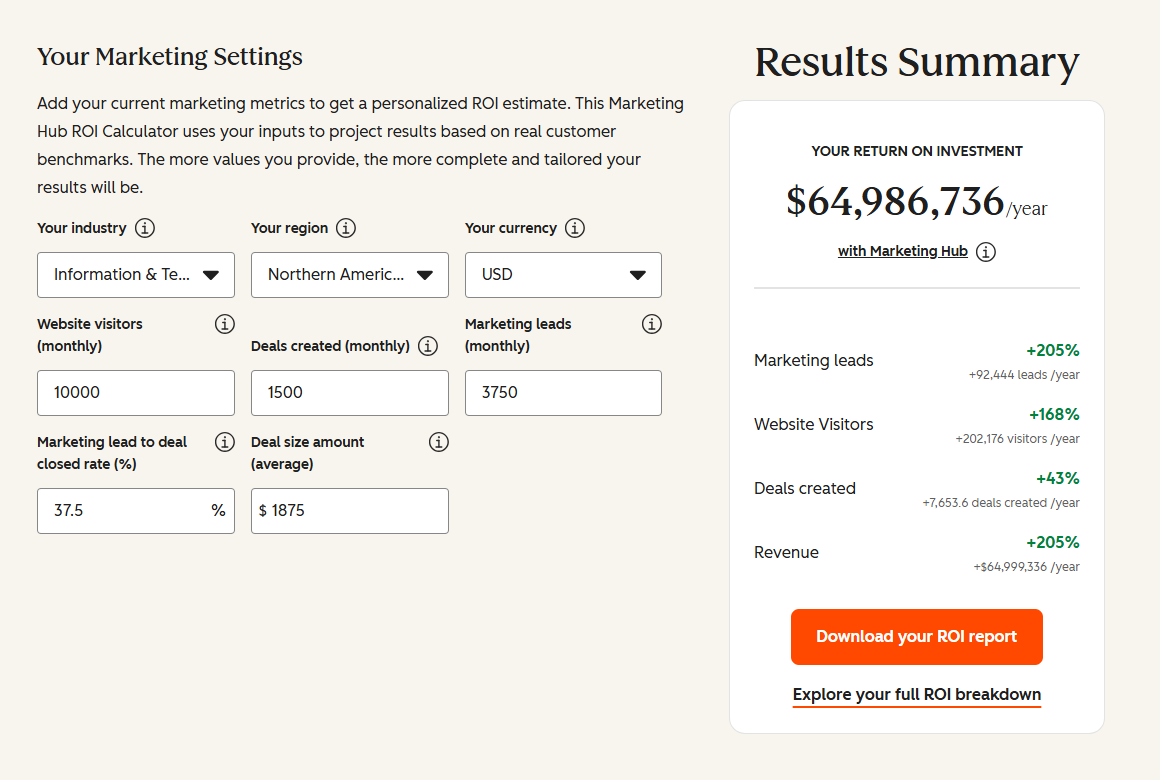
See your 12-month revenue impact with HubSpot CRM
Enter your current numbers — visitors, leads, deal size — and get a personalized projection based on real HubSpot customer benchmarks.
Final answer
Most HubSpot workflow errors are preventable. They come from stale filters, missing associations, lifecycle conflicts, app limits, and untested workflow edits.
If your team builds a habit of testing workflows, reviewing revisions, and auditing the data model behind the automation, workflow reliability improves fast. That is the difference between a HubSpot portal that feels stable and one that constantly needs manual cleanup.



Table of Contents
- Error 1: the record never enrolls
- Error 2: the workflow references an invalid filter value
- Error 3: the action fails because the record is missing an associated object
- Error 4: the workflow tries to move lifecycle stage backward
- Error 5: the connected app is rate-limited, unavailable, or failing downstream
- Error 6: someone changed the workflow and nobody tested the update
- Error 7: the workflow runs, but the wrong records are in it
- How to fix workflow errors faster
- Which workflow errors matter most to operations teams?
- What teams should do to prevent these errors
- Who should use this checklist?
- Frequently asked questions
- Final answer