











Explore this article with AI:

Your team uses ChatGPT or Claude every day, but are you using the right AI prompts for marketing and sales? But the outputs feel generic. The emails sound robotic. The social posts don’t convert.
Here’s the truth: Your AI tool isn’t the problem. Your prompts are.
Most marketing and sales teams treat AI like a convenience tool asking it the same vague questions they’d Google (“Write a sales email” or “Create a Facebook post”). AI responds the way it was trained to: broadly and safely. Bland. Non-differentiated. Forgettable.
The teams winning with AI think differently. They build specific, strategic prompts that treat AI as a collaborator, not a content machine. They provide context about their audience, their unique positioning, and their business outcomes. They request variations and depth. And they iterate.
The difference? A 10-minute difference in how you write your prompt can mean the difference between a 2% email open rate and a 28% open rate. Between a social post that gets 50 likes and one that drives a qualified lead.
This guide gives you 100+ ready-to-use prompts across marketing, sales, brand, and productivity all written with the specificity and context that actually works. You don’t have to reinvent the wheel. Just copy, customize your business details and watch your AI outputs become actual assets. Bookmark it as your go-to ai prompt 100 reference any time your team needs a fresh angle instead of starting from a blank chat window.
Let’s start with what really matters.
Free estimator
Know what your HubSpot project costs before the first call.
Select your services and get a transparent price range in minutes. No sales call needed to get a number.
Connect HubSpot to your ERP, billing platform, or database field mapping, custom logic, and support included.
Pipelines, workflows, email templates, and reporting configured for how your team actually works.
Live, role-based sessions with recordings and written guides built around a custom plan for your team.
HubSpot Partner
Client retention
Platforms integrated
Key Takeaways
-
Strong prompts transform AI from a content generator into a strategic partner.
-
Generic prompts return generic output; clear, contextual prompts create sharper campaigns, stronger sales, and actionable insights.
-
This guide shares 100 ready-to-use prompts across marketing, brand, sales, CRM and productivity.
-
Each is written with placeholders (
<business>,<persona>,<USP>) to adapt to your company. -
Teams that build a prompt library aligned with strategy will unlock more value from AI.
Why AI Prompt Quality Matters
When AI-generated content misses the mark, the cause is usually the prompt. A vague request like “Write a social post about our product” produces bland results that could apply to anyone.
Specific prompts unlock the real value of AI. They don’t just save time; they drive better campaigns, more relevant positioning, and insights that lead to action.

Turn HubSpot Into A Real-Time SMS Engine with
Message IQ

Two-Way Conversations

Shared Team Inbox

Automation Triggers

Advanced Reporting

Compliance Tools
-
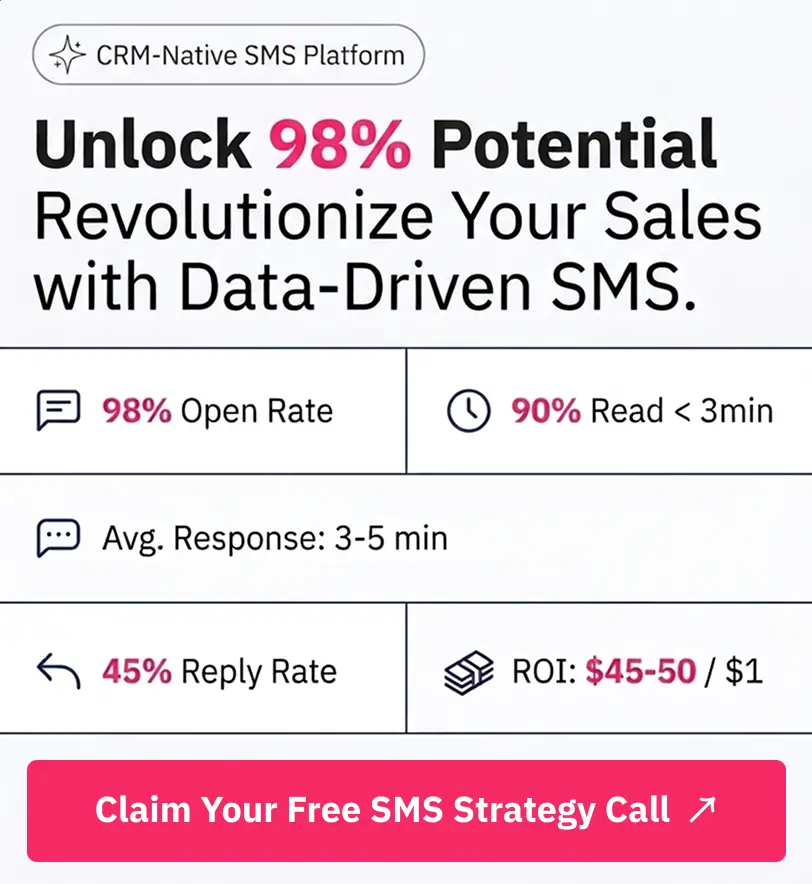
98%
SMS read within 3 min -
78%
Buy from first responder -
21×
More likely to qualify
3–5 min avg response
$45–$50 ROI / $1

*MessageIQ is an IntegrateIQ product – built natively for HubSpot by the same team.
What Makes a Fantastic Prompt?
The best prompts have clarity, context and direction. Use these rules of thumb:
-
Be specific: name the audience, desired outcome and format
-
Provide context: include your business, persona, USP and challenge
-
Define the output: ask for a case study, subject line or roadmap
-
Set the tone: professional, playful or data-driven
-
Request variations: test multiple versions
-
Push for depth: request frameworks, KPIs or examples
-
Iterate: refine based on what AI delivers
The 100 Best AI Prompts for Marketing, Sales and Productivity
Marketing Strategy
-
Develop a 90-day marketing roadmap for
<business>that connects<USP>to<persona>’s top pain points with clear KPIs -
Create a customer journey map for
<persona>highlighting friction points and where<USP>has the most impact -
Design a go-to-market strategy for a new product with positioning, launch channels and expected ROI
-
Build a segmentation model that divides
<persona>into subgroups and matches<USP>benefits to each -
Generate campaign concepts that uniquely differentiate
<business>from competitors while addressing objections -
Create a messaging hierarchy that moves
<persona>from awareness to decision using<USP> -
Outline a retention strategy with loyalty triggers that reinforce
<USP>and reduce churn -
Draft a marketing performance dashboard with the eight most relevant metrics for
<business> -
Propose a growth loop of acquisition, engagement, and referral tailored to
<business>’s<USP> -
Recommend partnerships
<business>should pursue to reach new audiences aligned with<persona>
Brand Strategy
-
Write a brand positioning statement that defines a unique emotional and functional perspective for
<business> -
Define five brand pillars
<business>should consistently reinforce to build trust with<persona> -
Build a brand voice spectrum (formal to playful, bold to humble) and recommend usage scenarios
-
Create a brand storytelling framework (problem, tension, solution, transformation) centered on
<USP> -
Draft both a one-minute elevator pitch and a five-minute investor pitch that highlight
<USP> -
Design a crisis response playbook aligned with
<business>’s values and<persona>’s expectations -
Evaluate competitor positioning and propose a white-space opportunity map for
<business> -
Recommend a brand ambassador program structure that incentivizes authentic advocacy
-
Build a tagline shortlist of 10 memorable, sticky options rooted in
<USP> -
Create a brand manifesto under 200 words that captures purpose, values, and impact
Copywriting and Content
-
Write homepage headlines that convert
<persona>by focusing on outcomes, not features -
Draft an About Us introduction that blends story, credibility, and
<USP> -
Create a product description formula combining benefit, proof, and emotional hook
-
Generate subject lines that increase open rates by sparking curiosity or urgency
-
Write landing page hero sections optimized for clarity and trust
-
Draft an FAQ addressing
<persona>’s top objections and building confidence in<USP> -
Write a thought leadership outline that challenges assumptions and positions
<business>as an innovator -
Create a testimonial template that makes customer stories about
<USP>authentic and persuasive -
Generate microcopy examples such as CTAs, tooltips, and form copy that boost conversions
-
Write a case study in a problem-solution-proof format showcasing
<business>’s most successful client
Social Media
-
Build a 30-day calendar balancing education, proof, and engagement
-
Create LinkedIn carousel concepts positioning
<business>as a thought leader -
Draft TikTok or Reels scripts that make
<USP>instantly relatable -
Propose a community-building strategy (Slack, Discord, or group) around
<USP> -
Write tweet variations turning
<USP>into snackable insights -
Develop a repurposing framework that turns one blog into eight social assets
-
Craft a “social proof spotlight” campaign using reviews and UGC
-
Write a crisis management post template responding with empathy while reinforcing
<USP> -
Create a playbook for employee advocacy with frequency guidelines and guardrails
-
Propose quarterly social media experiments with hypotheses and success metrics
SEO and Content Marketing
-
Generate high-intent long-tail keywords for
<persona>tied to<USP> -
Create a topic cluster map with pillar pages and supporting blogs
-
Write SEO-optimized meta descriptions designed for high CTR
-
Propose content upgrades such as guides, calculators, or templates that attract leads
-
Draft outlines for comparison posts that objectively position
<USP>versus competitors -
Identify featured snippet opportunities and suggest optimized answers
-
Create a backlink outreach plan targeting authoritative sites
-
Draft a blog calendar with awareness, consideration, and decision stage topics
-
Recommend schema markup improvements to boost visibility
-
Suggest ways to optimize old content for better ranking and conversions
Marketing Analysis
- Analyze the last three campaigns for <business> across email, paid, and organic and identify which channel drove the lowest cost per qualified lead
- Run a competitor SWOT analysis for <business>’s top three rivals based on their public positioning and pricing
- Interpret this campaign performance data and flag the two metrics most likely explaining the drop in conversions
- Build an attribution summary that shows which touchpoints influenced <persona>’s path to purchase
- Analyze customer review and support ticket themes to surface the top three product objections
- Compare this A/B test’s results and recommend whether to roll out the winning variant or run a follow-up test
- Break down channel mix spend versus return for the last quarter and recommend a reallocation
- Analyze cohort retention data and identify which acquisition channel produces the most loyal customers
- Summarize which content pieces are driving the most qualified traffic and why, based on this analytics export
- Benchmark <business>’s social engagement rate against three named competitors and explain the gap
Paid Ads (Google and Meta)
-
Write ad headlines that emphasize transformation over features
-
Create a responsive search ad framework with interchangeable headlines
-
Draft Meta carousel ad concepts that each tell a mini-story
-
Write ad copy variations testing urgency, authority, and empathy angles
-
Create audience targeting profiles for lookalike, remarketing, and interest-based campaigns
-
Propose a bidding strategy balancing cost per lead with ROI
-
Write retargeting ads addressing drop-off objections
-
Create ad extensions such as sitelinks, callouts, and structured snippets
-
Draft YouTube skippable ad scripts in both problem-solution and storytelling formats
-
Build a testing matrix for ad creatives covering copy, CTA, and format
Influencer and Advocacy
-
Identify influencers whose audience matches
<persona>and explain why -
Draft outreach emails that emphasize mutual benefit and authenticity
-
Create collaboration ideas that go beyond product placement
-
Write a contract outline covering deliverables, exclusivity, and brand safety
-
Propose a KPI dashboard for influencer ROI measuring reach, conversions, and sentiment
-
Generate campaign ideas for influencer-led product launches
-
Create a repurposing plan to extend influencer content across owned channels
-
Write a playbook for turning micro-influencers into long-term brand ambassadors
-
Suggest ways to co-create products or content with influencers
-
Draft a risk mitigation plan for influencer alignment issues
Sales and Conversion
-
Create a sales script addressing the five most common objections from
<persona> -
Draft a playbook chapter on when and how to introduce
<USP> -
Write a product comparison guide for sales teams in competitive deals
-
Create a customer onboarding checklist that reinforces
<USP> -
Draft a sequence of five sales emails tailored to
<persona>’s buyer journey -
Develop a referral incentive program that balances cost with conversion lift
-
Write a one-page case study formatted for sales enablement
-
Build a lead scoring model prioritizing signals of readiness
-
Propose quarterly sales contest ideas aligned with
<USP>goals -
Draft an upsell and cross-sell framework matching customer lifecycle stages
CRM and Customer Experience
-
Map the CRM fields
<business>must capture to personalize outreach -
Propose automation workflows that save time while deepening engagement
-
Create a CRM dashboard showing customer health, churn risk, and upsell potential
-
Write scripts for proactive outreach when churn indicators appear
-
Draft a loyalty program structure based on behavioral data
-
Propose a feedback loop process to integrate customer input into product updates
-
Design a multi-channel support strategy that feels seamless to
<persona> -
Recommend integrations across marketing, sales, and service tools for a 360° view
-
Write a segmentation strategy that highlights
<USP>across subgroups -
Propose a quarterly customer advisory board structure to refine positioning
Productivity and Leadership
-
Summarize meeting notes into action items with owners and deadlines
-
Create a prioritization framework distinguishing urgent and important tasks
-
Draft a daily productivity ritual balancing strategic and tactical work
-
Propose a delegation framework that empowers teams while freeing leadership time
-
Build a system for capturing and reusing institutional knowledge
-
Create templates for project briefs that align teams quickly
-
Write a decision-making framework that avoids analysis paralysis
-
Propose AI-driven automations that save
<business>more than 10 hours a week -
Create a playbook for remote collaboration that maintains productivity and culture
-
Draft a weekly reflection template capturing wins, misses, and next steps
How to Use These Prompts Effectively
-
Fill in the blanks with your business, persona, and USP
-
Iterate and refine – treat AI as a collaborator, not a vending machine
-
Save effective prompts into a shared library for your team
-
Connect prompts to HubSpot CRM data for maximum personalization
FAQs About AI Prompts
Why do generic prompts fail?
Because they lack context, leaving AI with little to work from.
What makes a strong AI prompt?
Clarity, context, tone, and a defined output.
Can I reuse these prompts across industries?
Yes, but adapt them to your business and persona.
How do I make prompts more powerful?
Connect them with HubSpot CRM data so they’re informed by real customer insights.
What is the best prompt to write for an AI marketing campaign?
The best campaign prompts follow one structure: who it is for, what you want AI to act as, what output format you need, and what constraints apply. A working template: “Act as a campaign strategist for <business>. Build a <channel> campaign targeting <persona> around <USP>. Include three messaging angles, a headline for each, and one success metric per angle.” Naming the role, the audience, and the exact output is what separates a usable draft from generic copy.
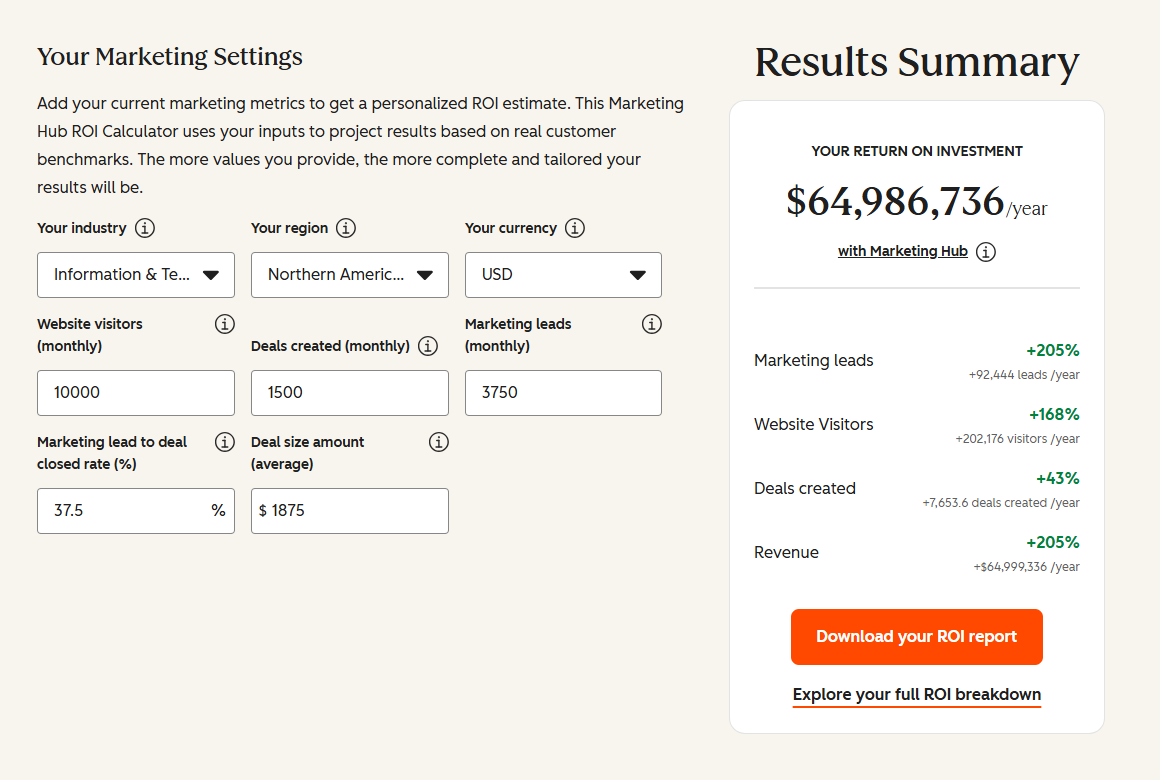
See your 12-month revenue impact with HubSpot CRM
Enter your current numbers — visitors, leads, deal size — and get a personalized projection based on real HubSpot customer benchmarks.
Bottom Line
Winning with AI doesn’t come from dabbling with generic inputs. Success comes from building a prompt library aligned to your strategy, customers, and brand.
If you’re ready to connect these prompts directly to your HubSpot environment, Integrate IQ can help.
Talk to our team to unlock the full potential of AI in your business.