
Explore this article with AI:

On day three of HubSpot UNBOUND 2026, our CEO Tim Ritchie did what he always does at these events: he sorted the real from the stage lighting. His verdict bears repeating because it is not the usual recap. HubSpot’s AI product Breeze underperformed last year. This is something HubSpot knows, and this year’s release is a ground-up rebuild built to earn back trust, not just add features.
The larger narrative behind that admission is something we’ve been advocating since we opened our doors in 2013. AI agents need context, not just more tools. HubSpot just named that principle: Growth Context. We believe that the name is less important than the fact that the biggest CRM vendor in the market has just publicly agreed with us.
Free estimator
Know what your HubSpot project costs before the first call.
Select your services and get a transparent price range in minutes. No sales call needed to get a number.
Connect HubSpot to your ERP, billing platform, or database field mapping, custom logic, and support included.
Pipelines, workflows, email templates, and reporting configured for how your team actually works.
Live, role-based sessions with recordings and written guides built around a custom plan for your team.
HubSpot Partner
Client retention
Platforms integrated
HubSpot Is Admitting Breeze Underperformed, and That’s the Right Call



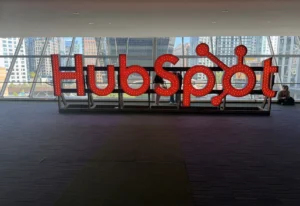
In Tim’s words from the show floor: “I said this last year because they said it last year, and then everybody went out and tried Breeze and it kind of sucked. This year they are having to acknowledge that and rebuild confidence again.”
That’s not a criticism that we’re passing from the outside. Instead, it’s HubSpot’s own product team, with new leadership, that’s rebuilding Breeze Assistant from the ground up rather than patching the version that shipped last year. Most vendors don’t say the quiet part outloud It did and the rebuild is more believable for it.
The practical takeaway for anyone running HubSpot: A vendor announcement that a feature exists is not the same as that feature being ready to run your business on. We’ve seen clients regret launching AI capabilities and flip on them the week they launch. Last year’s Breeze release was helpful to teams that initially piloted narrow, reversible use cases and then scaled.
The Real Announcement Wasn’t an Agent, It Was a Definition
Over two days of keynoting, the message from HubSpot was one word: context. Every new agent, every AI-generated email, every campaign recommendation, is now powered by what HubSpot calls Growth Context – its term for having rich business data connected, structured, and clean enough for AI to reason over.
Tim’s read on this: “That reinforces what we’ve been doing since 2013. We believe strongly that in order to be effective across the enterprise, AI needs diverse data connected. That data needs to be structured and it needs to be clean. HubSpot would call that context, and I really like that positioning.”
This is the part that most event coverage misses. Marketing silos. Sales silos. Accounting silos. All partial pictures. An agent thinking from one of those silos will confidently come up with a wrong answer, because it was never given enough of the business to get it right. This is not a problem that HubSpot created. It just built a product feature that scores how close a portal is to solving it.

Turn HubSpot Into A Real-Time SMS Engine with
Message IQ

Two-Way Conversations

Shared Team Inbox

Automation Triggers

Advanced Reporting

Compliance Tools
-
98%
SMS read within 3 min -
78%
Buy from first responder -
21×
More likely to qualify
3–5 min avg response
$45–$50 ROI / $1

*MessageIQ is an IntegrateIQ product – built natively for HubSpot by the same team.
Agents You Can Build Without a Developer, and Agents You Can Reach From Outside HubSpot
Beyond the rebrand, two structural shifts were notable. First, Breeze Assistant can now build custom agents in a HubSpot portal without a developer writing code. Second, HubSpot has made programmatic integrations available so tools like Claude, ChatGPT and Gemini can directly contact HubSpot and HubSpot’s own agents can reach back out to those tools.
Tim confirmed this is already how we work day to day: “It’s actually one of the primary ways we use AI in HubSpot.”
That’s not a hypothetical use case from a keynote slide. It’s a workflow we run today and it’s exactly the surface area that we help clients build on in our HubSpot integration process.” If an AI tool outside of HubSpot can cleanly read and write CRM data, the value of that connection depends entirely on whether the underlying data model can support it, which is the same problem custom integration work has always solved.
The Framework Worth Stealing: Outcome First, Agent Second
Sequencing is another area that HubSpot focuses on, and one we feel is most often overlooked. Just because an agent exists, don’t deploy it. Decide the outcome first, make it measurable, then build the agent against it.
Tim’s framing: “Have an outcome in mind when you begin your AI journey and make that measurable. Are you increasing leads? Are you improving speed to lead? Are you improving conversion rates? Are the number of hours you spend monthly on your receivables going down because you have agents doing all of that?”
Four questions worth answering before any agent goes live:
What specific number are we trying to move: lead volume, speed to lead, conversion rate, or hours reclaimed from manual work?
What does the current baseline look like, measured before the agent goes live?
What does the data feeding this agent actually look like today: is it structured, deduplicated, and synced across every system that touches it?
Who reviews the agent’s first output before it acts unsupervised?
Skip step three and the other three don’t matter. An agent given a clear outcome and messy data will still produce a wrong answer, just faster and with more confidence than a human would.
What This Means for Your Business
If you’re a RevOps leader or CTO looking on from the outside of the HubSpot keynote hall this cycle, the lesson isn’t about which agent to turn on first. It’s whether your data is in a state that it’s safe to turn one on.
Audit what’s actually plugged in. But if your CRM just has your marketing and sales activity, and your billing, service, or operations data is in other places, then no agent built on top of that CRM has the context HubSpot is talking about.
Pick one measurable outcome before your first agent pilot. Not “try AI,” but “cut speed to lead from 4 hours to under 30 minutes.”
Treat this the way we’ve treated every large-scale HubSpot build since 2013: the AI layer is only as good as the integration layer underneath it.
As a HubSpot Diamond Solutions Partner, we have synced 7 million fields daily across 300+ platforms and the pattern has not changed with this release, it has just become more visible. The businesses that are really getting ROI from agentic AI today are the ones whose HubSpot integrations already sync clean, up-to-date data across every system an agent needs to reason over. The ones that struggle are asking an agent to make sense of a CRM that was never designed to hold the whole picture.
FAQ
What did HubSpot announce at UNBOUND 2026?
HubSpot rebuilt Breeze Assistant from scratch, introduced new marketing and revenue agents, expanded its programmatic AI connections to tools such as Claude, ChatGPT, and Gemini, and focused the release on a concept it refers to as Growth Context, its term for connected, structured business data feeding into every AI feature.
What is Growth Context in HubSpot?
HubSpot calls the combined business data, customer information, and activity history of its AI features “Growth Context.” The more complete the data, the more accurate the AI output will be.
Do I need a developer to build a custom AI agent in HubSpot now?
No. Breeze Assistant can now walk a non-technical user through creating a custom agent within a HubSpot portal, however agents that need access to outside data sources still benefit from proper integration work to get them accurate information.
What should I do before turning on a new HubSpot AI agent?
Identify the exact outcome you want to change, evaluate your current starting point, and verify the correctness and consistency of the data driving the agent across all connected systems. The number one reason AI agent pilots fail is due to skipping the data check.
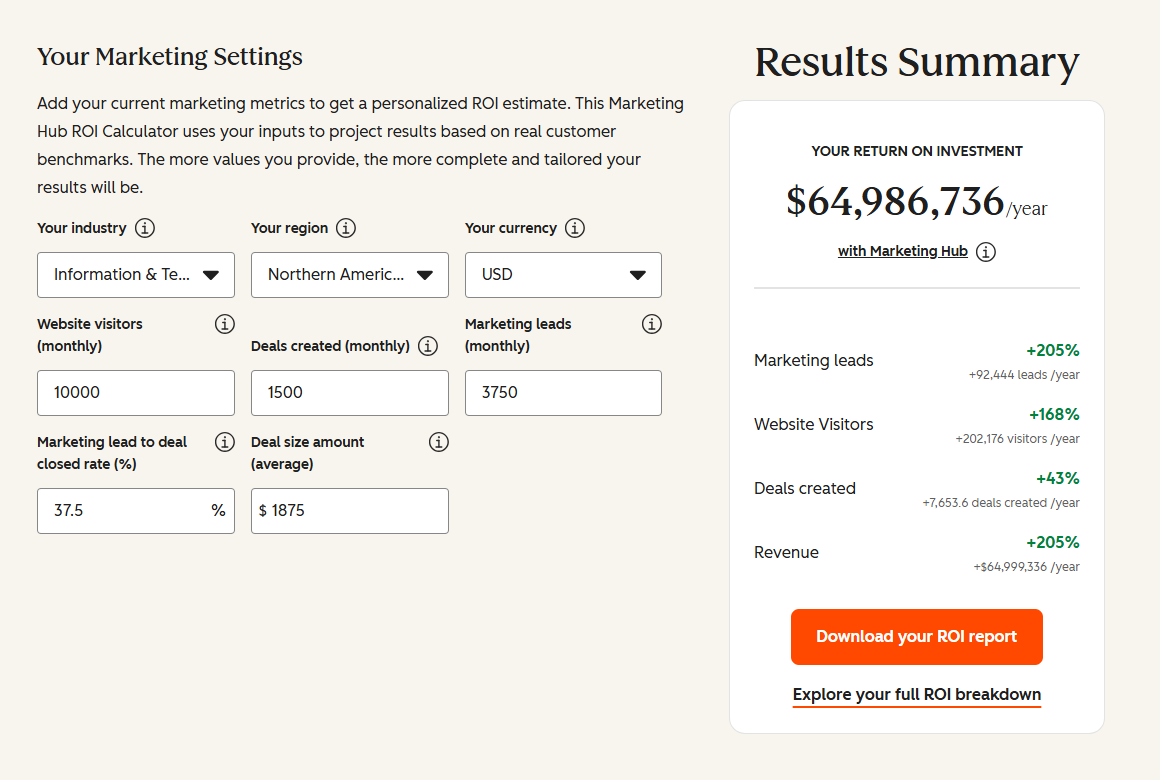
See your 12-month revenue impact with HubSpot CRM
Enter your current numbers — visitors, leads, deal size — and get a personalized projection based on real HubSpot customer benchmarks.
Build the Context Before You Build the Agent
Every agent HubSpot put in front of you this week is only as good as the data underneath it. And that’s exactly what we do every day as a HubSpot Diamond Solutions Partner – connect the systems that have your real business context so that the AI layer has something accurate to work with. If you’re planning an agent rollout this quarter, talk to our team before you hit the switch, not after a rep flags a wrong output on a live deal.

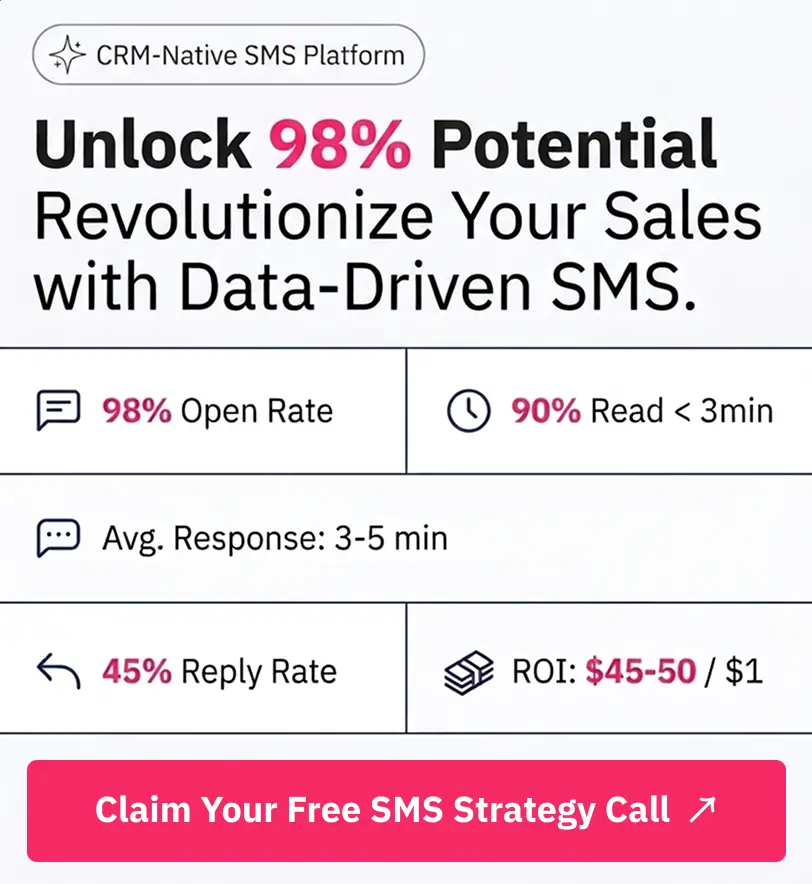
Table of Contents
- HubSpot Is Admitting Breeze Underperformed, and That's the Right Call
- The Real Announcement Wasn't an Agent, It Was a Definition
- Agents You Can Build Without a Developer, and Agents You Can Reach From Outside HubSpot
- The Framework Worth Stealing: Outcome First, Agent Second
- What This Means for Your Business
- FAQ
- Build the Context Before You Build the Agent