










Explore this article with AI:

Choosing a Zoho CRM alternative in 2026 is no longer just about storing contact names; it is about how well that system feeds your AI agents and scales with your operations. While Zoho CRM has long been a staple for cost-conscious firms, many leaders are hitting a “complexity wall.” Whether it is the fragmented user interface or the “hidden” costs of technical debt required to customize its proprietary Deluge scripts, the search for a more cohesive platform is accelerating.
Free estimator
Know what your HubSpot project costs before the first call.
Select your services and get a transparent price range in minutes. No sales call needed to get a number.
Connect HubSpot to your ERP, billing platform, or database field mapping, custom logic, and support included.
Pipelines, workflows, email templates, and reporting configured for how your team actually works.
Live, role-based sessions with recordings and written guides built around a custom plan for your team.
HubSpot Partner
Client retention
Platforms integrated
Key Takeaways
- User Experience Drives ROI: Modern alternatives prioritize high adoption rates through intuitive design, eliminating the “training tax” common with Zoho’s fragmented UI.
- Native AI is the Standard: Top 2026 contenders offer Breeze AI or Copilot features that work natively, rather than as bolted-on plugins.
- Total Cost of Ownership (TCO): Lower sticker prices often mask higher long-term costs in specialized consulting and manual data cleanup.
- Data Cohesion: Mid-market leaders are moving toward unified “hubs” where sales, marketing, and service data live in one primary, real-time record.
The Shifting Landscape of CRM Strategy
The mid-market has officially moved away from “Frankenstein” tech stacks. In the past, you might have tolerated a clunky interface if the price was right. Today, if your sales team spends more time fighting the CRM than talking to prospects, you are losing revenue.
The 2026 market is defined by AI Engine Optimization (AEO), how easily an AI can crawl and make sense of your data to provide real-time insights. If your data is siloed across various Zoho modules that don’t always “talk” to each other, your AI tools will hallucinate instead of helping. Achieving data quality is now the prerequisite for any successful migration.
Turn HubSpot Into A Real-Time SMS Engine with
Message IQ

Two-Way Conversations

Shared Team Inbox

Automation Triggers

Advanced Reporting

Compliance Tools
-
98%
SMS read within 3 min -
78%
Buy from first responder -
21×
More likely to qualify
3–5 min avg response
$45–$50 ROI / $1

*MessageIQ is an IntegrateIQ product – built natively for HubSpot by the same team.
Top 10 Zoho CRM Alternatives for 2026
1. HubSpot: The Gold Standard for Cohesion
HubSpot remains the most formidable Zoho CRM alternative because it was built on a single code base, unlike Zoho’s acquisition-heavy model. This ensures that your marketing, sales, and service data exist in one place without sync errors.
- Integrated Breeze AI: Features like “Breeze Studio” allow you to trigger AI agents directly within workflows based on CRM events.
- Unified Data Architecture: Eliminates the need for complex custom API integrations between internal silos.
- Smart Content Generation: Use Breeze Assistant to instantly generate blog posts, social updates, and personalized sales emails.
- User Adoption: Widely regarded as the most intuitive interface, reducing the time reps spend on data entry.
2. Salesforce: The Powerhouse for Customization
If your business logic requires a bespoke engine, Salesforce is the answer. It is the leading alternative for enterprise-level forecasting and complex “Go-To-Market” (GTM) motions.
- Einstein Copilot: A conversational AI assistant that lives across all Salesforce apps, trained on your specific company data for secure, accurate responses.
- Predictive Intelligence: Uses historical data to forecast lead conversion and identify churn risks before they happen.
- Data Cloud Integration: Unifies data from external sources like ERPs and e-commerce platforms into a single real-time view.
- Advanced Trust Layer: Ensures generative AI uses your data without exposing sensitive information.
3. Pipedrive: The Sales-First Specialist
Pipedrive is designed for teams that want to strip away the “operating system” feel of Zoho and focus purely on the deal.
- Visual Kanban Pipelines: The benchmark for pipeline clarity, allowing reps to drag and drop deals through stages.
- AI Sales Assistant: Provides personalized tips and identifies at-risk deals based on rep activity and deal history.
- Activity-Based Selling: Anchors the CRM around scheduled tasks (calls, emails, demos) to ensure consistent engagement.
- Smart Formulas: Automates calculations within deal fields to reduce manual admin work.
4. Monday.com CRM: Best for Visual Workflows
Monday has evolved from a project tool into a highly flexible CRM contender, perfect for teams that want to build their own interface without code.
- AI Blocks: Allows users to build custom automations and summarize communication timelines instantly.
- No-Code Flexibility: Teams can adapt the CRM to their specific sales process using drag-and-drop building blocks.
- Real-Time Dashboards: Visualizes project dependencies and marketing portfolio performance at scale.
- Post-Sale Management: Handles onboarding and renewals within the same platform to prevent customer handoff friction.
5. Microsoft Dynamics 365: The Ecosystem Play
For organizations deep in the Azure and Microsoft 365 ecosystem, Dynamics 365 offers the deepest native integrations available.
- Copilot Integration: Users can use natural language to ask for invoice summaries or identify top customer opportunities.
- Real-Time Assistance: AI helps service agents resolve cases faster by drafting responses and summarizing long email chains.
- Seamless Office Sync: Works natively with Outlook, Teams, and Excel, turning your standard workspace into an intelligent CRM.
- Predictive Analytics: Standardizes AI-driven insights across both ERP and CRM functions.
6. Freshsales: AI-Powered Simplicity
Freshsales is built for teams that want enterprise-grade AI insights, like lead scoring, without a massive price tag or steep learning curve.
- Freddy AI Copilot: Automates lead qualification and resolves duplicate contacts to keep your database clean.
- Built-in Telephony: Includes cloud-based phone service with call recording and logging directly in the CRM.
- Deal Risk Signals: AI parses emails and historical data to provide real-time recommendations for the “next best action”.
- Auto-Enrichment: Automatically adds social and public profile data to contact records.
7. Creatio: The No-Code Leader
Creatio is the top choice for firms that need to automate complex business processes (BPM) alongside their CRM activities.
- AI Command Center: A centralized hub to manage and deploy AI agents across the organization without writing code.
- Agentic Platform: Features ready-to-use AI agents for account research, meeting prep, and quote generation.
- Unified Architecture: Combines generative, predictive, and agentic AI into one cohesive no-code environment.
- Time-to-Value: Designed to reduce TCO by allowing non-technical users to build and deploy apps.
8. Copper: Built for Google Workspace
If your company “lives” in Gmail and Google Calendar, Copper is the only alternative that lives there with you.
- Zero Data Entry: Records are automatically populated with Gmail data, including contact details and file attachments.
- Native Chrome Extension: Makes CRM functionality available directly inside Gmail, Google Meet, and even LinkedIn.
- E-Signature Integration: Works seamlessly with tools like DocuSign and PandaDoc to manage contracts within the CRM.
- Automated Follow-ups: Uses pipeline email automations to ensure no lead slips through the cracks.
9. Insightly: Bridging Sales and Project Delivery
Insightly solves the common “handoff” problem by including project management directly within the CRM.
- Post-Sale Workflow: Close a deal and immediately convert it into a managed project with timelines and task assignments.
- AI Email Assistant: Summarizes long threads and drafts replies to keep communication moving.
- Two-Way Email Sync: Maintains a complete record of correspondence without manual logging.
- Customizable Dashboards: Focuses on visual data presentation to simplify complex sales and project analysis.
10. Nutshell: The SMB Value Play
Nutshell offers a “best of both worlds” approach: the simplicity of Pipedrive with the reporting power of more expensive systems.
- Sales Automation Playbooks: Puts time-wasting tasks on autopilot so reps can focus on relationship building.
- Website Visitor ID: Pinpoints which companies are visiting your site so you can target warm leads proactively.
- Contact Enrichment: Automatically reveals contact information for individuals at the companies you are targeting.
- Lead Attribution: Adds channel and source data to new leads to show exactly where your best revenue originates.
What Moving Off Zoho Actually Looks Like
Switching CRMs is where most teams underestimate the work. Zoho stores data across fragmented modules with CRM, Campaigns, Desk, Books and those records rarely map cleanly to a new system’s schema. Before you sign a contract with any alternative, answer these four questions:
1. Where does your data actually live?
Zoho splits contact, deal, and activity data across modules that are loosely connected. Run a full data audit before migration. Identify duplicate records, custom fields, and any Deluge scripts that contain business logic you cannot afford to lose.
2. How clean is your contact database?
Migrating dirty data into a new CRM doesn’t clean it and it multiplies the problem. Contacts without email addresses, duplicate companies, and deals with missing stage history will all carry over unless you scrub them first. See our CRM data preparation guide before starting.
3. What integrations does Zoho currently power?
If Zoho is connected to your ERP, billing tool, or support desk, those connections need to be rebuilt in the new system. A native connector is not always enough especially if you have custom field mappings or real-time sync requirements.
4. Who owns the migration?
DIY migrations from Zoho to HubSpot typically take 3–6 months and frequently result in partial data loss or broken workflows. A managed migration through a HubSpot Diamond Partner takes roughly 8 weeks with full data validation. See how our CRM migration service handles the complexity end to end.
Things To Watch Out For
When evaluating these Zoho CRM alternatives, don’t let a slick demo blind you to these pitfalls:
- Data Migration Fatigue: Moving from Zoho’s proprietary Deluge scripts and fragmented module structure is more complex than most teams expect. Run a CRM data preparation audit before you start. It will surface field mapping conflicts, duplicate records, and orphaned data that will break your new system if ignored.
- Feature Bloat: Many alternatives will sell you “AI” that is a basic wrapper around a third-party LLM. Look for natively built predictive models with HubSpot’s Breeze and Salesforce’s Einstein are trained on CRM-specific data, not general language data. That distinction matters for lead scoring accuracy.
- API Limitations: Make sure any alternative you consider has an open, documented API with no record limits. Some mid-tier platforms cap API calls at the plan level, which creates a new integration ceiling fast. Custom integrations built on closed APIs are expensive to maintain. Read our breakdown of custom integrations vs. iPaaS platforms to understand what to look for.
- Hidden Total Cost of Ownership: Zoho’s entry price looks cheap until you add the cost of a developer to manage Deluge scripts, plus the lost productivity from low adoption rates. Before comparing sticker prices, calculate your full TCO including implementation, training, and ongoing admin. Use our ROI calculator to run a 12-month comparison against HubSpot.
- Post-Migration Drift: Most teams focus entirely on getting data into the new system and nothing on what happens after go-live. Without a structured adoption plan, reps revert to spreadsheets within 60 days. Budget time for onboarding, not just migration. See our post-migration best practices to avoid this.
What Marketers Should Do Now
- Audit Your Adoption: Ask your sales team to rate their current CRM usage from 1–10. If it’s below a 7, the system is costing you money.
- Benchmark Data Quality: Check if your records are clean enough for AI agents to actually use. Use our Data Quality Guide to get started.
- Run a Pilot: Most of these tools offer 14-day trials. Don’t just look at the features, look at how many clicks it takes to perform a standard task like “Log a call.”
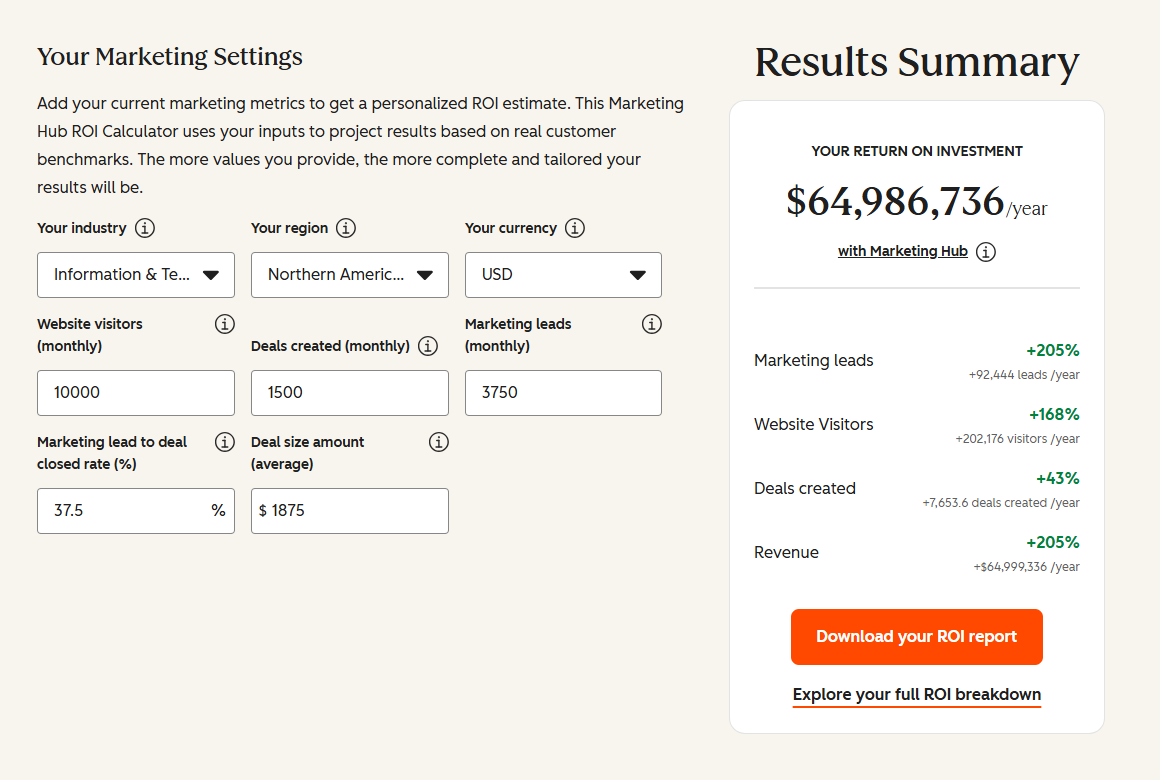
See your 12-month revenue impact with HubSpot CRM
Enter your current numbers — visitors, leads, deal size — and get a personalized projection based on real HubSpot customer benchmarks.
FAQs
What is the best Zoho CRM alternative for mid-market businesses?
For most mid-market teams, HubSpot is the strongest alternative because it solves Zoho’s core weakness: fragmentation. All marketing, sales, and service data lives in one architecture, which means your AI tools, reporting, and automation work without custom workarounds. If you need deep enterprise customization, Salesforce is the alternative worth evaluating.
Is there a cheaper alternative to Zoho CRM?
Freshsales and Nutshell both offer lower per-seat pricing than Zoho’s paid tiers. However, total cost of ownership matters more than the monthly rate. Zoho frequently requires developer time to manage its Deluge scripting and module integrations, costs that do not appear on the invoice but directly impact your team’s productivity.
Which Zoho CRM alternatives have the best AI features?
HubSpot (Breeze AI) and Salesforce (Einstein Copilot) lead the market with natively built AI models. The distinction matters: native AI is trained on your CRM data and predicts outcomes based on your actual pipeline history. Bolt-on AI tools query external models and return generic results that are far less accurate for sales forecasting or lead scoring.
How do I migrate data from Zoho CRM to HubSpot?
A Zoho-to-HubSpot migration involves four stages: data audit and field mapping, record cleansing, phased import with validation, and final cutover. The complexity depends on how many Zoho modules you use, whether you have custom Deluge scripts, and the size of your contact database. A managed migration with a HubSpot Diamond Partner typically completes in 8 weeks. See our full migration guide for a step-by-step breakdown.
What are the biggest limitations of Zoho CRM?
The most common complaints from teams switching off Zoho are: fragmented data across disconnected modules, a steep learning curve for customization using Deluge scripts, inconsistent UI across products acquired separately, and AI features that lag behind HubSpot and Salesforce in native capability. These are not minor issues — they directly reduce adoption rates and the ROI of your CRM investment.
Which Zoho CRM alternative is easiest to set up?
Pipedrive, Freshsales, and Copper are consistently rated the easiest to configure out of the box. All three are designed for teams that want to be operational within a week without dedicated technical resources. HubSpot’s free tier is also a low-friction starting point, though unlocking its full power requires proper onboarding.
Can I import my Zoho contacts into another CRM without losing data?
Yes, but the process requires preparation. Export your Zoho contacts, companies, deals, and activities as separate CSV files, then audit them for duplicates and missing required fields before importing. Most CRMs accept standard CSV imports. Where data loss typically occurs is in custom field mappings and activity history, these need to be manually mapped to the new system’s schema before import. Our CRM data preparation guide walks through this in detail.
How much does it cost to switch from Zoho CRM to HubSpot?
Costs vary based on database size, custom integrations, and whether you use a migration partner. HubSpot’s platform cost starts at $15 per seat per month (Sales Hub Starter). A professionally managed migration for a mid-market company with 20,000+ contacts and multiple integrations typically ranges from $5,000 to $25,000 depending on complexity. The right way to evaluate this is against the cost of staying: low CRM adoption and manual workarounds often represent a larger revenue loss than the migration investment.
Is HubSpot really better than Zoho CRM?
For most GTM teams, yes, but it depends on what you need. HubSpot wins on usability, native AI, unified data architecture, and ecosystem integrations. Zoho wins on breadth of business applications (finance, HR, legal) and price at the very low end. If your primary use case is marketing, sales, and service alignment, HubSpot outperforms Zoho on every operational metric that drives revenue. See our full HubSpot vs Zoho comparison for a feature-by-feature breakdown.
What should I do before switching from Zoho to a new CRM?
Three things before you move: First, audit your current data quality, clean data migrates cleanly, dirty data migrates dirty. Second, document every integration Zoho currently powers and confirm the alternative supports them natively or via API. Third, define your adoption plan before go-live, not after. Most failed CRM migrations fail at adoption, not data transfer. Use the checklist in our HubSpot onboarding guide as a reference template even if you are evaluating other platforms.
Bottom Line
Switching your CRM is major surgery, but staying in a system that hinders your growth is a slow death. The best Zoho CRM alternatives in 2026 are those that prioritize user adoption and data cohesion. If your team is “working for the CRM” instead of the CRM working for them, it is time to move to a platform that truly integrates your business.
Upgrade Your CRM Experience in Minutes

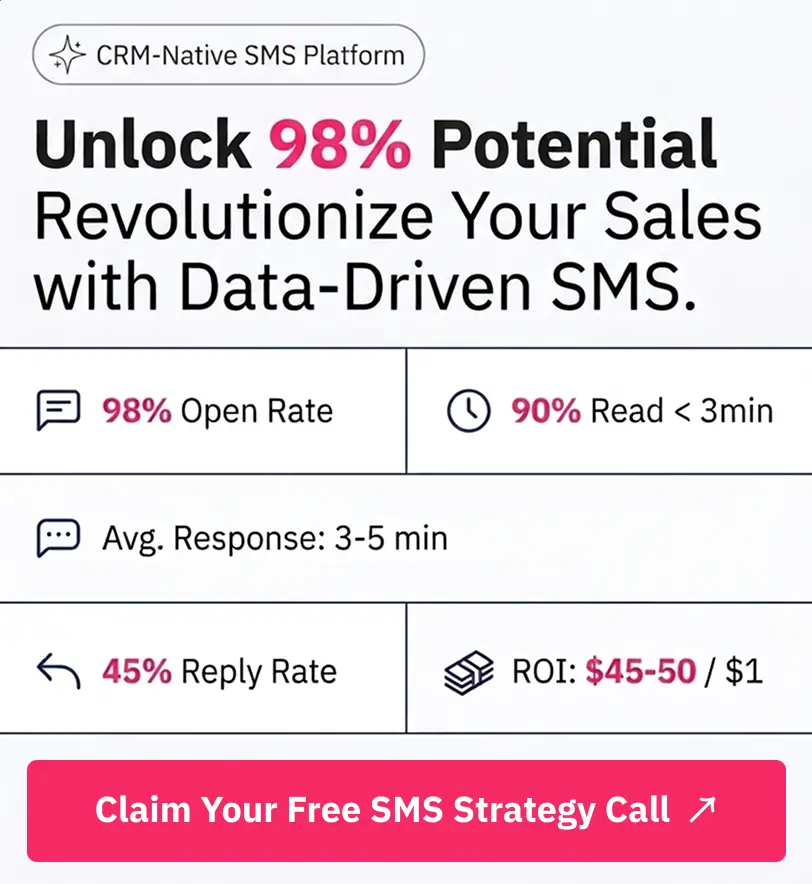
Table of Contents
- Key Takeaways
- The Shifting Landscape of CRM Strategy
- Top 10 Zoho CRM Alternatives for 2026
- 1. HubSpot: The Gold Standard for Cohesion
- 2. Salesforce: The Powerhouse for Customization
- 3. Pipedrive: The Sales-First Specialist
- 4. Monday.com CRM: Best for Visual Workflows
- 5. Microsoft Dynamics 365: The Ecosystem Play
- 6. Freshsales: AI-Powered Simplicity
- 7. Creatio: The No-Code Leader
- 8. Copper: Built for Google Workspace
- 9. Insightly: Bridging Sales and Project Delivery
- 10. Nutshell: The SMB Value Play
- What Moving Off Zoho Actually Looks Like
- Things To Watch Out For
- What Marketers Should Do Now
- FAQs